
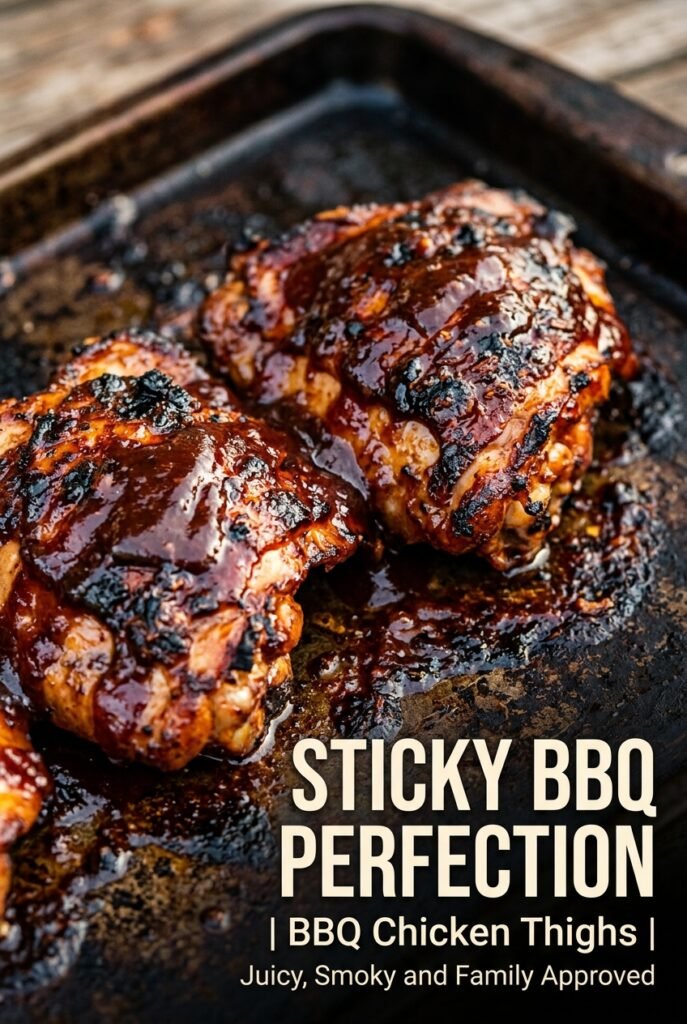
BBQ Chicken Thighs
Juicy BBQ chicken thighs are one of those dinners that disappear fast because they hit every mark at once: crisp, bronzed skin; tender meat; and a sticky sauce that clings…
Tip: save now, read later.
Juicy BBQ chicken thighs are one of those dinners that disappear fast because they hit every mark at once: crisp, bronzed skin; tender meat; and a sticky sauce that clings instead of sliding off. Baking the thighs first lets the fat render and the skin tighten up before the barbecue sauce goes on, which is what gives you that caramelized finish instead of a pale, wet coating. The result tastes like you spent far longer tending the pan than you actually did.
The trick is to keep the sauce off the chicken until the meat is mostly cooked. If it goes on too early, the sugars in the barbecue sauce can burn before the thighs are done, and you lose that glossy glaze. A little honey deepens the shine, while Worcestershire adds a sharp, savory note that keeps the sauce from tasting one-note sweet. I also like to dry the skin well and season beneath the sauce, because barbecue glaze tastes best when it has a salty, well-seasoned base to sit on.
Below you’ll find the timing that keeps the thighs juicy, the broiler finish that gives the sauce its sticky edges, and a few smart swaps if your pantry is missing one of the seasonings.
The sauce caramelized beautifully and the skin stayed crisp even after the second brush of BBQ sauce. I used thighs with the bone in, and they were still juicy after the full bake time.
Juicy BBQ chicken thighs with a sticky, caramelized glaze are perfect for the nights when you want bold barbecue flavor without firing up the grill.
The Broiler Finish Is What Turns Sauce Into Bark
The biggest mistake with BBQ chicken thighs is coating them too early and then wondering why the sauce tastes flat or scorched. Barbecue sauce is full of sugar, which means it needs time in the oven to warm through before it gets that final blast of heat. If you broil too soon, the glaze burns before the chicken has a chance to finish cooking through. If you skip the broil entirely, you end up with saucy chicken instead of that tacky, lacquered top that makes people reach for a second thigh.
Bone-in thighs are the right cut here because they stay juicy through a longer bake and give you enough fat to help the skin crisp. Boneless thighs can work, but they cook faster and need less time before saucing, or they’ll dry out around the edges. The dry seasoning layer matters more than it looks like it should; it keeps the meat flavorful even where the sauce doesn’t reach and gives the skin a head start on browning.
What Each Ingredient Is Actually Doing in This Dish

- Bone-in chicken thighs — This cut holds up to the longer bake and stays moist under high heat. Skin-on thighs give you the best contrast between crisp edges and juicy meat, though boneless thighs can work if you shorten the cooking time.
- BBQ sauce — Use a sauce you already like eating. A thin, tangy sauce caramelizes differently than a thick, sweet one, so the flavor of the finished chicken depends on the bottle you choose.
- Honey — This gives the glaze a deeper shine and helps it cling. If your BBQ sauce is already very sweet, cut the honey back a little so the coating doesn’t turn sticky-sweet instead of balanced.
- Worcestershire sauce — This adds savory depth and a little sharpness that keeps the glaze from tasting flat. There isn’t a perfect one-to-one substitute, but a small splash of soy sauce plus a touch of vinegar comes closest.
- Smoked paprika — This is where the smoky flavor starts before the sauce even hits the chicken. Regular paprika works in a pinch, but you lose some of that grill-like depth.
- Garlic powder and onion powder — These season the meat evenly and stick better than fresh aromatics would under the sauce. Fresh garlic can burn during the broil, which is why powder is the better choice here.
The Timing That Gives You Juicy Meat and Sticky Skin
Drying and seasoning the chicken
Pat the thighs dry first, even if the package doesn’t look especially wet. Moisture on the skin turns into steam, and steam keeps the skin pale instead of crisp. Rub the chicken with olive oil, then season it evenly so every bite tastes seasoned before the sauce goes on. If you rush this part, the barbecue glaze ends up doing all the work, and the meat underneath tastes bland.
Baking before the sauce
Arrange the thighs skin-side up on a baking sheet and bake until the skin has started to tighten and the fat is rendering. At this stage, the chicken should look opaque and lightly golden, but not fully lacquered yet. That’s exactly where you want it. The main failure here is adding sauce too soon because the chicken still looks pale; trust the clock and the visual cue of the skin starting to crisp.
Brushing and broiling
Mix the barbecue sauce, honey, and Worcestershire sauce, then brush on a generous layer once the thighs have baked through most of the way. Return them to the oven so the sauce can heat and settle into the skin, then add a second coat before broiling. Watch the broiler closely; the line between caramelized and burnt is short, and the sugars darken fast. Pull the pan the moment the glaze looks glossy with a few darkened edges.
Resting before serving
Let the chicken rest for a few minutes before serving so the juices stay in the meat instead of running onto the pan. The glaze will also set slightly as it cools, which helps it cling better when you move the thighs to a platter. If you cut in too soon, the juices spill out and the sauce looks looser than it should.
Three Ways to Make These BBQ Chicken Thighs Work for Your Kitchen
Dairy-Free and Naturally Gluten-Free
This recipe already fits both of those needs as written, as long as your barbecue sauce and Worcestershire sauce are labeled gluten-free. That’s the part people miss. Some sauces sneak in soy sauce or malt vinegar, and that changes the finish even if the rest of the recipe is unchanged.
Using Boneless Thighs Instead
Boneless thighs cook faster and are easier to serve at a cookout, but they won’t stay in the oven as long before saucing. Start checking them early, because the extra surface area can dry out if you wait for the same timing you’d use for bone-in pieces. You still get great glaze, just a softer skin texture and less of that roasted, deeply savory finish.
Swapping the Sauce Flavor
A smoky honey barbecue sauce gives you the most classic result, but a spicy sauce or mustard-style sauce works too. Just keep the same brush-and-broil method, since the cooking technique matters more than the flavor profile. If the sauce is thinner, it may need a few extra minutes in the oven before the broiler so it doesn’t run off the skin.
Storage and Reheating
- Refrigerator: Store leftovers in an airtight container for up to 4 days. The skin softens in the fridge, but the flavor holds up well.
- Freezer: These freeze well for up to 2 months. Wrap tightly or store in a freezer-safe container, and freeze with a little extra sauce if you can.
- Reheating: Reheat covered in a 325°F oven until hot, then uncover for the last few minutes to bring back some texture. The common mistake is microwaving too long, which turns the skin rubbery and makes the sauce separate.
Answers to the Questions Worth Asking
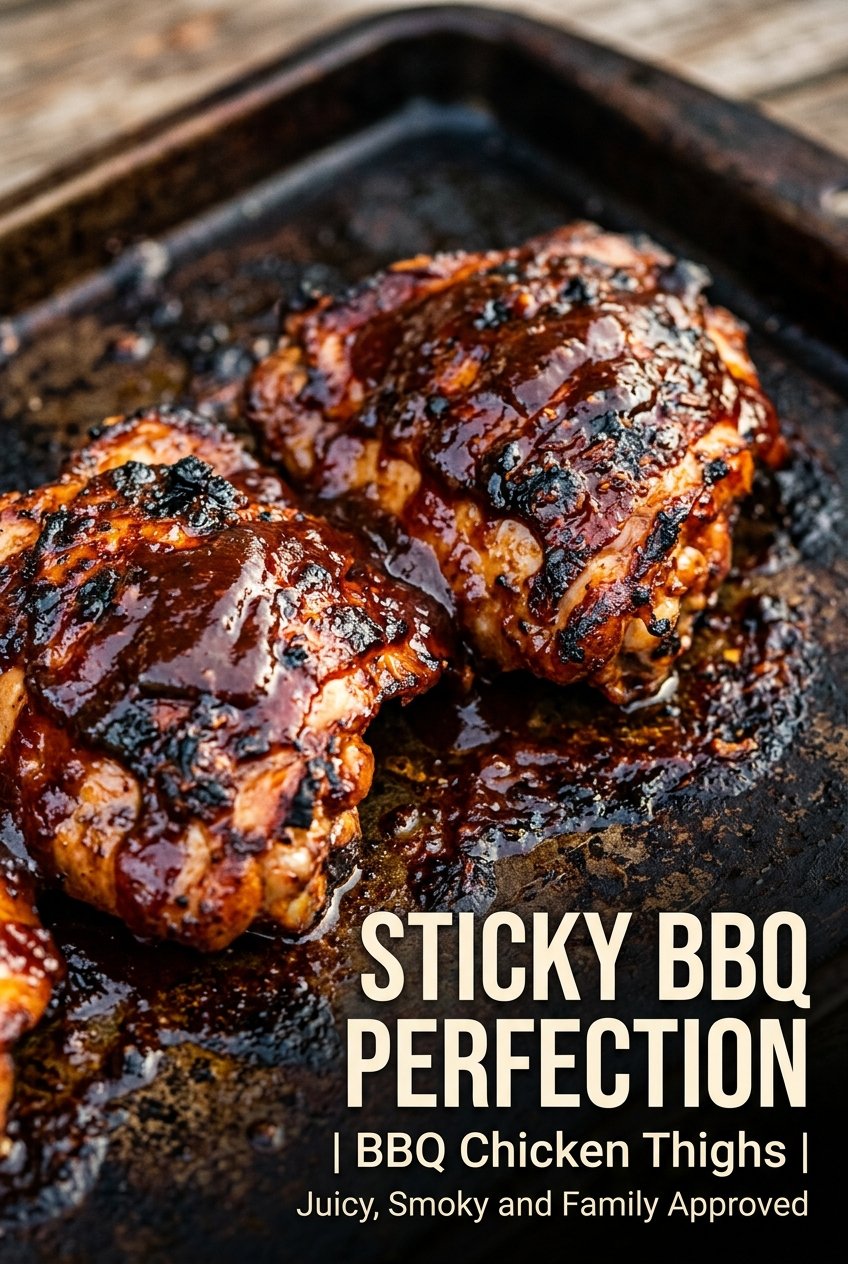
BBQ Chicken Thighs
Ingredients
Equipment
Method
- Preheat the oven to 425°F (220°C). Set a baking sheet on the middle rack to keep cooking time consistent.
- Pat the chicken thighs dry with paper towels. This helps the skin brown instead of steaming.
- Rub the chicken thighs with olive oil. Coat evenly so seasoning adheres.
- Combine the kosher salt, black pepper, garlic powder, onion powder, and smoked paprika. Mix until the spices are evenly distributed.
- Season the chicken evenly with the spice blend. Lightly press the spices onto the surface.
- Arrange the thighs skin-side up on a baking sheet. Leave space between pieces for airflow.
- Bake for 25 minutes. Cook until the chicken starts to render and the surface looks lightly browned.
- Mix the BBQ sauce, honey, and Worcestershire sauce. Stir until smooth and glossy.
- Brush the chicken generously with sauce. Use a thick coat so it can caramelize on contact with hot skin.
- Return to the oven for 15 minutes. Bake until the glaze looks tacky and coats the chicken.
- Brush with more sauce. Add another layer to deepen the caramelized sheen.
- Broil for 2–3 minutes until caramelized. Watch closely so the glaze darkens without burning.
- Rest the chicken for 5 minutes before serving. Let juices settle so each bite stays tender.
