
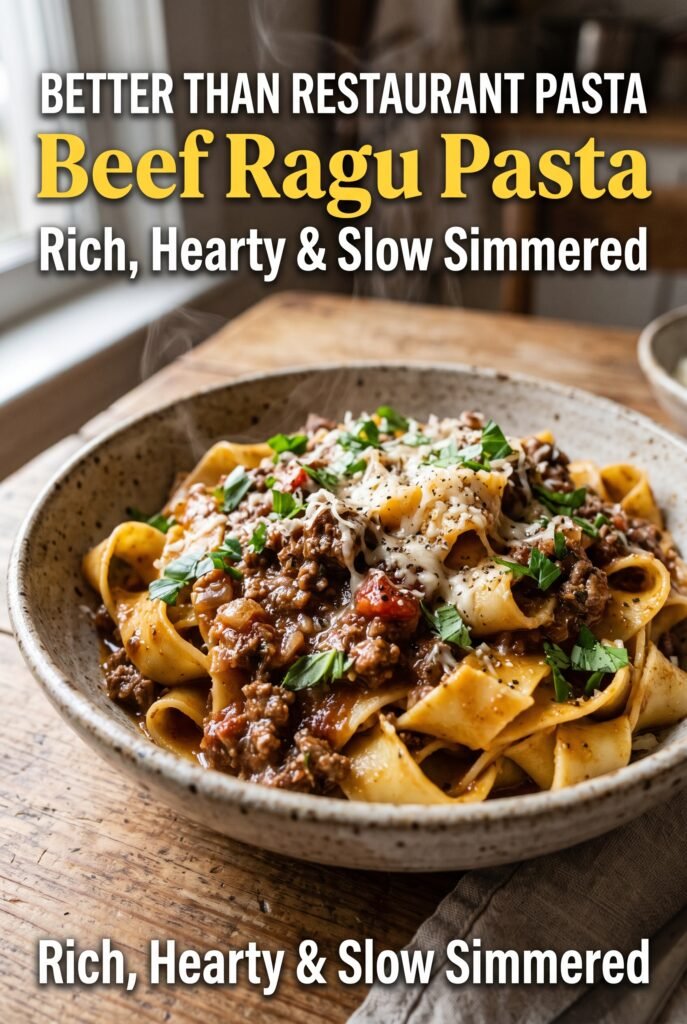
Beef Ragu Pasta
Beef ragu pasta earns its place in the dinner rotation because it tastes like it spent all afternoon on the stove, even when the work is mostly hands-off. The sauce…
Tip: save now, read later.
Beef ragu pasta earns its place in the dinner rotation because it tastes like it spent all afternoon on the stove, even when the work is mostly hands-off. The sauce turns thick and glossy, the beef gets tender instead of crumbly, and every bite of pasta catches onto those sweet tomatoes, browned meat, and soft little bits of onion, carrot, and celery. It’s the kind of meal that feels generous without being fussy.
The trick is giving the aromatics time to soften before the beef goes in, then letting the tomato paste cook until it darkens a shade or two. That quick step removes the raw edge and builds the deep, slow-cooked flavor you expect from ragu. The red wine adds depth, but the sauce still works if you skip it and use a little extra broth instead.
Below, I’ve included the one simmering mistake that can leave the sauce thin, plus a few smart swaps if you need to stretch it, skip the wine, or make it ahead.
The sauce thickened up beautifully and coated the pappardelle instead of pooling at the bottom. I skipped the wine and used extra broth, and it still tasted like it had been simmering for hours.
Save this beef ragu pasta for the nights when you want a rich, slow-simmered sauce that clings to every strand of pasta.
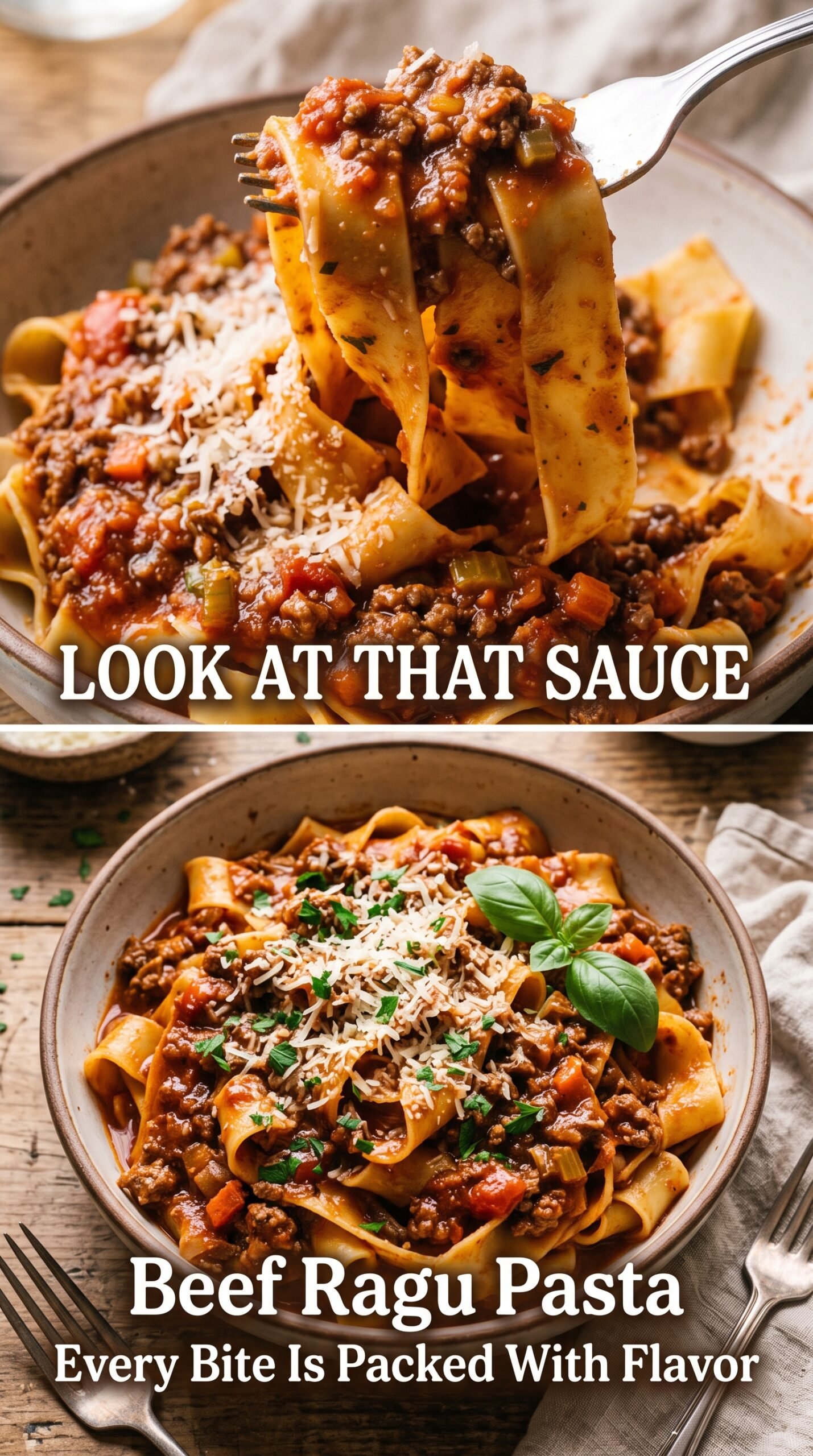
The Reason This Ragu Tastes Slow-Cooked Before It Ever Hits the Table
Most beef ragu recipes go thin because the pan gets crowded too early or the sauce never has enough time to reduce. Ground beef gives off liquid as it cooks, and if that liquid just sits there, you end up steaming the meat instead of building the browned base that gives ragu its depth. The fix is simple: cook the vegetables first, then brown the beef, then let the sauce simmer uncovered until it thickens and darkens.
Tomato paste matters more here than people expect. Cooking it for a minute with the garlic wakes it up and takes away that sharp, canned taste. Red wine brings another layer, but the real backbone comes from the browned beef, softened vegetables, and a long enough simmer for the crushed tomatoes to lose their raw edge.
- Ground beef — Lean ground beef gives you enough richness without flooding the sauce with grease. If you use a fattier blend, drain off the excess after browning so the finished sauce stays balanced.
- Tomato paste — This is what gives the ragu its concentrated tomato backbone. Let it cook briefly in the oil and aromatics so it darkens and sweetens before the liquid goes in.
- Dry red wine — The wine adds acidity and a deeper savory note. If you don’t use it, replace it with extra beef broth and a teaspoon of red wine vinegar at the end for a little brightness.
- Crushed tomatoes — Crushed tomatoes give the sauce body without making it smooth or watery. A good-quality canned tomato makes a difference here because there isn’t much else to hide behind.
- Parmesan — Freshly grated Parmesan finishes the dish with salt and nutty richness. The pre-shredded kind won’t melt as cleanly, so grate it yourself if you can.
How to Build Beef Ragu So It Turns Glossy, Not Watery
Softening the Vegetables First
Start with the onion, carrots, and celery in olive oil and cook them until they’re soft and sweet at the edges. You’re not looking for color here; you’re looking for a base that melts into the sauce instead of standing out in chunks. If the vegetables stay firm, they never fully blend into the ragu and the final texture feels rough.
Brown the Beef, Don’t Steam It
Add the ground beef and let it sit long enough to take on color before breaking it up too much. If you stir constantly, it releases moisture and turns gray. A little browning is what builds the savory flavor that makes this taste like it simmered much longer than it did.
Let the Sauce Reduce Openly
Once the tomatoes, broth, wine, and seasonings go in, drop the heat and simmer uncovered. That uncovered simmer matters because it lets water evaporate, which is how the sauce turns thick enough to coat pasta instead of sliding off it. If the sauce still looks loose after an hour, keep simmering until it clings to the spoon.
Toss the Pasta in the Sauce, Not the Other Way Around
Cook the pasta until just al dente, then move it straight into the ragu. The pasta finishes in the sauce and picks up flavor instead of sitting separately under a ladle of sauce on the plate. If the sauce feels a little tight, splash in a spoonful of pasta water to loosen it just enough to gloss the noodles.
Three Smart Ways to Make This Ragu Fit Your Kitchen
Skip-the-Wine Version
Use an extra cup of beef broth in place of the wine. Add a small splash of red wine vinegar or balsamic at the end if the sauce tastes flat, since wine usually adds the acidity that keeps ragu from tasting heavy.
Gluten-Free Dinner Bowl
Serve the ragu over gluten-free pasta, polenta, or mashed potatoes. The sauce itself is naturally gluten-free, so the only thing that changes is the base you serve it on.
Make It Lighter
Use a leaner ground beef, then stir in a little extra olive oil at the end if the sauce tastes too lean. You’ll lose some richness, but the vegetables, tomatoes, and Parmesan still give you a satisfying finish.
Stretch It for a Bigger Crowd
Add an extra half pound of pasta and a splash more broth if needed. The sauce is robust enough to stretch, but keep the simmer going a bit longer so it stays thick enough to coat all that extra pasta.
Storage and Reheating
- Refrigerator: Store the ragu and pasta separately for up to 4 days. The sauce gets even better overnight, while the pasta softens if it sits in the sauce too long.
- Freezer: The sauce freezes well for up to 3 months. Freeze it without the pasta in airtight containers or bags, then thaw in the fridge before reheating.
- Reheating: Warm the sauce gently on the stove with a splash of broth or water, then toss with freshly cooked pasta. The common mistake is blasting it over high heat until the sauce dries out and the meat turns tough.
Questions I Get Asked About This Beef Ragu Pasta
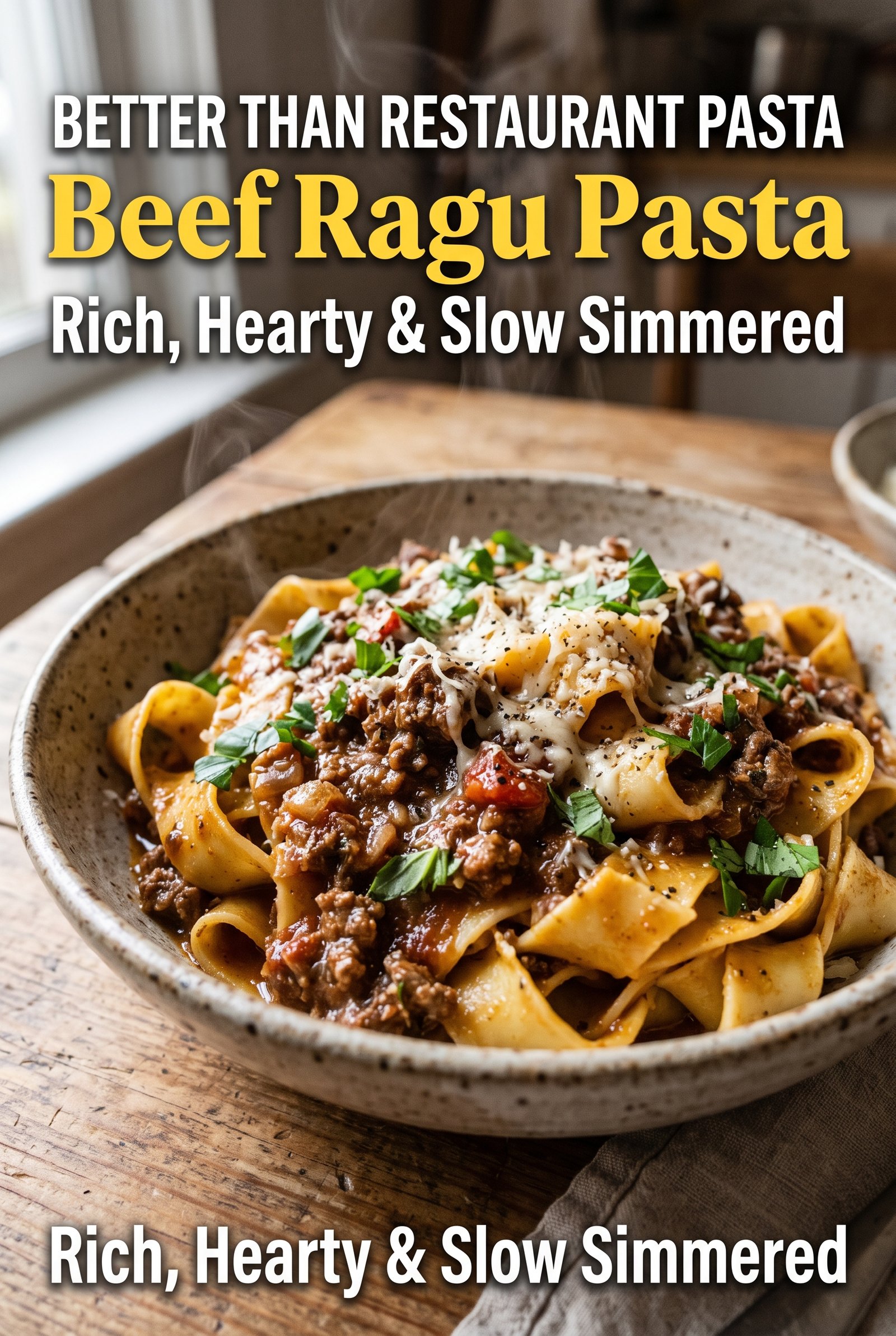
Beef Ragu Pasta
Ingredients
Equipment
Method
- Heat the olive oil in a Dutch oven over medium heat until shimmering.
- Add the onion, carrots, and celery, then cook for 6 minutes until softened.
- Stir in the garlic and tomato paste, then cook for 1 minute.
- Add the lean ground beef and cook until browned.
- Pour in the dry red wine and simmer for 3 minutes.
- Add the crushed tomatoes, beef broth, Italian seasoning, dried oregano, smoked paprika, bay leaves, salt, and black pepper.
- Reduce heat to low and simmer uncovered for 60–90 minutes, stirring occasionally, until the sauce thickens.
- Remove the bay leaves.
- Cook the pappardelle or rigatoni until al dente according to package directions.
- Toss the cooked pasta with the beef ragu until evenly coated.
- Garnish with freshly grated Parmesan cheese, chopped fresh parsley, and fresh basil before serving.
