
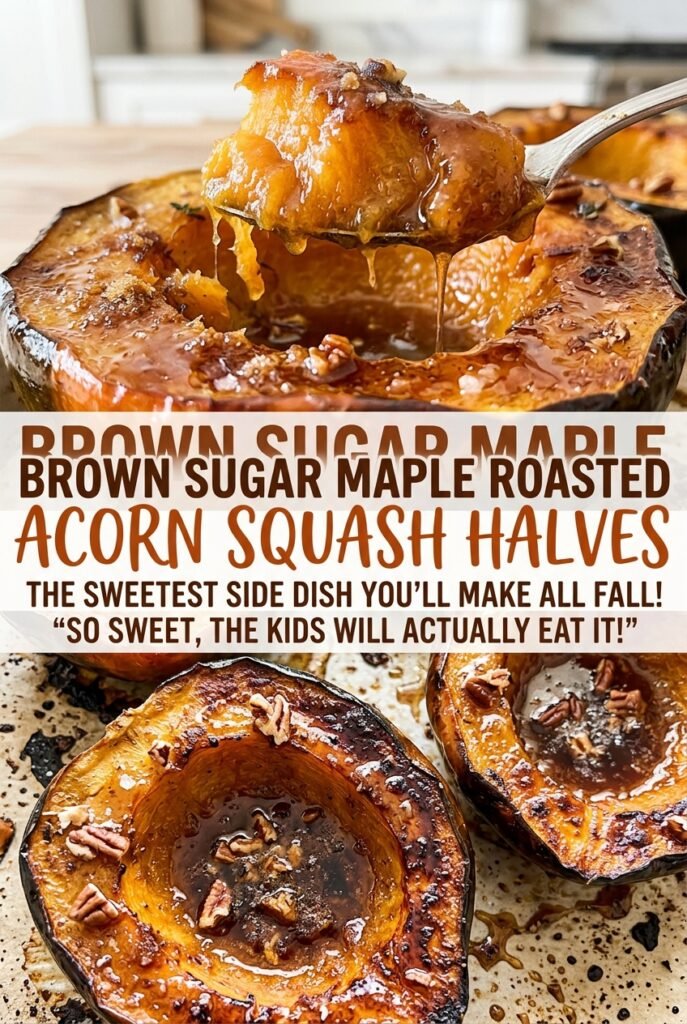
Brown Sugar Maple Roasted Acorn Squash Halves
When the squash comes out of its first roast, the cut surfaces have softened and the empty cavities are ready to hold the glaze. That timing gives these Brown Sugar…
Tip: save now, read later.
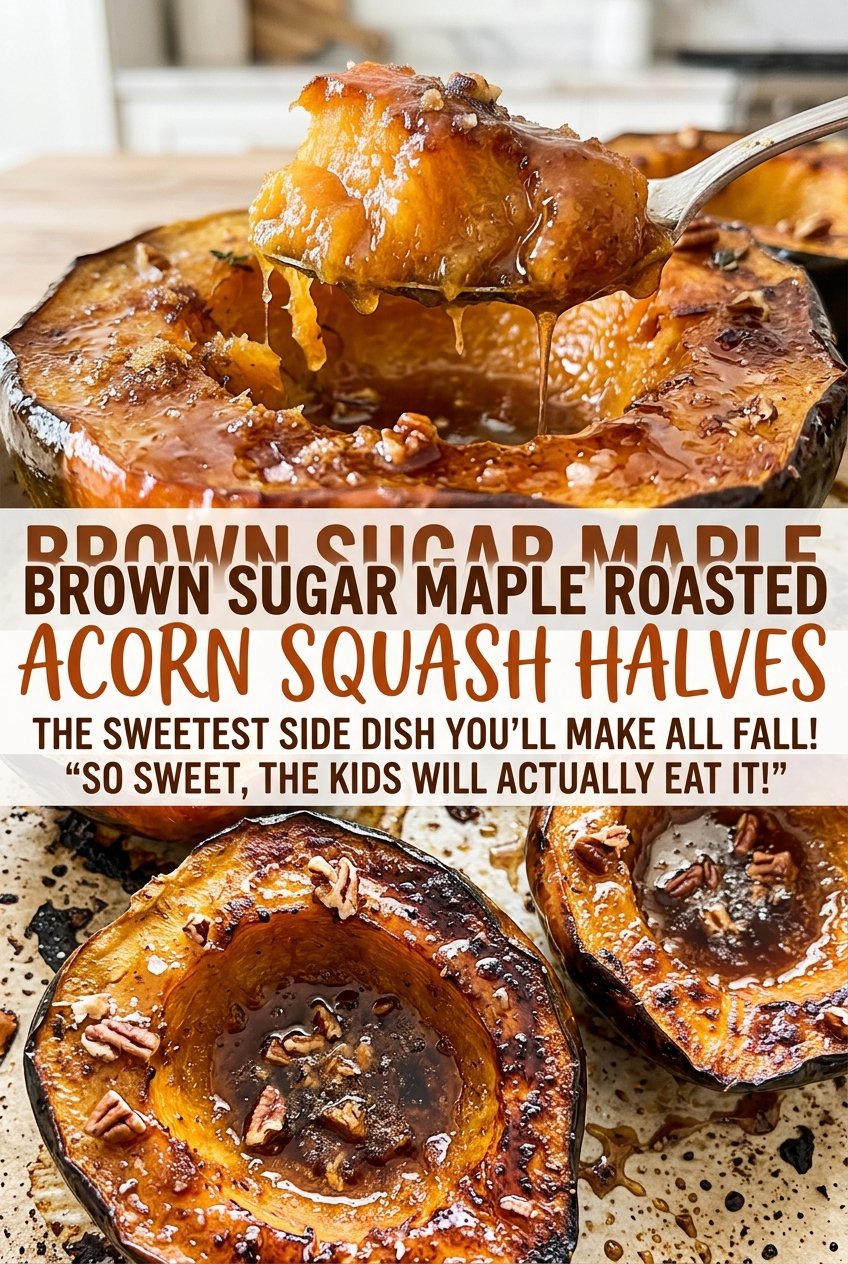
When the squash comes out of its first roast, the cut surfaces have softened and the empty cavities are ready to hold the glaze. That timing gives these Brown Sugar Maple Roasted Acorn Squash Halves their balance: tender squash underneath, with a buttery maple mixture that bubbles in the center instead of running straight onto the pan.
I like this recipe because the sweetness stays measured. Light brown sugar brings a mellow caramel note, while pure maple syrup keeps the glaze tasting unmistakably maple. Cinnamon adds warmth without taking over, and a little kosher salt keeps the sweetness from feeling flat. Each half roasts right in its own natural bowl, so it looks lovely on the plate and needs no extra garnish.
Kitchen Note
Give the squash its full five-minute rest before serving. The glaze is loose and bubbling when it first leaves the oven, and a short pause lets it settle back into the cavities instead of sloshing out when you move the halves.
Save these brown sugar maple roasted acorn squash halves for a cozy side dish with tender centers and a bubbling cinnamon-maple glaze.
Why the Maple Glaze Goes In After the First Roast
It might seem simpler to spoon the butter mixture into the squash before it goes into the oven, but the two-stage roast has a purpose. The halves start cut-side down, so the exposed flesh gets direct contact with the hot, parchment-lined pan while the squash begins to soften. At this point there’s no sugary glaze on the pan surface to darken or stick.
After 25 minutes, turning the halves cut-side up creates a little bowl for the maple, brown sugar, butter, cinnamon, and salt. The glaze then bubbles inside the cavities during the final roast. That keeps the sweet mixture gathered where you want it and gives the squash time to become fork-tender. If the glaze went in from the beginning, it would spend the entire roasting time exposed to the heat and could become overly dark before the squash was ready. The order matters more than fussing with the glaze: roast, turn, fill, and finish.
What Each Ingredient Brings to the Maple-Cinnamon Glaze
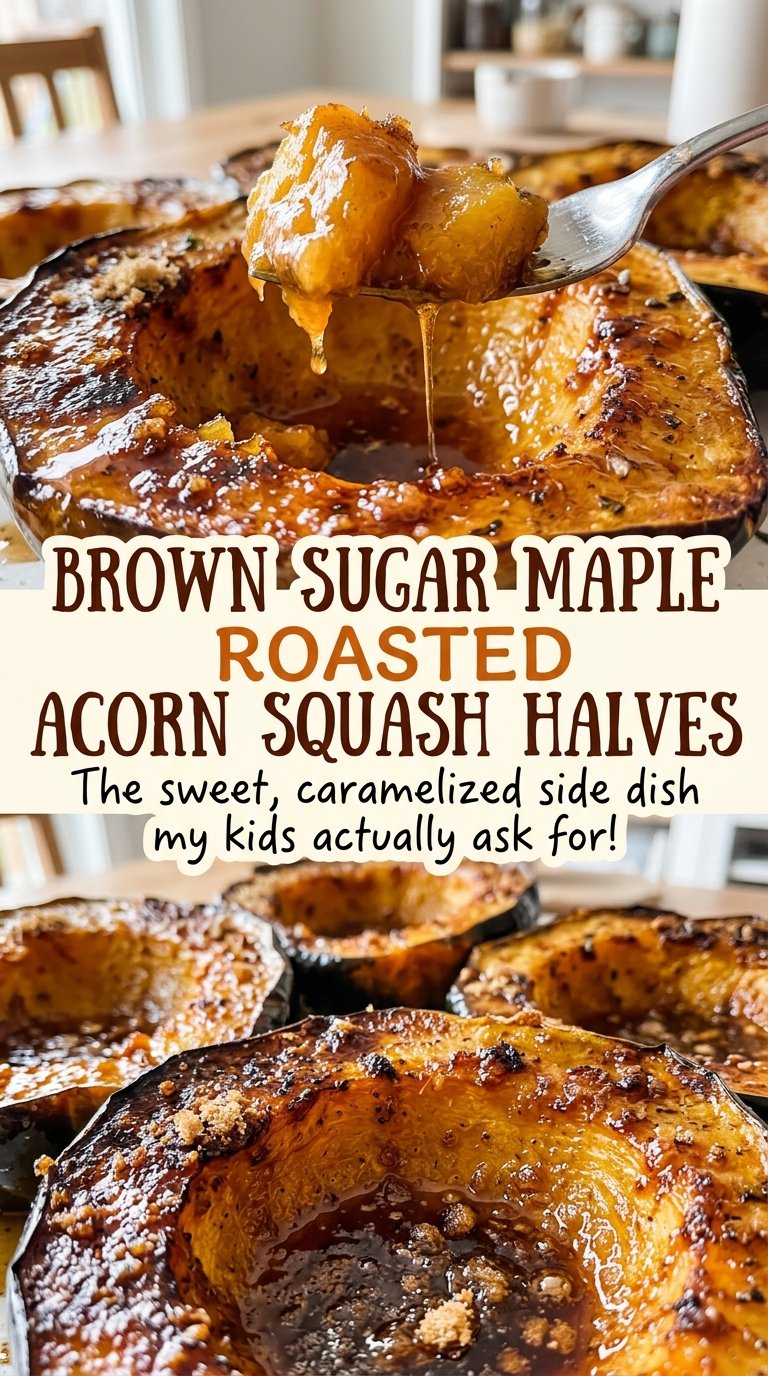
- Acorn squash — Medium squash make manageable halves with cavities deep enough to hold the glaze. Choose squash that feel firm and heavy for their size, with no soft spots. The skin stays on while the halves roast and helps each piece hold its shape.
- Unsalted butter — Melted butter gives the glaze a rich, smooth base and helps coat the squash instead of leaving the brown sugar dry. Unsalted butter keeps the seasoning in your control. For a dairy-free version, use the plant-based butter swap in the variations below.
- Light brown sugar — Its molasses notes deepen as the glaze heats, adding a caramel-like sweetness that plain granulated sugar wouldn’t bring. Pack it when measuring so you get the intended amount.
- Pure maple syrup — This is where the glaze gets its distinct maple flavor. Use pure maple syrup rather than pancake syrup; they’re different products, and pancake syrup changes both the flavor and consistency of the glaze.
- Ground cinnamon — Cinnamon gives the glaze a warm background note. Stir it thoroughly into the melted butter mixture so it doesn’t stay in a dry clump.
The Two-Stage Roast for Tender Squash and Bubbling Glaze
Set Up the Pan and Oven
Heat the oven to 400°F and line a rimmed baking sheet with parchment paper. The rim gives you a barrier around the squash and any glaze that escapes the cavities, while parchment makes the sheet easier to clean. Use a pan large enough to arrange the four halves cut-side down without stacking them. Getting the oven hot before the squash goes in keeps the first roast on schedule.
Stir Together the Butter Mixture
In a small bowl, stir the melted butter with the packed light brown sugar, pure maple syrup, ground cinnamon, and kosher salt. Keep stirring until the brown sugar is moistened and the cinnamon is distributed through the mixture. It doesn’t need to look perfectly smooth; the sugar will continue to melt as the glaze heats in the squash. Set the bowl aside while the halves complete their first roast.
Soften the Squash Cut-Side Down
Arrange the seeded squash halves cut-side down on the prepared baking sheet and roast for 25 minutes. They should sit steadily on the pan rather than wobble on top of one another. This first stretch gives the flesh time to soften before it’s turned and filled. Don’t add the glaze yet; it belongs in the cavities for the second roast.
Fill the Cavities and Finish Roasting
Turn each half cut-side up, then spoon the butter mixture evenly into the cavities. Return the pan to the oven for 15 to 20 minutes, until the flesh is fork-tender and the glaze is bubbling. If a fork meets firm resistance in the thickest part, the squash needs more time; tenderness is the useful cue, not the clock alone. Let the halves rest for 5 minutes before serving.
Simple Ways to Adapt These Squash Halves
Make the glaze dairy-free
Replace the unsalted butter with the same amount of unsalted plant-based butter. Stir it with the brown sugar, maple syrup, cinnamon, and salt just as you would the dairy butter. The glaze will still coat the squash, though its buttery flavor will depend on the brand you use.
Turn the roasted halves into a mash
For a softer, scoopable side, scrape the cooked squash flesh and the glaze from the cavities into a serving bowl, then mash them together with a fork. The squash loses its neat half shape, but the maple-butter mixture gets worked through every bite. Keep the skin behind as you scoop.
Storage and Reheating
- Refrigerator: Store cooled leftovers in an airtight container for 3 to 4 days. The squash will soften further, and the glaze may firm up when cold.
- Freezer: The cooked squash can be frozen in an airtight container for up to 2 months, though the flesh will be softer after thawing. Thaw it overnight in the refrigerator.
- Reheating: Warm leftovers covered in the microwave or oven until hot throughout. Keep them covered so the squash doesn’t dry out, and avoid reheating the halves uncovered for a long stretch.
Questions That Come Up With Roasted Acorn Squash
Brown Sugar Maple Roasted Acorn Squash Halves
Ingredients
Equipment
Method
- Heat the oven to 400°F.
- Line a rimmed baking sheet with parchment paper.
- Stir the melted butter, packed light brown sugar, pure maple syrup, ground cinnamon, and kosher salt together in a small bowl.
- Arrange the squash halves cut-side down on the baking sheet and roast for 25 minutes.
- Turn the squash cut-side up and spoon the butter mixture evenly into the cavities.
- Roast for 15 to 20 minutes, until the flesh is fork-tender and the glaze is bubbling.
- Rest for 5 minutes before serving.
