
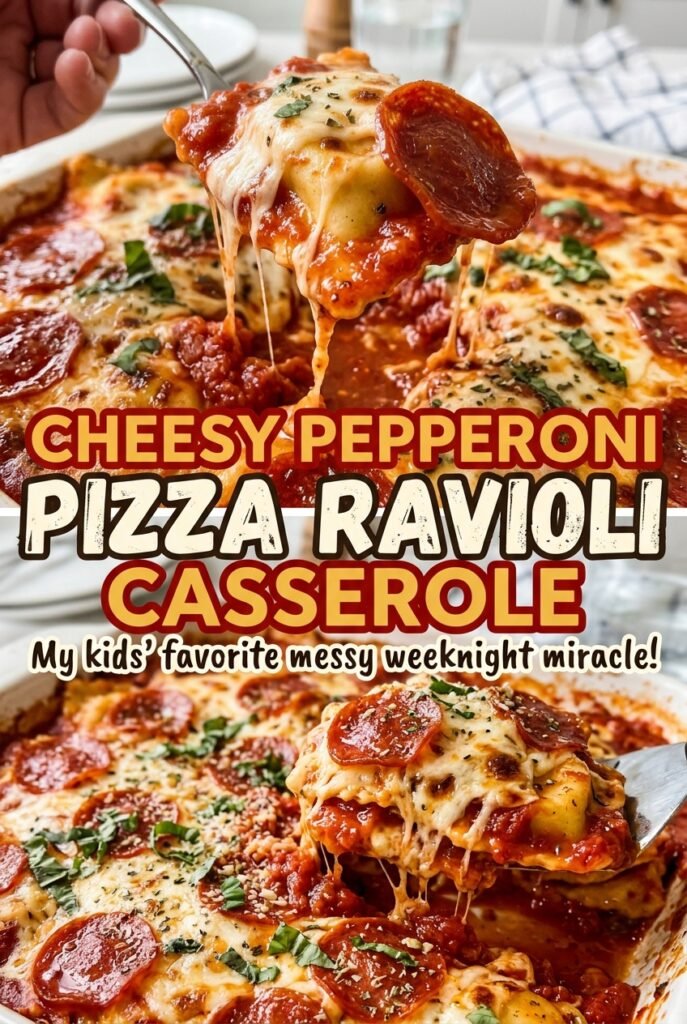
Cheesy Pepperoni Pizza Ravioli Casserole
As the foil lifts, the sauce should be bubbling at the edges, with the ravioli in the center tender when you pierce them. That covered bake is what turns frozen…
Tip: save now, read later.
As the foil lifts, the sauce should be bubbling at the edges, with the ravioli in the center tender when you pierce them. That covered bake is what turns frozen ravioli into a proper casserole without boiling a pot of water first. I make this Cheesy Pepperoni Pizza Ravioli Casserole in a 9×13-inch dish, layering the ravioli with a loosened marinara sauce so every piece cooks beneath the foil.
The sauce starts with jarred marinara, a little water, and Italian seasoning. That extra water matters: the frozen pasta needs moisture as it bakes, and a tight foil cover holds in the steam. Mozzarella and Parmesan go on only after the ravioli are tender, with pepperoni added right on top. The finished casserole comes out with bubbling cheese and those familiar pepperoni edges.
Kitchen Note
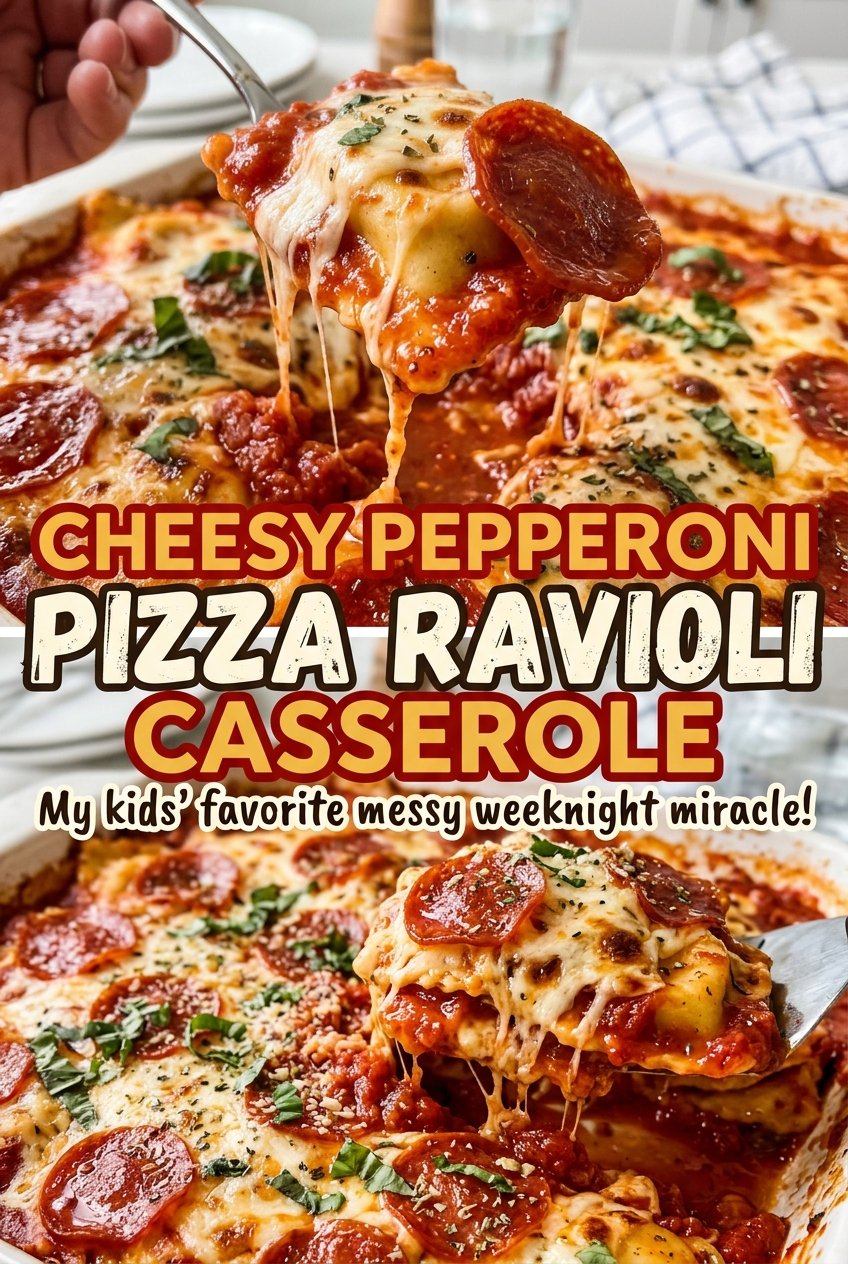
Give the casserole its full 10-minute rest, even when the cheese is still bubbling. The sauce settles around the ravioli, so the first scoop holds together instead of sliding apart.
Save this Cheesy Pepperoni Pizza Ravioli Casserole for a bubbling, cheesy dinner built from frozen ravioli and pantry marinara.
Why Frozen Ravioli Needs a Looser Sauce Than You’d Pour on Pasta
Frozen ravioli goes into this casserole without thawing or boiling, so it needs enough moisture around it to soften all the way through. Straight marinara is thick; adding water thins it into a sauce that can move between the layers while the ravioli bake. The water isn’t there to make the finished casserole soupy. It gives the pasta moisture during the covered part of the bake.
Layering matters just as much as thinning the sauce. A little sauce on the bottom keeps the first layer from sitting against a dry dish, and spreading sauce between and over the ravioli gives the whole casserole access to moisture. Then seal the foil tightly. If steam escapes, the top layer can dry before the center is tender. Keep the dish covered until a ravioli in the middle pierces easily; the uncovered bake is for melting the cheese and heating the pepperoni, not for cooking the pasta from firm to tender.
The Frozen Ravioli and Marinara Choices That Shape This Casserole
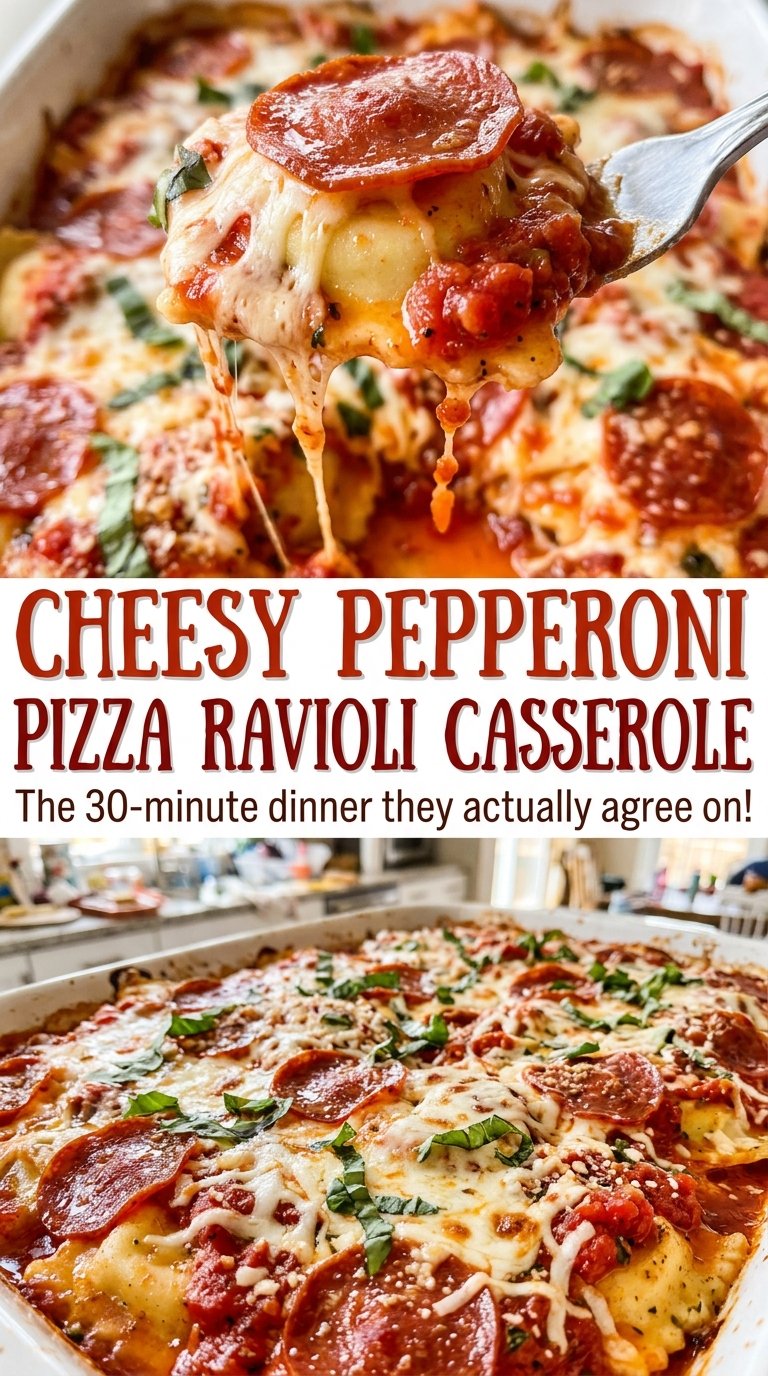
- Frozen cheese ravioli — Use it straight from the freezer; thawing changes how it holds up through the long covered bake. Choose ravioli you enjoy eating on its own, since the filling makes up the center of each bite. Small differences in shape are fine, but keep the ravioli in a single layer where possible.
- Marinara sauce — The jarred sauce brings tomato flavor and seasoning without extra prep. A familiar brand you like is a good choice; there’s no need for a specialty sauce. Keep it a marinara rather than a thick pizza sauce, which can make the finished dish taste more concentrated.
- Italian seasoning — This dried herb blend distributes evenly when stirred into the sauce. It’s a useful pantry choice here because there’s no chopping or separate cooking step. Stir it through the sauce before assembling so you don’t get concentrated pockets of herbs.
- Mozzarella — Shredded mozzarella gives the top its stretchy, mild layer. Low-moisture shredded mozzarella melts well; pre-shredded is convenient, though it may not melt quite as smoothly. Fresh mozzarella isn’t a close one-for-one swap here because it releases more moisture.
- Parmesan and pepperoni — Parmesan adds a salty, savory contrast to the mild mozzarella, while sliced pepperoni puts the pizza-inspired flavor on top. A tub of grated Parmesan is perfectly practical; use a vegetarian Parmesan if you’re making the meat-free variation. Thin pepperoni slices spread across the top without needing extra prep.
- Olive oil — A thin coating on the baking dish helps keep the edges from sticking. Brush it across the bottom and sides before you start layering; cooking spray can stand in if that’s what you have on hand.
Building the Layers So the Ravioli Cook Evenly
Grease the Dish and Loosen the Marinara
Heat the oven to 375°F and grease a 9×13-inch baking dish with the olive oil. Stir the marinara, water, and Italian seasoning together in a bowl until the seasoning is spread through the sauce. It will look thinner than marinara straight from the jar, which is what you want for baking frozen pasta. Mix it before you start layering so each spoonful has sauce and seasoning together.
Cover Every Layer with Sauce
Spread 1 cup of sauce over the bottom of the dish, then arrange half of the frozen ravioli in a single layer. Spoon 1 cup of sauce over that layer before adding the remaining ravioli. Finish by spreading the remaining sauce across the top, reaching the corners so exposed pasta isn’t left dry. Avoid thawing the ravioli while you assemble; the layers are easiest to arrange while the pasta is still firm.
Let the Covered Bake Tenderize the Center
Cover the dish tightly with foil and bake for 50–60 minutes. The foil needs to fit snugly around the dish so the steam stays inside and helps cook the pasta. Near the end of the bake, pierce a ravioli in the center rather than judging doneness from the edges alone. It should be tender, and the sauce should be bubbling around the edges before you add the topping.
Melt the Cheese and Finish the Top
Remove the foil and sprinkle the mozzarella and Parmesan over the casserole, then arrange the pepperoni on top. Bake uncovered for 10–15 minutes, until the cheese is melted and bubbling. The pepperoni sits on the surface, where it heats as the cheese melts. Take the casserole out and let it rest before serving so the layers settle into easier-to-scoop portions.
Three Topping and Filling Changes That Still Fit the Casserole
Make It Meat-Free with Vegetarian Pepperoni
Replace the sliced pepperoni with the same amount of vegetarian-labeled plant-based pepperoni and arrange it over the cheese in the same way. Use vegetarian Parmesan as well if needed. The cheese ravioli and mozzarella still contain dairy, so this makes a vegetarian casserole, not a vegan one.
Use Turkey Pepperoni for a Lighter Top
Swap in an equal amount of sliced turkey pepperoni. It keeps the familiar pepperoni seasoning while giving the topping a leaner, less greasy finish. Arrange it over the cheese just as you would regular pepperoni.
Turn Up the Pepperoni Heat
Choose hot or spicy sliced pepperoni instead of regular. The swap brings more heat to the cheesy top without changing the sauce or layering. If you’re serving people with different spice preferences, use regular pepperoni across the casserole and spicy slices on one side.
Storage and Reheating
- Refrigerator: Refrigerate leftovers within 2 hours and keep them for 3–4 days. The ravioli softens a little as it sits in the sauce.
- Freezer: Freeze cooled portions in airtight containers for up to 3 months. Thaw them in the refrigerator before reheating.
- Reheating: Cover a portion and reheat it in a 350°F oven until the center reaches 165°F. Leaving it uncovered for the whole reheat can dry out the pasta and cheese.
Questions That Come Up When Baking Ravioli Casserole
Cheesy Pepperoni Pizza Ravioli Casserole
Ingredients
Equipment
Method
- Heat the oven to 375°F.
- Grease a 9x13-inch baking dish with the olive oil.
- Stir the marinara sauce, water, and Italian seasoning together in a bowl.
- Spread 1 cup of the sauce in the baking dish.
- Arrange half of the frozen ravioli in a single layer over the sauce.
- Spoon 1 cup of sauce over the ravioli.
- Add the remaining ravioli, then spread the remaining sauce over the top.
- Cover the dish tightly with foil.
- Bake for 50-60 minutes, until the ravioli in the center is tender when pierced and the sauce is bubbling at the edges.
- Remove the foil and sprinkle the mozzarella and Parmesan over the casserole.
- Arrange the pepperoni on top.
- Bake uncovered for 10-15 minutes, until the cheese is melted and bubbling.
- Let the casserole rest for 10 minutes before serving.
