

Chocolate Orange Truffles
When the cream starts steaming, the chopped chocolate still looks like a pile of hard shards. That’s normal. I used to stir too soon, before the hot cream had time…
Tip: save now, read later.
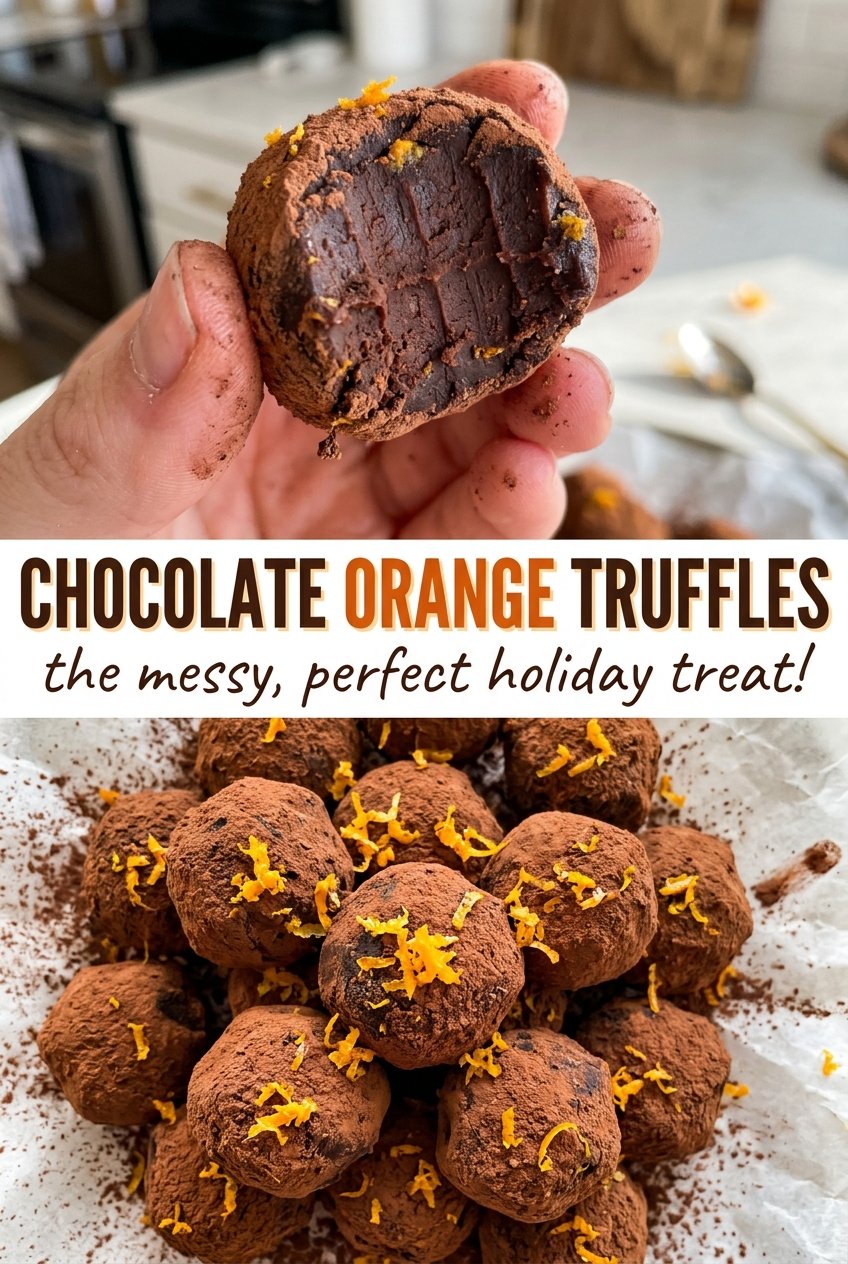
When the cream starts steaming, the chopped chocolate still looks like a pile of hard shards. That’s normal. I used to stir too soon, before the hot cream had time to soften the chocolate, and ended up chasing little stubborn pieces around the bowl. Give it five quiet minutes first, and these chocolate orange truffles turn into a smooth, fragrant ganache.
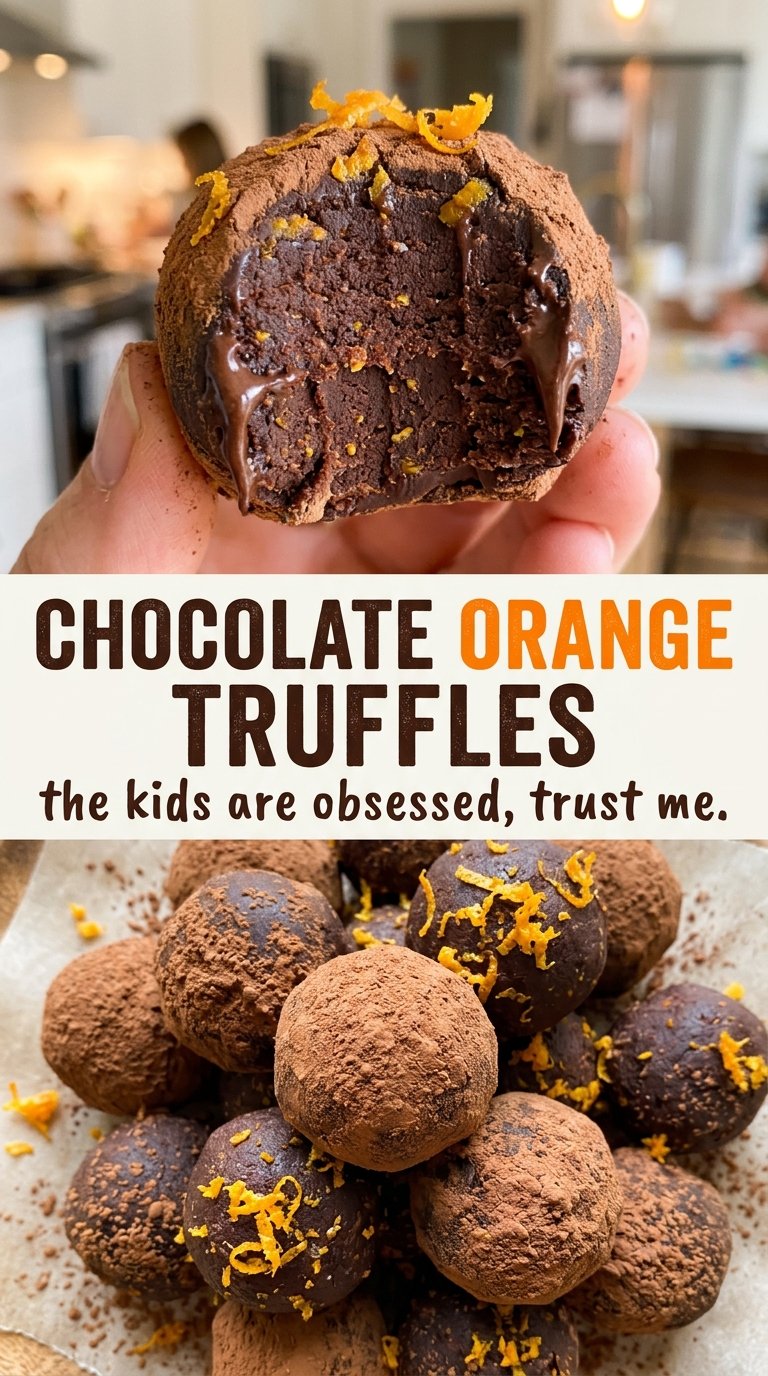
Bittersweet chocolate gives each bite a deep cocoa flavor, while orange zest and extract bring the citrus through without making the center taste like candy. The cocoa coating adds a pleasantly dry, slightly bitter finish. They’re rich, tender truffles with enough orange to notice and a soft center that firms up neatly in the refrigerator.
Kitchen Note
Roll each portion quickly between your palms. Your hands warm the ganache fast, so a quick pass is enough to make a round truffle without turning the surface sticky.
Save these chocolate orange truffles for a make-ahead treat with a smooth ganache center and a cocoa-dusted finish.
Why the Cream Should Steam, Not Boil, Before It Hits the Chocolate
Ganache depends on a balance: hot cream softens the chocolate, and the chocolate melts into the cream as you stir. You don’t need a rolling boil to get there. Heat the cream just until it’s steaming, with small bubbles at the edge of the pan, then pour it over the finely chopped chocolate. If the cream boils hard, it can lose moisture, and the mixture may be harder to bring together smoothly.
Letting the bowl sit undisturbed for five minutes gives the heat time to work through the chocolate. Stir after that pause, starting near the center and widening your circles as the mixture turns glossy. The ganache may look uneven at first; keep stirring until no chopped pieces remain. Add the butter and orange extract once the chocolate and cream are smooth, so the butter can melt into an even, silky center instead of sitting in greasy streaks.
What the Chocolate, Orange, and Cocoa Each Bring
- Bittersweet chocolate — Choose a bar in the 60% to 70% cacao range and chop it finely. The smaller pieces melt more evenly under the hot cream; large chunks can leave you with unmelted bits after stirring. A good-quality bar is worth using here because chocolate makes up the center, but either end of the specified cacao range works: 60% tastes rounder and sweeter, while 70% brings a more pronounced cocoa bite.
- Heavy cream — Its fat gives the ganache a rich, soft texture that sets firm enough to scoop after chilling. Milk isn’t a reliable one-for-one swap; the lower fat content changes how the chocolate mixture sets. Use heavy cream rather than trying to thin the mixture with a lighter dairy option.
- Orange zest and orange extract — Finely grated zest carries fragrant citrus oils, while the extract makes the orange note more distinct in the chocolate. A fresh orange with an unblemished peel is useful because the zest does the aromatic work; grate only the colored outer peel, not the bitter white pith. The extract is measured separately from the zest, so both contribute to the finished flavor.
- Unsalted butter — Stirring it in after the ganache turns smooth adds a satiny finish and helps the centers feel tender when you bite through the cocoa. Unsalted butter keeps the chocolate and orange flavors in front. Oil isn’t a good substitute because it won’t give the chilled centers the same buttery texture.
- Unsweetened cocoa powder — This is more than decoration: its dry, pleasantly bitter coating balances the rich center and keeps the outside from feeling sticky. A basic unsweetened cocoa powder is fine; sweetened hot-cocoa mix won’t give the same clean finish.
From Steaming Cream to Cocoa-Coated Truffles
Warm the Cream Until the Edges Bubble
Put the finely chopped chocolate in a heatproof bowl. Warm the heavy cream and orange zest together in a small saucepan over medium heat for about 3 to 5 minutes, watching for steam and small bubbles around the edge. Don’t let the cream boil. If the center of the pan starts bubbling vigorously, take it off the heat rather than letting it keep cooking.
Give the Chocolate Time to Melt
Pour the hot cream over the chocolate and leave it alone for 5 minutes. The pieces soften during this pause, which makes the next stir much easier. Stir until the ganache looks smooth, then mix in the butter and orange extract until the butter has melted and disappeared into the chocolate. If you still see chocolate pieces, keep stirring gently rather than adding more cream.
Chill Until the Ganache Can Hold a Scoop
Cover the bowl and refrigerate the mixture for 2 to 3 hours. It’s ready when a spoonful holds its shape instead of spreading back into the bowl. If the center still feels loose, give it more chilling time before shaping; soft ganache smears rather than rolling neatly. A covered bowl also keeps the chocolate from picking up refrigerator odors.
Roll, Coat, and Firm the Centers
Put the cocoa powder in a shallow bowl, then scoop the chilled ganache into 24 portions of about 1 tablespoon each. Roll each portion quickly between your palms into a ball and roll it in cocoa to coat. Set the finished truffles back in the refrigerator for at least 30 minutes before serving. If the ganache becomes too soft to handle as you work, return it to the refrigerator until it firms up again.
Two Small Changes That Shift the Chocolate-Orange Balance
Choose the sweeter end of the chocolate range
Use bittersweet chocolate closer to 60% cacao for a softer, sweeter cocoa flavor. The orange comes through more gently against it, and the truffles taste less intense than they do with chocolate near 70% cacao.
Make the orange more subtle
Leave out the orange extract but keep the finely grated orange zest. The zest still lends a fresh citrus aroma, while the truffles become more chocolate-forward and less distinctly orange.
Storage and Reheating
- Refrigerator: Store the truffles in an airtight container for up to 1 week. The cocoa coating may darken or absorb a little moisture over time, but the centers stay rich.
- Freezer: Freeze them in an airtight container for up to 2 months, with parchment between layers so the cocoa coating stays intact. Thaw them in the refrigerator while still covered.
- Reheating: These truffles don’t need reheating. Serve them chilled, or let them soften briefly at room temperature; microwaving can melt the centers unevenly.
Questions That Come Up While Making Chocolate Orange Truffles
Chocolate Orange Truffles
Ingredients
Method
- Put the chopped chocolate in a heatproof bowl.
- Heat the cream and orange zest in a small saucepan over medium heat until steaming and small bubbles form around the edge, about 3 to 5 minutes; do not let it boil.
- Pour the hot cream over the chocolate and let it stand for 5 minutes.
- Stir until smooth.
- Stir in the butter and orange extract until the butter is melted and fully combined.
- Cover the bowl and refrigerate for 2 to 3 hours, until the mixture is firm enough to scoop.
- Put the cocoa powder in a shallow bowl.
- Scoop the chilled mixture into 24 portions, about 1 tablespoon each.
- Roll each portion quickly between your palms into a ball.
- Roll the truffles in the cocoa powder to coat.
- Refrigerate for at least 30 minutes to firm before serving.
