
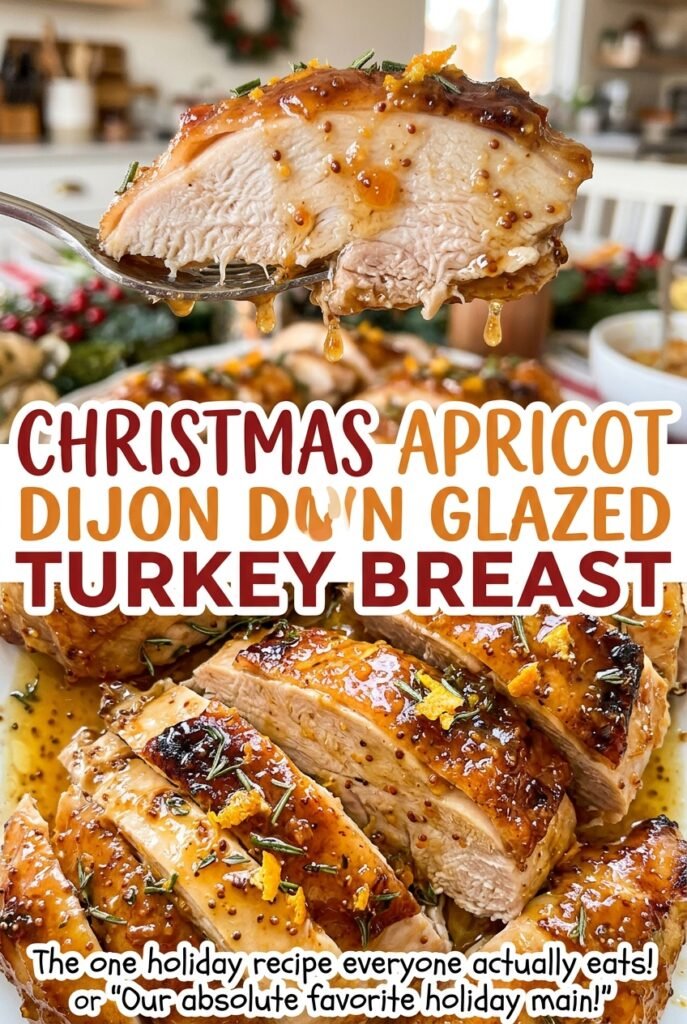
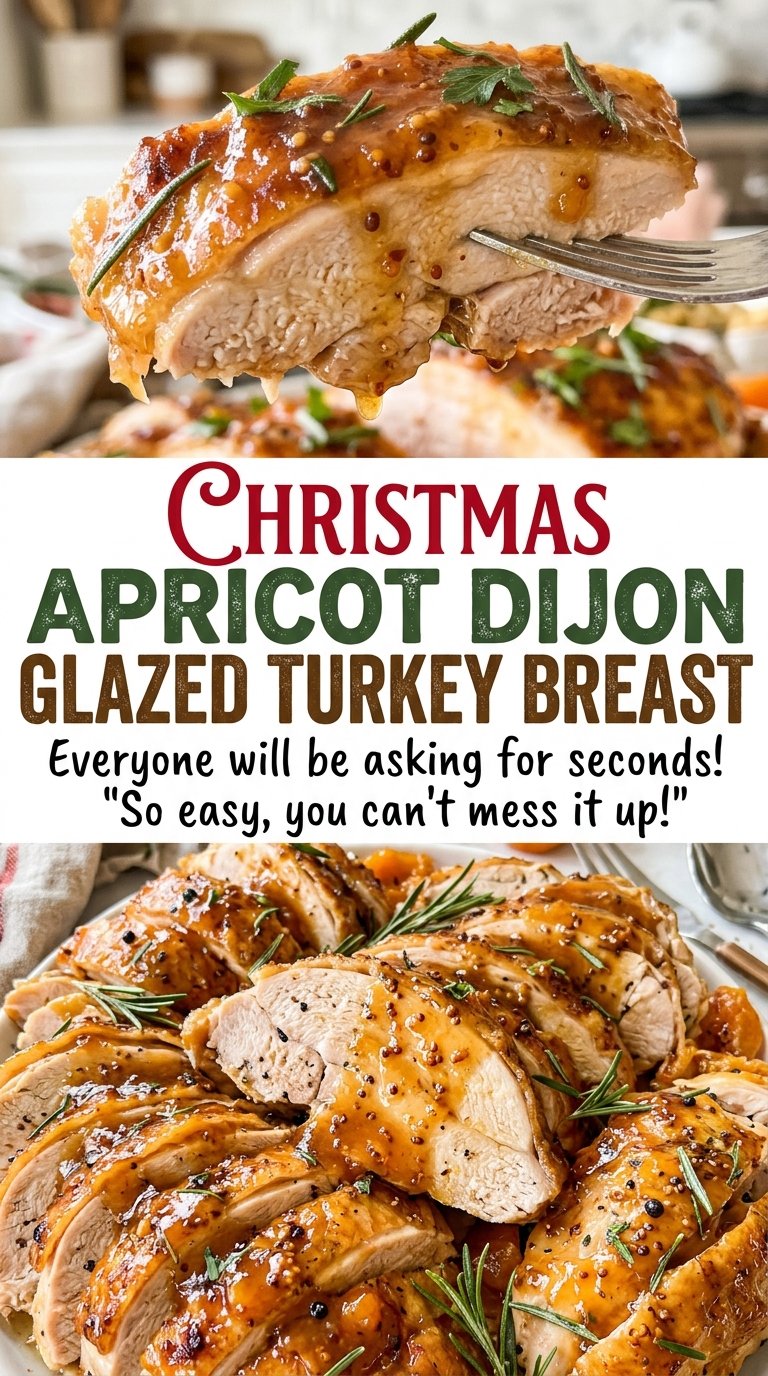
Christmas Apricot Dijon Glazed Turkey Breast
When apricot preserves warm with Dijon, vinegar, and butter, the glaze turns glossy and starts to bubble gently in just a few minutes. That sweet-tangy coating gives a roast turkey…
Tip: save now, read later.
When apricot preserves warm with Dijon, vinegar, and butter, the glaze turns glossy and starts to bubble gently in just a few minutes. That sweet-tangy coating gives a roast turkey breast a festive finish without making the whole meal feel like a project. I like this one for a smaller table: you get the familiar centerpiece, but the cooking stays manageable and the slices look handsome on a platter.
The timing of the glaze matters more than the stirring. It goes onto the turkey only after the thickest part reaches 145°F, then gets brushed on again every 10 minutes while the breast finishes roasting. That gives the fruit glaze time to cling and color without sitting in the oven from the start. With a bone-in, skin-on breast, olive oil, salt, and pepper do the simple work underneath; the apricot Dijon finish brings the bright, glossy bite.
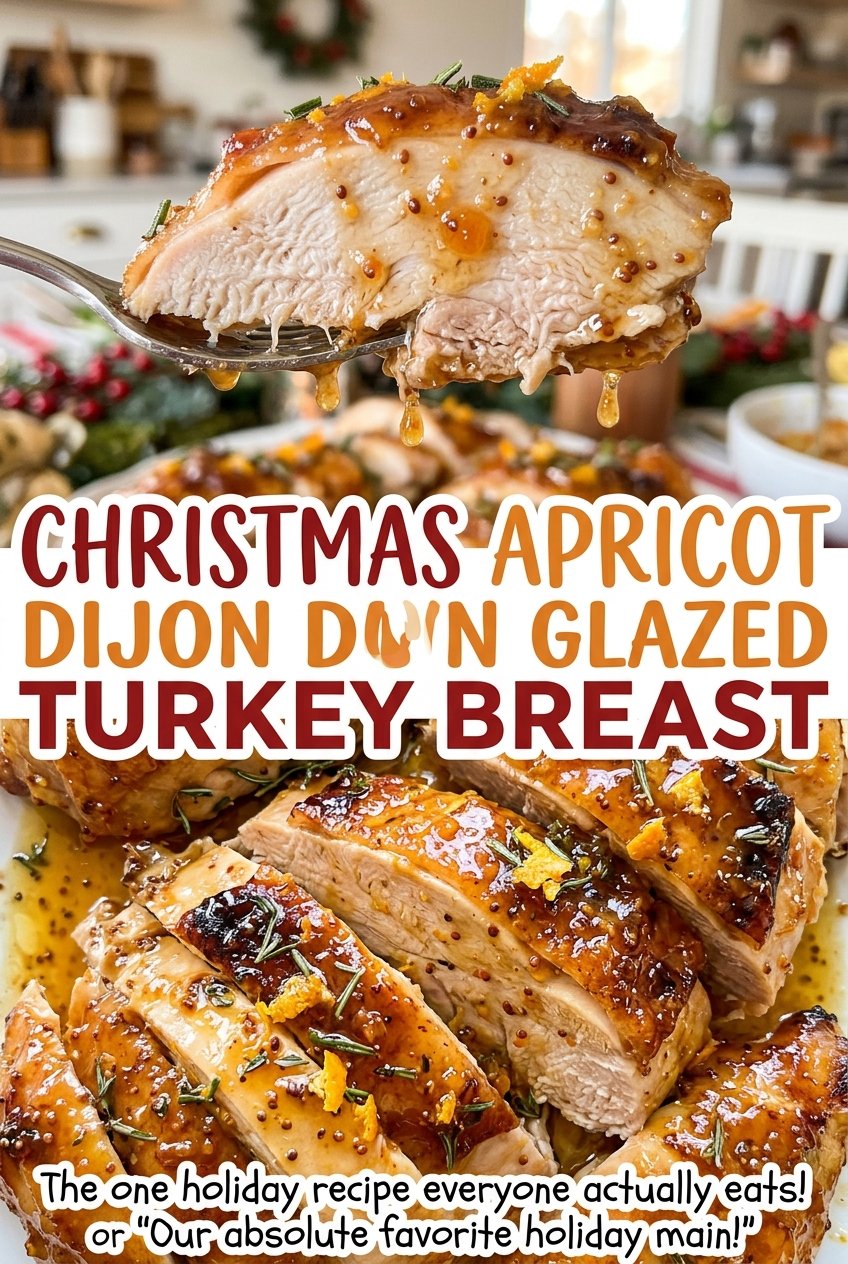
Kitchen Note
Set aside the serving glaze before you brush anything onto the turkey, and use a clean bowl for it. Keeping that portion separate means you can bring it to the table without worrying about glaze that has touched raw poultry.
Save this Christmas Apricot Dijon Glazed Turkey Breast for a centerpiece with tender slices and a sweet-tangy finish.
Why the Apricot Glaze Goes On Near the End
Fruit preserves bring natural sugars to the surface of the turkey, and those sugars can darken quickly during a long roast. Brushing the glaze on at the 145°F mark keeps it from spending the entire cooking time in the oven. The turkey still gets several rounds of glaze as it finishes, so the coating has time to settle onto the skin and turn shiny without starting out exposed to the heat.
Keep the oven at 350°F and follow the thermometer rather than trying to judge the finish by color alone. The glaze can look beautifully bronzed before the thickest part of the breast is ready, especially where it gathers along the skin. Insert the thermometer into the thickest part without touching bone; the bone can give you a misleading reading. If you brush on each layer gently, you’ll keep the coating in place instead of wiping it off the skin.
This timing also leaves the reserved portion tasting bright and fresh at the table. The glaze that cooks on the turkey becomes deeper and more savory, while the clean serving portion keeps its sharper apricot-and-Dijon character. A small spoonful alongside each slice gives diners a choice without covering up the roasted turkey.
What the Apricot, Dijon, and Vinegar Each Bring
- Apricot preserves — These give the glaze its fruit sweetness and help it cling to the skin. Choose preserves with a flavor you enjoy on its own; a basic grocery-store jar works well here. Peach preserves can stand in at the same amount, with a softer, less tangy fruit note.
- Dijon mustard — Dijon contributes a clean mustard bite that keeps the preserves from tasting one-dimensionally sweet. A familiar smooth Dijon is all you need; whole-grain mustard works in its place if you like visible mustard seeds and a more textured finish.
- Apple cider vinegar — Its acidity sharpens the glaze and balances the fruit. There’s no need for a specialty bottle; standard apple cider vinegar is right for this job, and swapping in a very different vinegar would shift the glaze away from its gentle apple-fruit edge.
- Unsalted butter — Butter rounds out the sharp ingredients and gives the warm glaze a silkier finish. For a dairy-free version, leave it out; the glaze will be less rich but still work as a fruit-and-mustard coating.
- Bone-in, skin-on turkey breast — The bone and skin are part of what makes this roasting method work, helping protect the meat while the outside browns. Buy it thawed, and pat the skin dry before seasoning so the oil and glaze have a dry surface to coat.
- Olive oil, kosher salt, and black pepper — The oil helps the seasonings spread across the breast, while salt and pepper give the turkey a savory base beneath the glaze. Regular olive oil is suitable; there’s no need to use an especially delicate or expensive one for roasting.
Roasting the Breast So the Glaze Stays Glossy
Warm the glaze until smooth
Combine the apricot preserves, Dijon, apple cider vinegar, and butter in a small saucepan over medium-low heat. Stir for 2 to 3 minutes, watching for a smooth mixture with gentle bubbles rather than a hard boil. Take 1/4 cup and transfer it to a clean bowl for serving. Keep the rest separate for brushing onto the turkey.
Set up the turkey for even roasting
Heat the oven to 350°F and place a rack in a 9×13-inch roasting pan. Pat the thawed breast dry with paper towels, then set it skin-side up on the rack. Rub it with olive oil and season all over with kosher salt and black pepper. The rack lets hot air circulate around the breast, so don’t lay it flat in the bottom of the pan.
Roast first, then brush in layers
Roast the turkey uncovered for 1 1/2 to 2 1/4 hours total. When the thickest part reaches 145°F, brush it with the remaining glaze and reapply every 10 minutes as it continues to roast. If the glaze starts to collect in the pan, keep the next coat light and spread it over the skin rather than pouring it on. The turkey is ready when a thermometer in the thickest part, not touching bone, reads 165°F.
Rest before carving
Move the turkey to a cutting board and tent it loosely with foil. Leave it to rest for 20 minutes before carving; cutting immediately lets more of the juices run onto the board. Carve into slices and serve with the reserved glaze. The brief rest also gives you time to bring the serving bowl to the table while the turkey settles.
Easy Swaps for a Different Apricot Dijon Turkey
Use peach preserves for a softer fruit note
Replace the apricot preserves with the same amount of peach preserves. The glaze will stay sweet and glossy, but the fruit flavor will be gentler and less distinctly tart than apricot.
Choose whole-grain mustard for extra texture
Use whole-grain mustard in place of Dijon in the same amount. Its seeds make the glaze more textured and give each slice a little more mustard presence, while the apricot still keeps the overall taste sweet and bright.
Make the glaze dairy-free
Leave out the butter and warm the preserves, Dijon, and vinegar together until smooth and gently bubbling. The result is a little less rounded and silky, but the apricot-mustard glaze still coats the turkey.
Storage and Reheating
- Refrigerator: Refrigerate leftover turkey within 2 hours and keep it covered for 3 to 4 days. The skin softens as it sits.
- Freezer: Freeze carved turkey in an airtight container for up to 2 to 3 months for best quality. Thaw it in the refrigerator before reheating.
- Reheating: Warm slices covered in the oven or in a covered skillet until they reach 165°F. Avoid prolonged uncovered heating, which dries the lean breast meat.
Questions That Come Up When Roasting a Turkey Breast
Christmas Apricot Dijon Glazed Turkey Breast
Ingredients
Equipment
Method
- Combine the apricot preserves, Dijon mustard, vinegar, and butter in a small saucepan over medium-low heat, stirring until smooth and gently bubbling, 2 to 3 minutes.
- Transfer 1/4 cup glaze to a clean bowl for serving and set aside; keep the remaining glaze for brushing on the turkey.
- Heat the oven to 350°F and set a rack in a 9x13-inch roasting pan.
- Pat the turkey breast dry with paper towels and place it skin-side up on the rack.
- Rub the turkey with the olive oil, then season it all over with the salt and pepper.
- Roast uncovered for 1 1/2 to 2 1/4 hours total, brushing with the remaining glaze when the thickest part reaches 145°F and reapplying every 10 minutes, until a thermometer inserted in the thickest part without touching bone reads 165°F.
- Transfer the turkey to a cutting board, tent loosely with foil, and rest for 20 minutes before carving.
- Serve with the reserved glaze.
