

Christmas Brown Butter Pecan Blondies
The butter starts out quiet, then turns foamy and suddenly smells toasted and nutty. That’s the moment to watch closely: the milk solids shift to amber quickly, and those browned…
Tip: save now, read later.
The butter starts out quiet, then turns foamy and suddenly smells toasted and nutty. That’s the moment to watch closely: the milk solids shift to amber quickly, and those browned bits are what give Christmas Brown Butter Pecan Blondies their deep, almost toffee-like flavor. I stir often and keep my attention on the pan rather than stepping away.
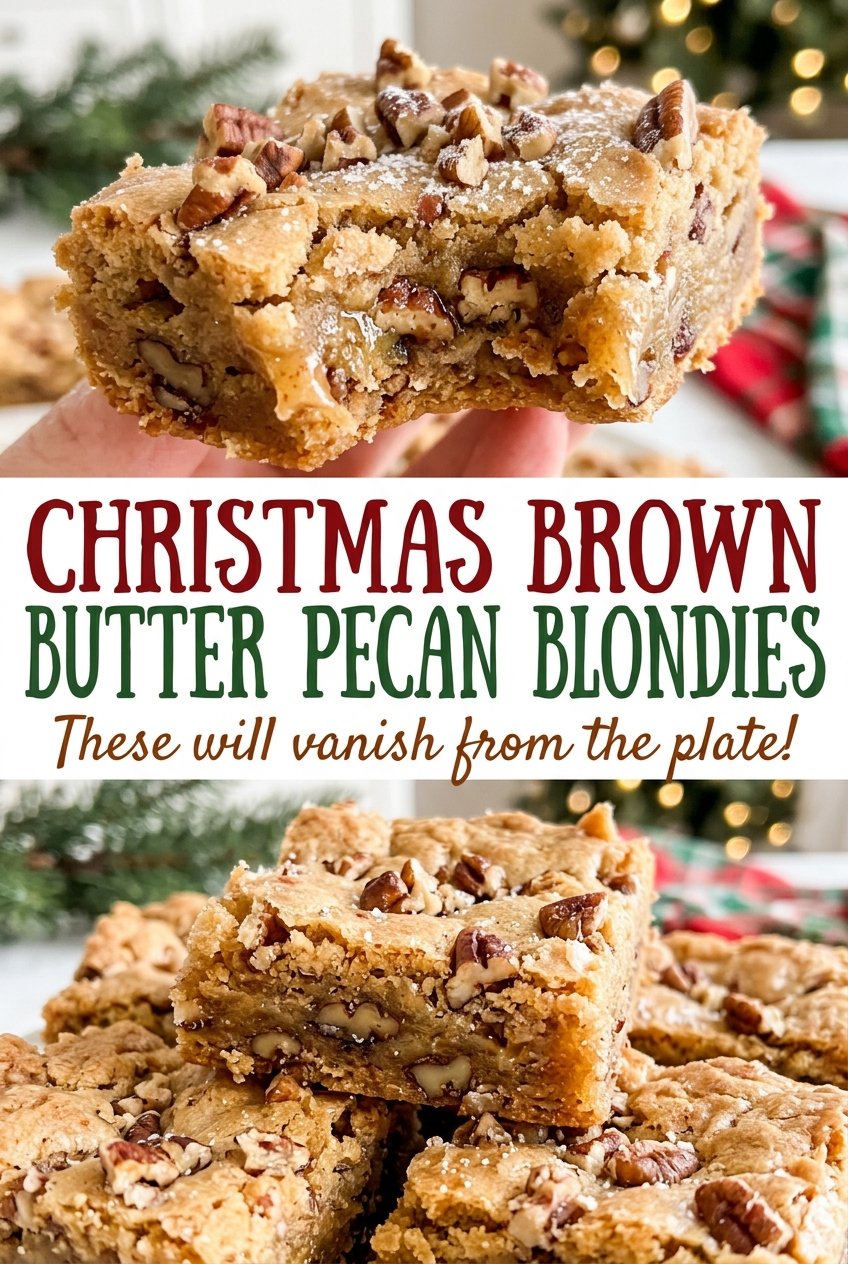
These blondies have a chewy center, set edges, and pecans in every bite. Brown sugar keeps the crumb soft, while an extra egg yolk gives the batter richness without making it cakey. I let the butter cool for 10 minutes before adding the eggs; warm is fine, but piping hot butter can scramble them. Once baked, the bars need to cool completely before cutting, which gives the center time to set into neat, tender squares.
Kitchen Note
Leave the parchment overhang on two sides, and don’t rush the cooling. Once the pan is completely cool, those paper handles lift the slab out cleanly, so you can cut bars without digging into the corners.
Save these Christmas Brown Butter Pecan Blondies for chewy bars with nutty browned butter and a little cinnamon warmth.
Why the Browned Butter Needs a Few Minutes to Cool
Browned butter brings plenty of heat into the mixing bowl, and adding eggs before it cools can leave you with bits of cooked egg instead of a smooth batter. That short cooling pause also gives the brown sugar a chance to dissolve into the butter when you whisk them together. The mixture should still be warm when the eggs go in, not steaming hot.
The order matters here. Whisk the sugar into the warm butter first, then whisk in the eggs, extra yolk, and vanilla until smooth. If the butter has cooled until firm, it won’t blend with the sugar as easily; if it’s too hot, the eggs are at risk. Ten minutes gives it time to settle while keeping it fluid enough to mix. You’ll end up with a cohesive batter that spreads easily and bakes into a dense, tender blondie rather than a greasy or eggy one.
That balance is what makes browned butter worth the small bit of attention it asks for. You get the toasted flavor from the butter without sacrificing the soft center that makes a blondie a blondie.
What the Brown Sugar, Extra Yolk, and Pecans Bring to These Bars
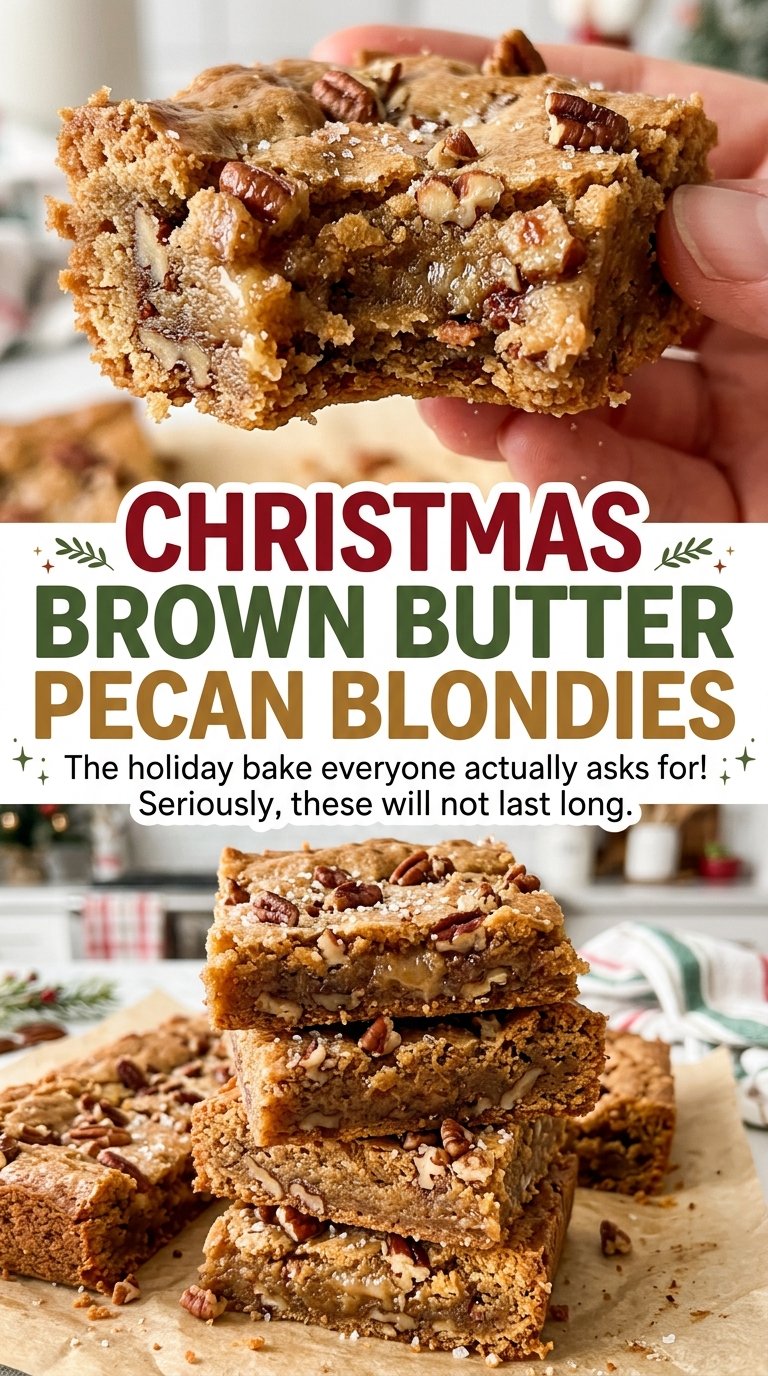
- Unsalted butter — Browning it builds the toasted flavor that defines these bars, while starting with unsalted butter lets the measured fine salt stay in control. Watch for amber milk solids rather than relying on color alone in the butter itself; the nutty smell is a helpful cue.
- Light brown sugar — Its moisture helps keep the interior chewy, and its molasses notes pair naturally with the browned butter. Packed brown sugar gives a consistent amount, so press it into the measuring cup rather than scooping it loosely.
- Eggs and an extra yolk — The eggs bind the batter, while the yolk adds richness to the center. Use large eggs and bring them to the bowl after the butter has cooled, so they whisk in smoothly.
- All-purpose flour — Spoon it into the measuring cup and level the top; scooping directly from the bag can pack in too much and make the bars dry. The flour gives the batter structure, so fold only until the last dry streaks disappear.
- Pecans — Chopped pecans bring a buttery crunch that complements the browned butter. If you need a pecan-free batch, leave them out; the blondies will have a softer, less textured bite, but the base batter still works.
- Cinnamon — A small amount gives the bars a gentle warmth without turning them into a spice-forward bake. Ground cinnamon is all you need; whisk it with the flour so it disperses evenly.
From Foaming Butter to Bars That Cut Cleanly
Brown the Butter Until the Solids Turn Amber
Melt the butter in a medium saucepan over medium heat, stirring often for 5 to 8 minutes. It will foam as it cooks, then the milk solids on the bottom will deepen to amber and the butter will smell nutty. Transfer it to a large heatproof bowl as soon as it reaches that point; leaving it in the hot saucepan can carry the browning further. Let it cool for 10 minutes before mixing in the sugar.
Whisk the Warm Butter Mixture Smooth
Whisk the packed brown sugar into the warm browned butter until combined. Add the eggs, egg yolk, and vanilla, then whisk until the mixture looks smooth. In a separate bowl, whisk together the flour, baking powder, cinnamon, and salt. Keeping the dry ingredients together first helps the leavening and cinnamon distribute throughout the batter.
Fold Until the Flour Disappears
Add the flour mixture to the butter mixture and fold just until no dry streaks remain. Stop there; mixing beyond that point can make the bars tougher. Fold in the chopped pecans, keeping the strokes gentle so they stay distributed through the thick batter. Scrape the bowl as you go, since a pocket of flour at the bottom can hide until the batter is in the pan.
Bake to Moist Crumbs, Then Cool Completely
Heat the oven to 350°F and line a 9×13-inch metal pan with parchment, leaving overhang on two sides; spray the parchment and exposed pan sides with nonstick cooking spray. Spread the batter evenly and bake for 25 to 30 minutes. Look for set edges and a toothpick from the center with a few moist crumbs, not wet batter. Cool completely in the pan, about 1 hour, then lift out with the parchment and cut into bars.
Small Changes for a Different Batch of Pecan Blondies
Make a Pecan-Free Batch
Leave out the pecans for a softer blondie with no nut crunch. If you’re baking for someone with a pecan allergy, take cross-contact seriously and use clean equipment and ingredients that haven’t been exposed to pecans.
Let the Browned Butter Lead
Omit the cinnamon for a more direct browned-butter and brown-sugar flavor. The bars keep their chewy texture, but the warm spice note steps back so the toasted butter comes through more clearly.
Cut Smaller Pieces for a Cookie Tray
Cut the cooled slab into smaller bars when you want bite-size portions. The recipe stays the same; the smaller pieces simply make the rich, chewy texture easier to serve alongside other treats.
Storage and Reheating
- Refrigerator: Store the cut bars in an airtight container for up to 5 days. Chilling firms the centers, so let them sit briefly at room temperature before serving if you prefer a softer bite.
- Freezer: Freeze the bars in a single layer until firm, then transfer them to an airtight freezer-safe container for up to 2 months. Thaw before serving.
- Reheating: Warm an individual bar in the microwave for about 8 to 10 seconds if you’d like it soft. Longer heating can dry the edges, so use a short burst.
Questions That Come Up While Baking These Blondies
Christmas Brown Butter Pecan Blondies
Ingredients
Equipment
Method
- Heat the oven to 350°F.
- Line a 9x13-inch metal baking pan with parchment paper, leaving overhang on two sides.
- Coat the parchment and exposed pan sides with nonstick cooking spray.
- Melt the butter in a medium saucepan over medium heat, stirring often, for 5 to 8 minutes, until it smells nutty and the milk solids are amber.
- Transfer the browned butter to a large heatproof bowl and cool for 10 minutes.
- Whisk the brown sugar into the warm browned butter until combined.
- Whisk in the eggs, egg yolk, and vanilla until smooth.
- In a separate bowl, whisk together the flour, baking powder, cinnamon, and salt.
- Fold the flour mixture into the butter mixture just until no dry streaks remain.
- Fold in the pecans.
- Spread the batter evenly in the prepared pan.
- Bake for 25 to 30 minutes, until the edges are set and a toothpick inserted in the center comes out with a few moist crumbs.
- Cool completely in the pan, about 1 hour.
- Lift out the blondies using the parchment and cut into bars.
