

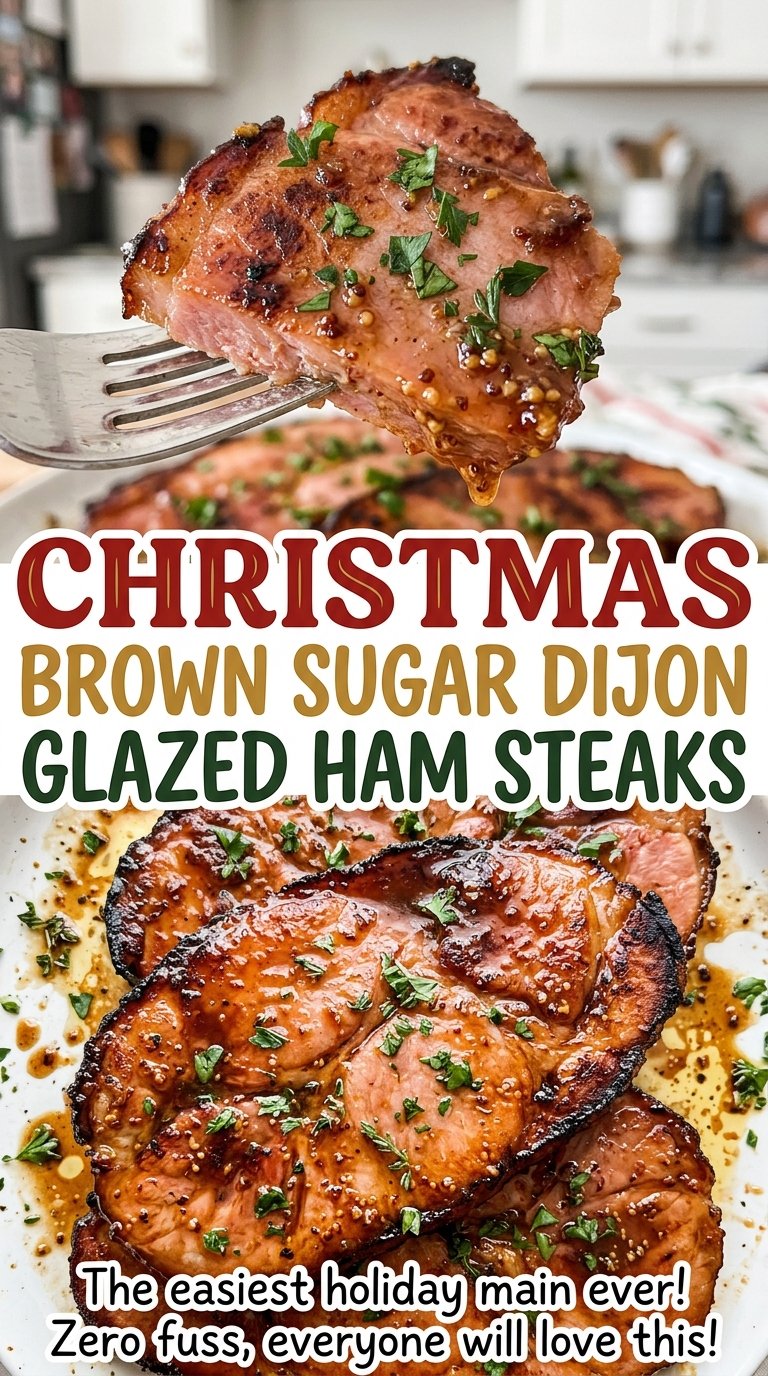
Christmas Brown Sugar Dijon Glazed Ham Steaks
The glaze is the part that can go from quietly bubbling to scorched while you’re watching the ham, so I keep the skillet at medium-low and stir as it cooks.…
Tip: save now, read later.
The glaze is the part that can go from quietly bubbling to scorched while you’re watching the ham, so I keep the skillet at medium-low and stir as it cooks. Once the butter melts and the mixture bubbles, the brown sugar, Dijon, orange juice, and cloves come together into a sweet-tangy coating that clings to the ham instead of tasting like plain sugar.
These Christmas Brown Sugar Dijon Glazed Ham Steaks make a festive meal without the hours of roasting a whole ham. The steaks are fully cooked and thin, so a quick sear and a short finish in the glaze are all they need. I like that the orange and mustard keep the brown sugar from taking over, while a small pinch of cloves brings a warm holiday note. You get glossy, flavorful ham in one skillet, with four servings from two steaks.

Kitchen Note
Keep stirring the glaze over medium-low heat until the butter has melted and the mixture is bubbling. Turning up the heat to hurry it can scorch the sugar before the ham is ready to go back in.
Save these Christmas Brown Sugar Dijon Glazed Ham Steaks for a holiday meal with a glossy, sweet-tangy finish and no whole-ham roast to manage.
Why These Ham Steaks Need a Glaze, Not a Long Roast
A ham steak is a different job from a whole holiday ham. These boneless steaks are already fully cooked, and at about half an inch thick they don’t need a long stretch in the oven to become tender. The goal here is a quick sear for a little color, followed by a brief turn in the skillet glaze so the surface gets coated and the center heats through.
The glaze balances several strong notes instead of asking brown sugar to do all the work. Dijon brings a sharp, savory edge; orange juice keeps the sweetness from feeling heavy; and ground cloves add a warm aroma in a small dose. That balance matters because ham already has a pronounced savory, salty taste. A coating that’s only sweet can overwhelm it, while the mustard and citrus give each bite a little lift. Think of the glaze as a bright, sticky finish, not a thick sauce meant to hide the ham.
That quick skillet approach also keeps the cooking focused. The ham gets its own short sear, then the glaze cooks in the same pan, where the butter and other glaze ingredients can bubble together before the steaks return. No separate saucepan or long roasting window is needed.
What Gives This Glaze Its Sweet-Tangy Balance
- Fully cooked boneless ham steaks — The half-inch thickness is useful here: it lets the steaks warm through quickly without a long cook. Choose fully cooked steaks rather than raw ham; raw ham needs a different cooking approach. The boneless kind is easy to portion, and the specified thickness helps the timing stay predictable.
- Neutral oil — A small amount helps the ham make contact with the hot skillet without adding a competing flavor. A basic neutral cooking oil is fine; there’s no need for an expensive bottle. Another neutral oil, such as canola or vegetable oil, works in the same role.
- Unsalted butter — Butter gives the glaze a rounded, rich base. Unsalted butter keeps the seasoning level easier to control alongside the ham; if salted butter is what you have, it can stand in, though the finished glaze may taste a little saltier.
- Light brown sugar — Its soft, mild molasses note sweetens the glaze and helps it cling. Dark brown sugar can replace it in the same amount for a deeper molasses flavor and a darker glaze. Pack either kind into the measuring cup so the quantity is consistent.
- Dijon mustard — Dijon supplies the sharp, smooth mustard note that keeps the brown sugar from tasting flat. Whole-grain mustard can work in the same amount, but its seeds give the coating a more textured, rustic look. A mild yellow mustard will taste simpler and sharper, so Dijon is the better choice when you want the intended balance.
- Orange juice and ground cloves — Orange juice adds citrus brightness and helps loosen the glaze as it bubbles. Carton or freshly squeezed juice both work; strained juice gives the smoothest coating. Ground cloves contribute a warm, distinctive aroma, so use them sparingly; if you leave them out, the glaze will still work but will lose that holiday-spice note.
The Skillet Sequence That Keeps the Ham Juicy
Sear the Steaks Briefly
Heat the neutral oil in a 12-inch skillet over medium heat. Add the two ham steaks and cook them for 2 minutes per side; they should pick up a little color without lingering in the pan. Transfer them to a plate once both sides have had their sear. Keeping this stage brief leaves the glaze time to finish the warming without overcooking the ham.
Stir the Glaze Until It Bubbles
Add the butter, brown sugar, Dijon mustard, orange juice, and ground cloves to the same skillet. Stir over medium-low heat for 2 to 3 minutes, while the butter melts and the glaze bubbles. The mixture will look loose as the ingredients first come together; look for an even, bubbling glaze rather than turning up the heat to force it along. Stirring keeps the sugar moving across the skillet instead of letting it sit in one hot spot.
Coat and Heat Through
Return the ham steaks to the skillet and turn them so the glaze covers both sides. Cook for 1 to 2 minutes, turning as needed to coat, until the ham reaches 140°F. Use an instant-read thermometer to check the center of a steak rather than judging by the glaze’s color alone. Once it reaches temperature, take the skillet off the heat so the coating doesn’t keep cooking unnecessarily.
Three Ways to Adjust the Glaze or Batch Size
A Less-Sweet, More Mustard-Forward Glaze
Use 1/4 cup packed light brown sugar instead of 1/3 cup, keeping the other glaze ingredients the same. The mustard and orange will stand out more, and the coating will be a little less thick and sweet. It’s a useful adjustment if you prefer the savory ham to lead.
Leave Out the Cloves
Omit the ground cloves if you want a cleaner orange-and-Dijon taste. The glaze still has its sweet and tangy notes, but it won’t have the same warm, spiced finish. No other change to the glaze is needed.
Make a Half Batch for Two
Use one 8-ounce ham steak and halve each of the oil and glaze ingredients. Keep the same skillet sequence and use the same visual cues; check the ham’s center with a thermometer rather than assuming the reduced batch needs less time. This keeps the flavor balanced without leaving a full batch of glaze behind.
Storage and Reheating
- Refrigerator: Refrigerate leftovers within 2 hours and keep them covered for 3 to 4 days. The glaze firms up when cold, and the ham will be less tender after chilling.
- Freezer: Freeze cooled portions in an airtight freezer container for up to 1 to 2 months for best quality. Thaw them in the refrigerator before reheating; the glaze may look less glossy after freezing.
- Reheating: Reheat in a covered microwave-safe dish in short bursts, turning the ham between bursts, until it reaches 165°F. Avoid a long high-power session, which can dry the thin steaks before the middle warms evenly.
Questions That Come Up Before the Skillet Gets Hot
Christmas Brown Sugar Dijon Glazed Ham Steaks
Ingredients
Equipment
Method
- Heat the oil in a 12-inch skillet over medium heat.
- Add the ham steaks and cook for 2 minutes per side.
- Transfer the ham steaks to a plate.
- Add the butter, brown sugar, Dijon mustard, orange juice, and cloves to the skillet; stir over medium-low heat for 2 to 3 minutes, until the butter melts and the glaze bubbles.
- Return the ham steaks to the skillet and turn to coat in the glaze; cook for 1 to 2 minutes, until heated to 140°F.
