
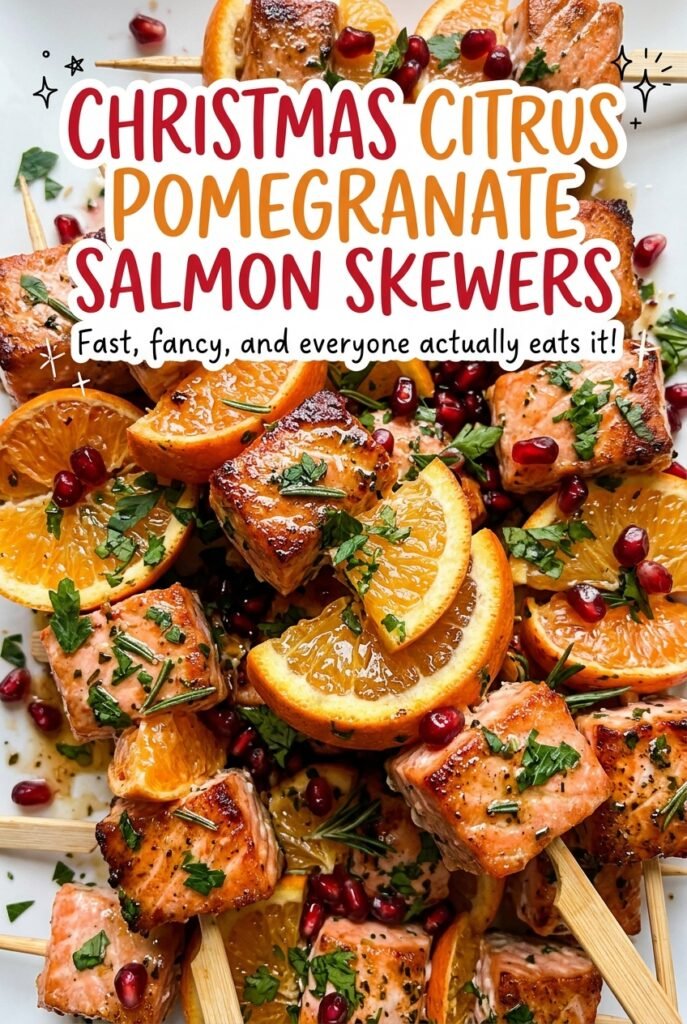
Christmas Citrus Pomegranate Salmon Skewers
The glaze starts out thin and ruby-colored, but after a few minutes on the stove it turns glossy enough to cling to a spoon. That matters once the salmon goes…
Tip: save now, read later.
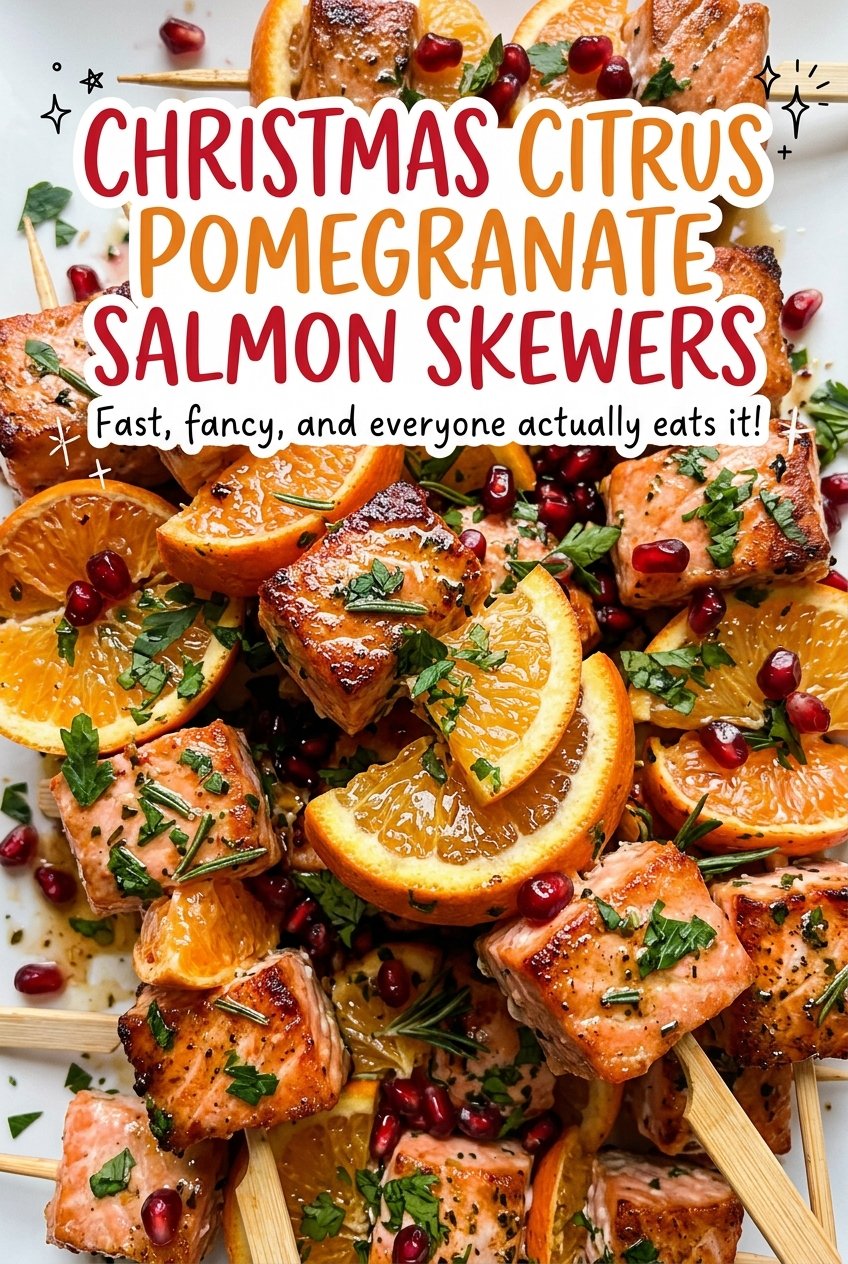
The glaze starts out thin and ruby-colored, but after a few minutes on the stove it turns glossy enough to cling to a spoon. That matters once the salmon goes under the broiler: the orange and pomegranate give these Christmas Citrus Pomegranate Salmon Skewers a bright, tangy coating without hiding the fish.
I like the broiler for this because it cooks the salmon quickly while the pepper and onion pick up a little color at the edges. Cut the salmon into even pieces, and keep an instant-read thermometer nearby; the largest cube is the one that tells you when the skewers are ready. A scatter of pomegranate arils and a little reserved glaze finish each serving with a fresh pop against the warm, savory salmon.
Kitchen Note
Set aside the serving glaze in a clean bowl before you brush any glaze onto the salmon. That keeps the sauce you serve at the table separate from the glaze that touches the raw fish.
Save these Christmas Citrus Pomegranate Salmon Skewers for a bright, broiled main with a glossy orange-pomegranate glaze.
Why These Skewers Need the Rack Set Six Inches Below the Broiler
A broiler gives you strong heat from above, so distance makes a real difference. Set the rack six inches below the element: close enough to brown the salmon and vegetables, but not so close that the surfaces race ahead while the centers are still cooking. The salmon pieces are larger than the vegetable pieces, which is another reason to keep the salmon cubes consistent rather than cutting some into small scraps and others into hefty chunks.
There’s also a timing advantage to glazing after the first four minutes. Honey gives the sauce its sheen, but a sweet glaze left under intense heat for the entire cook can darken too quickly. Starting the skewers without it gives the salmon time to cook before the glaze goes on. Once brushed, the sauce has just the final stretch under the broiler to turn sticky and lightly browned around the edges.
What the Orange and Pomegranate Bring to the Glaze

- Orange zest and juice — The zest brings fragrant citrus oils, while the juice gives the glaze its bright, fruity base. Fresh juice is lovely, but a good carton of orange juice works here; finely grate the zest so it melts into the sauce instead of leaving long strips.
- 100% pomegranate juice — Its tart, deep-fruit flavor keeps the honey and orange from making the glaze taste flatly sweet. Use 100% juice rather than a juice drink, which can change the sweetness and how the glaze reduces.
- Honey, soy sauce, and Dijon — Honey helps the reduced glaze cling, soy sauce adds savory depth, and Dijon gives the fruit a little sharpness. These ingredients work as a balance, so leaving one out makes the glaze less rounded; for a soy-free version, see the adaptation below.
- Garlic — Minced garlic gives the fruit juices a savory edge. Mince it finely so it cooks evenly in the saucepan and doesn’t leave large, raw-tasting pieces in the finished glaze.
- Skinless salmon — Choose a firm piece that you can cut into even cubes. Skinless fish is easier to portion and thread onto the skewers without the skin pulling away from the flesh.
- Red bell pepper and red onion — Both bring sweetness and color, and their one-inch pieces fit neatly between the salmon. Cut them evenly so the smaller vegetable pieces don’t become ragged while you thread the skewers.
- Pomegranate arils — These go on after broiling, so they keep their juicy pop instead of softening in the heat. Fresh arils make the finish especially lively; they’re a garnish, not part of the glaze.
From Ruby Glaze to Broiled Salmon in Three Stages
Reduce the Citrus-Pomegranate Glaze
Combine the orange zest, orange juice, pomegranate juice, honey, soy sauce, Dijon, and minced garlic in a one-quart saucepan. Bring the mixture to a simmer over medium heat and cook for 10 to 12 minutes, stirring occasionally. It should reduce to about one-half cup and coat a spoon rather than run off like juice. Set aside one-quarter cup in a clean bowl for serving, then leave the rest in the saucepan for brushing.
Prepare the Pan and Thread the Skewers
Set an oven rack six inches below the broiler and preheat the broiler to high. Line an 18-by-13-inch rimmed baking sheet with foil and brush it with one teaspoon of the oil. If you’re using wooden skewers, soak eight 10-inch skewers in water for 30 minutes. Toss the salmon, bell pepper, and onion with the remaining oil, salt, and pepper, then thread the pieces onto the skewers in alternating order.
Broil, Turn, and Glaze
Arrange the skewers on the prepared baking sheet and broil for four minutes. Turn them carefully, brush them with the glaze left in the saucepan, and broil for another four to six minutes. Check the center of the largest salmon cube with an instant-read thermometer; it should register 145°F. If the smaller pieces are ready first, rely on the largest cube for your doneness check rather than guessing from the edges.
Finish with Arils and Reserved Glaze
Transfer the skewers to a platter while they’re hot. Scatter the pomegranate arils over the top, then serve the reserved glaze alongside. Keeping the garnish for the end gives you a contrast between warm, glazed salmon and cool, juicy arils.
When You Need Soy-Free Glaze or No Skewers
Use coconut aminos for a soy-free glaze
Replace the soy sauce with the same amount of coconut aminos. The result will be a little sweeter and less savory, but it still gives the fruit glaze a salty, umami note; taste the reduced sauce before serving because brands vary in saltiness.
Broil the salmon and vegetables without skewers
For a no-skewer version, arrange the seasoned salmon and vegetables in a single layer on the same prepared baking sheet. Broil for four minutes, turn the pieces, brush with the saucepan glaze, and continue for four to six minutes, checking the largest salmon cube for doneness. The pieces won’t have the same presentation, but you’ll get the same citrus-pomegranate finish.
Storage and Reheating
- Refrigerator: Refrigerate leftovers within two hours and eat them within 3 to 4 days. The salmon will be firmer after chilling, and the vegetables will soften.
- Freezer: Cooked salmon and vegetables can be frozen in an airtight container for up to 2 to 3 months, though the vegetables will be softer after thawing. Freeze the arils separately or add fresh ones after reheating.
- Reheating: Reheat covered in a 275°F oven until the center reaches 165°F, adding a little reserved glaze if you have some. Avoid high heat or a long uncovered reheat, which can dry out the salmon.
Questions That Come Up While Making These Salmon Skewers
Christmas Citrus Pomegranate Salmon Skewers
Ingredients
Equipment
Method
- Combine the orange zest, orange juice, pomegranate juice, honey, soy sauce, Dijon mustard, and garlic in a 1-quart saucepan.
- Bring to a simmer over medium heat and cook for 10 to 12 minutes, stirring occasionally, until reduced to about 1/2 cup and thick enough to coat a spoon.
- Set aside 1/4 cup in a clean bowl for serving.
- Set an oven rack 6 inches below the broiler.
- Preheat the broiler to high.
- Line an 18x13-inch rimmed baking sheet with foil and brush it with 1 teaspoon of the oil.
- If using wooden skewers, soak 8 (10-inch) skewers in water for 30 minutes.
- Toss the salmon, bell pepper, and onion with the remaining 2 teaspoons oil, salt, and black pepper in a medium bowl.
- Thread the salmon and vegetables alternately onto the skewers.
- Arrange the skewers on the baking sheet and broil for 4 minutes.
- Turn them and brush with the glaze remaining in the saucepan.
- Broil for 4 to 6 minutes more, until the largest salmon cube reaches 145°F when checked in the center with an instant-read thermometer.
- Transfer the skewers to a platter.
- Scatter the pomegranate arils over them and serve with the reserved glaze.
