
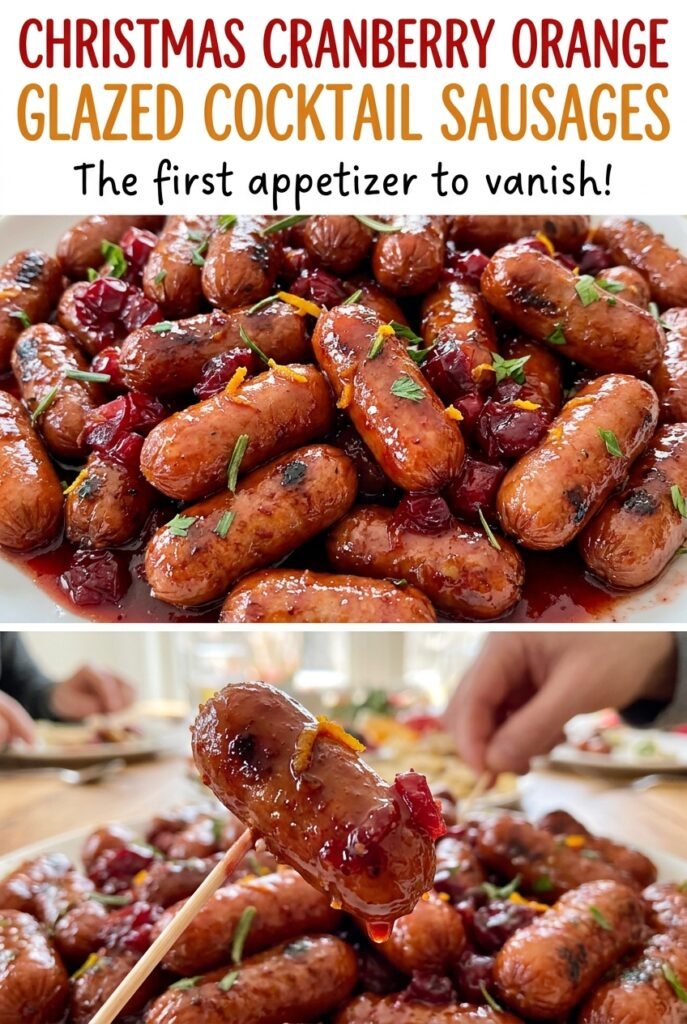
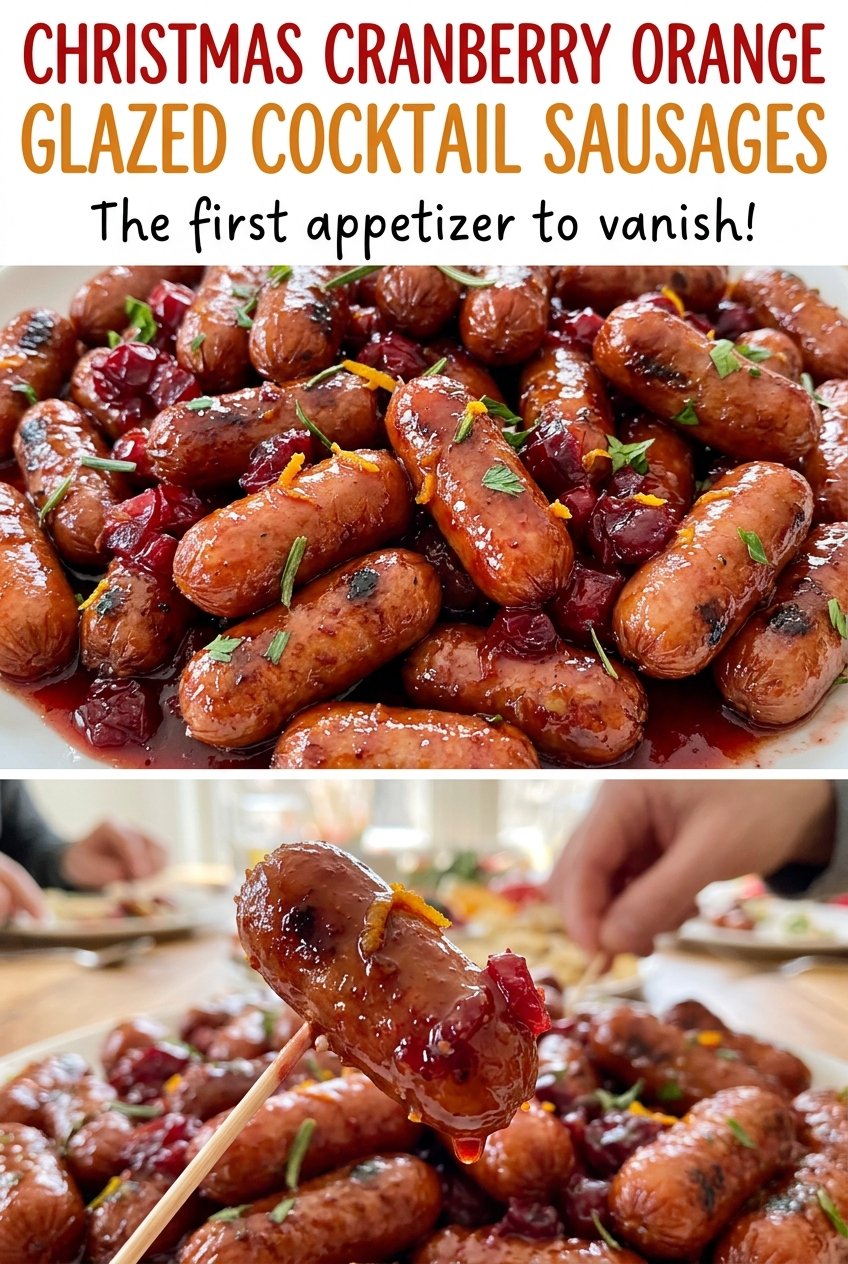
Christmas Cranberry Orange Glazed Cocktail Sausages
The cranberry glaze starts out thick in the saucepan, then loosens as the orange juice warms through. Once it bubbles gently, the orange zest makes the whole kitchen smell bright…
Tip: save now, read later.
The cranberry glaze starts out thick in the saucepan, then loosens as the orange juice warms through. Once it bubbles gently, the orange zest makes the whole kitchen smell bright and citrusy. These Christmas cranberry orange glazed cocktail sausages bring that sweet-tart sauce to a familiar party appetizer without turning it into a candy-sweet coating.
I like that the glaze comes together in one saucepan, with Dijon giving the cranberry and orange a savory edge. The whole-berry sauce keeps little pieces of fruit in the coating, and a few minutes of simmering helps it cling instead of pooling at the bottom of the dish. The sausages go in after the glaze has had time to thicken, so each bite gets plenty of cranberry-orange flavor.
Serve them warm, with a spoon nearby for the extra glaze. They’re a festive, easy-to-share appetizer with a glossy coating and a little citrus in every bite.
Kitchen Note
Once the sausages go in, keep the simmer gentle. A few small bubbles are plenty; a hard boil can make the casings split before the glaze has a chance to cling.
Save these Christmas cranberry orange glazed cocktail sausages for a party appetizer with a tangy fruit glaze and a little Dijon bite.
Why the Sausages Go In After the Cranberry Glaze Thickens
It’s easy to want to add everything to the saucepan at once, but giving the glaze its own simmer first changes the final texture. Whole-berry cranberry sauce already has fruit and syrup in it; the orange juice loosens that mixture so it can be stirred evenly, while the simmer cooks off some of the extra liquid. The result is a coating that stays on the sausages instead of sliding straight back into the pan.
Fully cooked cocktail sausages need warming, not a long cook to become tender. Adding them after the glaze has thickened lets you focus on getting them hot throughout without asking the sauce to reduce around them. It also keeps the fruit pieces visible, so the finished coating looks like cranberry rather than a smooth, thin red sauce. Keep the two stages distinct and the glaze has a better chance of landing where you want it: on the sausages.
What the Cranberry, Orange, and Dijon Each Bring to the Glaze

- Whole-berry cranberry sauce — It gives the glaze its tart fruit flavor and little berry pieces, while the sauce’s built-in sweetness helps it thicken without a separate cooking step. A standard canned version works well; no premium brand is needed. If you prefer a smoother coating, jellied cranberry sauce can stand in measure-for-measure, though you’ll lose the berry texture.
- Orange juice and zest — The juice loosens the cranberry sauce and adds citrus acidity; the finely grated zest brings a fresher, more fragrant orange note. Carton orange juice is fine here, but use a fresh orange for the zest and grate only the colored outer peel. Avoid the white pith, which tastes bitter. There isn’t a close replacement for the zest if you want the same orange aroma, so it’s better to omit it than add a splash of extract.
- Packed light brown sugar — This sweetens the tart cranberries and adds a mild molasses note. If you’re out, granulated sugar works in the same amount, but the glaze will taste a little less rounded. Break up any hard brown-sugar lumps before stirring so they dissolve evenly.
- Dijon mustard — Dijon keeps the glaze from leaning too sweet and gives it a subtle savory sharpness. Whole-grain mustard works as a direct swap if you don’t mind visible seeds and a slightly softer mustard flavor. The inexpensive jar is fine; you don’t need a specialty mustard for this sauce.
- Fully cooked cocktail sausages — Their small size makes them easy to coat and serve, and choosing fully cooked sausages keeps the method focused on warming them through. Another brand of fully cooked cocktail sausages works without changing the approach. If they’re packed in liquid, drain them before adding so you don’t thin the finished glaze.
Build the Glaze First, Then Coat the Sausages
Stir the Cranberry Base Until Smoothly Combined
Put the cranberry sauce, orange juice, brown sugar, Dijon mustard, and finely grated orange zest in a 4-quart saucepan over medium heat. Stir until the brown sugar is no longer sitting in clumps and the mustard is worked through the cranberry sauce. The mixture will look thick and textured because of the whole berries. Keep stirring against the bottom of the pan as it warms so the sugary sauce doesn’t catch.
Let the Glaze Simmer and Reduce
Bring the mixture to a gentle simmer, then lower the heat to medium-low. Cook for 8 to 10 minutes, stirring occasionally, until it’s bubbling and slightly thickened. Look for a cohesive sauce that leaves a light coating on the spoon; it shouldn’t look like a stiff jam. If it’s barely bubbling, give it time rather than turning the burner up sharply.
Warm the Sausages in the Finished Glaze
Add the cocktail sausages and stir until each one is coated. Keep the saucepan over medium-low heat and simmer for 10 to 15 minutes, stirring occasionally so the sausages heat evenly and the glaze doesn’t settle on the bottom. The sausages should be hot throughout, and the coating should cling when you lift one from the pan. If the glaze looks patchy, stir gently to redistribute it.
Three Easy Ways to Adapt the Cranberry-Orange Sausages
A Smooth, Seedless Cranberry Coating
Use jellied cranberry sauce in place of the whole-berry kind. It still makes a sweet-tart glaze, but the coating will be smooth rather than dotted with fruit. Keep stirring as it warms so the jellied sauce breaks down evenly with the juice and seasonings.
A Little More Savory Heat
Swap in fully cooked spicy cocktail sausages for the mild ones. The cranberry and orange still bring sweetness and acidity, while the sausage adds heat throughout each bite. Choose a fully cooked variety so the stovetop time remains focused on warming and glazing.
A Gluten-Free Party Version
Choose fully cooked gluten-free cocktail sausages instead of standard cocktail sausages. The glaze itself is made without wheat-based ingredients, and the swap keeps the same small, easy-to-serve format. The sausages may have a different seasoning, so expect a slight change in savory flavor.
Storage and Reheating
- Refrigerator: Refrigerate leftovers in a covered container for 3 to 4 days. The chilled glaze will firm up, then loosen again as it warms.
- Freezer: Freeze in an airtight container for up to 2 months. Thaw overnight in the refrigerator; the glaze may look a little looser after thawing, so stir it as it reheats.
- Reheating: Warm gently in a saucepan over low heat, stirring occasionally, until the sausages reach 165°F. Avoid high heat, which can scorch the sugary glaze before the sausages are hot.
Questions That Come Up When Making Cranberry-Glazed Sausages
Christmas Cranberry Orange Glazed Cocktail Sausages
Ingredients
Equipment
Method
- Stir the cranberry sauce, orange juice, brown sugar, Dijon mustard, and orange zest together in a 4-quart saucepan over medium heat.
- Bring the glaze to a gentle simmer.
- Cook over medium-low heat for 8 to 10 minutes, stirring occasionally, until bubbling and slightly thickened.
- Add the cocktail sausages and stir to coat them in the glaze.
- Simmer over medium-low heat for 10 to 15 minutes, stirring occasionally, until the sausages are hot throughout and the glaze clings to them.
