
Christmas Pull Apart Garlic Bread Wreath
The dough balls puff until they touch, and the gaps between them disappear into one golden ring. A ramekin in the middle keeps the opening clear while the Christmas Pull…
Tip: save now, read later.
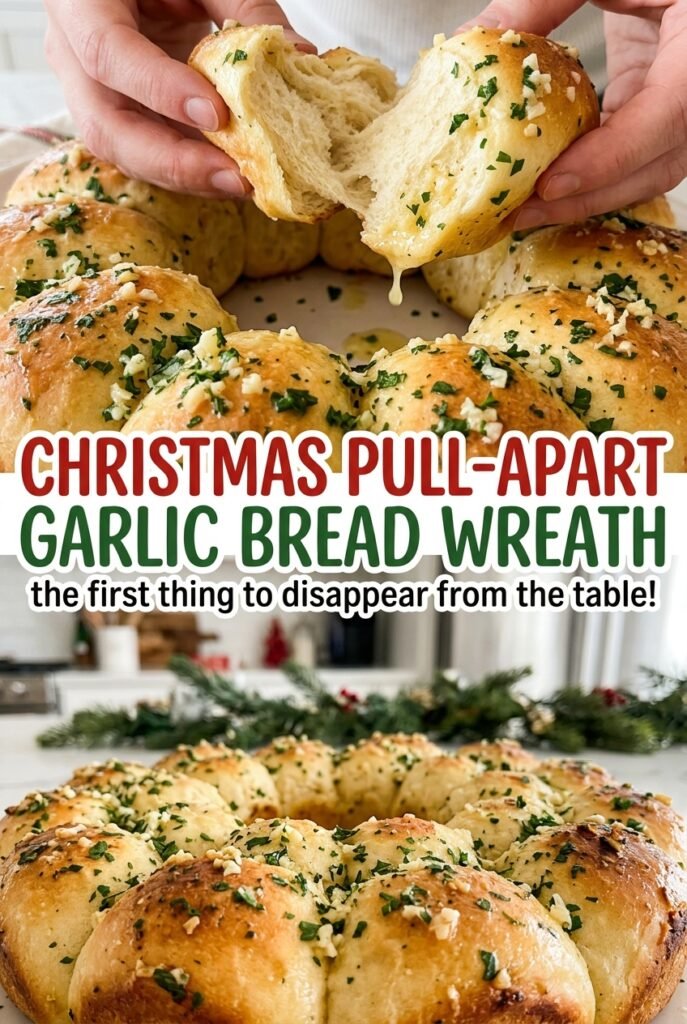
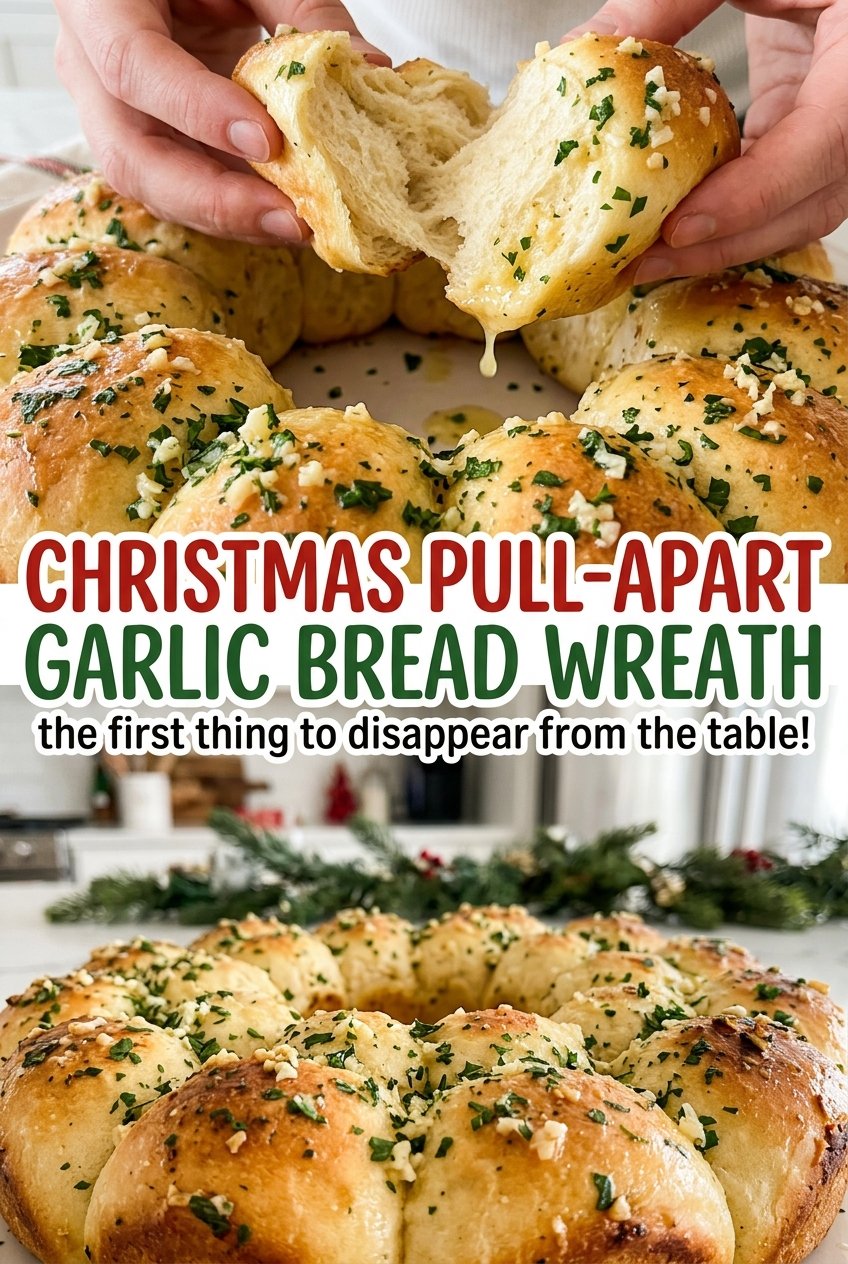
The dough balls puff until they touch, and the gaps between them disappear into one golden ring. A ramekin in the middle keeps the opening clear while the Christmas Pull Apart Garlic Bread Wreath bakes, so you can pull off warm, buttery pieces without cutting into the bread.
I take my time with the dough: the milk should be warm, not hot, and the first rise needs to carry it all the way to double. Once the ring is shaped, a shorter second rise gives the rolls time to swell together. Brushed with fragrant garlic butter and finished with tomatoes and Parmesan, it comes to the table looking festive and smelling like fresh-baked bread.
Kitchen Note
Let the melted butter cool before it goes into the yeast mixture with the egg. If it’s still hot, it can start cooking the egg before the dough even comes together.
Save this Christmas garlic bread wreath for its soft pull-apart rolls, fragrant garlic butter, and bright tomato-and-Parmesan finish.
Why the Ramekin Matters More Than a Perfectly Round Ring
A wreath can look like a simple circle of rolls, but the shape needs a little help to hold its center. The 4-inch oven-safe ramekin gives you a clear guide when you arrange the dough balls, then keeps the opening from closing as the dough rises and bakes. Spray the outside of the ramekin so it releases cleanly when the bread is ready.
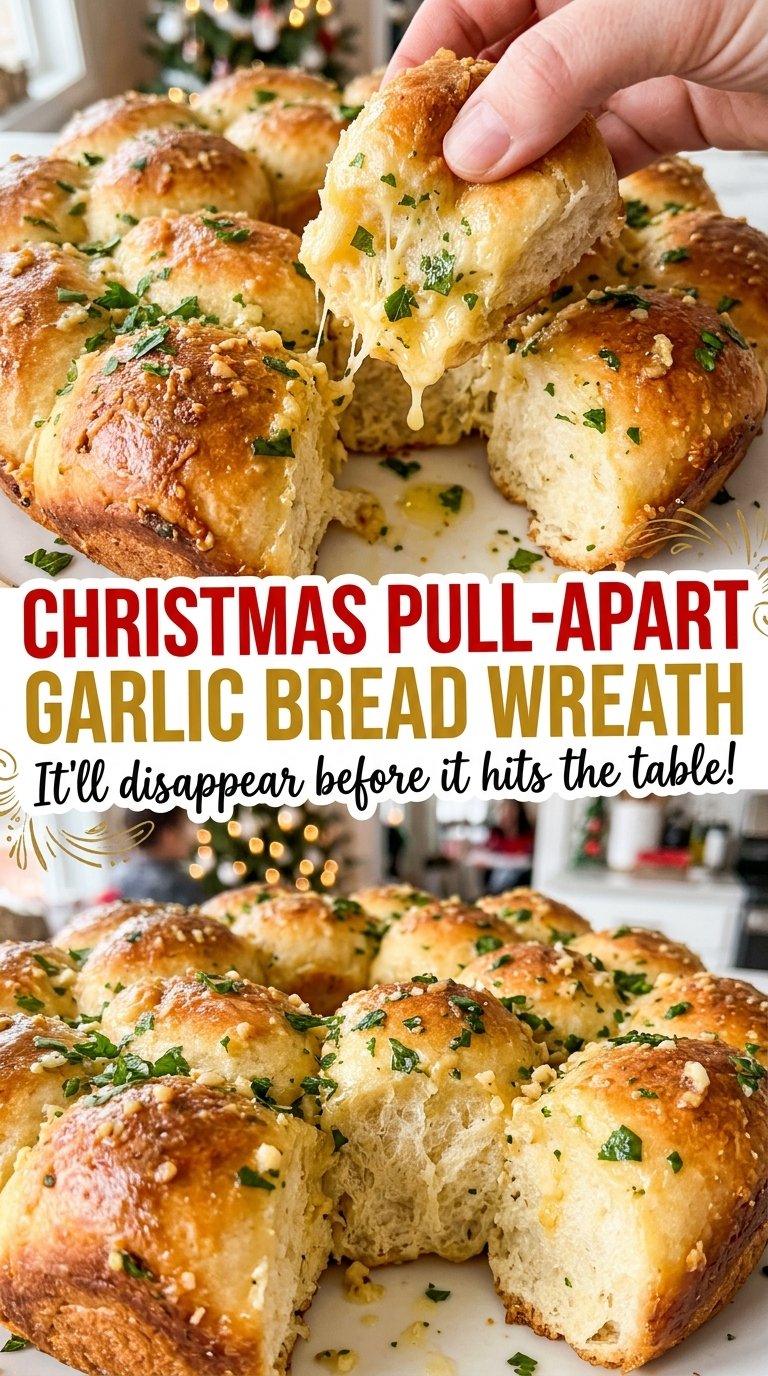
Dividing the dough into 20 pieces gives the wreath its pull-apart structure. Each ball expands beside its neighbors, and the second rise is complete when the rolls look puffy and are touching. If the pieces are still separate, the wreath won’t have the same joined, soft edges that make it easy to tear apart at the table. The ramekin also keeps the center open so the finished bread reads as a wreath rather than a solid round loaf. It’s a small shaping detail, but it’s what makes the presentation reliable.
What Gives These Rolls Their Soft Crumb and Garlic Finish
- Whole milk and egg — They give the dough its tender, rich texture. Use the milk at the stated warm temperature so the yeast can foam; the egg should go in with cooled melted butter, not hot butter.
- Active dry yeast and sugar — The sugar feeds the yeast as it stands in the warm milk, and the foam is a useful sign that the mixture is active. Stick with active dry yeast here so the proofing method and rise cues stay in step.
- All-purpose flour — This makes a dough that’s workable enough to divide and roll into balls. The useful cue is the dough itself: after kneading, it should feel smooth and elastic rather than shaggy.
- Unsalted butter, garlic, and parsley — Unsalted butter lets the fine salt stay in balance, while minced garlic perfumes the butter and fresh parsley adds a clean herbal finish. Fresh parsley is worth using for its color and flavor; the butter itself can be a standard store-brand stick.
- Cherry tomatoes and Parmesan — Halved cherry tomatoes add color and a juicy contrast to the buttery rolls. Finely grated Parmesan is easy to scatter over the top and clings well to the warm butter; a wedge grated at home or a good-quality pre-grated cheese both work.
From Foamy Yeast to a Golden Pull-Apart Wreath
Wake the yeast and knead the dough smooth
Warm the milk to 105–110°F, then stir in the active dry yeast and sugar. Give it 5–10 minutes; the surface should turn foamy before you move on. Whisk in the egg, cooled melted butter, and salt, then stir in the flour until the mixture looks shaggy. Knead on a clean work surface for 8–10 minutes, until the dough becomes smooth and elastic instead of rough and sticky-looking.
Let the dough double in a warm place
Spray a large bowl with cooking spray, add the dough, and turn it so the surface is coated. Cover the bowl and leave it in a warm place for 1–1 1/2 hours. Look for dough that has doubled in size, not just a slightly puffed surface. If it hasn’t doubled yet, give it the time it needs within that rise window rather than shaping it while it’s still dense.
Make the garlic butter while the dough rises
Melt the butter in a small saucepan over low heat, then stir in the minced garlic. Cook for 30–60 seconds, just until the garlic smells fragrant; it shouldn’t brown. Take the pan off the heat before stirring in the chopped parsley and salt. Set the garlic butter aside so it’s ready to brush over the bread while the rolls are warm.
Shape the wreath and let the rolls meet
Line an 18×13-inch sheet pan with parchment and spray the outside of a 4-inch oven-safe ramekin. Set the ramekin in the center, divide the dough into 20 pieces, and roll each piece into a ball before arranging them around it. Cover the shaped wreath loosely and let it rise for 35–50 minutes, until puffy and touching. Preheat the oven to 350°F during this rise.
Bake until golden, then finish the warm bread
Bake for 22–27 minutes, until the tops are golden brown. Carefully remove the ramekin, then brush the warm rolls with the garlic butter so it settles over their tops. Nestle the halved cherry tomatoes between the rolls and sprinkle with finely grated Parmesan. Let the wreath rest for 10 minutes before serving so the finish settles and the bread is easier to pull apart.
Easy Changes for the Wreath’s Topping
Leave off the cherry tomatoes
For a simpler, less juicy finish, skip the tomatoes and keep the garlic butter and Parmesan. The wreath still has the same soft rolls and savory topping, but the bread stays the focus.
Make the finish without Parmesan
Leave off the Parmesan if you prefer the garlic and parsley to stand on their own. The top will be less cheesy and won’t have Parmesan’s salty, savory edge, while the garlic butter still gives every roll plenty of flavor.
Storage and Reheating
- Refrigerator: Store the finished wreath covered for up to 3 days. The rolls firm up in the fridge, and the tomatoes soften.
- Freezer: For better texture, freeze the baked bread before adding the garlic butter, tomatoes, and Parmesan. Wrap it tightly and freeze for up to 2 months; thaw before warming and finishing.
- Reheating: Warm the bread in a 300°F oven until heated through, loosely covered with foil to keep the rolls from drying out. Add the toppings after warming if you froze it untopped.
Questions That Come Up When Making This Bread Wreath
Christmas Pull Apart Garlic Bread Wreath
Ingredients
Equipment
Method
- Warm the milk to 105–110°F.
- Stir the yeast and sugar into the milk.
- Let stand for 5–10 minutes until foamy.
- Whisk the egg, melted butter, and salt into the yeast mixture.
- Stir in the flour until a shaggy dough forms.
- Knead on a clean work surface for 8–10 minutes until smooth and elastic.
- Spray a large bowl with cooking spray, add the dough, and turn it to coat.
- Cover and let rise in a warm place for 1–1 1/2 hours until doubled in size.
- Melt the butter in a small saucepan over low heat.
- Stir in the garlic and cook for 30–60 seconds until fragrant.
- Remove from the heat and stir in the parsley and salt.
- Line an 18x13-inch sheet pan with parchment paper and spray the outside of a 4-inch oven-safe ramekin.
- Set the ramekin in the center of the pan.
- Divide the dough into 20 pieces.
- Roll each piece into a ball.
- Arrange the balls in a wreath around the ramekin.
- Cover loosely and let rise for 35–50 minutes until puffy and touching.
- Preheat the oven to 350°F during the rise.
- Bake for 22–27 minutes until golden brown.
- Carefully remove the ramekin.
- Brush the warm bread with the garlic butter.
- Nestle the tomato halves between the rolls.
- Sprinkle with Parmesan.
- Let rest for 10 minutes before serving.
