
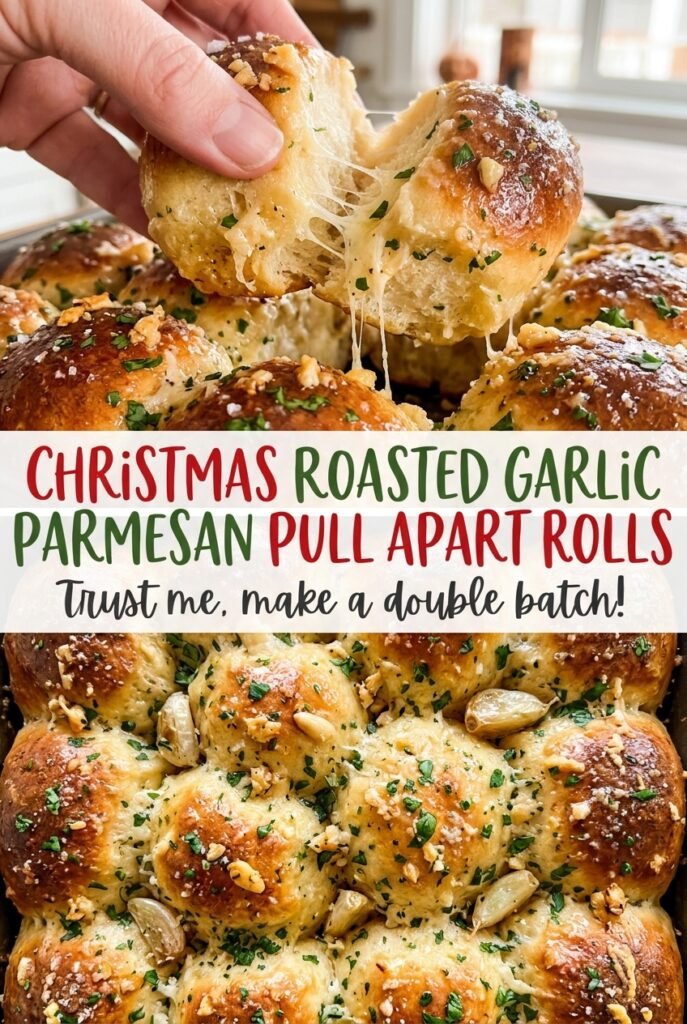
Christmas Roasted Garlic Parmesan Pull Apart Rolls
The foil opens and the garlic cloves are soft enough to squeeze out with almost no pressure. That’s when the kitchen starts smelling like the topping these rolls are headed…
Tip: save now, read later.
The foil opens and the garlic cloves are soft enough to squeeze out with almost no pressure. That’s when the kitchen starts smelling like the topping these rolls are headed for: mellow roasted garlic folded into melted butter, with Parmesan waiting on top. I make these Christmas Roasted Garlic Parmesan Pull Apart Rolls when I want a soft, yeasted roll that feels special without asking for a complicated shaping technique.
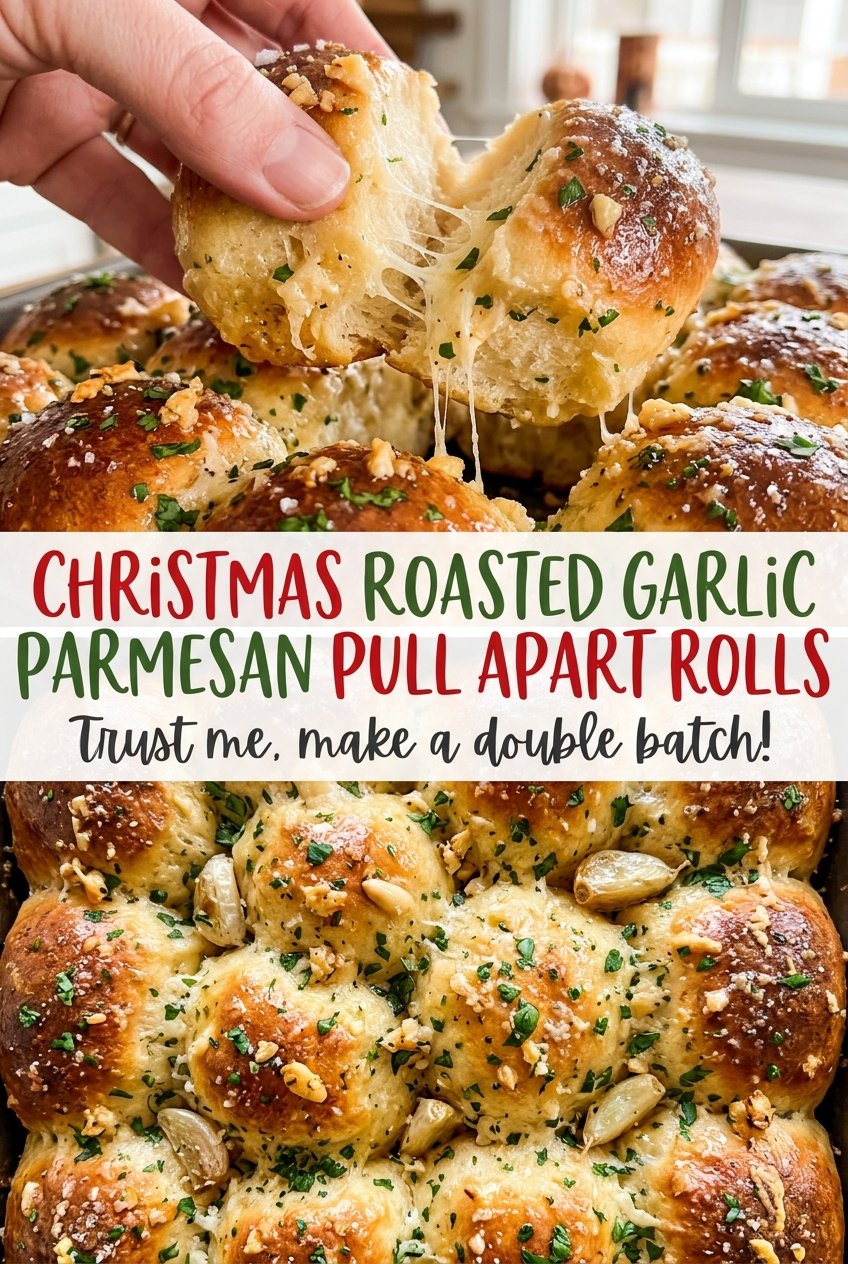
The dough is enriched with milk, egg, and butter, so it bakes up tender rather than crusty. Give it time for both rises; the first builds the dough, and the second lets the shaped rolls puff together in the pan. Each one pulls away easily, with a golden top and a soft center scented with roasted garlic and parsley.
Kitchen Note
Check the milk temperature before it meets the yeast; it should be between 105 and 110°F. I wait for the mixture to turn foamy before adding the egg, because a flat surface is a sign to pause rather than move on.
Save these Christmas roasted garlic Parmesan pull apart rolls for soft centers, golden tops, and a savory garlic-butter finish.
What the Second Rise Does for These Pull-Apart Rolls
Yeast dough needs time to grow, but these two rises do different jobs. The first happens before shaping, when the dough is still one smooth mass. It gives the dough time to expand and relax, which makes it easier to divide and shape without wrestling it back into place.
After shaping, the rolls rise again in the baking dish. That second rest is what makes the balls puffy and lets them bake close together, so they pull apart in soft portions instead of turning into separate little dinner rolls. Don’t rush from shaping straight to the oven: dough that hasn’t puffed will bake up tighter and heavier. Look for visible expansion before baking, not just a timer that has counted down.
The pieces don’t need to be perfectly round. What matters is dividing the dough into 12 similar portions, then tucking each one into a ball so the top has a smooth surface. That gives the rolls a more even look in the pan and helps them bake at roughly the same pace.
Why Roasted Garlic Goes Into the Butter, Not the Dough
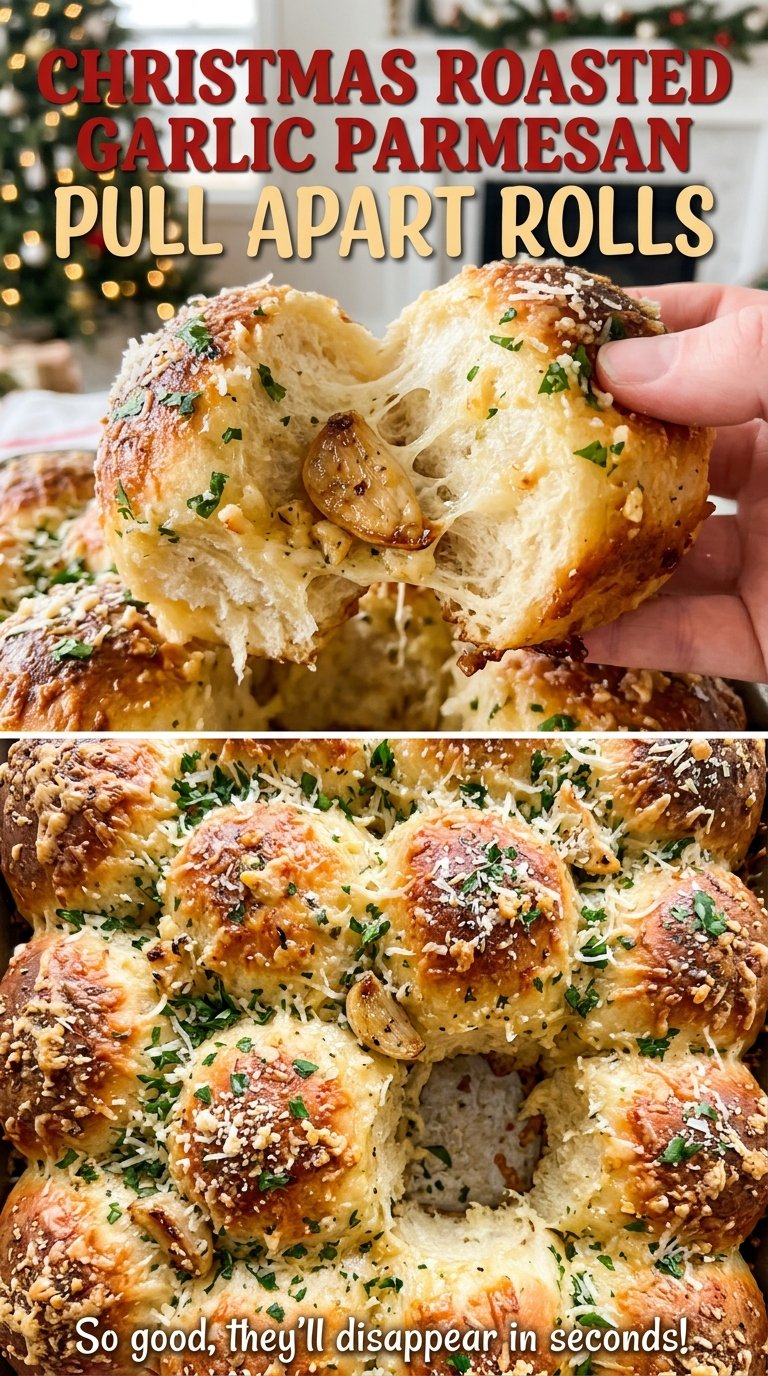
- Roasted garlic — A whole head turns soft and mellow in the oven, then mashes smoothly into the topping butter. Choose a firm head without soft spots. There isn’t another ingredient in this list that gives the rolls the same roasted garlic flavor.
- Whole milk and active dry yeast — Whole milk gives the dough richness, while active dry yeast provides its lift. Use milk warmed to the stated range, rather than guessing by touch; milk that’s too hot can interfere with the yeast. Keep the yeast fresh and use the foamy surface as your cue that it’s active.
- Egg and unsalted butter — The egg and the butter mixed into the dough contribute to its tender, enriched texture. Bring the egg to room temperature so it blends smoothly. The remaining butter is reserved for the topping, so keep the two portions separate as you prep.
- All-purpose flour — Spoon it into the measuring cup and level the top instead of scooping straight from the bag. Scooping can pack in extra flour and leave the dough firmer than intended. All-purpose flour is the best fit here; a different flour won’t give the same result without changing the dough.
- Finely grated Parmesan — Fine shreds settle across the rolls instead of sitting in thick clumps. A block grated finely gives an especially even topping; coarser shreds won’t distribute as neatly. Parmesan is a defining part of the savory top, so there’s no like-for-like substitute among the listed ingredients.
- Fresh parsley — Chopped parsley brings a fresh note to the garlic butter. Pick leaves that look bright and dry them before chopping so they don’t bring extra water to the topping. It can be left out, though the rolls will lose that herbal finish.
From Soft Cloves to Golden, 190°F Centers
Roast the Garlic Until It’s Soft
Heat the oven to 400°F, cut about 1/4 inch from the top of the garlic head, and drizzle the exposed cloves with olive oil. Wrap the head tightly in foil and roast for 35–45 minutes. The cloves should be very soft when pressed; if they still feel firm, give them more time in the oven. Let the garlic cool until it’s easy to handle before squeezing out the cloves.
Mix and Knead a Smooth Dough
Stir the warm milk, yeast, and sugar together in a large bowl, then let the mixture stand for 5–10 minutes. Beat in the egg and 4 tablespoons of melted butter before stirring in the flour and salt. Knead by hand for 8–10 minutes or with a dough hook for 6–8 minutes, stopping when the dough feels smooth and elastic. If it still looks rough and tears easily, it needs more kneading.
Let the Dough Rise, Then Shape the Rolls
Cover the dough and let it rise in a warm place until doubled in size, about 60–90 minutes. Spray a 9×13-inch baking dish with nonstick cooking spray, divide the dough into 12 equal pieces, and shape each piece into a ball. Arrange them in 3 rows of 4, cover, and let them rise for another 30–45 minutes, until puffy. While they rise, heat the oven to 350°F.
Brush on the Garlic Butter and Bake
Melt the remaining 4 tablespoons of butter, squeeze the cooled garlic cloves into it, and mash them in before stirring in the parsley. Brush the mixture over the puffy rolls, then sprinkle the finely grated Parmesan over the tops. Bake for 22–27 minutes, until golden brown and the centers reach 190°F. Rest the rolls in the pan for 5 minutes before serving; that short pause lets the just-baked crumb settle.
Two Flavor Changes for the Garlic-Butter Topping
Leave Out the Parsley
For a simpler topping, skip the chopped parsley and stir the mashed roasted garlic straight into the melted butter. Keep the Parmesan on top; the rolls will still have their garlic-butter base and a savory finish, just without the fresh herbal note.
Make the Rolls Less Garlic-Forward
Leave the roasted garlic out of the topping butter and brush the rolls with the butter and parsley instead, then add the Parmesan. This keeps the same soft rolls and cheesy top but gives you a milder, more buttery result.
Storage and Reheating
- Refrigerator: Keep leftover rolls in an airtight container for up to 3 days. The crumb will firm up faster in the refrigerator than it does at room temperature.
- Freezer: Once completely cool, wrap the rolls tightly and freeze for up to 2 months. Thaw before reheating for more even warmth.
- Reheating: Cover the rolls with foil and warm them in a 300°F oven for 8–10 minutes. Leaving them uncovered for too long can dry out the tops and edges.
Questions That Come Up While These Rolls Rise and Bake
Christmas Roasted Garlic Parmesan Pull Apart Rolls
Ingredients
Equipment
Method
- Heat the oven to 400°F.
- Cut about 1/4 inch off the top of the garlic head to expose the cloves, drizzle with olive oil, and wrap tightly in foil.
- Roast for 35–45 minutes, until the cloves are very soft, then cool until easy to handle.
- Stir the warm milk, yeast, and sugar together in a large bowl and let stand for 5–10 minutes, until foamy.
- Beat in the egg and 4 tablespoons melted butter.
- Stir in the flour and salt.
- Knead by hand for 8–10 minutes or with a dough hook for 6–8 minutes, until smooth and elastic.
- Cover the dough and let it rise in a warm place for 60–90 minutes, until doubled in size.
- Spray a 9x13-inch baking dish with nonstick cooking spray.
- Divide the dough into 12 equal pieces, shape each into a ball, and arrange them in the dish in 3 rows of 4.
- Cover and let rise for 30–45 minutes, until puffy.
- Heat the oven to 350°F.
- Melt the remaining 4 tablespoons butter.
- Squeeze the roasted garlic cloves into the butter and mash them in.
- Stir in the parsley.
- Brush the mixture over the rolls and sprinkle with the Parmesan.
- Bake for 22–27 minutes, until the rolls are golden brown and the centers reach 190°F.
- Let the rolls rest in the pan for 5 minutes before serving.
