

Classic Hummus with Roasted Red Pepper
The food processor starts with a rough, thick mixture, and it’s easy to wonder whether it will ever turn into the smooth hummus you had in mind. Keep going: the…
Tip: save now, read later.
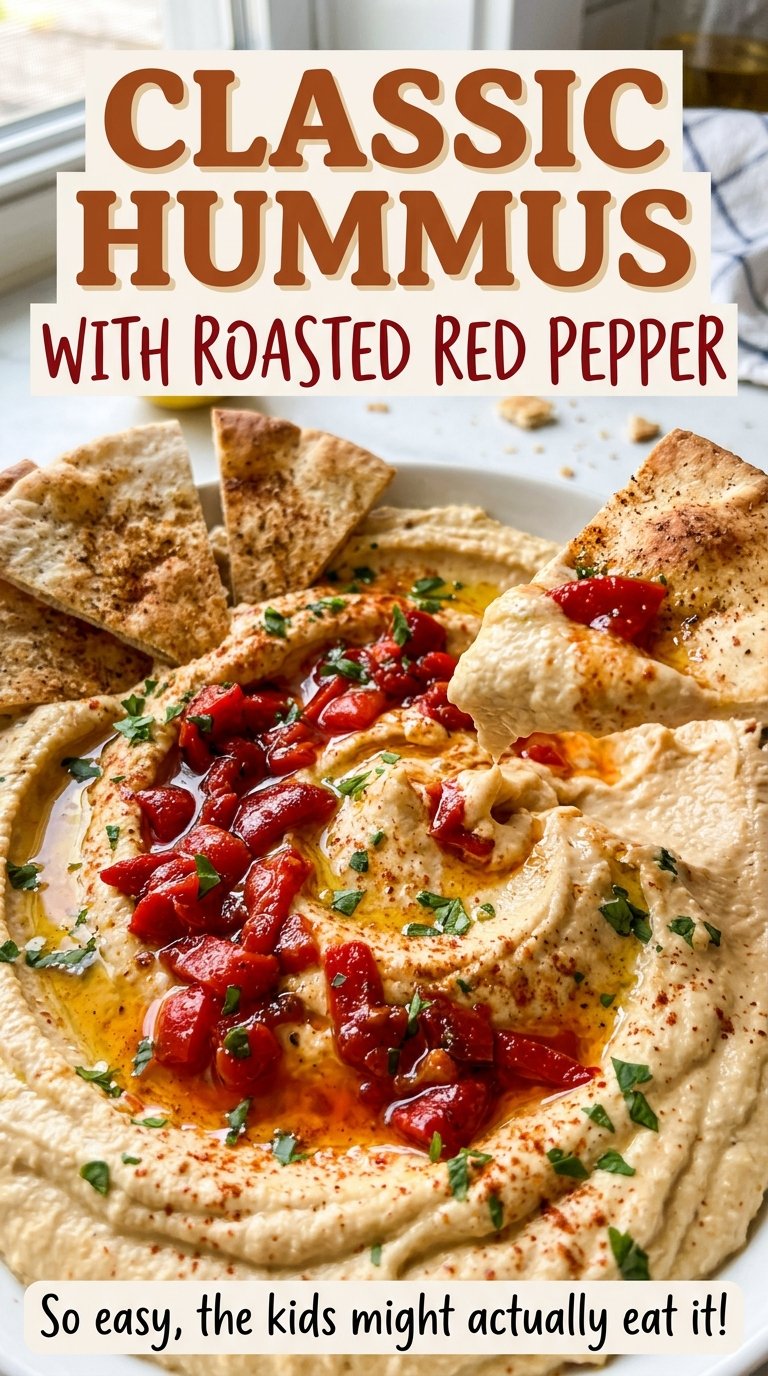
The food processor starts with a rough, thick mixture, and it’s easy to wonder whether it will ever turn into the smooth hummus you had in mind. Keep going: the last blend is where the chickpeas, tahini, olive oil, and cold water come together into a creamy dip. Roasted red peppers add a mellow sweetness and a rosy color without taking this classic hummus too far from its familiar sesame-and-lemon base.
I make this version in stages, rather than throwing everything into the processor at once. Blending the tahini and fresh lemon juice first gives the mixture time to turn creamy before the chickpeas go in. Then the peppers and seasonings get incorporated, and the oil and cold water finish the texture. The result is smooth, gently tangy hummus with roasted pepper in every bite.
It’s an easy bowl to set out when you want something savory that can be made with a food processor and pantry staples. The pepper flavor stays balanced, the cumin adds warmth, and the finish is soft enough to scoop cleanly.

Kitchen Note
Give the tahini and lemon their full 30 seconds together before adding anything else. I look for a creamy, slightly thickened mixture; that small head start makes the finished hummus feel more cohesive.
Save this roasted red pepper hummus for a smooth, lemony dip with a mellow roasted-pepper finish.
Why Roasted Peppers Can Leave Hummus Too Loose
Jarred roasted peppers bring more than flavor: they can also carry moisture from the jar. If that liquid goes into the processor, the hummus may turn softer than you want, especially once the olive oil and cold water are added. Draining the peppers and patting them dry keeps their sweet, lightly smoky taste in the mix without adding extra liquid that the chickpeas have to absorb.
That balance matters because this hummus gets its smoothness from a controlled blend, not from pouring in liquid until it loosens. The listed cold water is added at the end, where you can see the texture change as the processor runs. Starting with dry pepper pieces leaves that finishing blend room to do its job, so the hummus comes out creamy rather than thin.
There’s also a useful flavor distinction here. The peppers should round out the lemon and tahini, not bury them. Draining and drying them helps keep the dip tasting like hummus first, with roasted red pepper running through it.
What Tahini, Lemon, and Roasted Peppers Each Bring
- Tahini — This sesame paste gives the hummus its nutty, rounded base and helps it feel rich without dairy. A fresh, well-stirred tahini makes a noticeable difference; there isn’t a direct substitute that keeps the same flavor and texture, so I’d leave it out only if you’re comfortable with a different kind of dip.
- Fresh lemon juice — Lemon brings the bright acidity that keeps chickpeas and tahini from tasting heavy. Fresh juice has a clean citrus aroma that bottled juice won’t quite match. If you don’t have fresh lemons, bottled lemon juice can stand in, though the finish will taste less lively.
- Roasted red peppers — Jarred peppers make the flavor easy and consistent, with a mellow sweetness that works well alongside cumin. The jarred kind is convenient and dependable; draining and drying the peppers is the prep detail that matters most. Leaving them out makes a more traditional plain hummus, but removes the signature roasted-pepper flavor.
- Chickpeas — Canned chickpeas make this a straightforward blend-and-serve dip, and rinsing them clears away the canning liquid. A different bean would change the flavor and texture, so chickpeas are worth keeping if you want this specific hummus.
- Olive oil and cold water — Olive oil adds a rounded finish, while cold water loosens the thick chickpea mixture as it blends. Good everyday olive oil is fine here; a strongly peppery oil can become more noticeable in a dip. If you need to omit the oil, cold water can still help the hummus blend, but the result will be less rich.
The Four Blending Stages That Build a Creamy Hummus
Start with a Creamy Tahini-Lemon Base
Add the tahini and fresh lemon juice to the food processor and blend for 30 seconds. The mixture should look creamy rather than like two separate ingredients. Scrape down the sides if tahini is stuck above the blade. Giving this first blend its full time helps the later additions incorporate evenly.
Process the Pepper and Seasonings
Add the garlic, cumin, kosher salt, and drained, patted-dry roasted red peppers. Process for 15 seconds, scraping down the sides as needed. At this point, the pepper should be broken into the base, though you may still see small flecks. Don’t keep blending for a long time here; the chickpeas are what need the next longer pass.
Break Down the Chickpeas
Add the drained and rinsed chickpeas, then process for 1 minute. Pause halfway through to scrape down the sides so chickpeas sitting above the blade get pulled back into the mixture. The hummus will look thick and somewhat coarse before the finishing liquid goes in. That texture is expected at this stage.
Blend in the Oil and Cold Water
With the processor running, pour in the olive oil and cold water. Blend for 1 to 2 minutes, scraping down the sides as needed, until the hummus looks smooth and creamy. The mixture should move freely around the bowl without visible chickpea pieces. If it still looks rough, let the processor continue through the full blending window rather than stopping at the first sign of a smoother surface.
Three Flavor Adjustments That Keep the Hummus in Balance
Make a Classic Pepper-Free Hummus
Leave out the roasted red peppers and keep the rest of the ingredients and blending sequence. The result leans more directly on chickpeas, tahini, and lemon, with less sweetness and no roasted-pepper color.
Choose a Milder Garlic Finish
Omit the garlic for a gentler dip where the tahini, lemon, and roasted peppers come forward more clearly. The texture stays much the same; what you lose is the sharp savory note of raw garlic.
Let the Cumin Lead
For a warmer, earthier version, increase the cumin slightly. It will bring more of that savory spice note to the front, so the lemon tastes less pronounced by comparison. Add only a little at a time if you’re adjusting the flavor.
Make-Ahead and Storage
- Refrigerator: Store in a covered airtight container for up to 4 days. The hummus may firm up as it chills; stir it before serving.
- Freezer: Hummus freezes well for up to 3 months in an airtight freezer-safe container. Thaw it in the refrigerator and stir thoroughly, since the texture may separate slightly after freezing.
- Serving: This is a cold dip, so it doesn’t need reheating. Serve it chilled or let the portion you plan to eat sit out briefly; don’t leave it at room temperature for more than 2 hours.
Questions That Come Up When Making Roasted Red Pepper Hummus
Classic Hummus with Roasted Red Pepper
Ingredients
Equipment
Method
- In a food processor, blend the tahini and lemon juice for 30 seconds, until creamy.
- Add the garlic, cumin, salt, and roasted red peppers; process for 15 seconds, scraping down the sides as needed.
- Add the chickpeas and process for 1 minute, scraping down the sides halfway through.
- With the processor running, pour in the olive oil and cold water; blend for 1 to 2 minutes, until smooth and creamy, scraping down the sides as needed.
- Transfer the hummus to a serving bowl.
