

Classic Vanilla Bean Panna Cotta
When the cream starts steaming, the vanilla seeds drift through it like tiny dark flecks. That’s the moment I take the saucepan off the heat; a rolling boil isn’t needed,…
Tip: save now, read later.
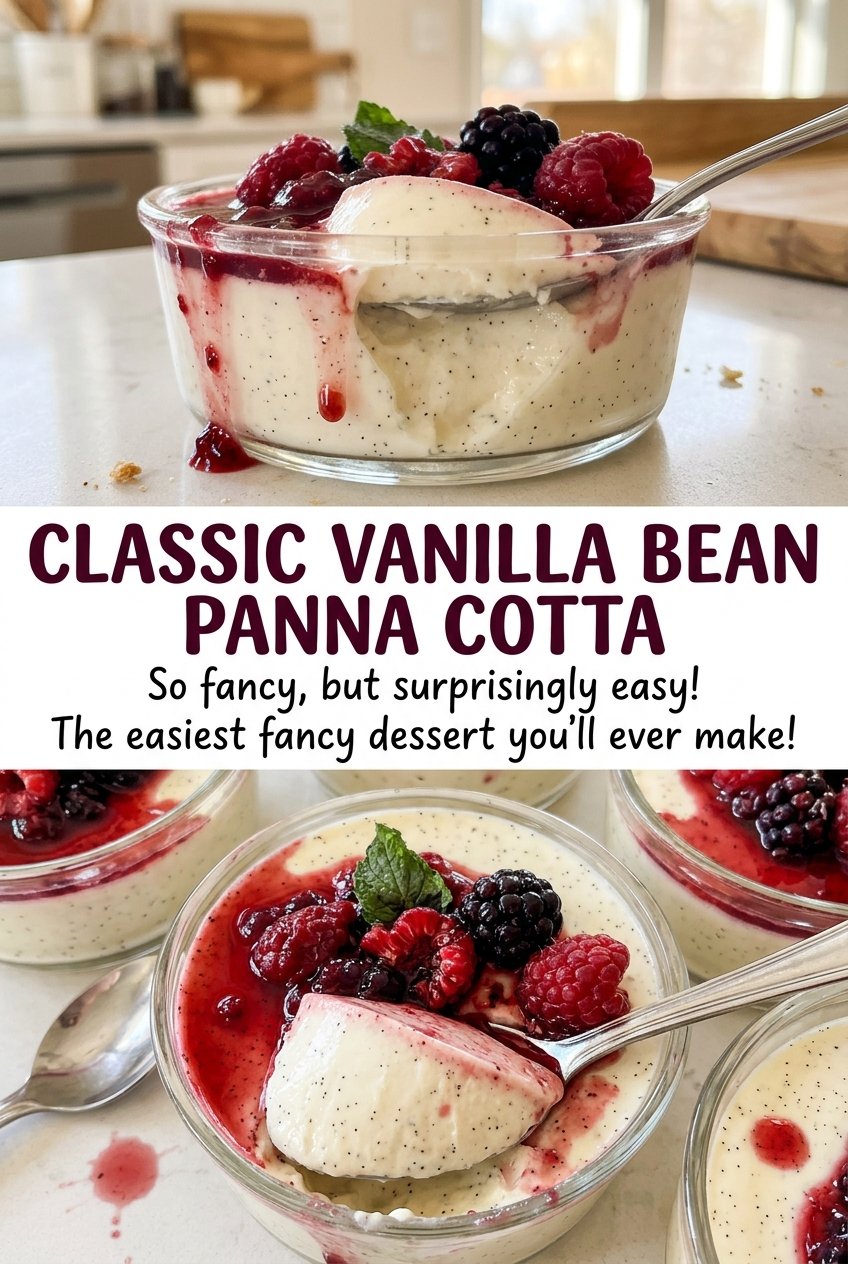
When the cream starts steaming, the vanilla seeds drift through it like tiny dark flecks. That’s the moment I take the saucepan off the heat; a rolling boil isn’t needed, and it can make a delicate panna cotta harder to get right. This classic vanilla bean panna cotta turns a short list of ingredients into a cool, softly set dessert that feels special without needing a complicated technique.
The texture depends on giving the powdered gelatin time to absorb the cold milk before it meets the warm cream. I let it sit until it looks spongy, then whisk it in after taking the saucepan off the heat. That small pause keeps the gelatin from clumping and lets it dissolve smoothly. Once the mixture is strained into ramekins and chilled, the vanilla comes through in every creamy spoonful.
Kitchen Note
Scrape the vanilla seeds into the cream, then add the split pod while it heats. The seeds bring those little flecks, and the pod adds fragrance as the cream warms; take it out before you whisk in the gelatin.
Save this classic vanilla bean panna cotta for a make-ahead dessert with a smooth, softly set texture and real vanilla flecks.
Why Panna Cotta Turns Rubbery When the Gelatin Isn’t Handled Gently
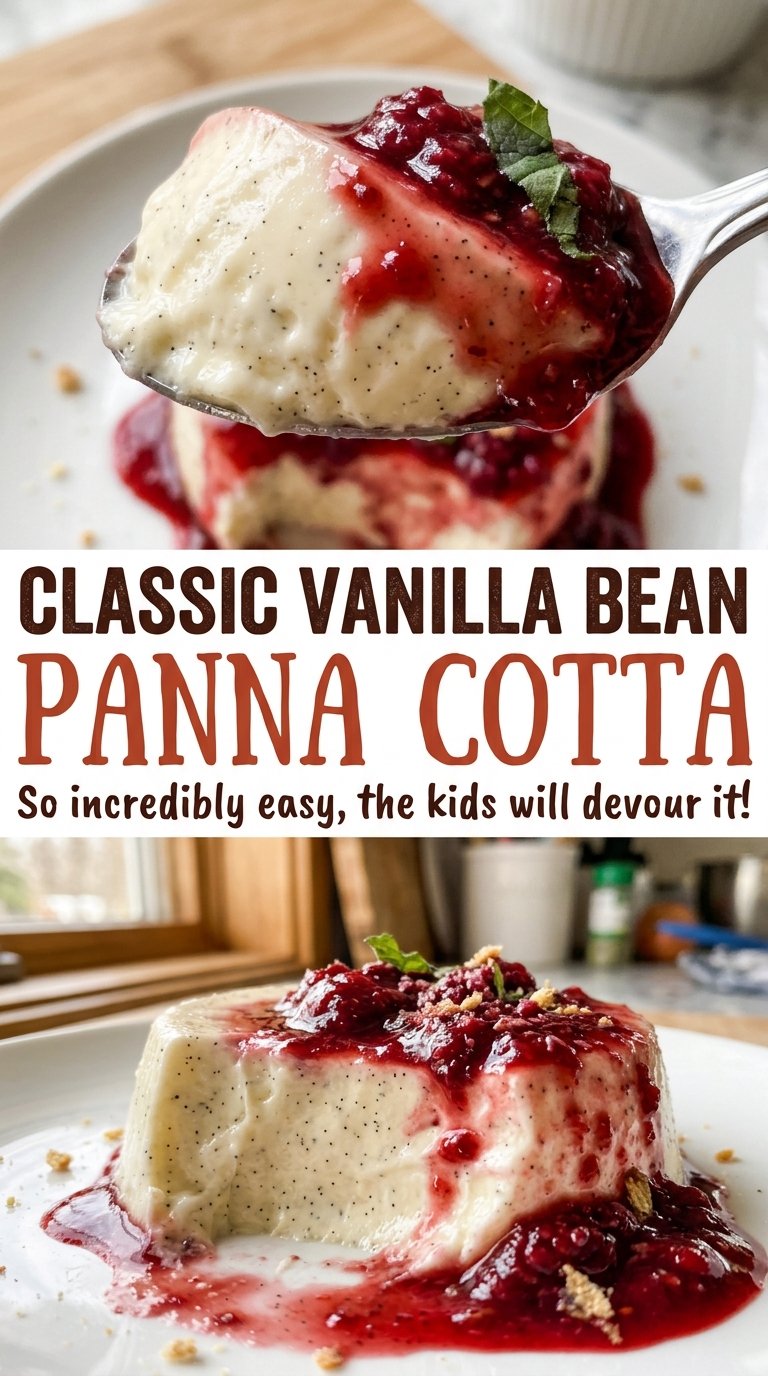
Panna cotta should hold its shape softly, not bounce like a gummy candy. Gelatin gives it structure, but it needs to be hydrated evenly and dissolved completely to do that job well. Sprinkling it over cold milk gives each bit time to absorb liquid before it goes into the cream. If dry gelatin hits warm liquid all at once, the outside can set into stubborn little lumps while the centers stay dry.
Heat matters for a different reason. The cream needs to get steaming so the sugar dissolves, but boiling it isn’t part of this method. After the saucepan comes off the burner, whisk in the bloomed gelatin until you can’t see granules or streaks. Straining the mixture into a pitcher catches any bits that didn’t dissolve and makes it easier to divide the panna cotta evenly.
The finished dessert should be softly set after chilling, not firm enough to feel rubbery on the spoon. If you’ve had panna cotta that seemed too stiff, avoid increasing the gelatin; the measured balance here is what gives the cream a gentle wobble. Let the mixture chill undisturbed so it can set evenly in its ramekins.
Why Cold Milk and a Whole Vanilla Bean Matter in This Panna Cotta
- Cold whole milk — This is where the powdered gelatin blooms. Starting with cold milk gives it time to absorb liquid and turn spongy before it’s whisked into the warm cream. Whole milk also keeps the finished dessert creamy; skim milk would make the mixture less rich.
- Unflavored powdered gelatin — It sets the cream without adding another flavor. Use powdered gelatin here rather than guessing at a sheet-gelatin conversion; different products don’t always measure the same way, and the proportions are important to the soft set.
- Heavy cream — Cream provides the characteristic rich, smooth body. It’s the main ingredient, so use fresh cream you enjoy the taste of; a lower-fat dairy product won’t give the same richness.
- Granulated sugar — The sugar dissolves as the cream warms and balances the dairy and vanilla. Stirring occasionally helps it dissolve before the mixture comes off the heat.
- Vanilla bean — A whole bean gives the panna cotta both fragrant vanilla and visible seeds. Split it lengthwise and scrape the seeds into the saucepan, then add the pod while the cream heats. A dry, brittle bean is harder to scrape and won’t be as pleasant to work with.
Four Stages for a Smooth, Evenly Set Vanilla Panna Cotta
Let the Gelatin Turn Spongy in Cold Milk
Pour the cold milk into a small bowl and sprinkle the powdered gelatin evenly over its surface. Leave it alone for 5 to 10 minutes, until it has absorbed the milk and looks spongy. Don’t stir it into the milk right away; an even sprinkle gives the granules room to hydrate. The mixture should look swollen rather than like dry powder floating on top.
Warm the Cream Until It Steams, Not Boils
Combine the heavy cream and sugar in a medium saucepan, then scrape in the seeds from the split vanilla bean and add the pod. Heat over medium for 5 to 7 minutes, stirring occasionally, until the cream is steaming and the sugar has dissolved. Keep an eye on the surface as it warms; a boil isn’t the goal. If it starts bubbling vigorously, take the pan off the heat.
Whisk in the Gelatin and Strain
Remove the saucepan from the heat and discard the vanilla bean pod. Whisk in the bloomed gelatin until it’s fully dissolved, scraping around the bottom and sides of the pan as you whisk. Pour the mixture through a strainer into a pitcher or measuring cup. This catches any undissolved bits and gives you a clean pour for filling the ramekins.
Give the Ramekins Time to Chill
Divide the warm mixture among six 5-ounce ramekins, then let them cool for 20 minutes. Cover the ramekins and refrigerate them for at least 4 hours, until the panna cotta is softly set. Try not to move them around as they chill; keeping the cups level helps the tops set neatly. The center should hold its shape while still giving a little when nudged.
Small Changes for a Different Vanilla Bean Panna Cotta
A Milder Vanilla Finish
For a gentler vanilla aroma, scrape the seeds into the cream but leave out the pod. You’ll still see the vanilla flecks, while the cream gets less of the pod’s infused fragrance. The classic version includes both seeds and pod during heating for a fuller vanilla character.
A Less-Sweet Cream
You can reduce the granulated sugar slightly if you prefer the cream and vanilla to stand out more. Stir until the sugar has dissolved before taking the pan off the heat. The panna cotta will taste less sweet, though the sugar also contributes to its rounded, classic dessert flavor.
Storage and Reheating
- Refrigerator: Keep the covered ramekins refrigerated and enjoy within 3 days. The surface may lose a little of its fresh, silky feel over time.
- Freezer: Freezing isn’t recommended; the dairy-and-gelatin texture can turn watery or grainy after thawing.
- Reheating: Panna cotta is served cold, so don’t reheat it. Warmth softens the set, and microwaving can loosen it unevenly.
Questions That Come Up When Making Panna Cotta
Classic Vanilla Bean Panna Cotta
Ingredients
Equipment
Method
- Pour the cold milk into a small bowl.
- Sprinkle the gelatin evenly over the milk and let stand for 5 to 10 minutes, until the gelatin has absorbed the milk and looks spongy.
- Combine the heavy cream and sugar in a medium saucepan.
- Split the vanilla bean lengthwise, scrape the seeds into the saucepan, and add the pod.
- Heat over medium for 5 to 7 minutes, stirring occasionally, until steaming and the sugar has dissolved; do not boil.
- Remove the saucepan from the heat and discard the vanilla bean pod.
- Whisk in the bloomed gelatin until fully dissolved.
- Strain the mixture into a pitcher or measuring cup.
- Divide the mixture among six 5-ounce ramekins and cool for 20 minutes.
- Cover the ramekins and refrigerate for at least 4 hours, until softly set.
