
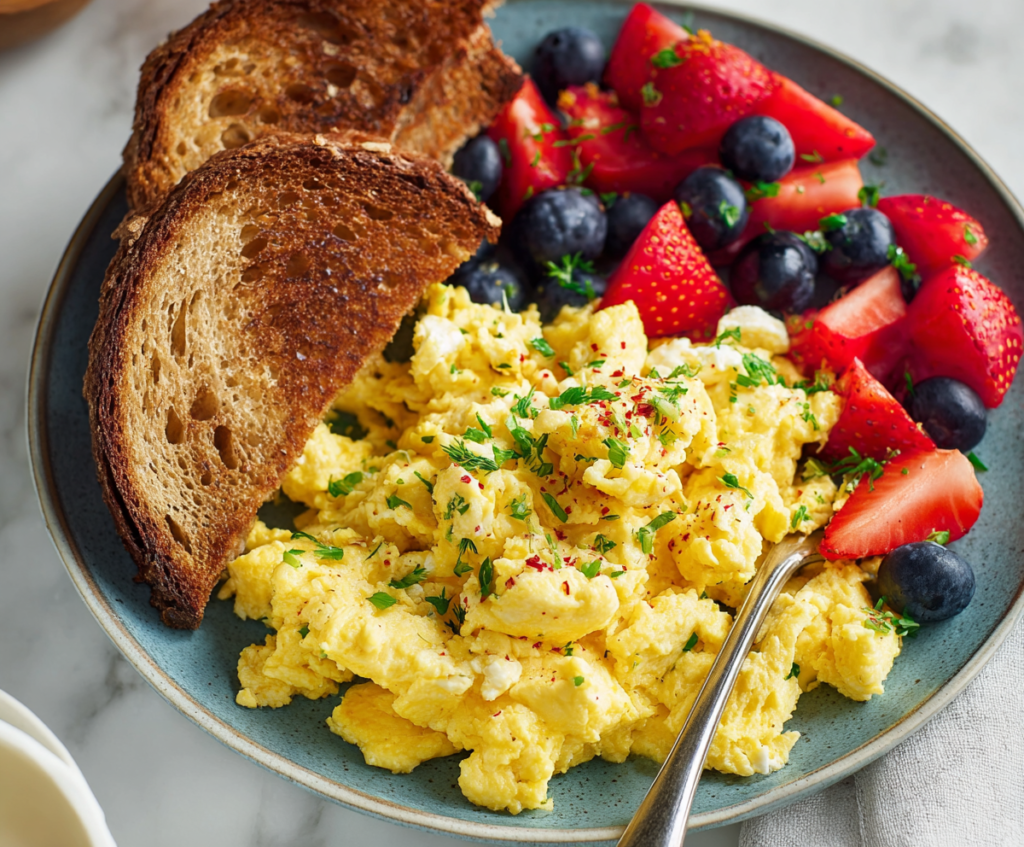
Cottage Cheese Scrambled Eggs
Cottage Cheese Scrambled Eggs are a creamy and protein-packed twist on your regular scrambled eggs. The cottage cheese adds a smooth, slightly tangy texture that makes the eggs super moist…
Tip: save now, read later.
Cottage Cheese Scrambled Eggs are a creamy and protein-packed twist on your regular scrambled eggs. The cottage cheese adds a smooth, slightly tangy texture that makes the eggs super moist and fluffy, while still keeping that classic egg flavor you love. It’s a simple dish with just a few ingredients, but it feels special and satisfying every time.
I like to add cottage cheese into my scrambled eggs whenever I want a quick breakfast that keeps me full longer. The creamy curds melt into the eggs while cooking, giving them a nice richness without needing butter or cream. It’s a great way to sneak in some extra protein and calcium, especially when I’m in a hurry but still want something tasty and filling.
One of my favorite ways to enjoy these eggs is with a slice of toasted whole grain bread and some fresh veggies on the side. Sometimes I throw in a little black pepper or chopped herbs like chives or parsley, which brings a bit of brightness to the dish. For busy mornings or a lazy weekend brunch, Cottage Cheese Scrambled Eggs always feel like a gentle, comforting start to the day.
Key Ingredients & Substitutions for Cottage Cheese Scrambled Eggs
Cottage Cheese: This adds creaminess and a protein boost. If you don’t have cottage cheese, ricotta works well too. Use small curd for a smoother texture or large curd for more bite.
Milk or Cream: Optional, but helps make the eggs extra creamy. Use any milk you like—dairy or plant-based. I like a splash of cream for richness without heaviness.
Butter or Olive Oil: Butter gives a rich flavor and helps prevent sticking. Olive oil is a lighter option with a subtle fruity taste.
Fresh Herbs: Parsley or chives add freshness and color. You can swap for dill, basil, or green onions if you want a different twist.
How Do You Cook Soft, Creamy Scrambled Eggs with Cottage Cheese?
Cooking scrambled eggs with cottage cheese is about gentle heat and patience to keep them soft and creamy.
- Use medium-low heat to avoid tough or dry eggs.
- Let the eggs sit in the pan for a few seconds before stirring to form soft curds.
- Fold the eggs gently instead of stirring vigorously, keeping the lumps of cottage cheese visible for creaminess.
- Remove from heat while the eggs still look slightly undercooked; they’ll finish cooking off the heat.
I find that gentle folding and careful timing make these eggs velvety and fluffy every time.
Equipment You’ll Need
- Non-stick skillet – perfect for cooking eggs gently without sticking or burning.
- Rubber or silicone spatula – helps fold the eggs softly without breaking them up too much.
- Whisk or fork – for mixing eggs and cottage cheese smoothly.
- Mixing bowl – to combine eggs and cottage cheese easily.
- Measuring cups and spoons – to get your ingredients just right.
Flavor Variations & Add-Ins
- Add diced tomatoes or bell peppers for a fresh, slightly sweet pop of flavor and color.
- Stir in shredded cheddar or feta cheese for extra richness and tanginess.
- Mix in cooked spinach or mushrooms when you want a boost of veggies and earthiness.
- Sprinkle some smoked paprika or chili flakes for a mild smoky heat that brightens up the dish.
How to Make Cottage Cheese Scrambled Eggs
Ingredients You’ll Need:
- 4 large eggs
- 1/4 cup cottage cheese
- 2 tablespoons milk or cream (optional, for creamier texture)
- Salt, to taste
- Black pepper, to taste
- 1 tablespoon butter or olive oil
- Fresh parsley or chives, finely chopped for garnish
- Red chili flakes or paprika (optional, for garnish)
- Toasted bread slices, for serving
- Fresh mixed berries (strawberries, blueberries), for serving
How Much Time Will You Need?
This dish takes about 10 minutes in total to prepare and cook. It’s quick to whisk everything together and gently cook the eggs until soft and creamy. You can have a delicious breakfast ready in no time!
Step-by-Step Instructions:
1. Mix the Eggs and Cottage Cheese:
In a mixing bowl, whisk the eggs together with the cottage cheese and milk or cream if you’re using it. Mix until everything is well combined but still a little lumpy from the cottage cheese. Season with salt and pepper to your liking.
2. Heat the Pan and Add Fat:
Place a non-stick skillet over medium-low heat. Add the butter or olive oil and let it melt completely, making sure to coat the pan evenly to stop the eggs from sticking.
3. Cook the Eggs Slowly:
Pour your egg mixture into the skillet. Let it sit for a moment without stirring until soft curds start to form at the edges. Then, gently stir with a spatula, pushing the eggs from the edges toward the center. Keep folding gently until the eggs are mostly set but still creamy and soft. Take the pan off the heat just before the eggs are fully cooked—they will keep cooking a bit off the heat.
4. Serve with Garnishes and Sides:
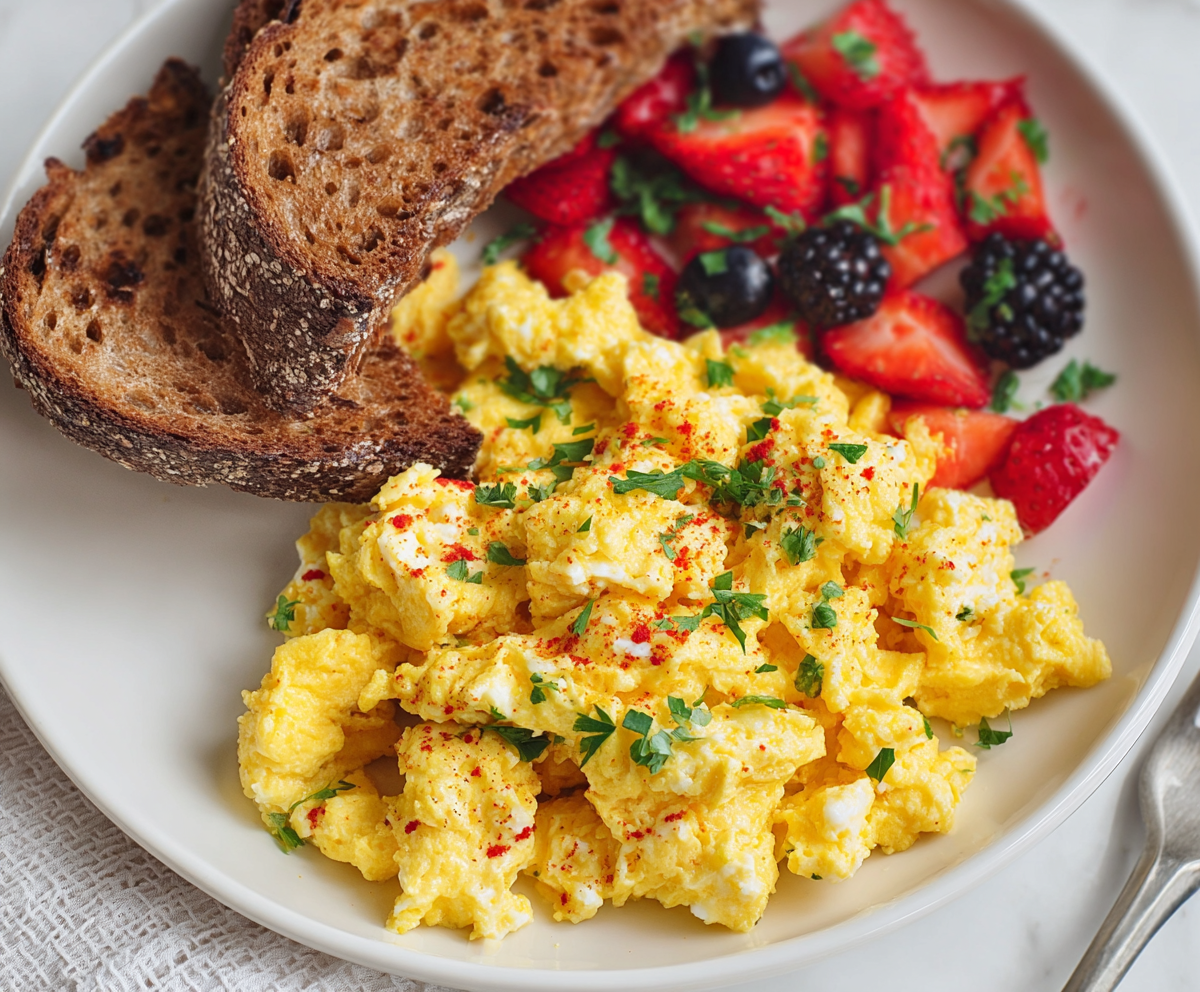
Slide the scrambled eggs onto a plate. Sprinkle the chopped parsley or chives on top and add a pinch of red chili flakes or paprika if you like some heat or color. Serve right away with toasted bread slices and fresh mixed berries for a colorful and balanced meal.
Can I Use Frozen Cottage Cheese for This Recipe?
It’s best to use fresh cottage cheese for the creamiest texture. If you only have frozen, thaw it completely in the fridge and drain any excess liquid before mixing with the eggs.
Can I Make These Scrambled Eggs Ahead of Time?
These eggs are best served immediately for the softest texture. If needed, you can keep them warm in a low oven for up to 15 minutes, but avoid reheating as they may become rubbery.
How Should I Store Leftovers?
Store any leftover scrambled eggs in an airtight container in the fridge and consume within 1–2 days. Reheat gently in a microwave or on the stove over low heat to prevent drying out.
What Can I Substitute for Fresh Herbs?
If you don’t have fresh parsley or chives, dried herbs like dill or thyme can work in a pinch. Add them sparingly to avoid overpowering the mild flavor of the eggs.
