
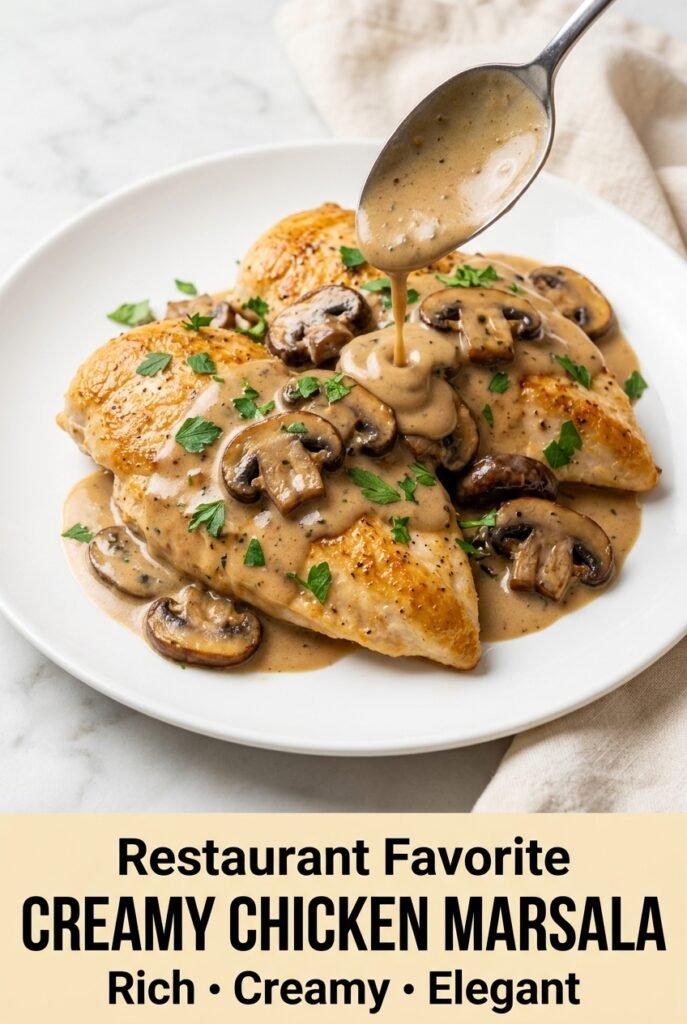
Creamy Chicken Marsala
Tender pan-seared chicken and a glossy Marsala mushroom sauce make this the kind of dinner that lands on the table looking polished without asking for much more than one skillet…
Tip: save now, read later.
Tender pan-seared chicken and a glossy Marsala mushroom sauce make this the kind of dinner that lands on the table looking polished without asking for much more than one skillet and a little attention. The chicken stays lightly coated and golden, the mushrooms turn savory and browned instead of soft and pale, and the sauce finishes with enough body to cling to every slice instead of pooling underneath it.
What makes this version work is the order. The chicken gets browned first so the pan builds flavor, then the mushrooms cook long enough to lose their moisture before the wine goes in. That step matters more than it sounds. If the mushrooms are still wet, the sauce tastes thin and the browning gets lost. Marsala brings sweetness and depth, while the Parmesan and cream pull everything together without turning the sauce heavy.
Below you’ll find the exact points where this dish can go off track and how to keep the sauce smooth, plus a few smart swaps if you need to work around what you have on hand.
The sauce reduced down beautifully and didn’t break when I added the cream. The chicken stayed juicy, and even my picky eater asked for the mushrooms on top.
Creamy Chicken Marsala with browned mushrooms and a silky Parmesan sauce belongs in your weeknight rotation.
The Reason the Sauce Stays Silky Instead of Turning Grainy
The sauce starts smooth or it doesn’t recover later. Marsala wine needs a minute or two in the pan before the broth and cream join in, because that first reduction concentrates the wine and cooks off the sharp edge. If you dump in the dairy too early, the sauce can taste flat and feel thinner than it should.
The other point that matters is the heat level after the cream goes in. Low to medium-low is enough. High heat is what makes cream sauces look broken or speckled, especially once Parmesan enters the pan. Stir gently and let the sauce thicken from simmering, not from boiling.
What Each Ingredient Is Actually Doing in This Dish
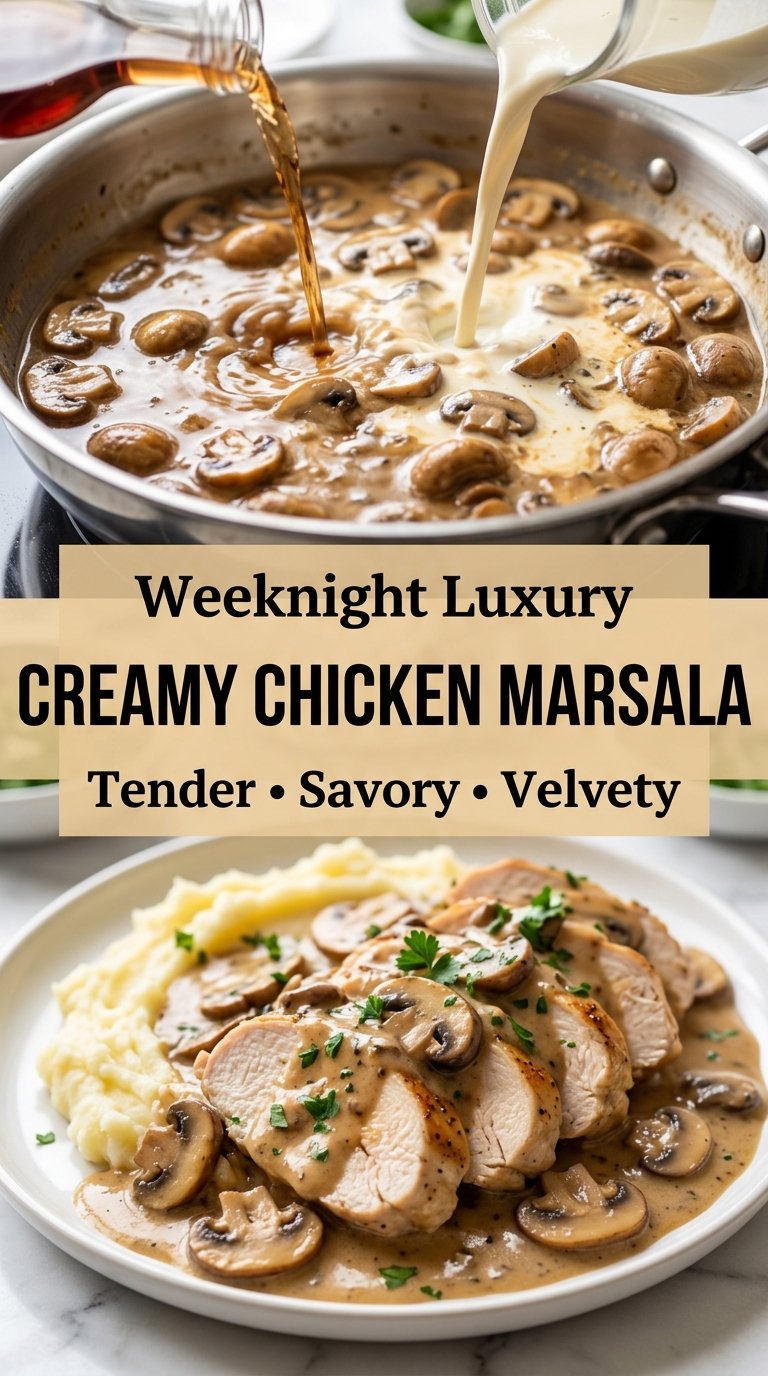
- Chicken breasts — Slicing them in half lengthwise gives you thinner cutlets that cook quickly and stay tender. Thick whole breasts take too long, and by the time the center is done the outside is overcooked.
- Marsala wine — This is the flavor that makes the dish taste like Marsala instead of just chicken in cream sauce. Dry Marsala gives the cleanest savory result; if all you have is sweet Marsala, use it and lean a little harder on the broth to balance the richness.
- Cremini mushrooms — They brown better than white mushrooms and bring a deeper, earthier flavor. If you swap in white buttons, cook them a few minutes longer so their moisture has time to evaporate.
- Parmesan cheese — Grate it finely so it melts into the sauce instead of clumping. Pre-shredded cheese often has anti-caking starches that can make the sauce less smooth.
- Flour — The light dredge helps the chicken brown and gives the sauce a little structure later. You don’t need a thick coating; too much flour turns the skillet drippings pasty instead of silky.
Building the Pan Sauce in the Right Order
Season and Dredge the Chicken
Season both sides of the chicken before it touches the flour so the meat itself tastes like something, not just the coating. The flour layer should be thin enough that you can still see the chicken through it. If the dredge is heavy, it will steam in the pan and turn gummy instead of forming a light crust.
Brown the Chicken First
Heat the oil until it shimmers, then lay the chicken in without crowding the skillet. You want a steady sizzle right away; if the pan is too cool, the flour absorbs oil and goes pale. Cook until the surface is deeply golden, then pull the chicken out before it finishes all the way through.
Cook the Mushrooms Until Their Moisture Is Gone
Add the butter and mushrooms to the same pan and let them sit long enough to brown before you stir them around too much. At first they’ll release liquid, then that liquid will cook off and the edges will start to caramelize. If the pan looks crowded or wet, the mushrooms will turn soft and gray instead of savory.
Reduce the Wine Before the Dairy Goes In
Once the garlic smells fragrant, pour in the Marsala and scrape the bottom of the skillet. Those browned bits dissolve into the sauce and carry the whole dish. Let the wine reduce by about half before adding broth and cream; that keeps the sauce from tasting boozy and gives it a cleaner finish.
Finish with Cream, Parmesan, and the Chicken
Keep the heat gentle when the cream goes in, then stir in the Parmesan a little at a time. If the sauce starts looking grainy, the pan is too hot — pull it off the burner and stir until it smooths out. Return the chicken and let it simmer until the sauce coats the back of a spoon and the chicken reaches 165°F.
Three Ways to Adjust Creamy Chicken Marsala Without Losing What Matters
Dairy-Free Version That Still Feels Rich
Use olive oil instead of butter, swap the cream for full-fat coconut milk or an unsweetened dairy-free cooking cream, and leave out the Parmesan. The sauce won’t taste identical, but you’ll still get a velvety finish if you keep the heat low and reduce the Marsala properly before adding the substitute.
Gluten-Free Chicken Marsala
Swap the all-purpose flour for a good gluten-free flour blend or a light dusting of cornstarch. Cornstarch gives a slightly cleaner, glossier sauce, while gluten-free flour behaves more like the original coating and browns a little more like wheat flour.
Use Chicken Thighs for a More Forgiving Result
Boneless thighs work well if you prefer darker meat and a little more margin for error. They need a few extra minutes in the pan, but they stay juicy and soak up the sauce nicely. Keep the pieces similar in size so they finish at the same time.
Storage and Reheating
- Refrigerator: Store in an airtight container for up to 3 days. The sauce thickens as it chills.
- Freezer: It freezes, but cream sauces can separate a little when thawed. If you freeze it, cool it fully first and reheat gently with a splash of broth.
- Reheating: Warm it slowly in a covered skillet over low heat. High heat is the fastest way to split the sauce and dry out the chicken.
Answers to the Questions Worth Asking
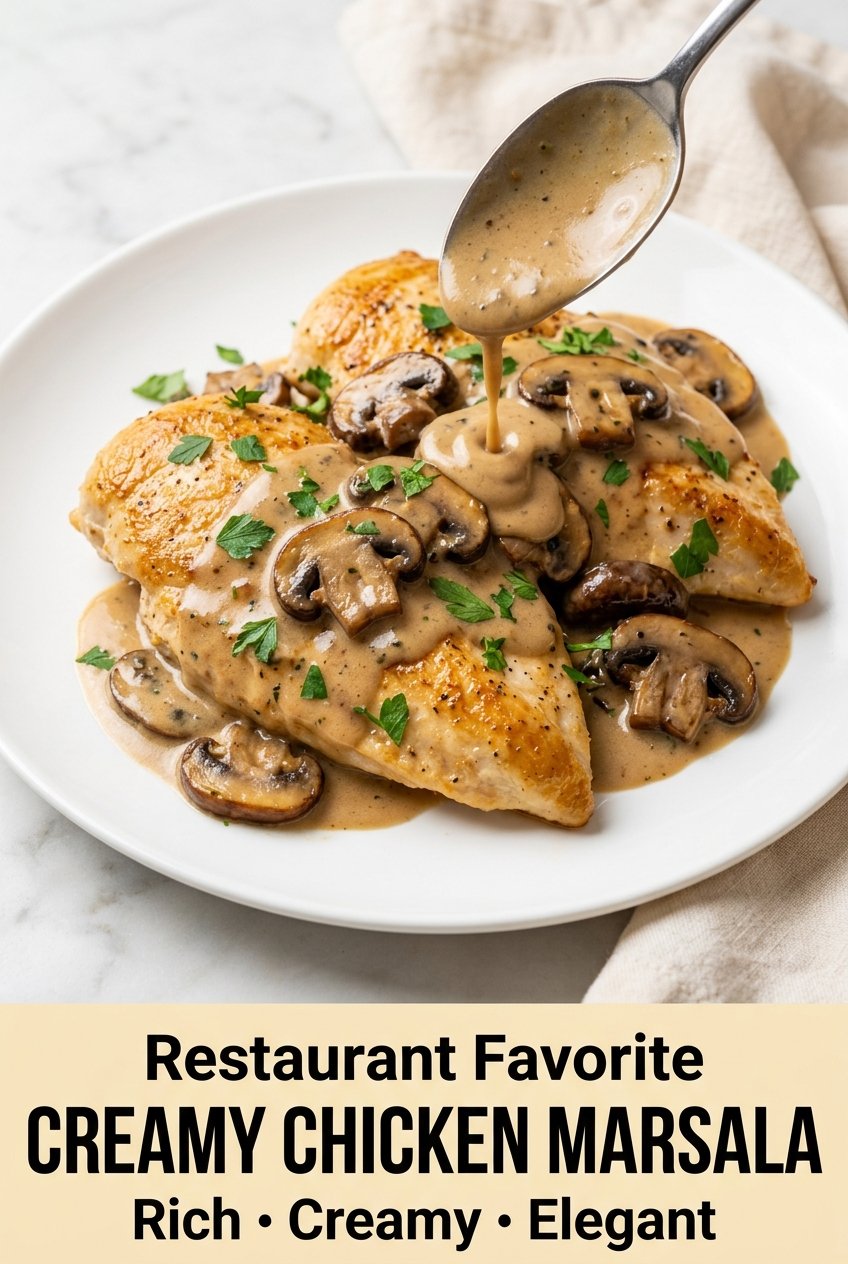
Creamy Chicken Marsala
Ingredients
Equipment
Method
- Season the chicken with kosher salt, black pepper, and garlic powder. Lightly dredge each piece in the flour, shaking off excess flour.
- Heat the olive oil in a large skillet over medium-high heat. Cook the chicken for 4–5 minutes per side until golden brown, then transfer it to a plate.
- Melt the butter in the same skillet. Sauté the sliced mushrooms for 6–8 minutes until browned and their moisture has evaporated.
- Add the minced garlic and cook for 30 seconds until fragrant.
- Pour in the Marsala wine and scrape the browned bits from the pan. Simmer for 3–4 minutes until slightly reduced.
- Stir in the chicken broth and heavy cream. Simmer for 4 minutes until the sauce begins to thicken.
- Whisk in the Parmesan cheese and fresh thyme until smooth and creamy.
- Return the chicken to the skillet. Simmer for 5–7 minutes until the chicken reaches 165°F and the sauce coats the chicken beautifully.
- Sprinkle with chopped fresh parsley and serve immediately over mashed potatoes, buttered noodles, or rice.
