
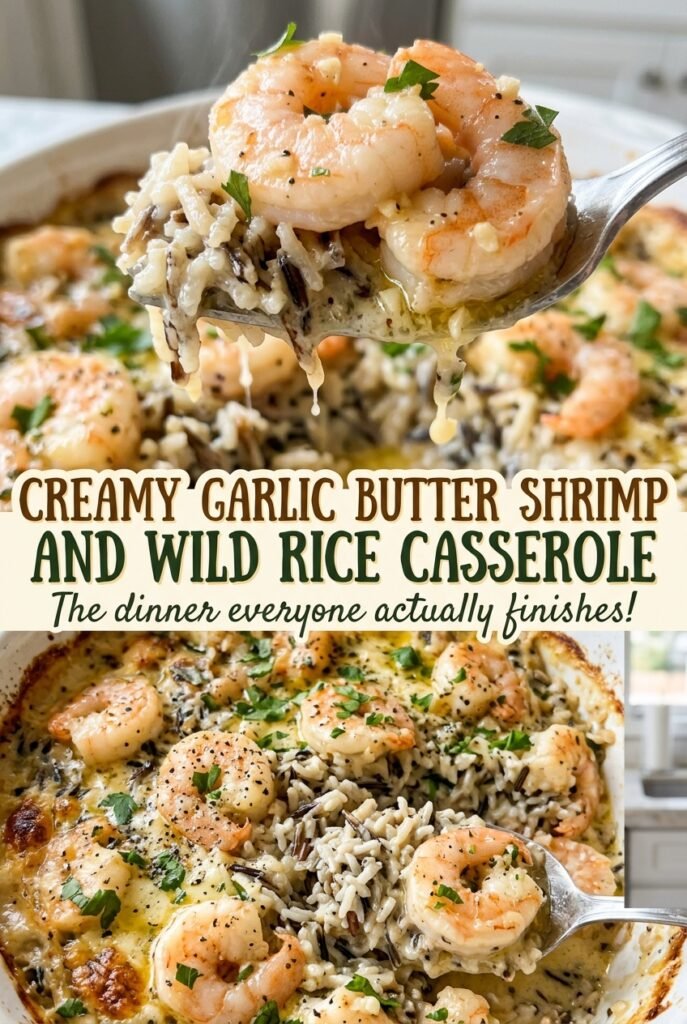
Creamy Garlic Butter Shrimp and Wild Rice Casserole
The mushrooms release liquid almost as soon as they hit the butter, and the skillet can look much wetter before it starts to look ready. I wait until most of…
Tip: save now, read later.
The mushrooms release liquid almost as soon as they hit the butter, and the skillet can look much wetter before it starts to look ready. I wait until most of that moisture has cooked away; otherwise, it thins the sauce later. That small pause gives this creamy garlic butter shrimp and wild rice casserole a sauce that clings instead of pooling around the rice.
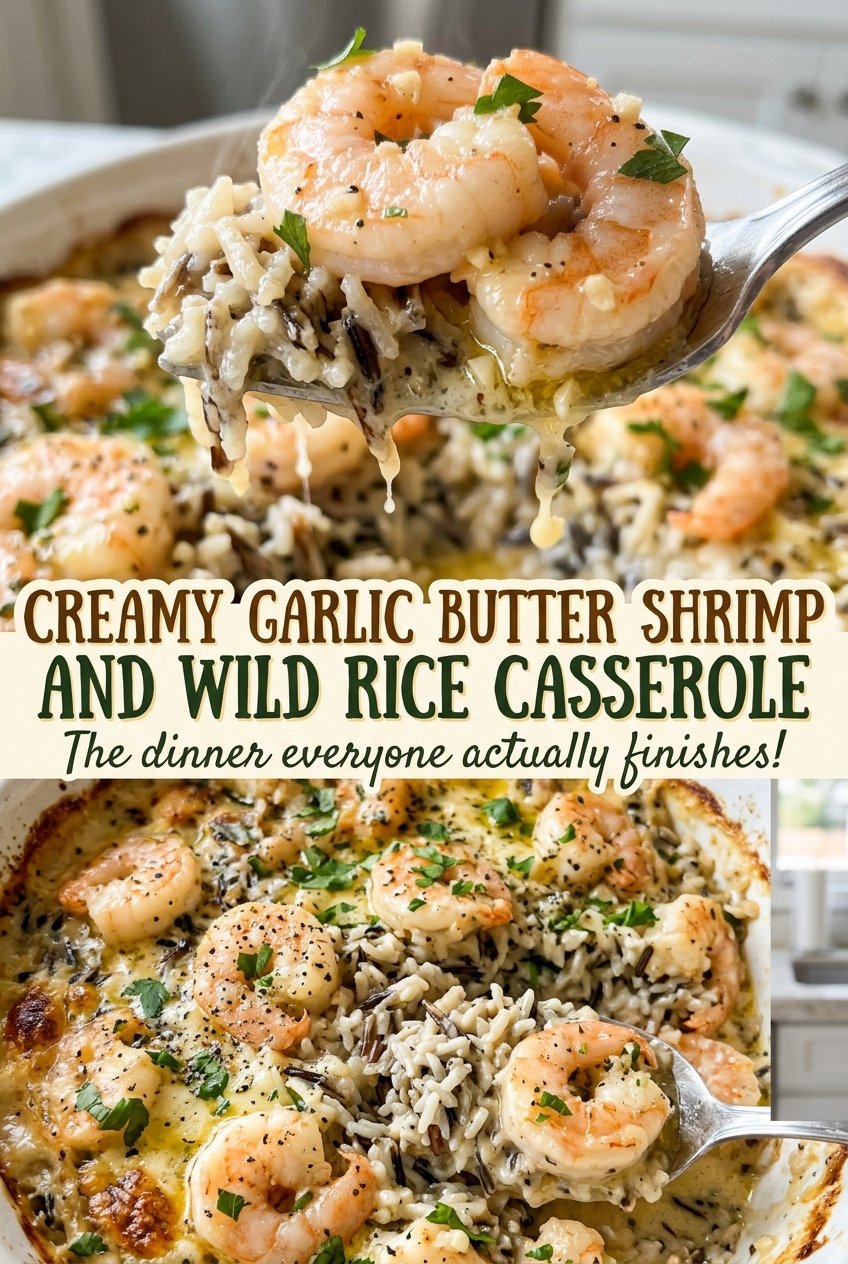
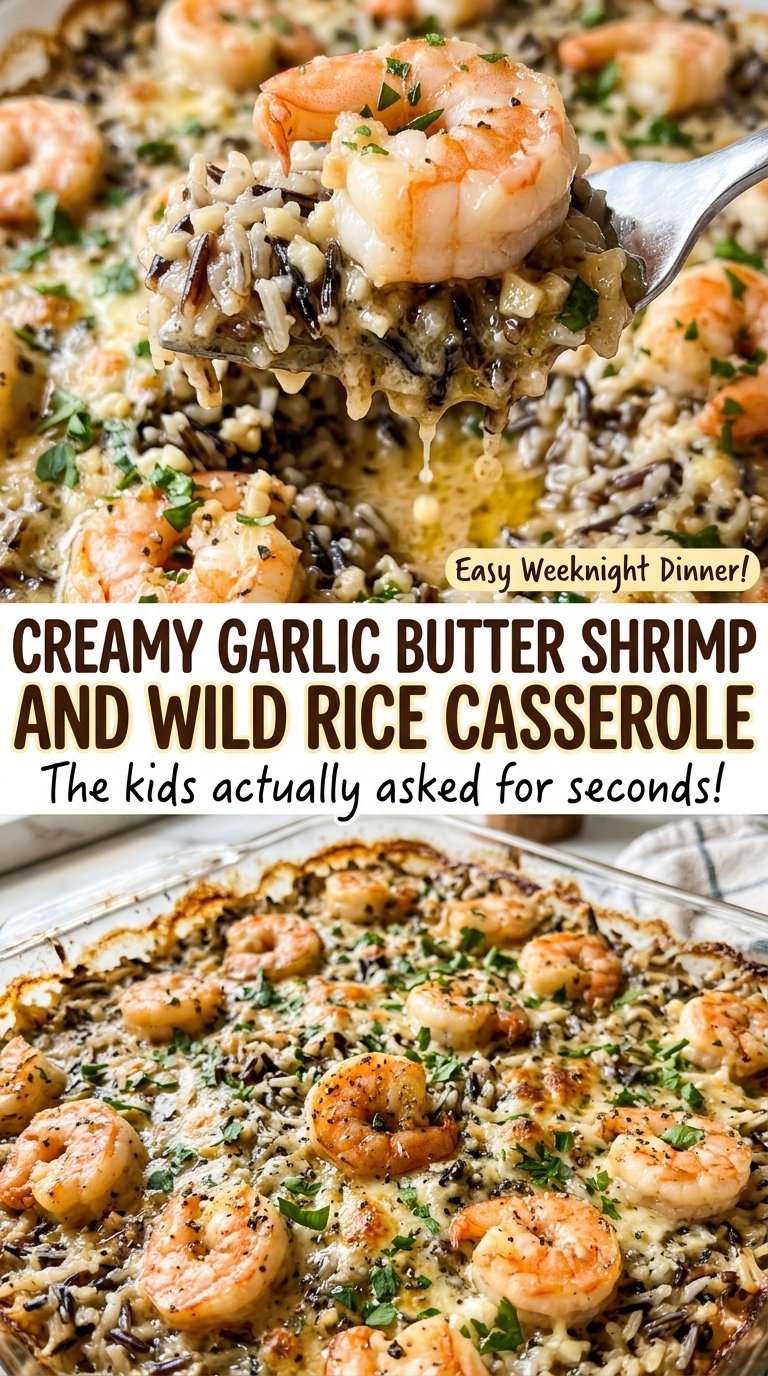
I cook the wild rice separately, then fold it into a thick, garlicky sauce with raw shrimp. The shrimp cook in the oven while the panko turns golden, so they don’t need a separate round in the skillet. Each spoonful has tender shrimp, chewy grains of wild rice, and a crisp top that gives way to a creamy center.
Kitchen Note
Pat the thawed shrimp dry before folding them into the rice and sauce. If they go in wet, that extra moisture can loosen the casserole right where you want it creamy.
Save this creamy garlic butter shrimp and wild rice casserole for its crisp panko top and tender shrimp tucked into a rich, garlicky sauce.
Why the Shrimp Goes Into the Oven Raw, Not Into the Skillet First
Large raw shrimp need only the casserole’s baking time to cook through. The wild rice is already tender and the sauce is already thickened before the shrimp go in, so the oven can finish the seafood while warming the assembled dish and browning the topping. Cooking the shrimp in the skillet first would give them heat twice, which makes it harder to keep them tender.
That order also makes the cooking easier to manage: prepare the rice and sauce, fold in the shrimp, then let the oven do the final cooking. Keep the shrimp distributed through the rice instead of leaving them piled together in one spot. They’ll cook more evenly, and you’ll get shrimp in each serving rather than a cluster in the middle.
What Wild Rice, Raw Shrimp, and Parmesan Each Bring to the Casserole
- Wild rice — Its firm, nutty grains hold their shape under a creamy sauce. Rinse it before cooking, and choose plain wild rice rather than a blend with other grains, which can cook at a different pace.
- Large raw shrimp — Large shrimp are a better fit for the casserole’s oven time than small ones, which can turn firm quickly. Frozen raw shrimp work well once thawed; choose peeled and deveined shrimp with the tails removed to keep serving simple.
- Cremini mushrooms — They bring an earthy note and substantial texture. White button mushrooms are a useful stand-in; swap them in by weight for a milder mushroom flavor.
- All-purpose flour, broth, and cream — The flour thickens the broth and cream into a sauce that coats the rice. Low-sodium broth leaves you more control over seasoning, while heavy cream gives the sauce body; Dijon adds a little sharpness to balance its richness.
- Finely grated Parmesan — Fine shreds melt into the sauce more evenly than thick pieces. A good wedge grated at home melts smoothly, but pre-grated Parmesan is convenient if it’s finely grated.
- Panko and olive oil — Panko gives the top its airy crunch, and tossing it with oil helps it turn golden in the oven. Regular breadcrumbs make a finer, denser topping, so panko is worth choosing here.
Cook the Rice, Thicken the Sauce, and Let the Oven Finish the Shrimp
Simmer the Wild Rice Until Tender
Rinse the wild rice in a fine-mesh strainer, then combine it with the water in a large saucepan and bring it to a boil. Reduce the heat to low, cover, and simmer for 45–60 minutes. Look for tender grains with most of them split open; wild rice doesn’t need every grain to look identical. Drain it well before it goes near the sauce.
Cook Down the Mushrooms and Onion
Heat the oven to 400°F and grease a 9×13-inch baking dish. Melt the butter in a 12-inch skillet over medium heat, then add the diced onion and sliced mushrooms. Cook for 8–10 minutes, stirring occasionally, until the onion and mushrooms have softened and most of the liquid from the mushrooms has evaporated. If the skillet still looks watery, give it a little longer before moving on.
Build a Smooth, Thick Sauce
Stir the minced garlic into the skillet and cook for 30 seconds, just until fragrant. Stir in the flour and cook for 1 minute so it doesn’t taste raw. Gradually whisk in the broth and cream, taking time to smooth out any flour lumps before the sauce simmers. Cook at a gentle simmer for 3–5 minutes, until thickened, then stir in the Dijon, salt, pepper, and Parmesan.
Fold in the Rice and Shrimp
In a large bowl, fold the cooked rice and raw shrimp into the sauce until everything is coated. Use a gentle motion so the rice grains stay intact and the shrimp are spread throughout rather than bunched together. Transfer the mixture to the prepared baking dish and spread it into an even layer. A level surface helps the panko brown consistently.
Top, Bake, and Rest
Toss the panko with the olive oil and scatter it evenly over the casserole. Bake for 15–20 minutes, until the topping is golden and the thickest shrimp reaches 145°F on an instant-read thermometer. If the crumbs are browning but the shrimp needs more time, rely on the thermometer rather than the color of the topping. Let the casserole rest for 5 minutes before serving so the sauce can settle around the rice.
Useful Changes for a Mushroom-Free or Gluten-Free Casserole
Leave Out the Mushrooms
Skip the cremini mushrooms for a casserole with a cleaner garlic-and-shrimp flavor. Cook the onion in the butter until softened, then continue with the garlic and flour; without the mushrooms’ liquid, the skillet stage will take less time, so use the softened onion as your cue.
Make It Gluten-Free
Use a gluten-free all-purpose flour blend in place of the regular flour and gluten-free panko for the topping. Choose a gluten-free chicken broth, too. The sauce may thicken a little differently depending on the flour blend, so go by its texture as it simmers rather than expecting the exact same timing.
Storage and Reheating
- Refrigerator: Keep leftovers in an airtight container for 3–4 days. The panko will soften as it sits against the creamy casserole.
- Freezer: Freeze portions in airtight freezer-safe containers for up to 2 months. The cream sauce may separate a little after thawing, and the topping won’t stay crisp.
- Reheating: Reheat covered in a 350°F oven until the center reaches 165°F, uncovering near the end to refresh the topping. For a quick portion, use short microwave bursts; extended high heat can make the shrimp tough.
The Questions That Come Up When Making Shrimp and Wild Rice Casserole
Creamy Garlic Butter Shrimp and Wild Rice Casserole
Ingredients
Equipment
Method
- Rinse the wild rice in a fine-mesh strainer.
- Combine the rice with the water in a large saucepan and bring to a boil.
- Reduce the heat to low, cover, and simmer for 45–60 minutes, until tender and most grains have split.
- Drain the rice well.
- Heat the oven to 400°F.
- Grease a 9x13-inch baking dish.
- Melt the butter in a 12-inch skillet over medium heat.
- Add the onion and mushrooms and cook for 8–10 minutes, stirring occasionally, until softened and most of the mushroom liquid has evaporated.
- Stir in the garlic and cook for 30 seconds.
- Stir in the flour and cook for 1 minute.
- Gradually whisk in the broth and cream until smooth.
- Bring the mixture to a gentle simmer and cook for 3–5 minutes until thickened.
- Stir in the Dijon, salt, pepper, and Parmesan.
- In a large bowl, fold the cooked rice and shrimp into the sauce.
- Spread the mixture in the prepared baking dish.
- Toss the panko with the olive oil.
- Scatter the panko evenly over the casserole.
- Bake for 15–20 minutes, until the topping is golden and the thickest shrimp reaches 145°F on an instant-read thermometer.
- Let the casserole rest for 5 minutes before serving.
