
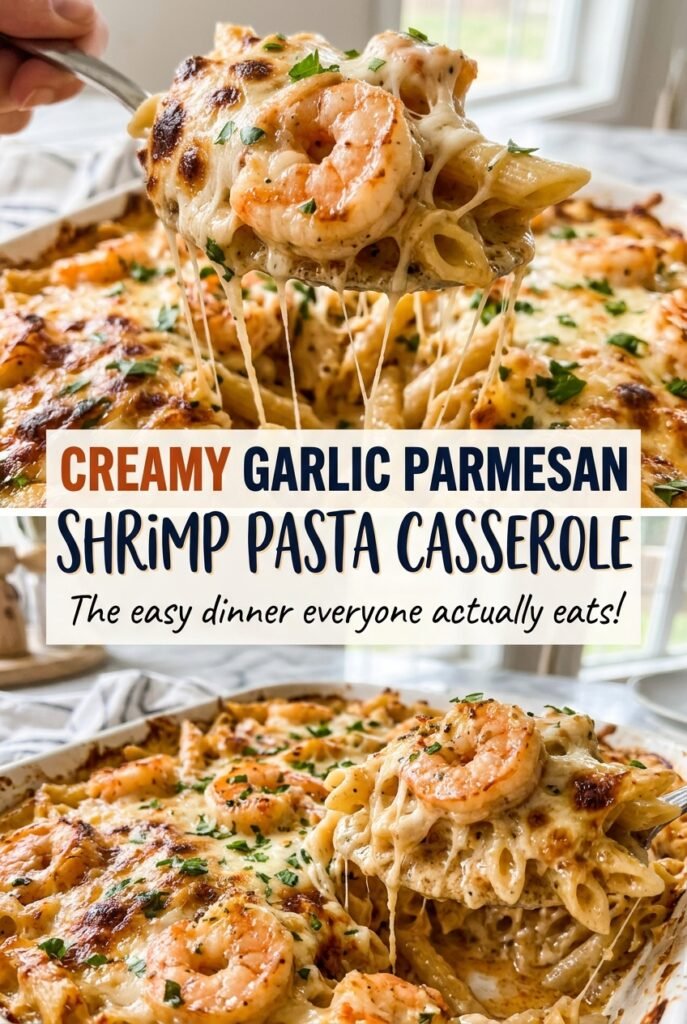
Creamy Garlic Parmesan Shrimp Pasta Casserole
When I lift the foil from this casserole, the panko is still pale and the shrimp are cooking in the creamy sauce underneath. Those last few minutes uncovered turn the…
Tip: save now, read later.
When I lift the foil from this casserole, the panko is still pale and the shrimp are cooking in the creamy sauce underneath. Those last few minutes uncovered turn the top golden without leaving the whole dish in the oven longer than it needs. That balance matters in a baked pasta: you want a crisp lid, saucy penne, and tender shrimp, not a dry casserole with tough seafood. I make this Creamy Garlic Parmesan Shrimp Pasta Casserole when I want the pasta, sauce, and shrimp to finish together in one dish.
I toss the panko with olive oil before scattering it over the casserole, so the crumbs get lightly coated and brown evenly. That crisp layer is a good contrast to the soft pasta underneath. The sauce also starts on the stovetop, where the flour thickens the milk, cream, and broth before they meet the penne. Parmesan melts into that creamy base, giving every forkful a savory, cheesy sauce beneath the golden topping.
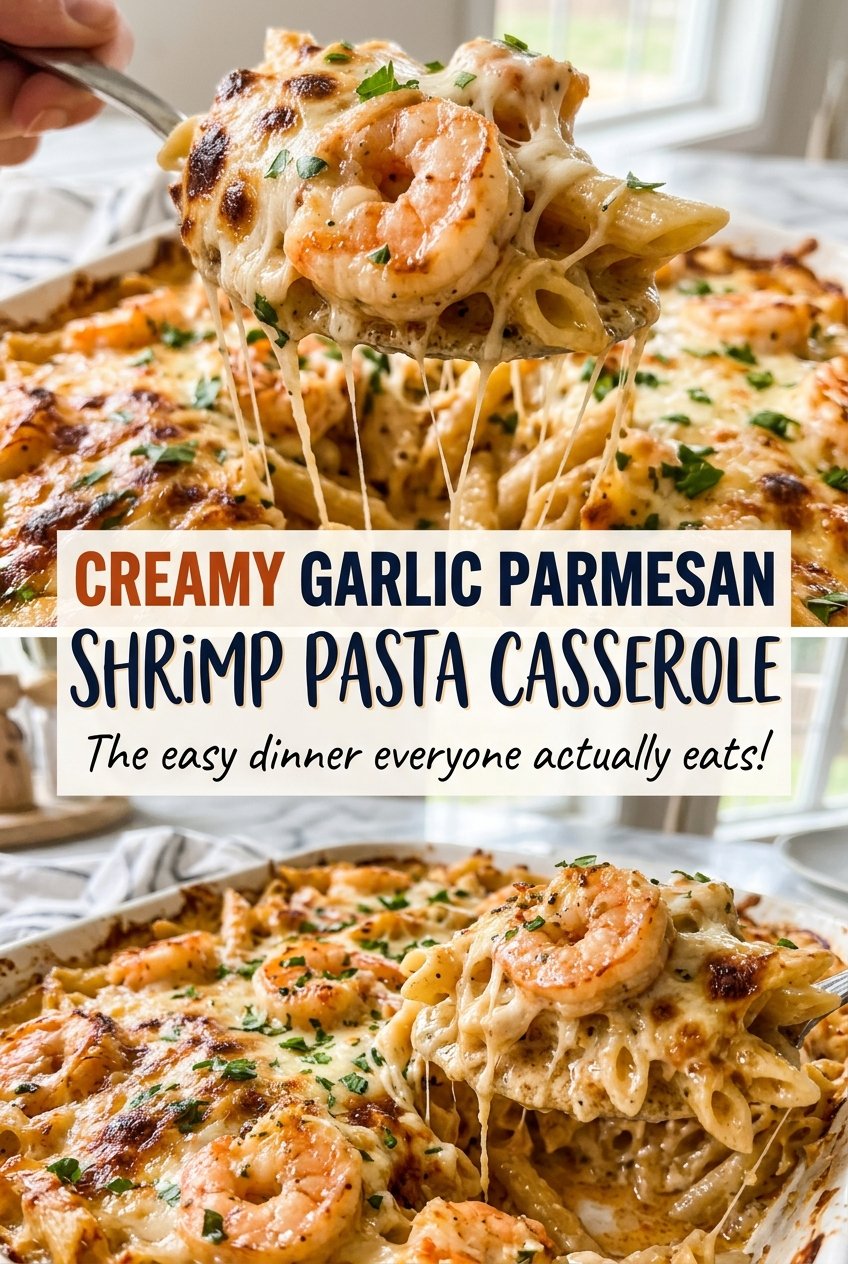
Kitchen Note
Stop the penne two minutes before the package time. It keeps its shape while it finishes in the oven, instead of turning soft at the edges.
Save this Creamy Garlic Parmesan Shrimp Pasta Casserole for its tender shrimp, Parmesan cream sauce, and crisp panko top.
Why the Shrimp Goes Into the Casserole Raw
Cooking the shrimp in a skillet first seems like a way to lock in flavor, but it gives the seafood two rounds of cooking: one in the pan and another in the oven. That extra time can leave shrimp firm and rubbery by the time the casserole is ready. Here, I stir the raw shrimp directly into the sauce and pasta, so it cooks just once as the casserole bakes.
The covered bake keeps the shrimp nestled in the creamy mixture while the heat moves through the dish. That’s also why I spread the pasta and shrimp into an even layer rather than piling everything into the center. Each shrimp gets room to cook alongside the penne, and there’s no separate pan to wash or pre-cooked seafood to fold in at the last minute. For this method, start with raw shrimp, not cooked or cocktail shrimp.
What the Milk, Cream, and Broth Each Bring to This Shrimp Casserole
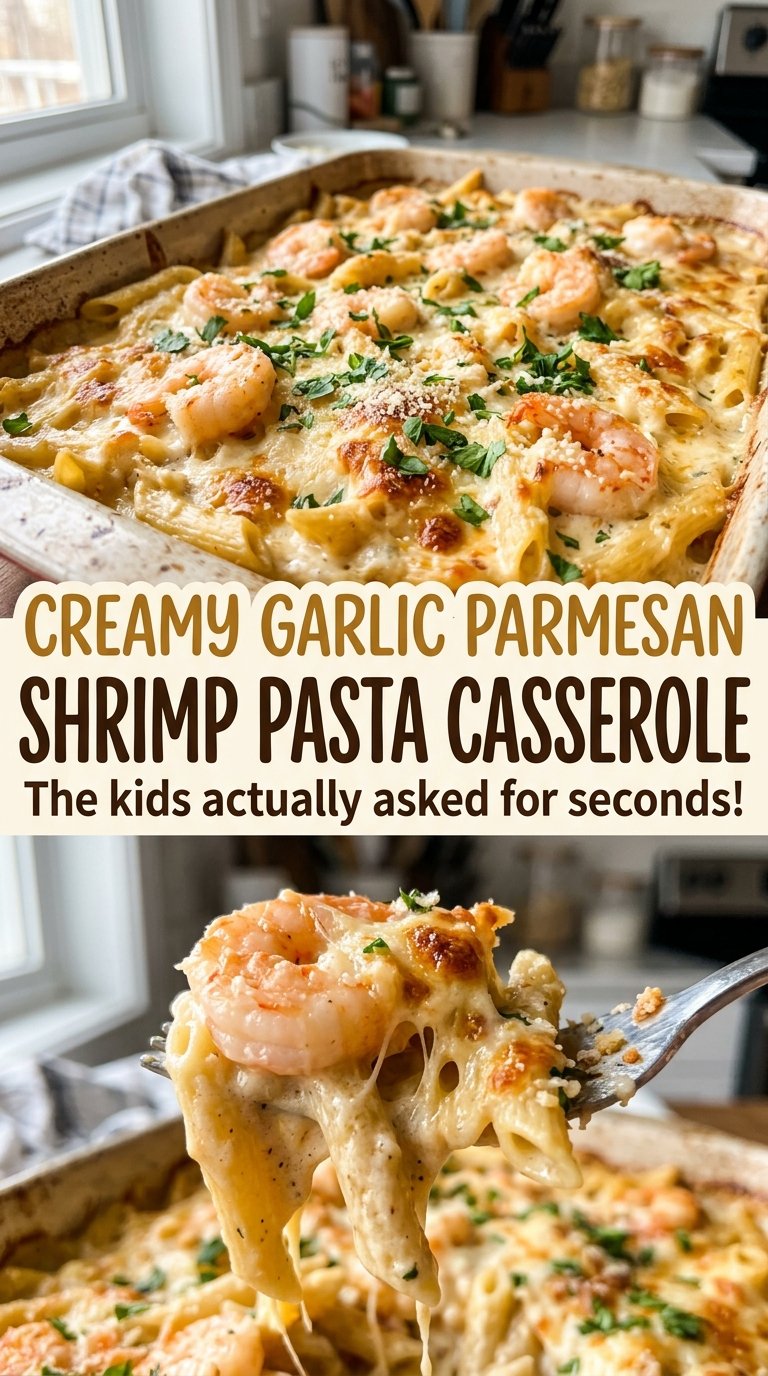
- Whole milk and heavy cream — The milk keeps the sauce from feeling too rich, while cream gives it body. Whole milk is a better fit than skim here; lower-fat milk makes a thinner sauce and loses some of the casserole’s silky texture. Half-and-half can stand in for the cream, though the finished sauce will be less rich.
- Low-sodium chicken broth — Broth brings savory depth without making the sauce as heavy as using cream alone. Low-sodium broth leaves room to season the sauce yourself. Vegetable broth works as a swap, with a slightly different savory taste.
- Finely grated Parmesan — Fine shreds melt into the sauce more evenly than thick strands. A wedge grated at home is a good choice, but finely grated packaged Parmesan works too. Add it off the heat so it melts into the sauce instead of clumping.
- Large raw shrimp — Peeled and deveined shrimp keep prep manageable and make the casserole easy to serve. Frozen shrimp are convenient; thaw them before adding them so they don’t bring excess ice into the sauce.
- Penne — The short tubes are easy to scoop and hold sauce inside as well as around the pasta. Rigatoni is a close substitute if that’s what you have; cook it according to its package time, stopping two minutes early.
- Flour — Flour thickens the butter and dairy into a sauce that can coat the pasta. Stir it into the melted butter and cook it briefly before whisking in the liquids; adding it later can leave little floury lumps.
- Panko and olive oil — Panko gives the casserole a lighter, crunchier topping than fine breadcrumbs. Tossing the crumbs with oil helps them brown across the surface. Use fresh panko if you want the topping to stay crisp rather than taste stale.
From Stovetop Sauce to a Golden Panko Top
Get the Penne Ready for Its Second Cook
Heat the oven to 375°F and grease a 9×13-inch baking dish. Bring a large pot of water to a boil, add the kosher salt, and cook the penne for two minutes less than the package directions. Drain it well so excess water doesn’t thin the sauce. The pasta should still feel firm in the center; it will finish cooking in the casserole.
Cook the Garlic and Flour in Butter
Melt the butter in a large saucepan over medium heat, then add the minced garlic. Cook it for 30 seconds, just until fragrant; garlic can turn bitter if it browns. Stir in the flour and cook for one minute, stirring so it combines with the butter. The mixture should look smooth and pasty rather than dry or scorched.
Whisk the Creamy Parmesan Sauce
Gradually whisk in the milk, heavy cream, and chicken broth until the mixture is smooth. Bring it to a simmer and whisk often for 4 to 6 minutes, until it thickens enough to coat a spoon. Take the saucepan off the heat before stirring in the salt, pepper, and Parmesan. If you add the cheese while the sauce is still over direct heat, it’s more likely to clump instead of melting smoothly.
Bake Until the Shrimp Are Opaque and the Panko Is Golden
Stir the drained penne and raw shrimp into the sauce, then spread the mixture in the prepared baking dish. Toss the panko with olive oil and scatter it evenly over the top. Cover the dish with foil and bake for 15 to 20 minutes, until the shrimp are opaque and reach 145°F in the thickest part. Remove the foil and bake for 4 to 6 minutes, until the topping is golden. Let the casserole rest for 5 minutes before serving so it settles and scoops neatly.
Three Ways to Adapt This Shrimp Pasta Casserole
Make It Gluten-Free
Use gluten-free penne, a cup-for-cup gluten-free flour blend in place of the all-purpose flour, and gluten-free panko. Cook the pasta two minutes short of its package time as usual. The sauce may thicken a little differently depending on the flour blend, but simmer it until it coats a spoon before adding the cheese.
Use Rigatoni Instead of Penne
Rigatoni gives you a wider tube with plenty of space for the creamy sauce. Follow the package timing for your pasta and drain it two minutes early; the larger shape makes the casserole feel a little heartier without changing the sauce or shrimp.
Skip the Crunchy Topping
For a softer top, leave off the panko and olive oil. Bake the covered casserole until the shrimp are opaque and cooked through, then let it rest before serving; there won’t be a browned, crunchy finish, but the sauce and pasta stay the focus.
Storage and Reheating
- Refrigerator: Refrigerate leftovers promptly in an airtight container for 3 to 4 days. The penne will absorb some sauce as it sits.
- Freezer: Freeze airtight portions for up to 2 months. Thaw them in the refrigerator; the cream sauce may look slightly separated and the pasta will be softer after thawing.
- Reheating: Warm a covered portion in the microwave in short bursts, stirring between them if possible. Avoid heating it for too long at once, which can make the shrimp rubbery and the sauce oily.
Questions I Get Asked About This Shrimp Pasta Casserole
Creamy Garlic Parmesan Shrimp Pasta Casserole
Ingredients
Equipment
Method
- Heat the oven to 375°F.
- Grease a 9x13-inch baking dish.
- Bring a large pot of water to a boil, add the tablespoon of kosher salt and penne, and cook for 2 minutes less than the package directions.
- Drain the pasta.
- Melt the butter in a large saucepan over medium heat.
- Add the garlic and cook for 30 seconds.
- Stir in the flour and cook for 1 minute.
- Gradually whisk in the milk, heavy cream, and chicken broth until smooth.
- Simmer, whisking often, for 4 to 6 minutes until thickened.
- Remove from the heat and stir in the 1/2 teaspoon kosher salt, black pepper, and Parmesan.
- Stir the drained pasta and raw shrimp into the sauce.
- Spread the mixture in the prepared baking dish.
- Toss the panko with the olive oil.
- Sprinkle the panko mixture evenly over the casserole.
- Cover the dish with foil and bake for 15 to 20 minutes, until the shrimp are opaque and reach 145°F in the thickest part.
- Remove the foil and bake for 4 to 6 minutes, until the topping is golden.
- Rest for 5 minutes before serving.
