
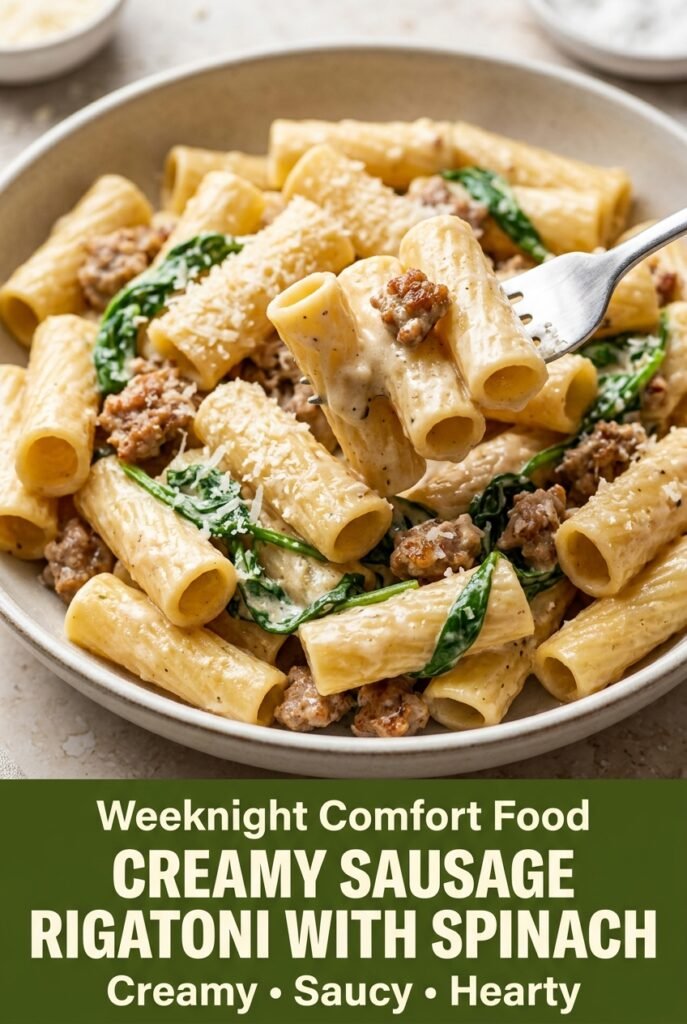
Creamy Sausage Rigatoni with Spinach
Rigatoni and sausage in a Parmesan cream sauce is one of those dinners that disappears fast because every bite hits a little differently. The rigatoni catches the sauce inside the…
Tip: save now, read later.
Rigatoni and sausage in a Parmesan cream sauce is one of those dinners that disappears fast because every bite hits a little differently. The rigatoni catches the sauce inside the tubes, the sausage brings a savory, peppery bite, and the spinach keeps the whole pan from feeling heavy. It’s rich without tipping into muddy or flat, and that balance is what makes it worth putting on repeat.
The key is building the sauce in the same skillet after the sausage has browned. Those browned bits on the bottom carry a lot of flavor, and tomato paste deepens the sauce just enough to keep the cream from tasting one-note. I also keep the heat low once the cream and Parmesan go in, because that’s the difference between a smooth sauce and one that turns grainy or oily.
Below, I’ll walk through the part that matters most: how to get the sauce thick enough to cling to the pasta without reducing it into something stiff. There’s also a few practical variations if you want to swap the sausage, lighten it up, or turn it into leftovers that still eat well the next day.
The sauce thickened up perfectly and coated the rigatoni instead of pooling at the bottom. I used spicy sausage and the spinach stayed bright, not soggy.
Save this creamy sausage rigatoni for the nights when you want a silky Parmesan sauce, hearty pasta, and spinach all in one pan.
The Part Where Cream Sauces Go Wrong
The biggest mistake in a dish like this is rushing the cream after the sausage has browned. If the pan is too hot, the dairy can separate before the Parmesan has a chance to melt smoothly, and you end up with a sauce that looks broken instead of glossy. Medium-low heat gives the sauce time to thicken without tightening up or turning greasy.
Tomato paste does more here than add color. It gives the sauce a deeper savory base and keeps the cream from tasting flat. That short minute of cooking the paste in the pan matters, because raw tomato paste tastes sharp and tinny until it darkens a little and loses that edge.
- Browned sausage — This is the backbone of the dish. Don’t just cook it until gray; let it take on real color so the sauce starts with a meaty, caramelized base.
- Tomato paste — A small amount makes the sauce taste rounder and richer. Cooking it for a minute in the skillet wakes it up and keeps it from tasting raw.
- Parmesan — Freshly grated cheese melts more smoothly than the pre-shredded stuff. The bagged version can work in a pinch, but it usually gives you a slightly grainier finish.
- Rigatoni — The tubes matter here because they trap sauce inside and outside. Penne works too, but rigatoni gives you a better bite and a fuller coating.
What Each Ingredient Is Actually Doing in This Dish
- Italian sausage — Use mild or spicy depending on how much heat you want. The casing-free sausage breaks into craggy bits that brown well, and that texture is part of what makes the sauce feel hearty.
- Heavy cream — This brings the body and silkiness. Half-and-half can work, but the sauce will be thinner and a little more fragile, especially once the cheese goes in.
- Chicken broth — It loosens the cream just enough so the sauce coats instead of clumps. If you use all cream, the sauce gets heavier and less balanced.
- Baby spinach — Add it at the end so it wilts without turning dull or swampy. Frozen spinach isn’t the best swap here because it releases too much water and can thin the sauce.
- Garlic and onion — These build the savory base before the dairy goes in. Dice the onion small so it softens fast and disappears into the sauce instead of standing out in chunks.
Building the Sauce So It Stays Silky
Brown the Sausage First
Heat the oil, then cook the sausage until it’s browned on the edges and no longer looks wet. Those browned bits are what give the sauce depth, so don’t crowd the pan or stir constantly. If the sausage steams instead of browns, the final dish tastes flatter and the texture turns softer than it should.
Cook the Aromatics and Tomato Paste
Add the onion and let it turn translucent before the garlic goes in. Garlic burns fast, so it only needs about a minute with the tomato paste once the onion has softened. The paste should darken slightly and smell sweet, not sharp.
Simmer Before the Cheese
Pour in the cream and broth, then keep the heat at medium-low and let the sauce bubble gently. You want a few lazy bubbles around the edge, not a hard simmer. If it boils, the dairy tightens up and the Parmesan is more likely to turn grainy when you stir it in.
Finish With Pasta and Spinach
Stir in the Parmesan until the sauce looks smooth, then add the spinach and let it wilt just until bright green. Fold in the rigatoni and toss until the tubes are coated inside and out. If the sauce looks too thick, a splash of the pasta cooking water or broth loosens it back to a glossy consistency.
How to Adapt This for a Few Different Kitchens
Make It Spicier
Use hot Italian sausage and add a pinch of red pepper flakes with the garlic. That keeps the heat layered into the sauce instead of sitting on top of it. The cream softens the spice, so the dish stays balanced instead of fiery.
Dairy-Free Version
Use an unsweetened, full-fat oat or cashew cream and swap the Parmesan for a dairy-free Parmesan-style cheese. The sauce won’t be quite as rich or salty, so taste it before serving and add a little extra seasoning if needed. Keep the heat low because plant-based creams can split just as easily as dairy when they boil.
Gluten-Free Pasta Swap
Use a sturdy gluten-free rigatoni and undercook it by a minute or two. Gluten-free pasta softens fast once it hits the sauce, so it needs a little extra structure at the beginning. Toss gently so the tubes don’t split.
Storage and Reheating
- Refrigerator: Store in an airtight container for up to 4 days. The sauce thickens as it sits, so the pasta will look a little tighter the next day.
- Freezer: It freezes, but the cream sauce can change texture a bit when thawed. For the best result, freeze in a shallow container for up to 2 months and expect to stir in a splash of cream or broth when reheating.
- Reheating: Warm it gently on the stove over low heat with a splash of broth, cream, or water. High heat is what makes the sauce separate, so go slow and stir often until it loosens back up.
Answers to the Questions Worth Asking
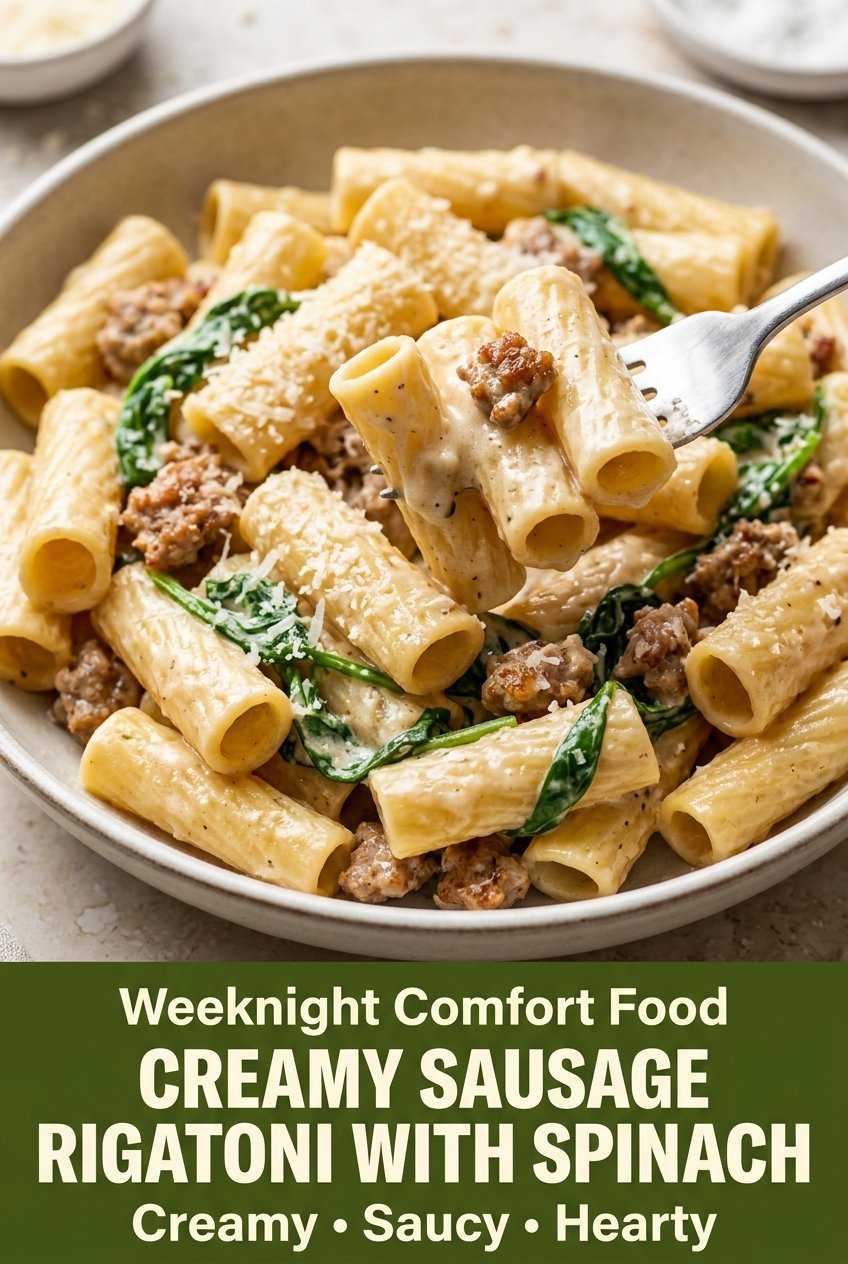
Creamy Sausage Rigatoni with Spinach
Ingredients
Equipment
Method
- Boil the rigatoni in a large pot of salted water according to package directions until al dente, with the water at a full rolling boil.
- Drain and set aside so the pasta can be finished in the sauce.
- Heat the olive oil in a large skillet over medium-high heat until shimmering.
- Add the Italian sausage and cook for 6–8 minutes, breaking it into bite-size pieces, until browned and cooked through.
- Add the yellow onion and sauté for 3–4 minutes until softened and translucent.
- Stir in the garlic and tomato paste, cooking for 1 minute until fragrant and the tomato paste darkens slightly.
- Pour in the heavy cream and chicken broth, then add the Italian seasoning, kosher salt, and black pepper.
- Simmer over medium-low heat for 3–4 minutes until the sauce begins to thicken.
- Stir in the Parmesan cheese until melted and the sauce becomes smooth and creamy.
- Add the baby spinach and cook for 1–2 minutes until wilted but still bright green.
- Fold the cooked rigatoni into the skillet and toss for 1–2 minutes until every piece is generously coated with the creamy sausage sauce.
- Finish with fresh parsley and serve while the sauce is creamy.
