
Creamy Tomato Gnocchi with Burrata
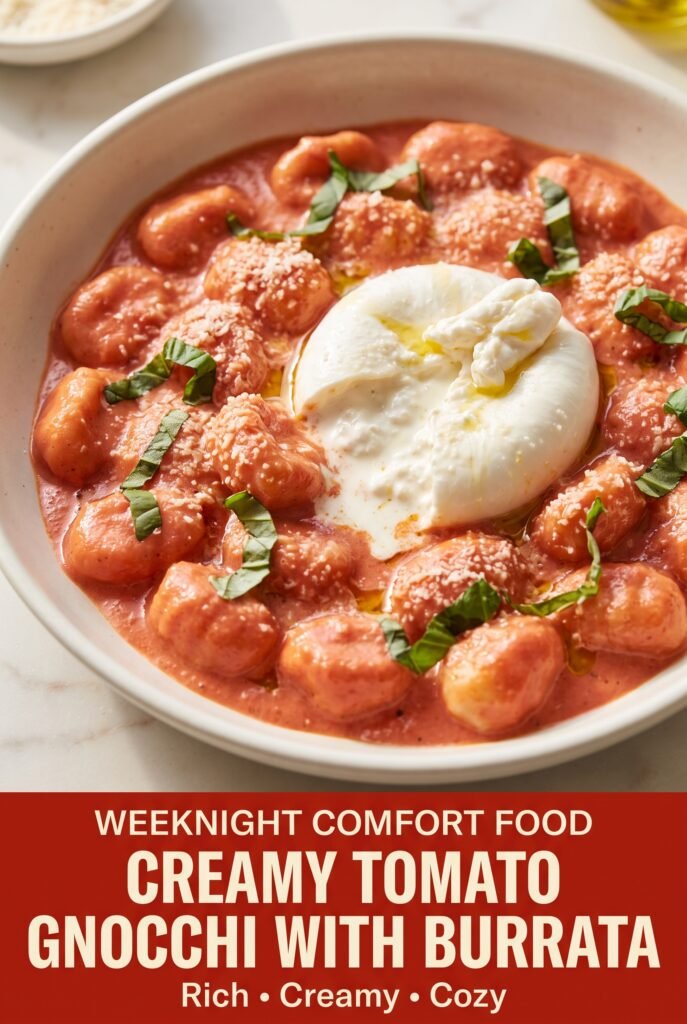
Soft gnocchi, a glossy tomato cream sauce, and a burrata center that spills out in the best possible way — that combination turns a fast skillet dinner into something that…
Tip: save now, read later.
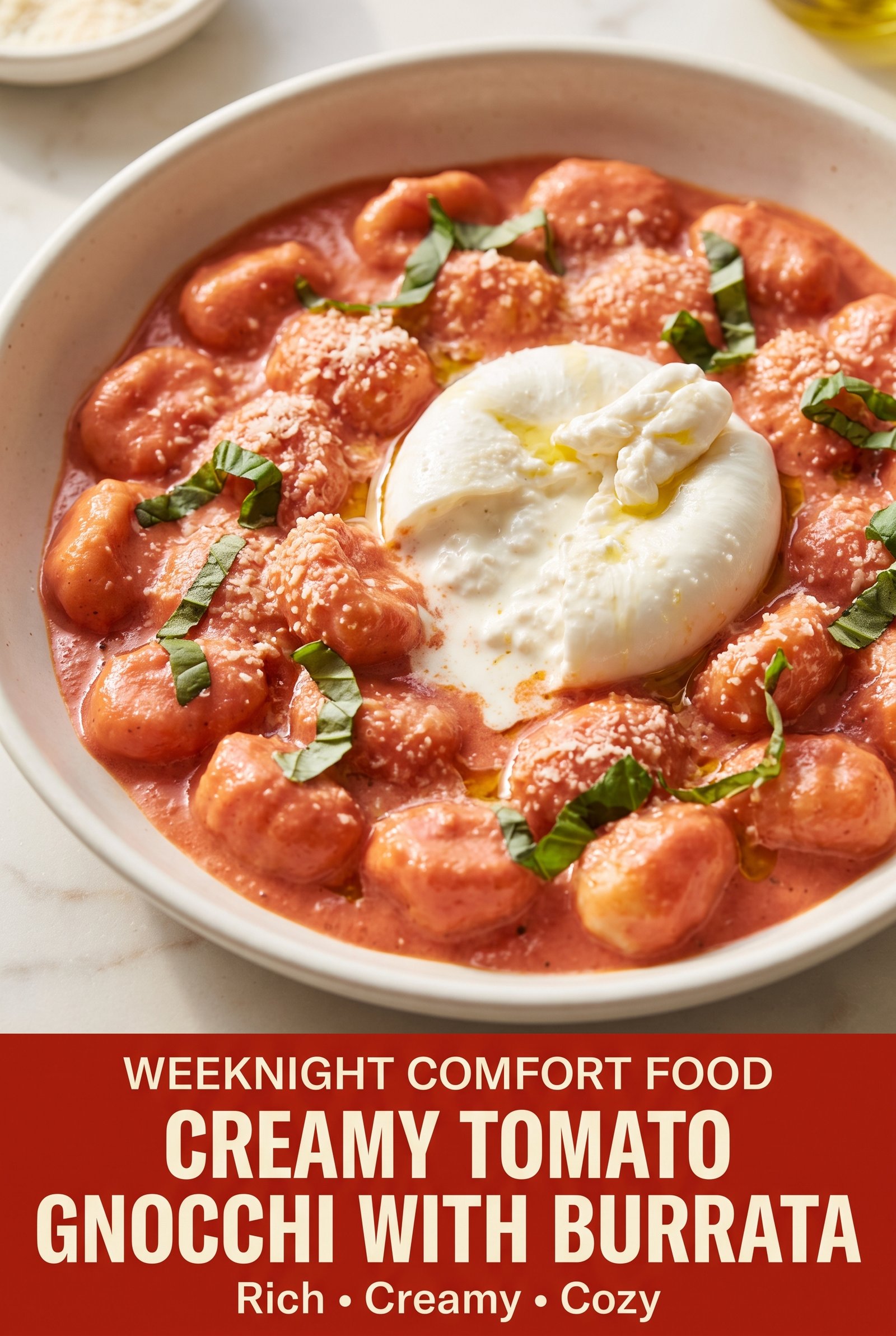
Soft gnocchi, a glossy tomato cream sauce, and a burrata center that spills out in the best possible way — that combination turns a fast skillet dinner into something that feels a little special without asking much from you. The sauce clings to every ridge of the gnocchi, and the burrata brings a cold, milky contrast that keeps each bite from tasting heavy.
The trick here is building the sauce in stages. The tomatoes need a few minutes on their own first so they lose that raw edge and tighten up a little before the cream goes in. Parmesan finishes the sauce with body, but only if the heat stays gentle; too much heat and it can turn grainy instead of smooth. The gnocchi also matter more than people think — once they float, they’re done. Letting them hang around in the water too long makes them soft and a little swollen.
Below, I’ve included the small details that make this dish work the way it should, plus a few smart swaps if you need them. The burrata finish is worth reading through carefully, because the way you serve it changes the whole feel of the dish.
The sauce got silky and coated the gnocchi perfectly, and the burrata in the middle melted into the warm tomatoes just enough. I used a little pasta water at the end and it came together fast with no broken sauce.
Save this creamy tomato gnocchi with burrata for the nights when you want a silky skillet dinner that looks restaurant-worthy with almost no extra work.
The Reason the Sauce Stays Creamy Instead of Turning Grainy
The sauce in this dish only works if you respect the order. Tomato and cream don’t need to fight each other, but they do need time. The tomatoes should simmer first until they lose their sharpness and thicken slightly. If the cream goes in too early, the sauce stays thin and the Parmesan has a harder time melting in smoothly.
The other common problem is heat. Parmesan can turn sandy if you dump it into a bubbling sauce, and burrata can lose its contrast if it melts completely before serving. Keep the sauce at a low simmer once the cream is in, then take a minute to plate it with the burrata on top instead of stirring it through. That cold center is what makes each spoonful interesting.
What Each Ingredient Is Actually Doing in This Dish
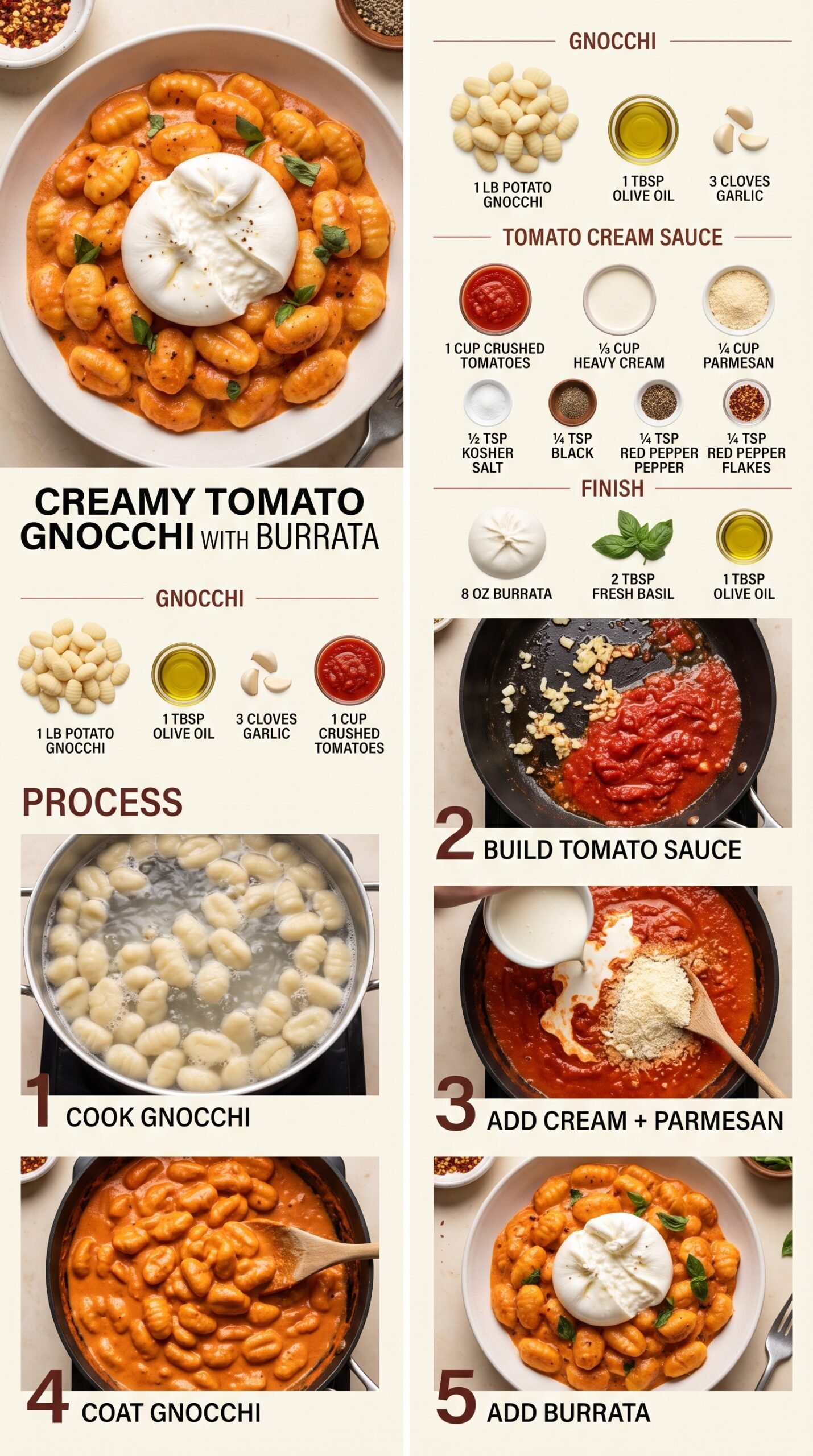
- Potato gnocchi — These cook fast and hold onto the sauce better than most pasta shapes. Shelf-stable gnocchi works fine here, and fresh gnocchi is even softer, but don’t overcook either one or they’ll go mushy in the skillet.
- Crushed tomatoes — This gives the sauce body without needing to cook down a long time. If your tomatoes taste sharp, a longer simmer helps, but don’t swap in a watery tomato sauce or the finished dish will be loose instead of glossy.
- Heavy cream — This smooths out the tomatoes and turns the sauce pale pink-orange instead of bright and acidic. Half-and-half can work in a pinch, but it won’t cling as well and it’s easier to split if you crank the heat.
- Parmesan — This adds salt and a little thickness. Grate it finely so it melts fast; pre-shredded Parmesan often has anti-caking agents that keep the sauce from turning fully smooth.
- Burrata — This is the payoff. It should be cold when it hits the hot gnocchi so the center stays creamy. If you can’t find burrata, fresh mozzarella gives you richness, but you lose that soft, spoonable middle.
- Fresh basil — Add it at the end so it stays bright. Dried basil won’t give the same fresh finish here.
Building the Sauce, Coating the Gnocchi, and Finishing With Burrata
Blooming the garlic without browning it
Warm the olive oil over medium heat and add the garlic for just a short minute until it smells sweet and sharp, not toasted. Garlic goes bitter fast once it picks up color, and that bitterness shows up in a sauce this simple. If the pan runs hot, pull it off the burner for a few seconds before adding the tomatoes.
Letting the tomatoes tighten before the cream goes in
Stir in the crushed tomatoes, salt, pepper, and red pepper flakes, then let the sauce simmer until it looks a little thicker and the bubbles slow down slightly. This is where the raw edge cooks off. If it still tastes thin or acidic, give it another minute or two before adding dairy.
Melting in the cream and Parmesan gently
Lower the heat before you pour in the cream. Stir until the color turns even and silky, then add the Parmesan a little at a time so it melts instead of clumping. If the sauce starts looking grainy, the heat is too high. Take the pan off the burner and stir until it comes back together.
Finishing the gnocchi and serving right away
Add the drained gnocchi and toss until every piece is coated. A splash of the reserved cooking water helps the sauce loosen and turn velvety if it tightens too much. Transfer everything to a serving bowl, tear the burrata over the top, and finish with basil and a drizzle of olive oil while the gnocchi are still hot enough to soften the cheese around the edges.
How to Adapt This for a Different Pantry or Diet
Make it dairy-free
Use a full-fat unsweetened oat or cashew cream and skip the burrata and Parmesan. The sauce will still coat the gnocchi, but it’ll taste less rich and won’t have the same milky finish, so lean a little harder on the basil and black pepper at the end.
Keep it gluten-free
Use certified gluten-free gnocchi if you need the dish to stay gluten-free. The sauce itself is already friendly to that swap, and the cooking method stays the same.
Add protein without crowding the sauce
Stir in browned Italian sausage, shredded rotisserie chicken, or sautéed shrimp at the end. Add it after the sauce is finished so you don’t overcook the protein while the gnocchi is warming through.
Use another soft cheese if burrata isn’t available
Fresh mozzarella, ricotta dollops, or even a spoonful of mascarpone will give you a creamy finish, though none of them have burrata’s loose center. If you use ricotta, add a pinch of salt on top so it doesn’t taste flat against the tomato sauce.
Storage and Reheating
- Refrigerator: Store leftovers for up to 3 days. The gnocchi will soften a bit as it sits, and the sauce will thicken.
- Freezer: I don’t recommend freezing this one. Cream sauces can separate and burrata doesn’t thaw well.
- Reheating: Reheat gently in a skillet over low heat with a splash of milk or water to loosen the sauce. High heat is what makes the cream split and turns the gnocchi chewy.
The Questions That Come Up With Creamy Tomato Gnocchi and Burrata
Creamy Tomato Gnocchi with Burrata
Ingredients
Equipment
Method
- Bring a large pot of salted water to a boil, then add the potato gnocchi and cook according to package directions until they float to the surface, usually 2–4 minutes. The gnocchi will lift and bob when they’re done.
- Drain the gnocchi, reserving about 1/2 cup of the cooking water. Keep the reserved water nearby for loosening the sauce.
- Heat 1 tbsp olive oil in a large skillet over medium heat, then add the garlic and cook for 30–60 seconds until fragrant. You should see the garlic sizzle without browning.
- Stir in the crushed tomatoes, kosher salt, black pepper, and red pepper flakes, then simmer for 4–5 minutes until slightly thickened. The sauce should reduce and look glossy.
- Pour in the heavy cream and stir until the sauce becomes smooth and evenly pink-orange. The color should look uniform with no streaks.
- Add the grated Parmesan cheese and stir for 1–2 minutes until melted into the sauce. The sauce should coat a spoon.
- Fold the cooked gnocchi into the tomato cream sauce and add a small splash of reserved cooking water if needed to loosen the sauce. The sauce should cling to the gnocchi evenly.
- Cook for another 2–3 minutes until the gnocchi are thoroughly coated and heated through. You should see a light, silky gloss on every piece.
- Transfer the gnocchi to a wide serving bowl or shallow platter. Spread them out so the sauce doesn’t pool.
- Place the burrata in the center and gently open it to expose the creamy interior. The interior should look soft and creamy when pulled apart.
- Finish with torn fresh basil and 1 tbsp olive oil, then serve immediately. The basil should appear fresh and bright against the warm sauce.
