
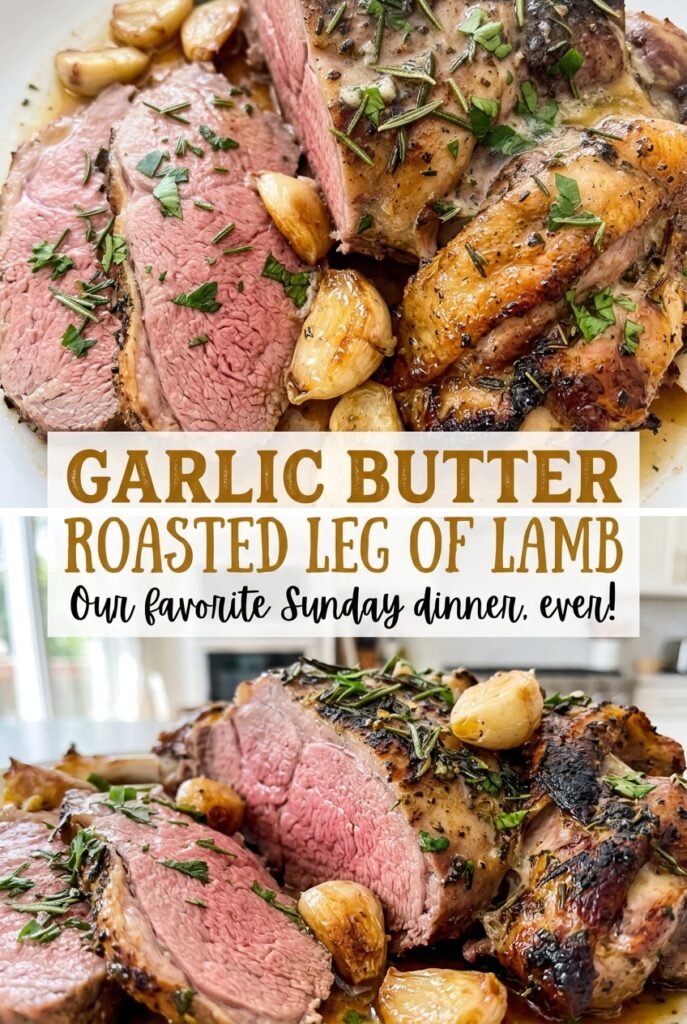
Garlic Butter Roasted Leg of Lamb
The butter starts to soften and run as the lamb hits the hot oven, carrying garlic and rosemary across the surface. That first stretch at high heat is brief; the…
Tip: save now, read later.
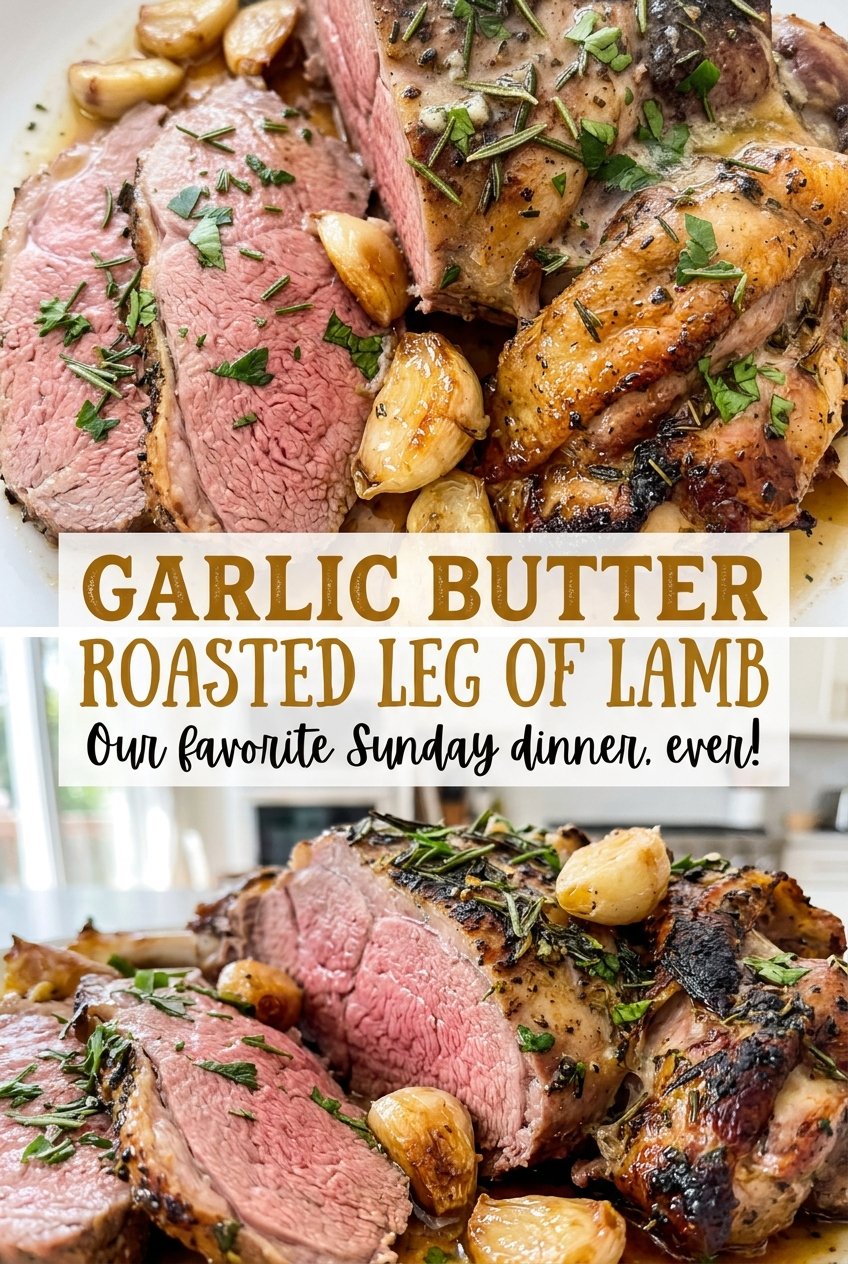
The butter starts to soften and run as the lamb hits the hot oven, carrying garlic and rosemary across the surface. That first stretch at high heat is brief; the longer roast happens after the temperature comes down. It’s a useful rhythm for a large bone-in roast, where the outside needs a head start but the center needs time to cook evenly. This garlic butter roasted leg of lamb makes a generous centerpiece for eight, with a savory coating that comes together in one small bowl.
I use softened butter rather than trying to brush on melted butter, because it holds the minced garlic and rosemary together long enough to spread over the lamb. Pat the meat dry first, then work the mixture over the fat side and the rest of the surface. Once the roast is in the oven, let a thermometer—not the clock alone—tell you when the thickest part is ready. After its rest, the lamb is easier to carve and the slices stay juicy.
Kitchen Note
Softened butter should be pliable, not melted. If it’s oily, the garlic and rosemary won’t stay evenly suspended, and the mixture is harder to spread across the lamb.
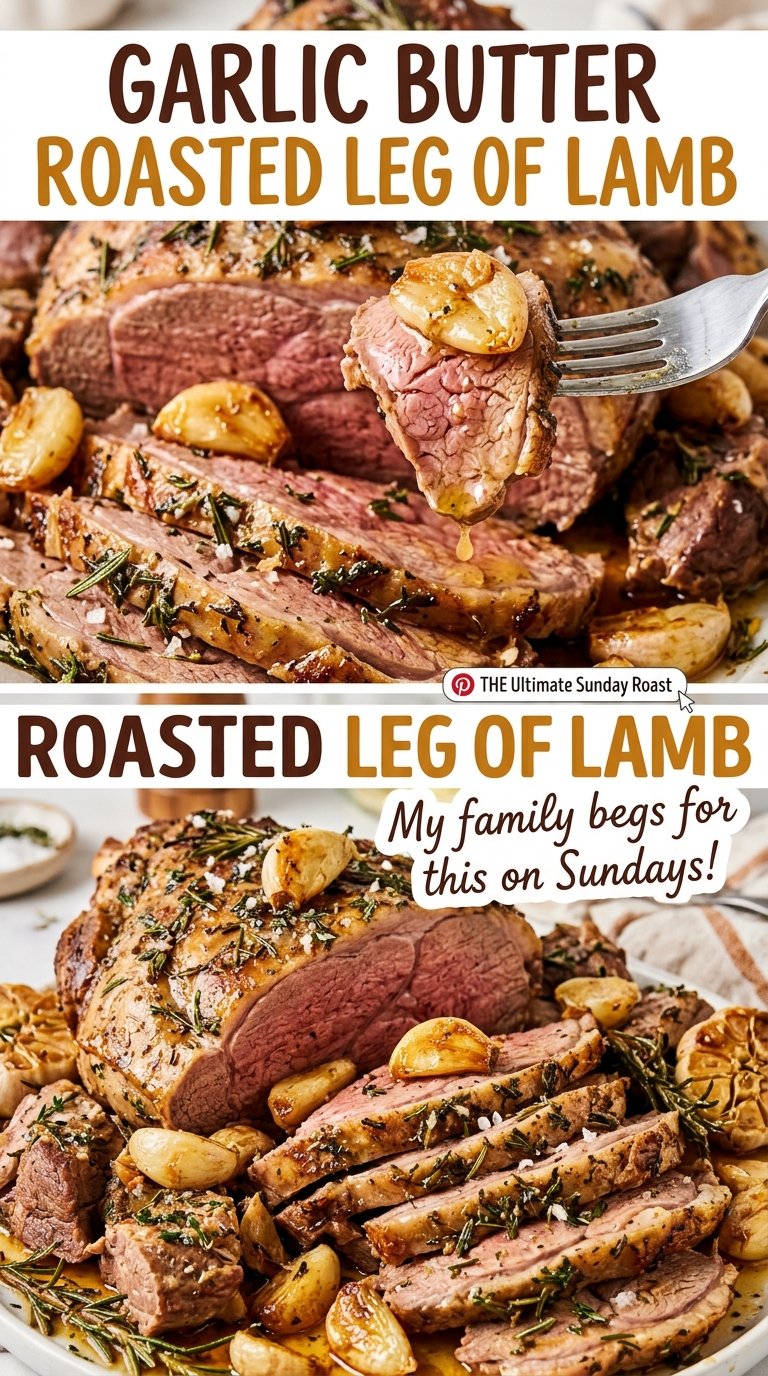
Save this garlic butter roasted leg of lamb for a centerpiece roast with rosemary, garlic, and a simple two-temperature oven method.
Why the Lamb Gets a Short Hot Roast Before the Oven Cools
A leg of lamb is thick enough that a long stretch at one high temperature can overcook the outside before the center is ready. The brief opening roast gives the surface a chance to start browning, then the lower oven temperature carries the heat through more gently. That change matters especially with a butter-based coating: garlic and herbs are exposed on the outside, where prolonged high heat can make them darken too quickly.
Think of the two temperatures as two different jobs, not two settings you can casually swap. Start at 425°F for 15 minutes, then reduce the oven to 325°F for the remaining roast. The timing range accounts for the size and shape of a 5- to 6-pound bone-in leg, but ovens and roasts vary. A thermometer gives you a dependable endpoint; the clock helps you know when to begin checking.
What the Butter, Garlic, and Rosemary Each Bring to the Roast
- Bone-in leg of lamb — The bone is part of this roast’s shape and affects how heat moves through it, so a boneless leg won’t follow the same timing exactly. Choose a roast with a fairly even thickness if you have options; an unusually narrow end will cook faster than the thick center.
- Unsalted butter — Softened butter makes a spreadable base for the garlic and herbs, and unsalted butter lets the kosher salt provide the seasoning. A standard grocery-store butter works well here; there’s no need to seek out a specialty brand. For a dairy-free adaptation, use a firm plant-based butter rather than a pourable oil.
- Fresh garlic — Minced cloves give the coating a vivid savory bite and distribute through the butter. Fresh garlic is worth using because its aroma is a major part of this simple rub; very finely minced pieces spread more evenly than large chunks.
- Fresh rosemary — Chopped rosemary brings a woodsy, piney note that stands up to lamb’s rich flavor. Fresh leaves are easy to chop finely and disperse through the butter. If you only have dried rosemary, use 1 teaspoon dried in place of 1 tablespoon fresh, and crush it between your fingers as you add it.
How to Roast the Lamb Without Losing Track of the Finish
Set Up the Pan and Make the Garlic Butter
Heat the oven to 425°F and set a rack inside a 12×16-inch roasting pan. Pat the lamb dry, then place it fat side up on the rack; a dry surface gives the butter mixture something to cling to. Stir the softened butter with the minced garlic, chopped rosemary, kosher salt, and black pepper until the ingredients are evenly combined. Rub it over the lamb, reaching across the surface rather than leaving the mixture in one thick mound.
Give the Outside Its Hot Start
Put the pan in the 425°F oven and roast the lamb for 15 minutes. The surface should begin to take on color, while the butter melts and coats the roast. Keep the opening roast to that short interval, then lower the oven to 325°F. Leaving it at the higher temperature for the full cooking time gives the garlic and butter much longer exposure to intense heat.
Roast Gently, Then Let the Meat Rest
Continue roasting at 325°F for 1 1/2 to 2 1/4 hours, checking the thickest part with a thermometer and keeping the probe away from the bone. The exact point within that time range depends on the roast, so don’t assume the longer estimate is automatic. When it reaches 145°F, transfer the lamb to a cutting board and tent it loosely with foil. Rest it for 15 minutes before carving; cutting immediately makes it harder for the slices to retain their juices.
Simple Ways to Adjust the Garlic Butter Lamb
Make It Dairy-Free with Plant-Based Butter
Replace the unsalted butter with an equal amount of firm, unsalted plant-based butter. Choose one that’s made for spreading or baking, not a liquid butter substitute; the mixture should still hold the garlic and rosemary together. The lamb will have a slightly different buttery aroma, but the herb-and-garlic coating still works.
Turn Up the Garlic
For a bolder, more pungent coating, add another minced clove or two to the butter mixture. Keep the pieces small so they spread across the lamb instead of collecting in a few spots. The garlic will taste more prominent, and the surface may darken faster, so keep the oven temperature change on schedule.
Let the Rosemary Take a Back Seat
Use less chopped rosemary if you prefer a gentler herbal note, keeping the garlic and butter as the main flavors. Chop the leaves finely so each bite gets an even hint instead of a concentrated piece. The roast will taste less piney, with a simpler savory finish.
Storage and Reheating
- Refrigerator: Refrigerate leftover lamb within 2 hours and keep it covered for 3 to 4 days. Slices may firm up as they chill, but they’ll soften when gently reheated.
- Freezer: Freeze carved portions in an airtight container or freezer bag for up to 2 to 3 months. Removing excess air helps limit freezer burn.
- Reheating: Warm slices covered in a 300°F oven until the leftovers reach 165°F. Avoid blasting uncovered slices with high heat; that dries the edges before the middle warms through.
Questions That Come Up When Roasting a Leg of Lamb
Garlic Butter Roasted Leg of Lamb
Ingredients
Equipment
Method
- Preheat the oven to 425°F and set a rack in a 12x16-inch roasting pan.
- Pat the lamb dry and place it fat side up on the rack.
- In a small bowl, mix the butter, garlic, rosemary, salt, and pepper.
- Rub the mixture over the lamb.
- Roast at 425°F for 15 minutes, then reduce the oven to 325°F and roast for 1 1/2 to 2 1/4 hours, until a thermometer inserted into the thickest part without touching bone reads 145°F.
- Transfer the lamb to a cutting board and tent loosely with foil.
- Rest for 15 minutes before carving.
