
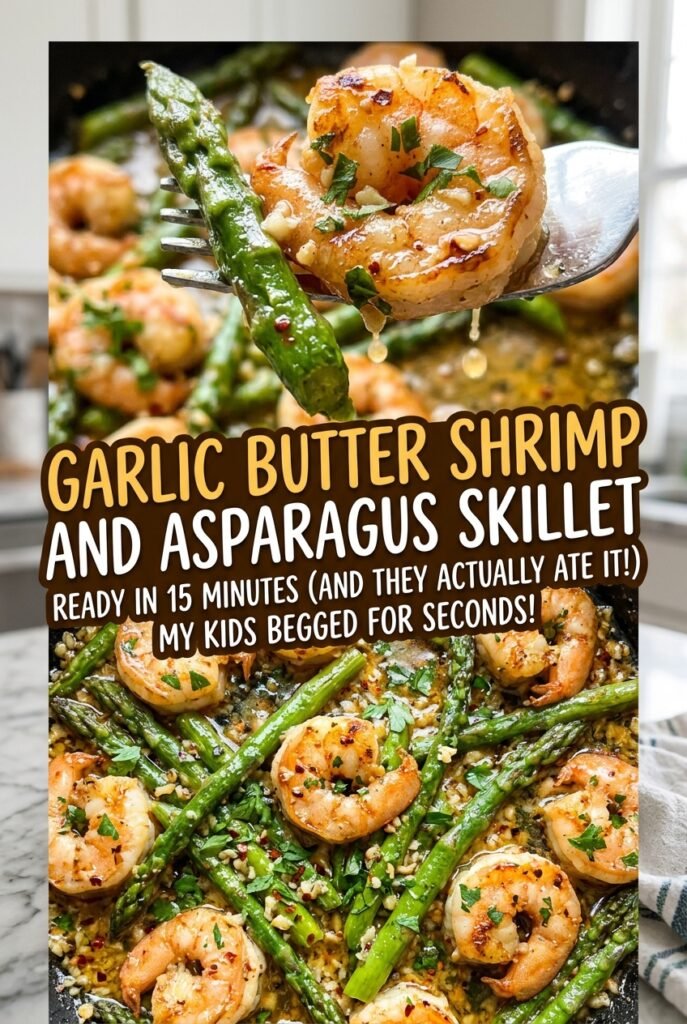
Garlic Butter Shrimp and Asparagus Skillet
The garlic hits melted butter and the skillet turns fragrant in seconds. A squeeze of lemon at the finish keeps that buttery richness from weighing down the shrimp, and the…
Tip: save now, read later.
The garlic hits melted butter and the skillet turns fragrant in seconds. A squeeze of lemon at the finish keeps that buttery richness from weighing down the shrimp, and the asparagus gives every bite a fresh, crisp-tender edge. Garlic Butter Shrimp and Asparagus Skillet is the kind of dinner I like to make when I want a complete meal from one pan without building a separate sauce. The shrimp cook quickly, and the vegetables keep their shape instead of disappearing into the buttery juices.
I cut the asparagus into even 2-inch pieces so the stalks cook at a similar pace, and I use a 12-inch skillet to give everything room. The flavors stay simple: garlic carries through the butter, while lemon juice brightens the pan right before serving. There’s no complicated sauce to tend or long finish to wait for. You get tender shrimp, green asparagus, and a light coating of garlic butter in every forkful.
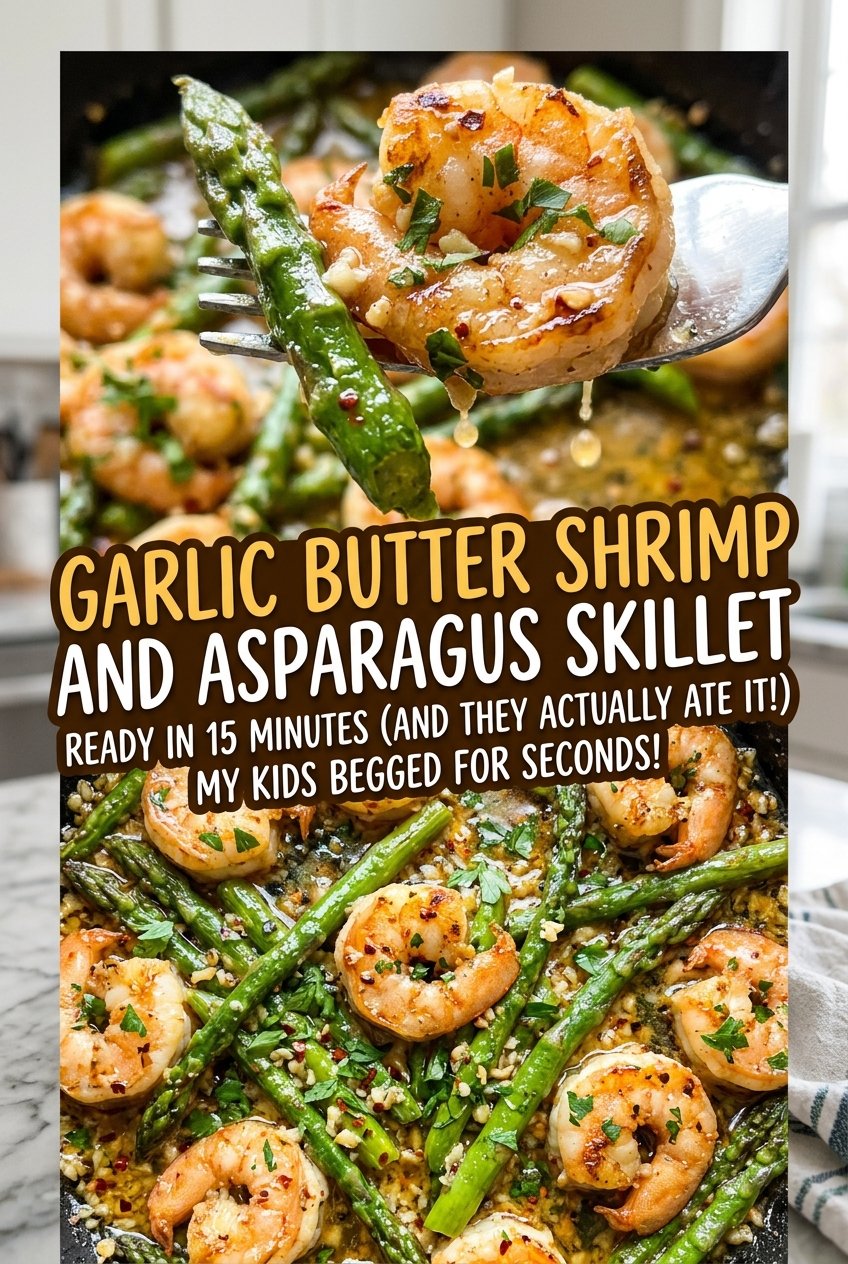
Kitchen Note
Pat the shrimp dry before they go into the skillet. Excess surface moisture can make them release liquid instead of cooking cleanly in the butter, so I take care of this before the pan gets hot.
Save this Garlic Butter Shrimp and Asparagus Skillet for a quick dinner with crisp-tender asparagus and lemony garlic butter.
Why the Asparagus Gets a Head Start on the Shrimp
Both main ingredients cook quickly, but they don’t finish at the same pace. Asparagus needs a few minutes to soften while keeping a little bite; large shrimp need only a short time in the hot skillet. If they go in together, the asparagus can still be firm when the shrimp are ready, or the shrimp can sit in the pan while the vegetables catch up. Cooking them in turns gives each ingredient the heat and attention it needs.
Moving the asparagus to a plate also keeps it from taking on more heat while the garlic and shrimp cook. It goes back into the skillet only at the end, when a brief toss warms it through and brings the lemon juice across the whole dish. That sequence gives you distinct textures rather than a soft, crowded skillet. It’s a small change in timing, but it’s what lets the shrimp stay tender and the asparagus keep its character.
What Each Ingredient Brings to the Skillet
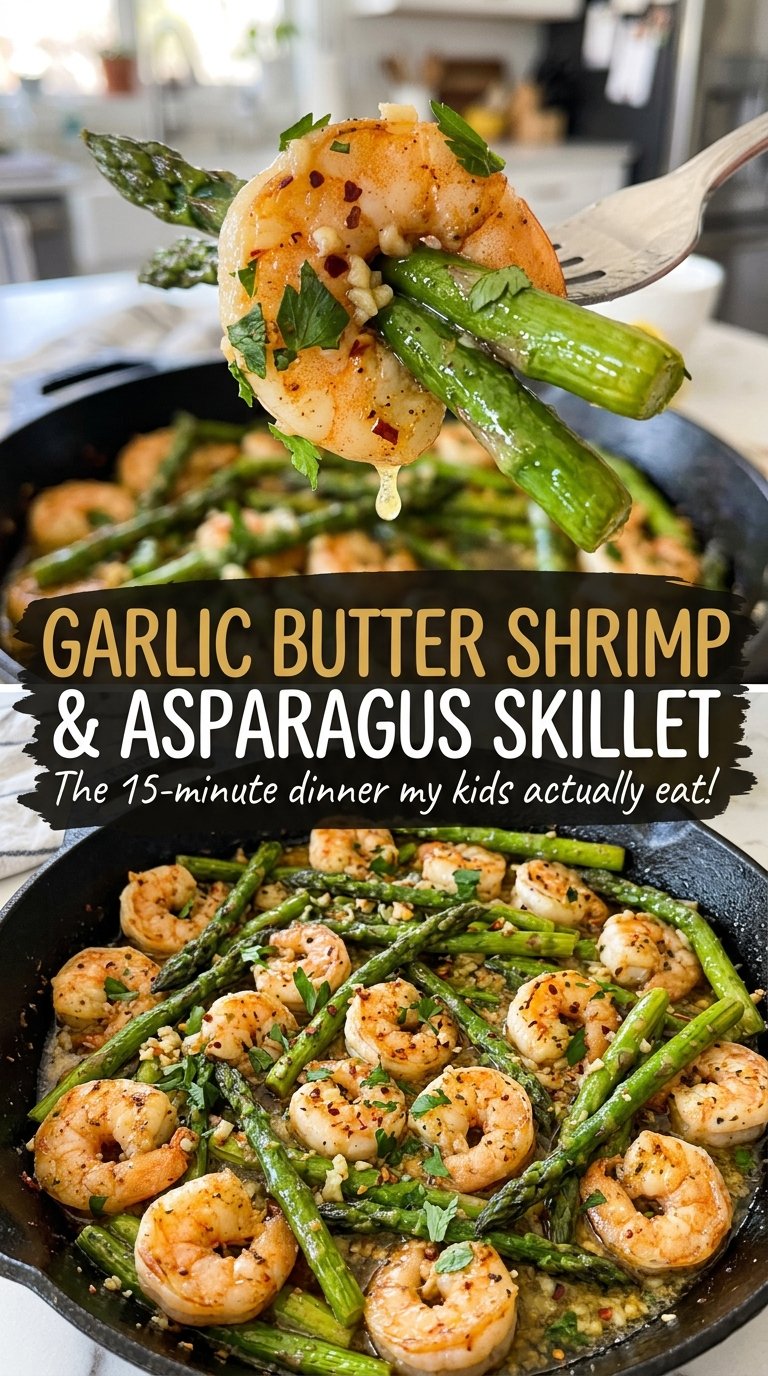
- Asparagus — Choose firm stalks with closed tips. Cutting them into even 2-inch pieces helps them cook at a similar pace; thinner stalks will soften sooner, so watch their texture as they cook.
- Large shrimp — Peeled and deveined shrimp keep this skillet quick to eat and cook. Fresh or frozen shrimp work; if using frozen, thaw them fully before cooking so they heat evenly.
- Unsalted butter — It gives the garlic a rich base and lets you control the seasoning with the kosher salt. Standard grocery-store butter works well here; there’s no need for a specialty butter.
- Garlic — Minced garlic spreads through the butter and seasons each bite. Freshly minced garlic has a sharper aroma, while jarred minced garlic is a practical swap if that’s what you have.
- Lemon juice — Its acidity cuts through the butter. Freshly squeezed juice tastes bright, but bottled lemon juice works when convenience matters.
- Olive oil — This coats the skillet for the asparagus before the butter goes in. A regular everyday olive oil is fine; a more expensive finishing oil won’t have much opportunity to stand out in the hot pan.
The Three Skillet Stages That Keep Everything Tender
Cook the Asparagus Until Crisp-Tender
Heat the olive oil in a 12-inch skillet over medium-high heat. Add the asparagus with half of the kosher salt and black pepper, then cook for 4 to 6 minutes, stirring occasionally. Look for pieces that have softened but still offer a little resistance when bitten. Transfer them to a plate once they’re crisp-tender; leaving them in the hot skillet would keep cooking them.
Let the Garlic Fragrance Come Through
Melt the butter in the same skillet, then add the minced garlic. Stir constantly for 30 seconds so the garlic perfumes the butter without sitting in one spot. Keep your attention on the pan; garlic can turn bitter if it browns. The butter should smell savory and garlicky, not toasted.
Cook the Shrimp, Then Bring the Pan Together
Add the shrimp with the remaining salt and pepper, and cook for 1 to 2 minutes per side. They’re ready when they’re opaque and reach 145°F in the thickest part. Return the asparagus to the skillet, add the lemon juice, and toss for about 1 minute, just until everything is heated through. If the asparagus is already tender, keep that final toss brief.
Two Useful Ways to Adapt This Skillet
Make It Dairy-Free With Olive Oil
Replace the butter with olive oil for the garlic-and-shrimp stage. The skillet will be dairy-free and still carry the garlic, though the finished sauce will taste lighter and less rounded than the butter version.
Make It a Shrimp-Only Skillet
Leave out the asparagus and its olive oil cooking stage, then cook the garlic, shrimp, and lemon juice in the butter. You’ll lose the green vegetable and its crisp-tender contrast, but the garlic-butter shrimp still make a quick, focused skillet dish.
Storage and Reheating
- Refrigerator: Store leftovers in an airtight container and eat within 3 days. The asparagus will soften, and the shrimp will firm up as they chill.
- Freezer: I don’t recommend freezing the finished skillet; asparagus turns soft after thawing, and reheated shrimp can become tough.
- Reheating: Warm gently in a skillet over low heat, turning the shrimp just until hot; reheat leftovers to 165°F. High heat is the common mistake here because it toughens the shrimp before the asparagus is warm.
Questions That Come Up When Cooking Shrimp and Asparagus
Garlic Butter Shrimp and Asparagus Skillet
Ingredients
Equipment
Method
- Heat the olive oil in a 12-inch skillet over medium-high heat.
- Add the asparagus and half of the salt and pepper, and cook for 4 to 6 minutes, stirring occasionally, until crisp-tender.
- Transfer the asparagus to a plate.
- Melt the butter in the skillet.
- Add the garlic and cook for 30 seconds, stirring constantly.
- Add the shrimp and the remaining salt and pepper.
- Cook for 1 to 2 minutes per side, until opaque and 145°F in the thickest part.
- Return the asparagus to the skillet, add the lemon juice, and toss for about 1 minute, until heated through.
