
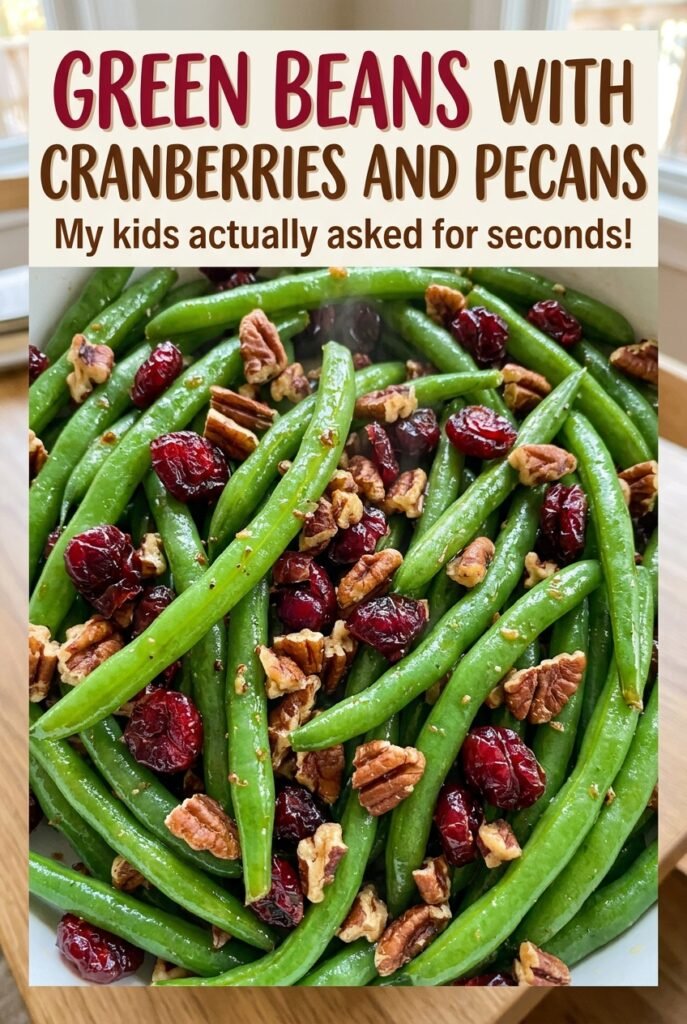
Green Beans with Cranberries and Pecans
When the beans land in the skillet, they should sizzle softly in butter, not sit in a puddle of cooking water. I used to rush from pot to pan before…
Tip: save now, read later.
When the beans land in the skillet, they should sizzle softly in butter, not sit in a puddle of cooking water. I used to rush from pot to pan before the beans had drained properly, and they came out glossy but limp. Letting the water run off well keeps the skillet finish quick and the beans crisp-tender. These green beans with cranberries and pecans solve the side-dish problem I run into when the main course already has the oven tied up: all the cooking happens on the stovetop, and the vegetables still look lively on the plate.
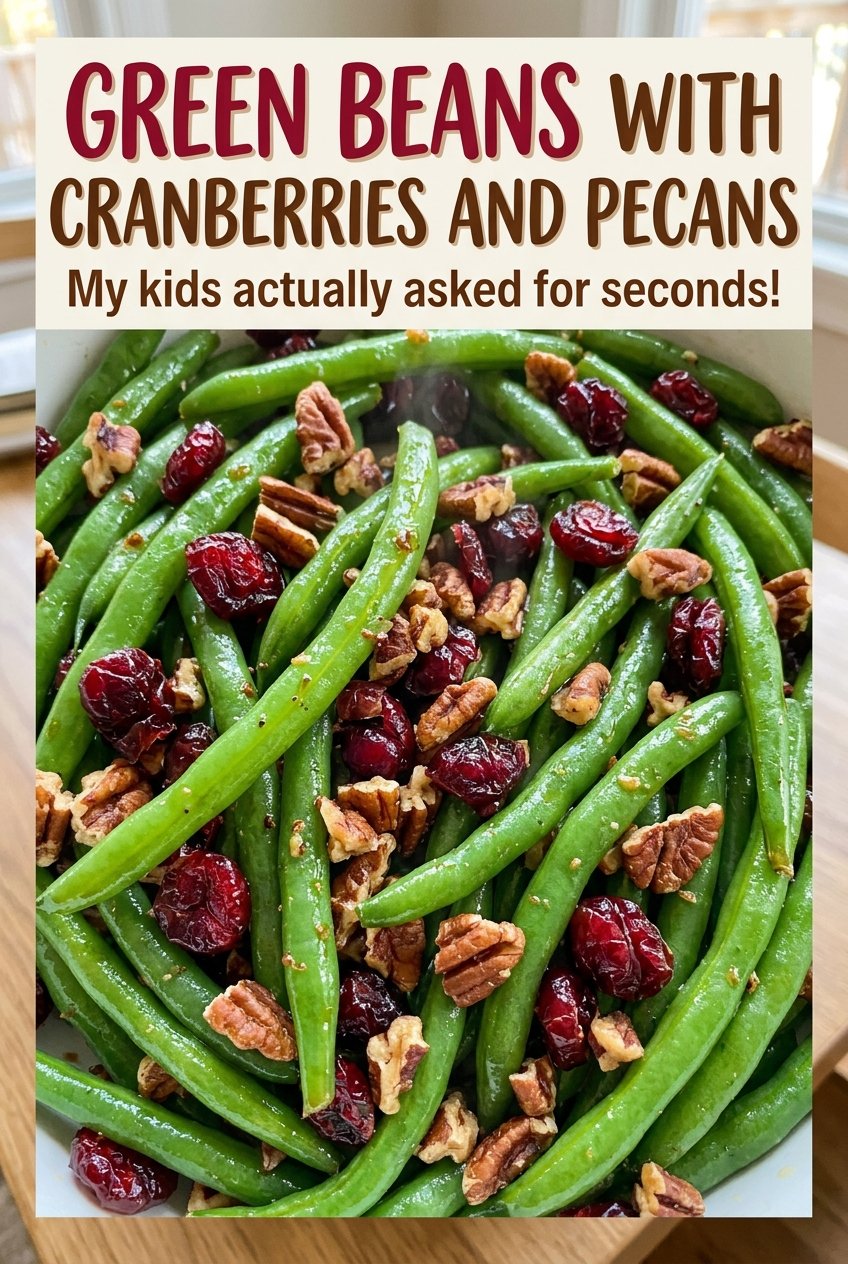
The dried cranberries bring a gentle tart-sweet bite, and pecans add the toasted crunch plain green beans lack. I like that the nuts toast in the skillet before the butter goes in, so their aroma is already there when the beans hit the pan. A final toss with lemon juice keeps the finish bright rather than heavy, and the side reaches the table warm with distinct textures instead of one soft, buttery pile.
Kitchen Note
I set the cranberries, pecans, lemon juice, remaining salt, and pepper beside the stove before the beans go into the butter. That last toss moves quickly, and having everything within reach keeps the beans from sitting in the hot skillet while I search for an ingredient.
Save these green beans with cranberries and pecans for a bright, crisp-tender side with toasted crunch and a tart-sweet finish.
Why These Beans Get a Quick Boil Before the Butter Skillet
Green beans need enough time in boiling water to cook through, but a skillet full of butter isn’t the best place to do that job. The quick uncovered boil brings the beans to crisp-tender evenly, while the bright green color gives you a useful visual cue. The skillet stage then has one job: warm the beans and coat them with butter, not soften them from raw.
That two-part approach also helps prevent watery beans. After boiling, drain them well before they go into the skillet; leftover water can dilute the butter and keep it from clinging to the beans. The pecans toast separately in the same skillet, so they get direct contact with the dry pan before the butter is added. Each part has room to do its work, and the final toss takes just long enough to warm the cranberries without turning the beans soft.
What Each Ingredient Brings to the Green Beans

- Fresh green beans — Their firm bite is the foundation of the dish, so look for evenly green pods that feel crisp rather than limp. Trim the ends before cooking; beans of similar thickness cook more evenly. Fresh beans give this method its best crisp-tender texture.
- Pecan halves — Halves give you a clear toasted-nut crunch in each serving. Freshness matters here more than buying an expensive variety: pecans that smell stale can taste bitter after toasting. A walnut swap works, though it brings a more assertive, earthy taste.
- Unsalted butter — Butter carries the pecan aroma onto the beans and gives the skillet finish a rounded, savory feel. A standard unsalted butter works well; choosing unsalted also lets you control the seasoning. Olive oil is the practical dairy-free replacement, with a lighter finish.
- Dried cranberries — Their chew and tart-sweet flavor contrast with the tender beans and crunchy nuts. Choose a bag with soft, pliable fruit rather than cranberries that feel hard and dried out. Dried cherries can stand in for a deeper, less tangy fruit note.
- Lemon juice — The acidity keeps the buttery finish from tasting heavy. Bottled lemon juice is convenient and works, while juice squeezed from a lemon tends to taste fresher. Add it with the other finishing ingredients so it doesn’t disappear into the cooking water.
- Freshly ground black pepper — Pepper adds a warm bite that balances the fruit’s sweetness. Grind it just before using if possible; pre-ground pepper is fine when convenience matters, but its aroma is milder.
The Short Cook That Keeps the Beans Crisp-Tender
Boil the Beans Until Bright Green
Bring 4 quarts water and 1 1/2 teaspoons kosher salt to a boil in a 6-quart pot. Add the trimmed green beans and boil uncovered for 4 to 5 minutes. Look for a bright green color and a tender bean that still has a little resistance when you bite it. Drain well; don’t leave the beans sitting in the cooking water.
Toast the Pecans in a Dry Skillet
Set a dry 12-inch skillet over medium heat and add the pecan halves. Stir often for 3 to 4 minutes, until they smell fragrant; the aroma is a better cue than waiting for a deep change in color. Transfer them to a plate as soon as they’re toasted, since the hot skillet will keep cooking them if they stay in the pan. If they smell sharp or scorched, they’ve gone too far.
Warm the Beans in Butter
Melt the butter in the same skillet over medium heat. Add the drained beans and toss for 2 to 3 minutes, until they’re hot throughout. Tossing helps coat the beans without letting them sit and brown in one spot. If they seem wet rather than glossy, they needed a more thorough drain before reaching the skillet.
Finish with Cranberries, Pecans, and Lemon
Add the cranberries, toasted pecans, lemon juice, remaining 1/2 teaspoon kosher salt, and black pepper. Toss for 1 minute, just until the cranberries are warmed through. Keep the pan moving so the fruit and nuts distribute through the beans instead of collecting at the bottom. Serve while the beans are warm and the pecans still have their crunch.
Easy Swaps That Change the Finish, Not the Flow
Make It Dairy-Free with Olive Oil
Replace the butter with the same amount of olive oil and warm the beans in it the same way. The result is dairy-free and a little lighter, without the buttery richness; choose a mild-tasting oil so it doesn’t overwhelm the cranberries.
Trade Pecans for Walnuts
Use walnuts in place of the pecans, toasting them in the dry skillet over medium heat and stirring until fragrant. They bring a slightly more earthy, robust flavor. Watch them closely as they toast, since smaller walnut pieces can darken faster than halves.
Use Dried Cherries for a Deeper Fruit Note
Swap the cranberries for the same amount of dried cherries. Cherries are a little deeper and less tart, with a pleasantly chewy texture; chop larger pieces so they mix easily through the beans.
Storage and Reheating
- Refrigerator: Store cooled leftovers in an airtight container for 3 to 4 days. The beans soften in storage, and the pecans lose some crunch.
- Freezer: Freeze in an airtight, freezer-safe container for up to 2 months for best quality. Thaw in the refrigerator; expect softer beans and less-crisp pecans.
- Reheating: Warm gently in a skillet over medium heat, tossing just until hot, or microwave in short bursts and stir between them. Long reheating makes the beans limp and the nuts softer.
Questions That Come Up When Making This Side
Green Beans with Cranberries and Pecans
Ingredients
Equipment
Method
- Bring 4 quarts water and 1 1/2 teaspoons of the salt to a boil in a 6-quart pot.
- Add the green beans and boil uncovered for 4 to 5 minutes, until bright green and crisp-tender.
- Drain the green beans well.
- Toast the pecans in a dry 12-inch skillet over medium heat for 3 to 4 minutes, stirring often, until fragrant.
- Transfer the pecans to a plate.
- Melt the butter in the same skillet over medium heat.
- Add the drained green beans and toss for 2 to 3 minutes, until hot.
- Add the cranberries, toasted pecans, lemon juice, remaining 1/2 teaspoon salt, and black pepper.
- Toss for 1 minute, until the cranberries are warmed through.
- Serve.
