
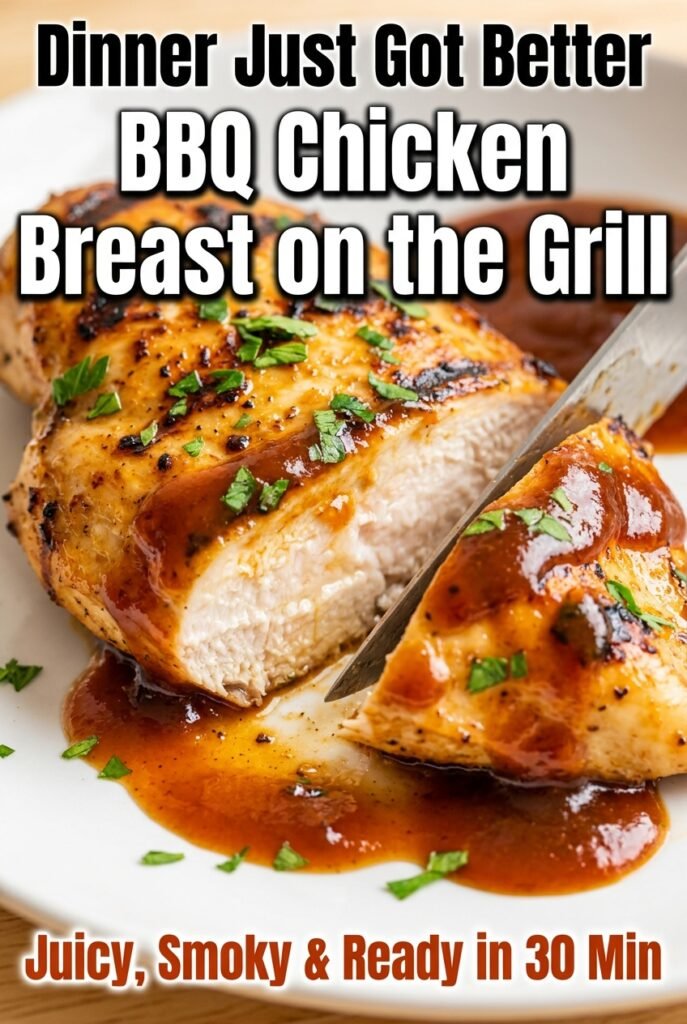
BBQ Chicken Breast on the Grill
Grilled BBQ chicken breast only works when the meat stays juicy long enough to pick up smoke, char, and that sticky glaze at the same time. This version does that…
Tip: save now, read later.
Grilled BBQ chicken breast only works when the meat stays juicy long enough to pick up smoke, char, and that sticky glaze at the same time. This version does that job cleanly. The chicken gets pounded to an even thickness, soaked in a quick savory marinade, then finished with a glossy BBQ sauce that caramelizes instead of burning. The result is tender in the center, lacquered on the outside, and sturdy enough to slice for plates or sandwiches.
The marinade does more than season the surface. Olive oil helps carry the spices, soy sauce brings salt and depth, and apple cider vinegar gives the chicken a little head start on tenderness without turning it mushy. Brown sugar and BBQ sauce both matter here, but they’re handled in a way that keeps the grill marks intact instead of turning the bird into a sticky mess too early. The glaze goes on near the end, when the chicken has already cooked through most of the way.
Below, I’ll walk through the part that keeps this recipe from drying out: even thickness, medium-high heat, and the timing on the glaze. There’s also a simple way to adjust the heat level if you like a little kick, plus storage notes for the leftovers that usually disappear fast.
The chicken stayed unbelievably juicy, and the glaze got that sticky charred edge without burning. Pounding them to the same thickness made a huge difference — everyone’s piece finished at the same time and there weren’t any dry ends.
Save this grilled BBQ chicken breast for the nights when you want smoky char, a sticky glaze, and juicy slices without babysitting the grill.
The Reason Grilled BBQ Chicken Stays Juicy Instead of Turning Stringy
Chicken breast dries out for two reasons: uneven thickness and heat that runs too hot for too long. Pounding the meat to a steady ¾ inch gives you an even cooking surface, which means the thinner edge doesn’t overcook while the center catches up. That’s the difference between sliced chicken that still looks glossy and chicken that goes chalky at the first cut.
The other mistake is glazing too early. BBQ sauce usually has sugar in it, and sugar burns before chicken is done. By grilling the chicken mostly plain first, then brushing on the glaze near the end, you get caramelization without that bitter scorched edge.
- Even thickness is the single biggest fix here. A meat mallet or rolling pin works fine; just cover the chicken so it doesn’t tear.
- Medium-high heat gives you grill marks and color without blasting the outside before the inside cooks.
- Late glaze keeps the sauce glossy instead of dark and sticky in the wrong way.
- Resting time matters. Five minutes on the cutting board keeps the juices inside the meat instead of spilling onto the plate.
What Each Ingredient Is Actually Doing in This Dish
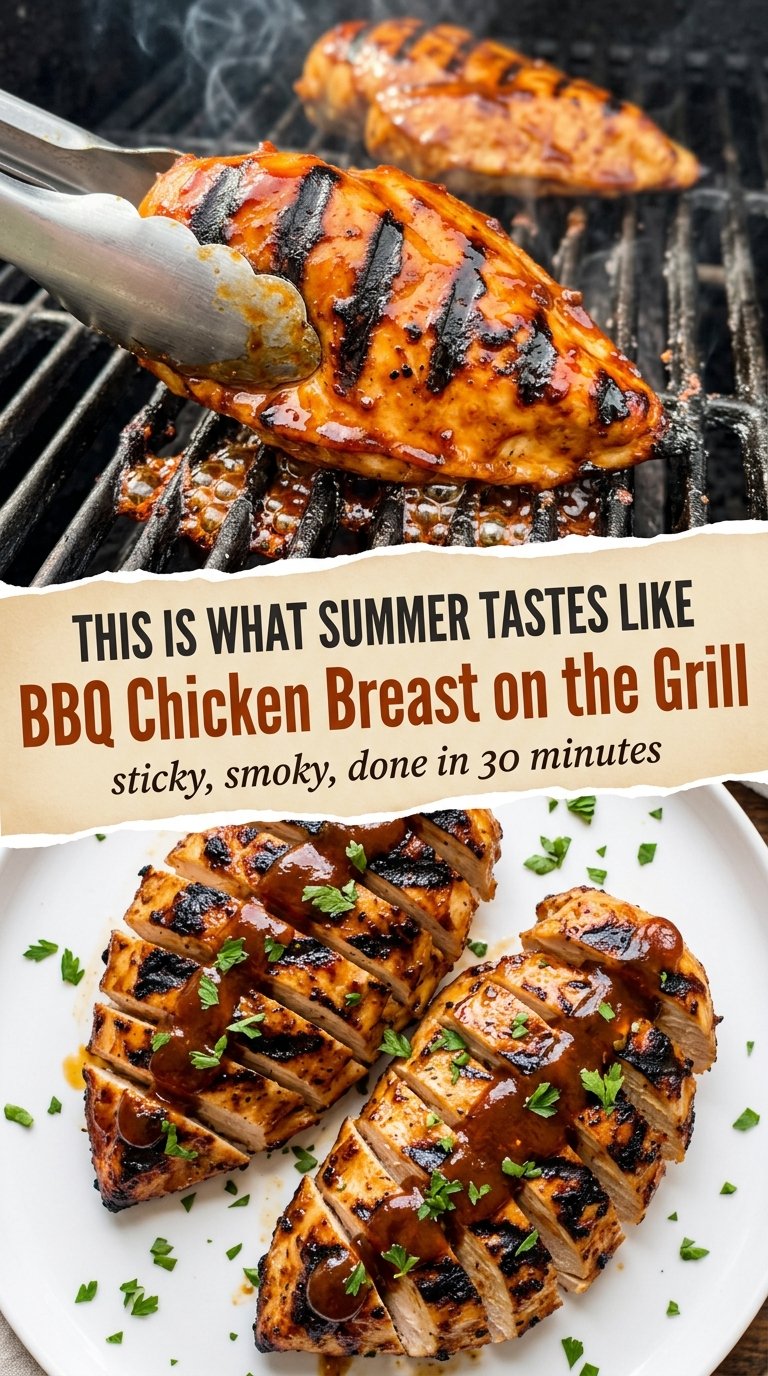
- Chicken breasts should be boneless and skinless so they cook quickly and evenly. If yours are huge, slice them horizontally into cutlets or pound them thinner so they finish before the outside dries out.
- Olive oil helps the marinade cling and keeps the surface from sticking to the grates. You don’t need an expensive bottle here; a standard cooking olive oil works fine.
- Soy sauce adds salt plus a deeper savory note that plain salt alone won’t give you. If you need a gluten-free swap, use tamari in the same amount.
- Apple cider vinegar gives the marinade a little bite and helps the chicken stay tender. Lemon juice can work in a pinch, but it tastes sharper and less round.
- Brown sugar helps the grilled surface brown and balances the vinegar. You can reduce it a little, but skipping it entirely makes the chicken taste flatter and the glaze less glossy.
- Smoked paprika and garlic powder build the smoky backbone before the grill even starts doing its job. Fresh garlic isn’t the move here because it can scorch on the grill and turn bitter.
- BBQ sauce is the finish, so use one you actually like the taste of on its own. A thinner sauce brushes on more evenly, while a thick sauce can be loosened with the honey and a teaspoon of water if needed.
- Honey gives the glaze shine and helps it cling to the chicken during those last few minutes. It also rounds out the tang in the BBQ sauce without making the glaze overly sweet.
The Part of the Grill Process That Matters Most
Marinate for Flavor, Not Forever
Whisk the marinade until the sugar dissolves and the oil looks emulsified, then coat the chicken well. Thirty minutes gives the surface enough seasoning to matter; several hours deepens the flavor without changing the texture in a weird way. Don’t leave it in the marinade overnight, because the vinegar can push the chicken toward a mealy texture.
Grill Over Medium-High, Not Over a Blast Furnace
Heat the grill to about 400 to 425°F and oil the grates before the chicken goes on. You want a sizzle when the meat hits the grates, not smoking flare-ups that blacken the outside before the center is done. If the chicken sticks hard when you try to lift it, it isn’t ready to flip yet; once it releases naturally, the crust is set.
Brush the Glaze Only After the First Turn
Cook the first side undisturbed for 5 to 6 minutes, then flip and brush on the glaze. That first dry side gets the strongest grill marks, and the sauce won’t burn while the inside finishes cooking. Flip once more, glaze the first side again, and pull the chicken when the thickest part hits 165°F.
Rest Before You Slice
Transfer the chicken to a cutting board and give it 5 minutes to settle. If you cut too early, the juices run out and the slices look dry even if the chicken was cooked perfectly. Rested chicken slices cleaner and stays moist all the way to the center.
Three Ways to Adjust This BBQ Chicken Without Ruining It
Make It Gluten-Free With One Swap
Use tamari instead of soy sauce and check that your BBQ sauce is gluten-free. The flavor stays savory and balanced, and you won’t lose the browning or glaze quality.
Turn Up the Heat Without Drowning the Smoke
Keep the optional hot sauce in the glaze, or add a pinch of cayenne to the marinade. That gives the chicken a gentle burn that builds under the sweetness instead of overpowering the BBQ flavor.
Make It Ahead for Lunch or Meal Prep
Grill the chicken, cool it, and slice it before storing. Cold grilled chicken breast holds up well in wraps, salads, and rice bowls, especially when you keep a little extra sauce on the side for reheating.
Skip the Grill and Use a Grill Pan
A hot grill pan on the stove gives you good color and a similar finish when outdoor grilling isn’t practical. You’ll lose a little smoke flavor, but the marinade and glaze still carry the dish.
Storage and Reheating
- Refrigerator: Store in an airtight container for up to 4 days. The glaze stays tasty, though the exterior won’t be as crisp after chilling.
- Freezer: It freezes well for up to 2 months if you wrap the chicken tightly and thaw it in the refrigerator overnight.
- Reheating: Warm slices covered in a 300°F oven with a spoonful of extra BBQ sauce or a splash of water. High heat dries out the breast fast, so skip the microwave unless you’re reheating a small portion.
Answers to the Questions Worth Asking
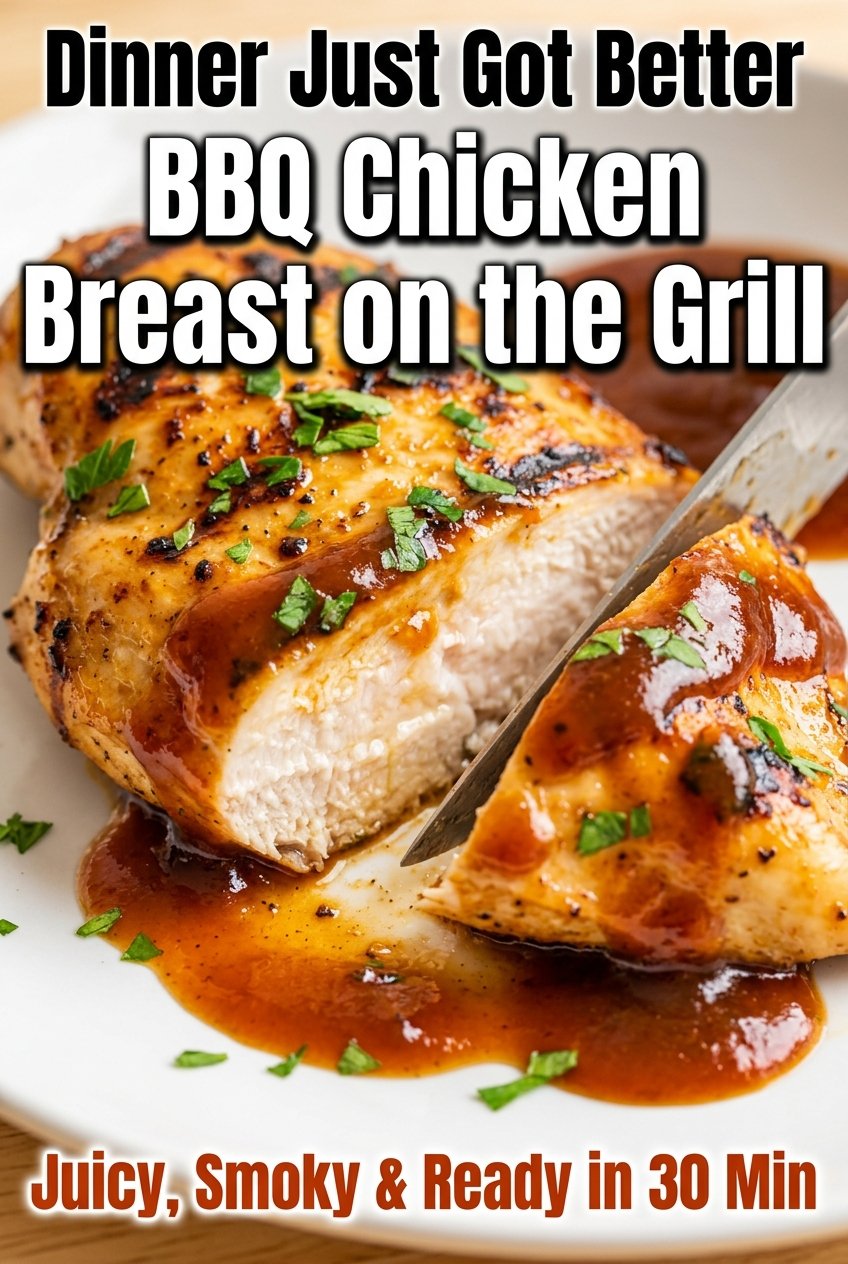
BBQ Chicken Breast on the Grill
Ingredients
Equipment
Method
- Pound the chicken to an even thickness (about ¾ inch) using a meat mallet or rolling pin to help it cook uniformly and stay juicy.
- Pat the chicken lightly dry if it seems wet, then transfer it to a zip-lock bag or shallow dish so it’s ready for marinating.
- Make the marinade by whisking olive oil, soy sauce, apple cider vinegar, brown sugar, garlic powder, smoked paprika, onion powder, black pepper, and salt until the sugar dissolves.
- Marinate the chicken by pouring the marinade over it, sealing the bag, and refrigerating for at least 30 minutes up to 8 hours for deeper flavor.
- Preheat your grill to medium-high (around 400–425°F), then oil the grates well to prevent sticking.
- Mix the glaze by stirring BBQ sauce, honey, and hot sauce in a small bowl, then set it aside.
- Remove chicken from the marinade and let excess drip off, then place it on the grill and cook 5–6 minutes undisturbed until grill marks form and the chicken releases naturally.
- Flip the chicken and brush generously with BBQ glaze, then cook another 4–5 minutes until it looks glossy and caramelizing.
- Flip one more time, apply another layer of glaze to the first side, and cook 1–2 more minutes until the internal temperature reaches 165°F.
- Rest the chicken off the heat on a cutting board for 5 minutes before slicing so the juices redistribute.
- Slice and serve with fresh chopped parsley on top and extra BBQ sauce on the side.
