

Hearty Beef Barley Stew
Hearty beef barley stew is the kind of pot that rewards patience with deep, layered flavor and a spoonful that feels satisfying all the way to the bottom. The beef…
Tip: save now, read later.
Hearty beef barley stew is the kind of pot that rewards patience with deep, layered flavor and a spoonful that feels satisfying all the way to the bottom. The beef turns tender without falling apart completely, the barley cooks up plump and chewy, and the broth picks up that slow-cooked richness from browned meat, tomato paste, and herbs. It eats like a full meal because it is one.
What makes this version work is the order. The beef gets a real sear before anything else, which gives the stew its backbone. The mushrooms and tomato paste cook long enough to lose their raw edge, and the barley simmers right in the broth so it absorbs flavor instead of tasting separate from the rest of the pot. I also like adding the peas at the end so they stay bright instead of fading into the background.
Below you’ll find the small details that keep the stew hearty instead of heavy, plus a few swaps that still preserve the texture and comfort this dish is known for.
The beef got meltingly tender and the barley stayed pleasantly chewy instead of mushy. I made it ahead for dinner and the flavor was even better the next day.
Save this hearty beef barley stew for a night when you want deep flavor, tender beef, and a broth that gets even better after a day in the fridge.
The Sear That Gives Beef Barley Stew Its Depth
The biggest mistake with beef stew is crowding the pan and steaming the meat instead of browning it. You want the beef in a single layer with enough space for the surface to hit the hot oil directly. That deep caramelized crust is where the stew gets its savory backbone, and it’s the difference between broth that tastes flat and broth that tastes like it simmered all afternoon.
Once the beef is browned, don’t rush the vegetables. The onion, carrots, celery, and mushrooms need time to soften and pick up the browned bits stuck to the pot. That fond is free flavor, and the tomato paste needs that short cooking time too so it turns brick-red and loses the tinny edge it can bring when it’s added too early.
What Each Ingredient Is Actually Doing in This Stew
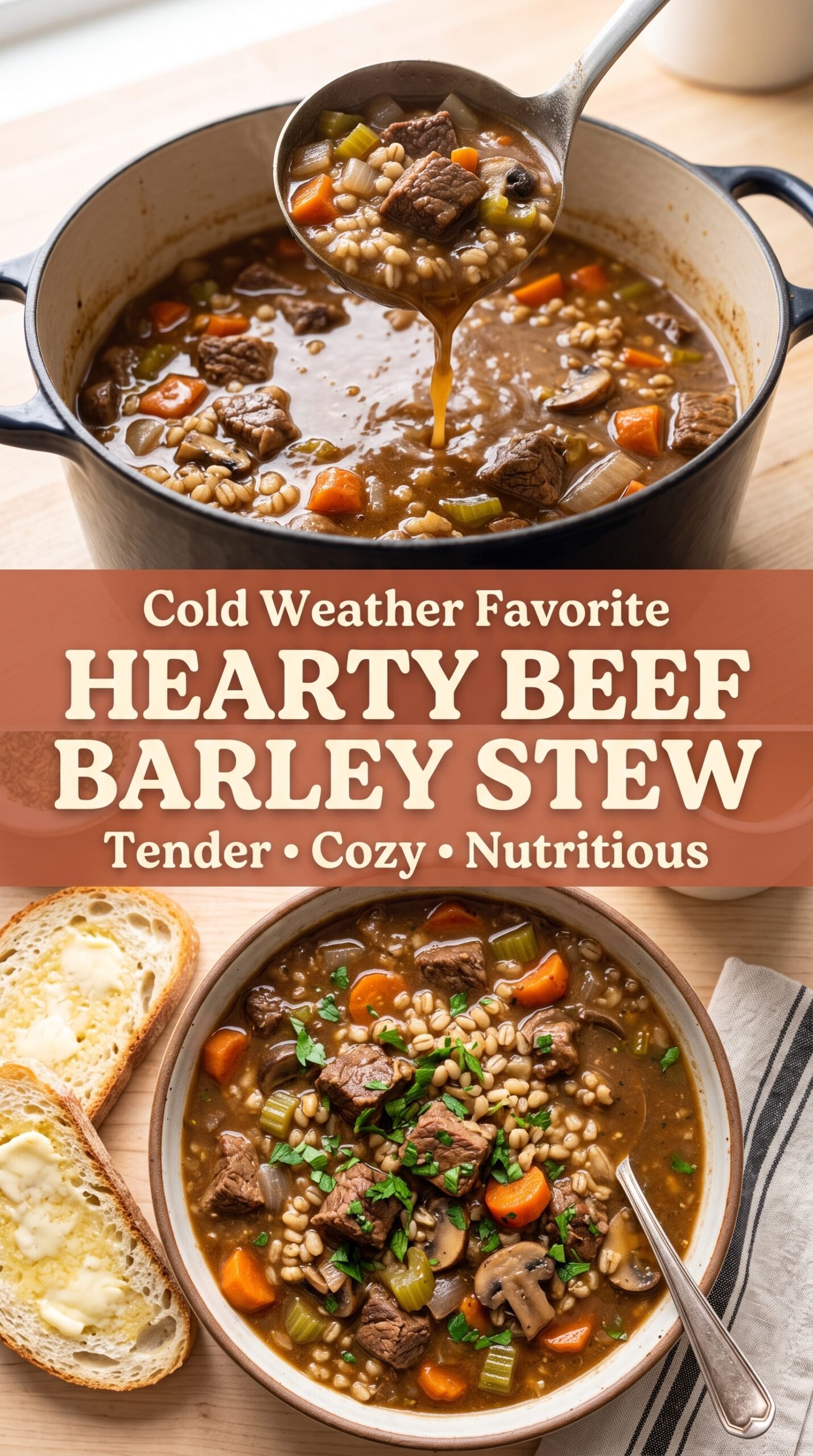
The beef chuck roast is the right cut here because it has enough connective tissue to turn tender during a long simmer. Leaner beef can work in a pinch, but it won’t give you the same silky texture after 90 minutes on the stove. Cut the cubes evenly so they cook at the same rate and don’t end up with some pieces dry while others are still tough.
- Pearl barley — This is what gives the stew its body and that satisfying chew. It plumps in the broth without dissolving the way rice can, but it will keep absorbing liquid as it sits, so add a splash of broth when reheating if it tightens up.
- Tomato paste — A couple tablespoons deepen the color and round out the broth. Cooking it with the garlic for a minute wakes up the flavor and keeps it from tasting sharp.
- Worcestershire sauce — This adds an umami edge that makes the stew taste meatier. If you don’t have it, a small splash of soy sauce can cover some of the same ground, though the flavor will be a little less complex.
- Frozen peas and parsley — Both go in at the end for freshness. The peas stay sweet and bright, and the parsley lifts the whole pot after the long simmer.
Building the Stew So the Barley Stays Tender and the Beef Goes Silky
Brown the beef in batches
Heat the oil until it shimmers, then add the beef in a single layer without packing the pot. Let each side sit long enough to turn deeply browned before moving it; if the meat sticks at first, it usually needs another minute. Pull the pieces to a plate as they finish so you don’t trap moisture in the pan and lose that crust.
Cook the vegetables until they soften and pick up color
Onion, carrots, celery, and mushrooms should cook down until the onion turns translucent and the mushrooms lose their raw moisture. This is where the stew develops sweetness and depth. If the pan looks dry, the vegetables need a little more time, not more heat.
Simmer low and steady
Once the broth goes in, bring the pot just to a gentle boil, then drop it to low. A hard boil can toughen the beef and break the barley apart before the center turns tender. You want a lazy simmer with just a few bubbles breaking the surface, and a lid that keeps enough steam in without forcing the pot into a full boil.
Finish with peas and parsley at the end
Frozen peas only need a few minutes to heat through. Add them near the end so they keep their color and a little bite. The parsley goes in after the heat is off, which keeps it from turning dull and lets the fresh herb finish stand out against the rich broth.
How to Adapt This for Different Needs and Different Pantry Shelves
Dairy-Free and Naturally Hearty
This stew already fits a dairy-free table without any changes, which is part of why it works so well as a pantry meal. The richness comes from browned beef, mushrooms, and long simmering, not cream or butter.
If You Need It Gluten-Free
Pearl barley contains gluten, so swap in brown rice or certified gluten-free sorghum if needed. Brown rice will soften faster and give a lighter texture, while sorghum keeps more chew and acts a lot like barley in the bowl.
If You Want a Thicker, Spoon-Standing Stew
Let the stew simmer uncovered for the last 15 minutes. That reduces the broth without changing the ingredient list, and the barley will help thicken it naturally as it sits. If it gets too thick, a splash of hot broth brings it right back.
Storage and Reheating
- Refrigerator: Store for up to 4 days. The barley will continue to absorb broth, so the stew thickens a bit each day.
- Freezer: It freezes well for up to 3 months. Cool completely, portion into airtight containers, and leave a little headspace for expansion.
- Reheating: Warm it gently on the stove over medium-low with a splash of broth or water. Don’t blast it in a hard boil or the beef can tighten and the barley can turn overly soft.
Answers to the Questions Worth Asking
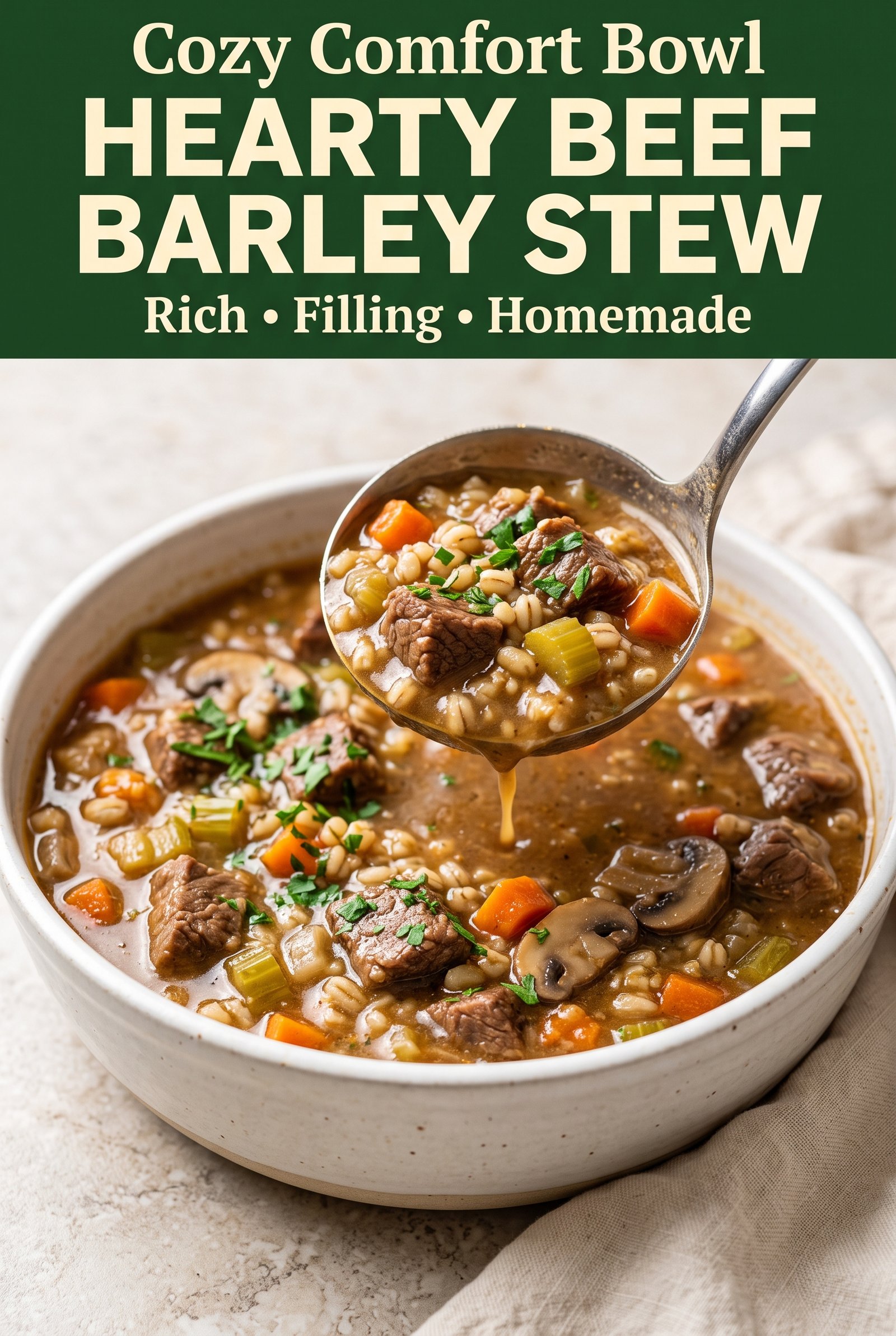
Hearty Beef Barley Stew
Ingredients
Equipment
Method
- Season the beef cubes with kosher salt and black pepper.
- Set a large Dutch oven near the stove so you can brown the beef in batches.
- Heat the olive oil in a large Dutch oven over medium-high heat.
- Brown the beef in batches for 5–6 minutes until deeply caramelized, then transfer to a plate.
- Add the onion, carrots, celery, and mushrooms to the pot and cook for 6–8 minutes until softened.
- Stir in the garlic and tomato paste and cook for 1 minute until fragrant.
- Return the beef to the pot, then pour in the beef broth.
- Stir in the Worcestershire sauce, pearl barley, dried thyme, dried rosemary, and bay leaves, stirring well to combine.
- Bring to a gentle boil, then reduce the heat to low.
- Cover and simmer for 75–90 minutes, stirring occasionally, until the beef is fork-tender and the barley is plump.
- Stir in the frozen peas during the last 5 minutes of cooking.
- Remove the bay leaves and sprinkle with the fresh parsley, then serve hot.
