
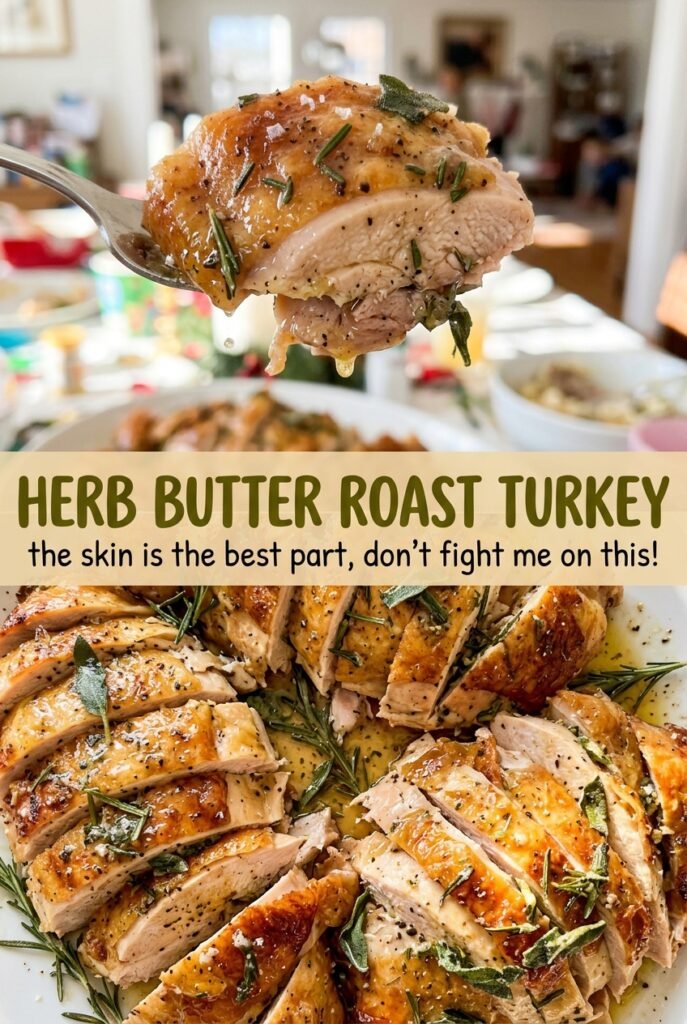
Herb Butter Roast Turkey
The first sign that herb butter is doing its job is the smell when the turkey starts roasting: garlic and fresh herbs warming together under the skin. I used to…
Tip: save now, read later.
The first sign that herb butter is doing its job is the smell when the turkey starts roasting: garlic and fresh herbs warming together under the skin. I used to spread all the butter over the outside, where it looked inviting but didn’t season the breast as evenly. For this Herb Butter Roast Turkey, some of that butter goes beneath the breast skin, while the rest coats the outside.
A fully thawed bird and a roasting rack give the turkey a steady start in a 325°F oven. I tuck a halved lemon and quartered onion into the cavity, then let a thermometer—not the clock alone—tell me when it’s ready. The skin can brown before the inside is done, so a loose foil tent is there if you need it. After a 30-minute rest, the turkey is ready to carve, with fragrant herbs in every slice.
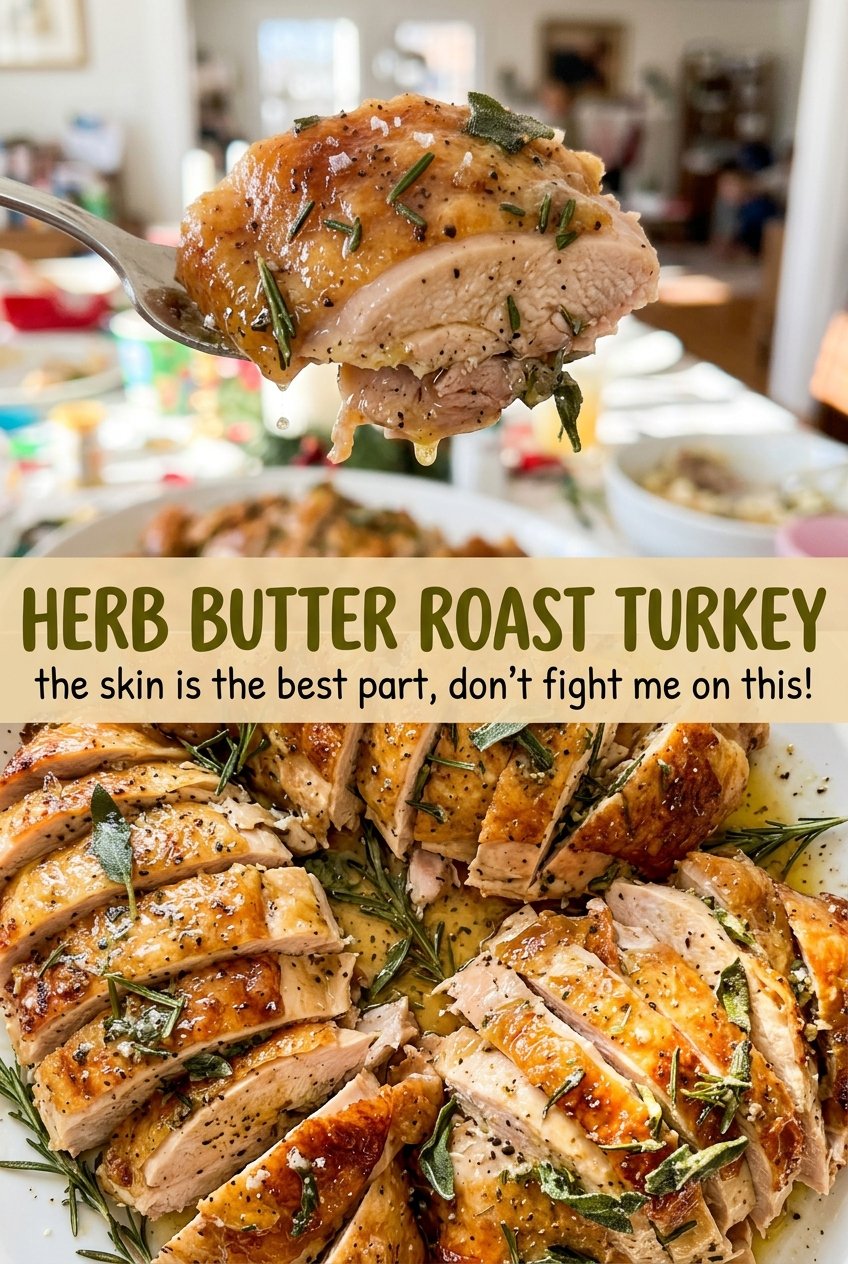
Kitchen Note
Pat the turkey dry with paper towels before seasoning, and don’t rinse it. A dry surface gives the butter a better place to cling, and skipping the rinse avoids splashing raw turkey juices around the sink.
Save this Herb Butter Roast Turkey for a centerpiece roast with garlic, fresh herbs, and butter worked right beneath the breast skin.
Why Herb Butter Belongs Under the Breast Skin, Not Only on Top
Butter rubbed over the outside helps the skin brown, but it can’t reach the meat beneath an intact layer of skin. Gently loosening the breast skin creates a pocket for some of the herb butter, so the parsley, thyme, sage, rosemary, and garlic sit closer to the breast instead of all being on the surface. The remaining butter still coats the outside, giving the skin its own layer of seasoning.
Go slowly when you make that pocket. Slide your fingers between the skin and meat and work outward without pulling upward; if you tug hard, the skin can tear, and the butter may not stay where you put it. You don’t need to separate the skin completely. A little room over each side of the breast is enough to spread the butter in a thin layer. This two-place application makes better use of the same herb butter: some seasons the breast directly, and the rest flavors the skin.
How the Fresh Herbs and Aromatics Shape This Roast
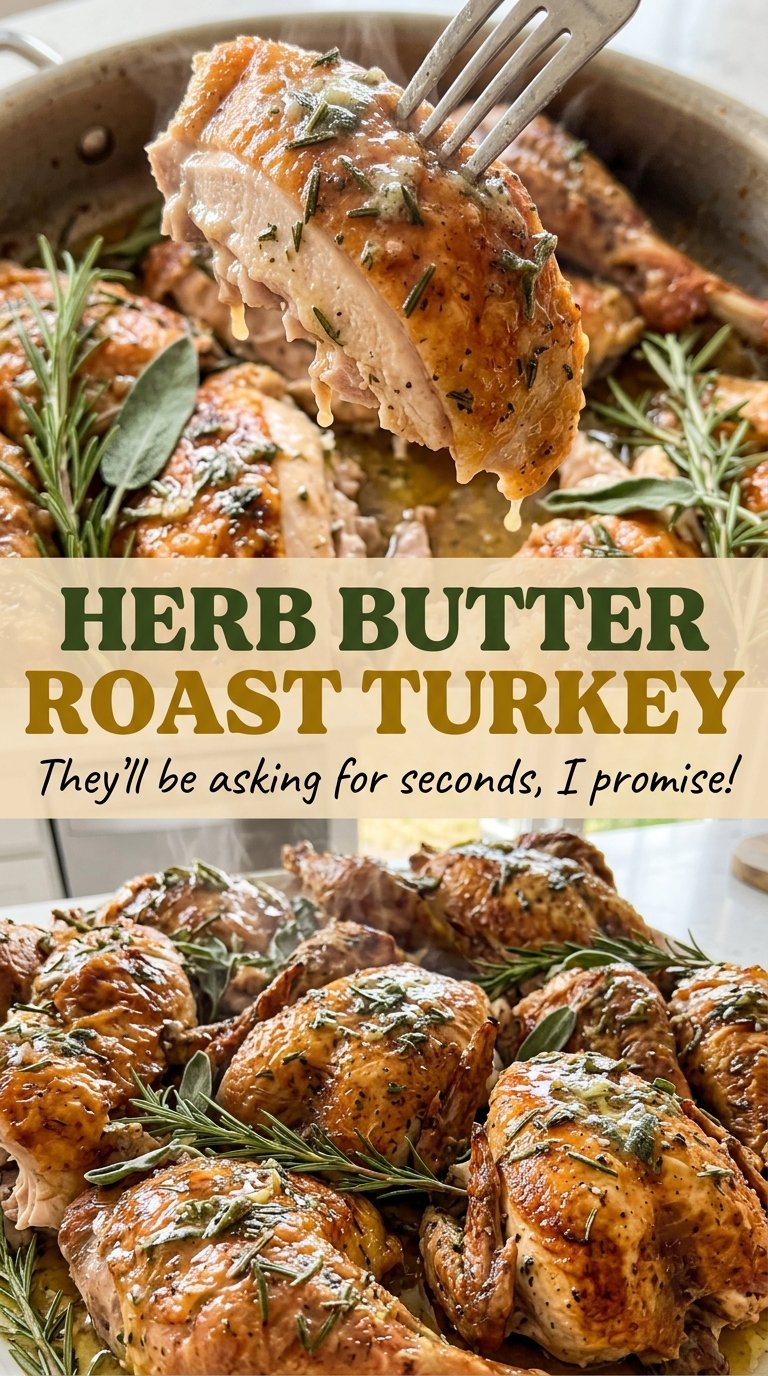
- Unsalted butter and fresh herbs — Softened butter is easy to stir and spread, while unsalted butter leaves the seasoning in your control. Fresh parsley, thyme, sage, and rosemary give the mixture its distinct herbal character; choose herbs with lively color and a fresh scent, but there’s no need to buy premium butter for this use. If one of the listed herbs isn’t available, leave it out rather than swapping in dried herbs one-for-one, which can make the blend taste unbalanced.
- Garlic — Finely grated garlic disperses through the butter instead of leaving large pieces in one spot. Fresh cloves give the most direct, savory flavor here; if you leave the garlic out, the butter will still carry the herbs, though the roast will taste less garlicky.
- The turkey — A fully thawed bird in the 12- to 14-pound range is the size this roasting time is built around. Check that the cavity is empty of the neck and giblets before you add the aromatics; the turkey itself doesn’t need special treatment beyond being fully thawed.
- Onion and lemon — The quartered onion and halved lemon scent the cavity as the turkey roasts. Choose a firm onion and a lemon that feels heavy for its size; either is an easy place to simplify if you prefer less aromatic flavor, but the cavity will be less fragrant.
- Kosher salt and black pepper — These season the skin and turkey evenly when scattered over the outside. Freshly ground pepper has a more pronounced aroma, but ordinary ground black pepper works for the straightforward seasoning this roast needs.
How to Roast the Turkey Without Guessing at Doneness
Stir the Herb Butter Until the Herbs Are Evenly Distributed
Combine the softened butter with the parsley, thyme, sage, rosemary, and finely grated garlic in a bowl. Stir until the herbs and garlic are spread throughout, with no large clump of garlic or bare patches of butter. Butter that’s softened will spread more easily than cold butter, so give it time to become pliable before mixing. Set a roasting rack in the pan while you heat the oven to 325°F.
Prepare the Cavity and Season the Outside
Remove the neck and giblets from the fully thawed turkey, then pat the bird dry with paper towels. Put the quartered onion and halved lemon in the cavity, and season the outside with kosher salt and ground black pepper. Keep the onion and lemon inside the cavity rather than packing it tightly; the space around them allows heat to circulate. Rinsing the turkey isn’t part of this preparation.
Spread Butter Beneath the Skin and Over the Surface
Use your fingers to gently loosen the skin over the breast, working carefully so it stays intact. Spread some of the herb butter beneath the skin, then rub the remaining butter over the outside of the turkey. Aim for an even coating rather than a thick mound in one spot. Set the turkey breast-side up on the roasting rack.
Roast to Temperature, Then Let It Rest
Roast for 3 to 3 3/4 hours, beginning to check the temperature after 2 1/2 hours. If the skin browns too quickly, loosely tent the turkey with foil; a tight cover can press against the buttered skin. Insert a thermometer into the thickest part of the breast and the innermost part of the thigh without touching bone; both should read 165°F before you remove the turkey. Rest it for 30 minutes before carving so the juices have time to settle.
Three Useful Ways to Change the Herb Butter Roast
A dairy-free roast without the butter coating
For a dairy-free version using only the ingredients here, leave out the butter and herb mixture. Season the turkey with the salt and pepper, and keep the onion and lemon in the cavity. The result is a simpler roast without the rich, herb-buttered skin, so expect a less deeply browned exterior.
A softer, less garlicky herb butter
Leave the garlic out of the butter but keep the parsley, thyme, sage, and rosemary. The roast will still have the fresh, savory herb coating, with less pungent flavor in the skin and breast. This is a simple change if garlic tends to take over the other herbs for you.
A brighter lemon-forward cavity
Use the halved lemon in the cavity and leave out the onion. That keeps the aromatic note brighter and less sweet, while the herb butter stays unchanged. It’s a small adjustment, but useful when you want the lemon to come through more clearly.
Storage and Reheating
- Refrigerator: Store carved turkey in a covered container and refrigerate within 2 hours. It keeps for 3 to 4 days; the breast may lose some of its just-roasted tenderness.
- Freezer: Freeze carved portions in an airtight freezer-safe container for up to 3 months for best quality. Thaw in the refrigerator before reheating.
- Reheating: Warm portions in a covered dish until steaming hot throughout. Gentle reheating helps keep the breast from drying out; avoid leaving turkey on a low setting for a long stretch.
Questions That Come Up Before the Turkey Goes in the Oven
Herb Butter Roast Turkey
Ingredients
Equipment
Method
- Stir the butter, parsley, thyme, sage, rosemary, and garlic together in a bowl until evenly combined.
- Heat the oven to 325°F.
- Set a roasting rack in a roasting pan.
- Remove the neck and giblets from the turkey cavity.
- Pat the turkey dry with paper towels; do not rinse it.
- Put the onion and lemon in the cavity.
- Season the outside of the turkey with the salt and pepper.
- Gently loosen the breast skin with your fingers and spread some herb butter underneath.
- Rub the remaining butter over the outside of the turkey.
- Set the turkey breast-side up on the rack and roast for 3 to 3 3/4 hours, beginning to check the temperature after 2 1/2 hours.
- Loosely tent with foil if the skin browns too quickly.
- Remove the turkey when a thermometer reads 165°F in the thickest part of the breast and the innermost part of the thigh without touching bone.
- Rest it for 30 minutes before carving.
