
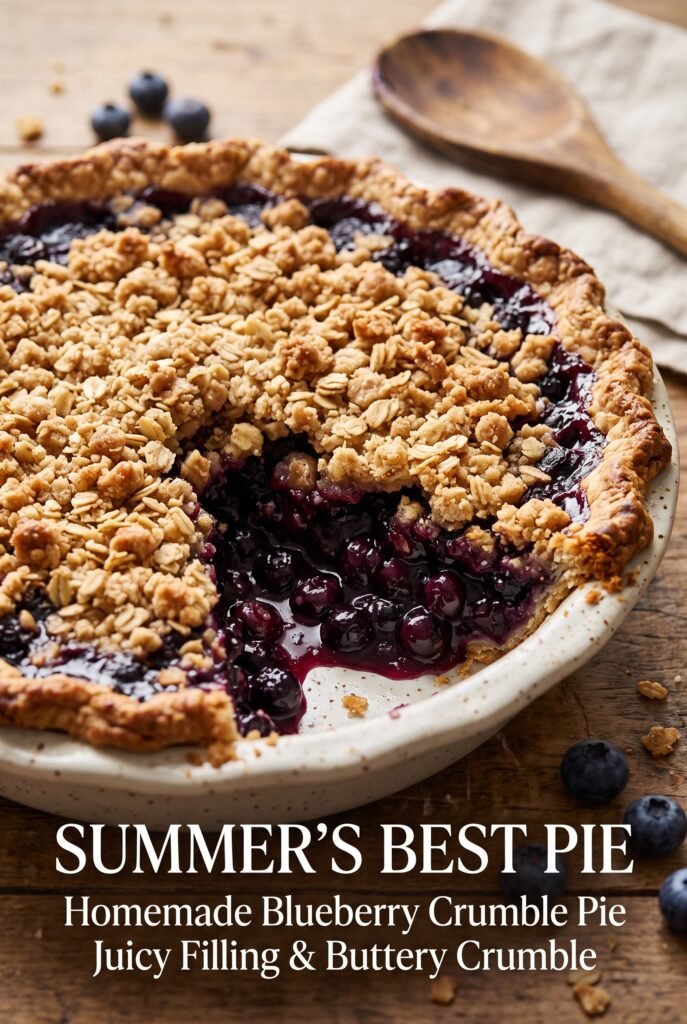
Homemade Blueberry Crumble Pie
Blueberry crumble pie gives you the best parts of two desserts at once: a juicy, jammy filling under a crisp, buttery topping that stays bronzed instead of soggy. The crust…
Tip: save now, read later.
Blueberry crumble pie gives you the best parts of two desserts at once: a juicy, jammy filling under a crisp, buttery topping that stays bronzed instead of soggy. The crust holds its shape, the berries collapse into a thick spoonable center, and the crumble bakes into little golden clusters that crackle when you cut into it. It’s the kind of pie people ask for a second slice of before the first one is gone.
What makes this version work is the balance between moisture and thickener. Blueberries release a lot of juice as they bake, so the cornstarch has to be there early, before the filling goes into the crust, or you’ll end up with a loose pie that runs across the plate. Lemon juice and zest keep the berries tasting bright, and a little cinnamon in both the filling and the crumble ties everything together without making it taste like spice cake.
Below, I’ll walk through the one cooling step you shouldn’t rush, the crumble texture you’re aiming for, and a few swaps that still keep the pie sturdy enough to slice cleanly.
The filling set up beautifully after the full cooling time, and the crumble stayed crisp even the next day. I’ve made blueberry pie before, but this was the first one that sliced cleanly without turning into soup.
Save this blueberry crumble pie for the day you want a juicy fruit filling, a crisp oat topping, and a clean slice that holds together.
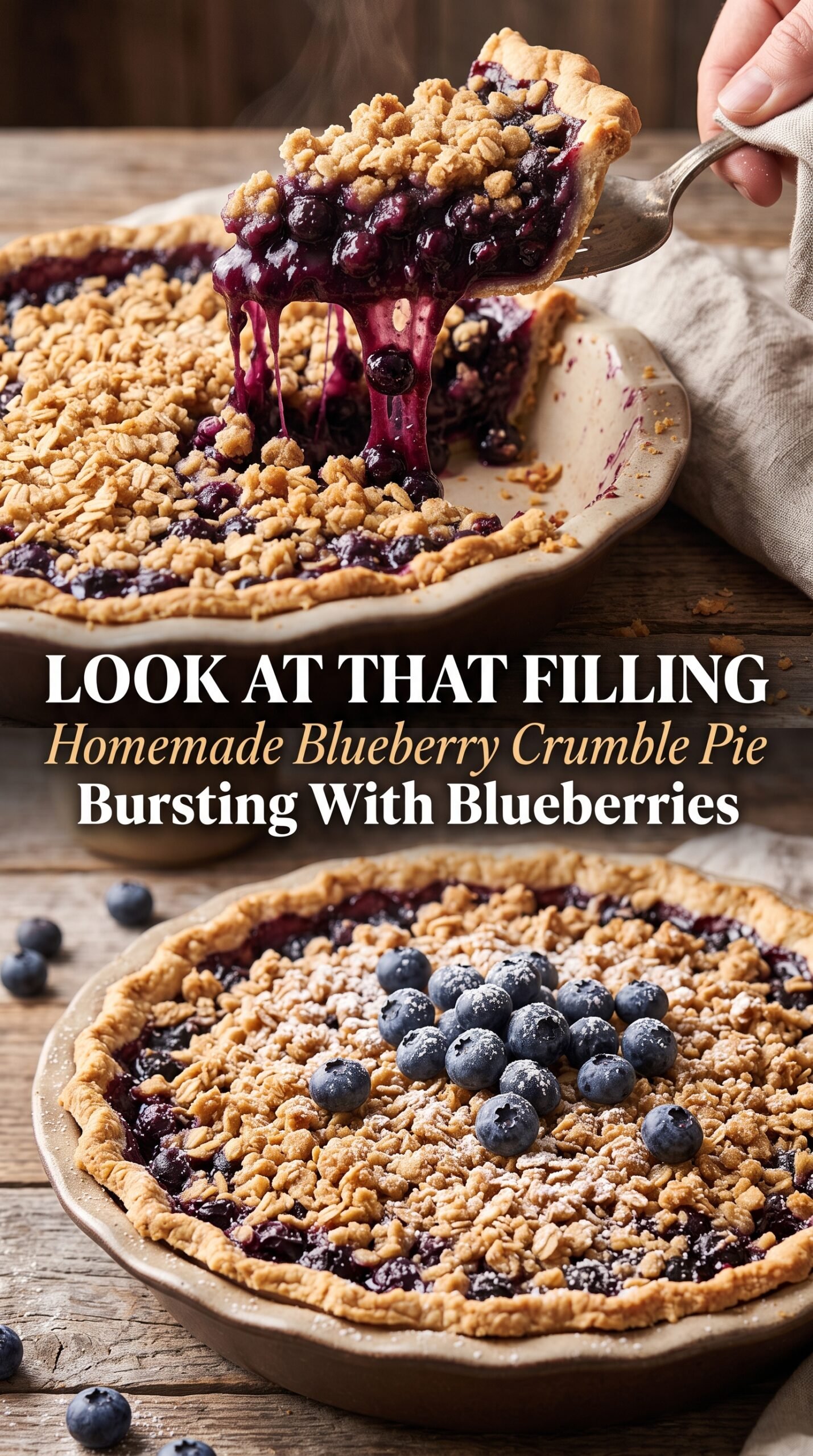
The Reason the Filling Needs a Thickener Before It Hits the Crust
Blueberries look sturdy in the bowl, but they give off a lot of juice as soon as they warm up. If you wait until the filling is already in the crust to think about thickening, the juices will have nowhere to go except the bottom of the pie, where they can turn the crust soft before it ever has a chance to crisp. Cornstarch has to be tossed with the berries while they’re still dry enough to coat evenly. That coating starts working in the oven as soon as the fruit breaks down.
The other thing that matters is the sugar balance. Granulated sugar brings clean sweetness, while brown sugar adds a little depth that keeps the crumble from tasting flat. Lemon juice keeps the filling from turning one-note, and the zest gives you the part of the lemon that actually smells fresh. Skip the zest and the pie still works, but it loses the lift that makes each bite taste like more than just sweet berries.
- Blueberries — Fresh berries hold their shape a little better than frozen ones and give you a thicker, cleaner filling. If you do use frozen blueberries, don’t thaw them first; toss them with the cornstarch mixture while still frozen so they don’t bleed out too much juice before baking.
- Cornstarch — This is what turns blueberry juice into pie filling instead of syrup. Arrowroot can work in a pinch, but the filling will set a little softer, so keep the bake time at the long end.
- Lemon juice and zest — The juice sharpens the berry flavor, and the zest adds aroma that disappears if you skip it. Bottled lemon juice will do in an emergency, but fresh zest is worth using because it gives the pie a brighter finish.
- Cinnamon — A small amount warms the filling without making it read as spiced dessert. It also echoes the crumble topping, which helps the whole pie taste intentional instead of just layered.
Building the Crumble So It Bakes Crisp Instead of Past
Toss the filling until every berry looks coated
Stir the blueberries with the sugars, cornstarch, lemon, vanilla, cinnamon, and salt until the dry ingredients disappear and the berries look glossy. If you still see streaks of cornstarch at the bottom of the bowl, those spots will bake into chalky pockets. Spoon the filling into the crust right after mixing so the sugar doesn’t draw out too much juice before it gets into the oven.
Mix the topping until it looks like wet sand with chunks
The crumble should clump when you squeeze it but still break apart easily between your fingers. That texture comes from melted butter mixed through the flour, oats, and sugars until everything looks sandy with a few bigger nuggets. If the topping turns into a paste, it will bake up dense instead of crisp. If it looks too dry, keep mixing just until the butter is evenly distributed.
Bake until the center bubbles, not just the edges
The pie is done when the filling is actively bubbling through the topping in the center and the crumble is deep golden brown. Those bubbles tell you the cornstarch has thickened the juices fully. If the edges of the crust are browning too fast, shield them with foil while the middle keeps baking. Cutting it early is the fastest way to end up with a runny slice.
How to Adapt This Pie When You Need a Different Crust or Topping
Make it gluten-free with one swap
Use a gluten-free pie crust and replace the all-purpose flour in the crumble with a 1:1 gluten-free flour blend. The oats should be certified gluten-free if cross-contact matters. The topping will still bake crisp, but the crumbs may be a little more delicate when you cut the pie.
Make the filling a little less sweet
Drop the granulated sugar in the filling by 2 to 3 tablespoons if your berries are very ripe. Blueberries vary a lot in sweetness, and overripe fruit can make the pie taste heavy. The cornstarch still does the same job, so the texture stays set even with less sugar.
Use frozen blueberries when fresh aren’t available
Frozen berries work, but they release more liquid, so the pie needs the full bake time and the full cooling time. Don’t thaw them first. Bake from frozen, and expect the filling to look a little looser when it comes out of the oven before it sets as it cools.
Storage and Reheating
- Refrigerator: Store covered for up to 4 days. The topping softens a little, but the filling stays set.
- Freezer: Freeze the baked pie tightly wrapped for up to 2 months. Thaw overnight in the refrigerator before reheating so the crust doesn’t turn gummy.
- Reheating: Warm slices in a 300°F oven for 10 to 15 minutes. The microwave makes the topping limp and can make the filling weep, so use the oven if you want the crumble to crisp back up.
Answers to the Questions Worth Asking
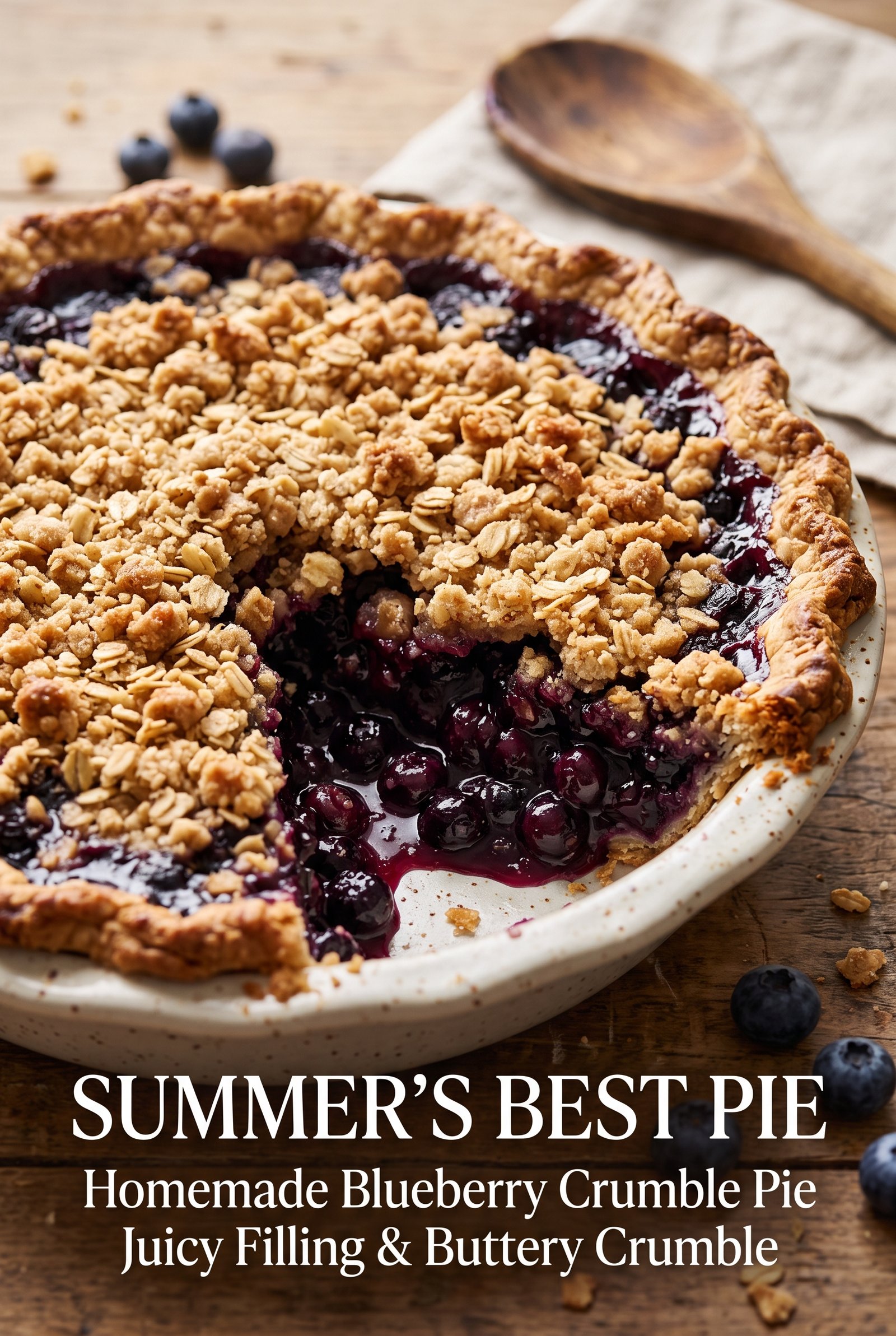
Homemade Blueberry Crumble Pie
Ingredients
Equipment
Method
- Preheat the oven to 375°F (190°C). Place a sheet pan in the oven so it’s ready for baking the pie.
- Fit the pie crust into a 9-inch pie plate. Ensure the crust sits evenly at the bottom and up the sides.
- In a large bowl, combine fresh blueberries, granulated sugar, brown sugar, cornstarch, lemon juice, lemon zest, vanilla extract, ground cinnamon, and salt. Stir until the berries are evenly coated and the cornstarch is distributed.
- Spoon the blueberry filling into the prepared crust. Spread it into an even layer so it bakes uniformly.
- Mix all-purpose flour, rolled oats, both sugars, cinnamon, salt, and melted unsalted butter until crumbly. The mixture should look like loose clumps that will turn crisp in the oven.
- Sprinkle the crumble evenly over the blueberry filling. Cover the surface completely for a balanced berry-to-crumble bite.
- Bake for 50–60 minutes, until the filling bubbles and the topping is golden brown. If the edges brown too quickly, cover them with foil to prevent burning.
- Cool for at least 3 hours before slicing. Letting the pie set prevents runny filling and makes clean wedges.
- Serve with vanilla ice cream or whipped cream. Plate after cooling so the topping stays crisp.
