

Homemade Classic Caramel Apples on a Stick with Chopped Peanuts
The caramel thickens as it cooks, and the moment it reaches the right temperature it clings to the spoon instead of running off in a thin stream. That’s the point…
Tip: save now, read later.
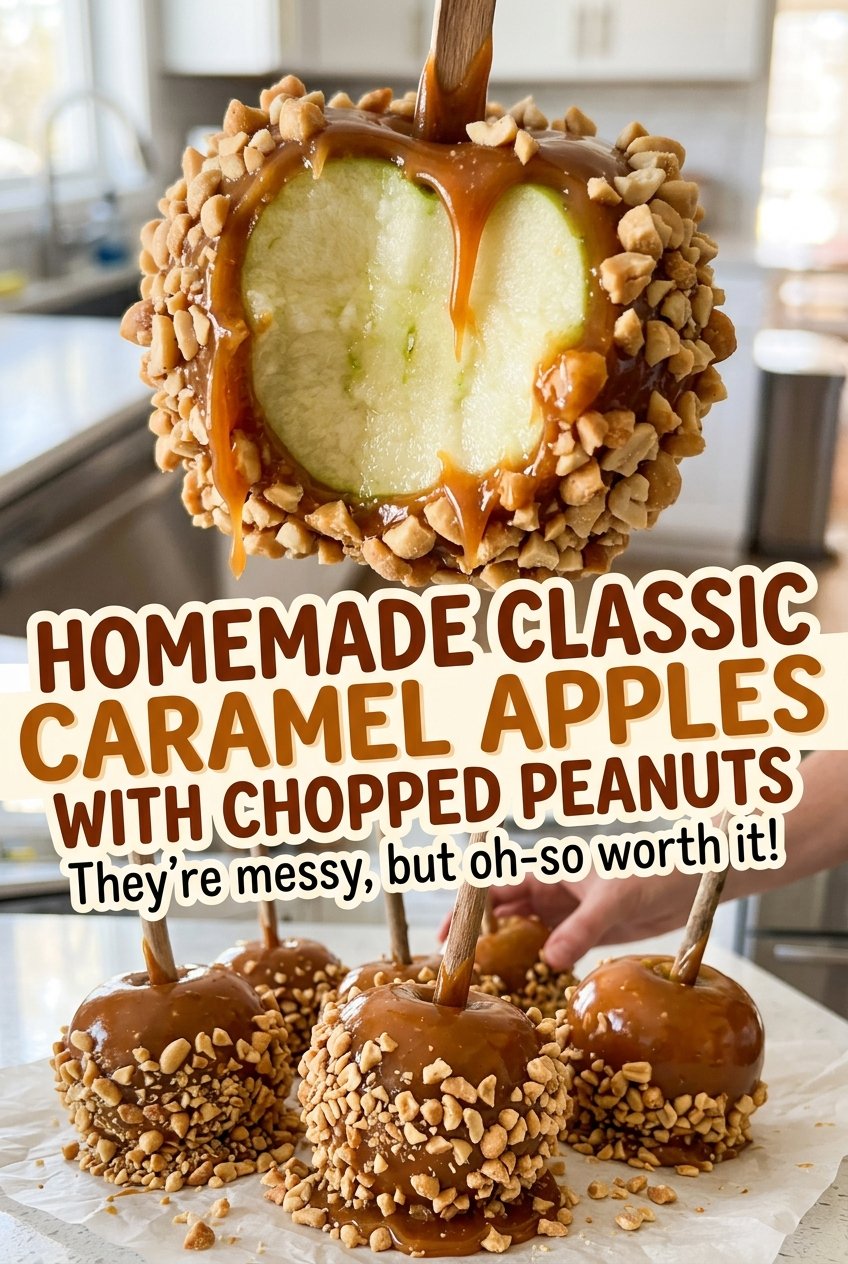
The caramel thickens as it cooks, and the moment it reaches the right temperature it clings to the spoon instead of running off in a thin stream. That’s the point I watch for when making homemade classic caramel apples on a stick with chopped peanuts: the coating needs to stay fluid enough to dip, but firm enough to hold its shape once it’s on the apple. Granny Smiths bring a tart bite that balances the buttery sweetness.
Getting the apples ready matters just as much as cooking the caramel. Wax and even a little water on the skin can keep the coating from gripping, while room-temperature apples give you time to turn each one through the caramel before it starts to set. Once the peanuts are ready in a shallow bowl, the finish comes together quickly: glossy caramel, a crunchy peanut coat, and a firm bite of apple underneath.
Kitchen Note
Set the chopped peanuts in their shallow bowl before the caramel is ready. Once the apples are dipped, you’ll want the coating close at hand so you can roll each one while the caramel is still tacky.
Save these homemade caramel apples with chopped peanuts for a crisp, tart apple wrapped in buttery caramel and a crunchy roasted-peanut coating.
Why Caramel Slides Off Apples Before It Ever Sets
Caramel needs a clean, dry surface to grip. Many apples have a thin wax coating, and that slick layer can leave caramel sliding instead of forming an even shell. Washing the Granny Smiths under hot running water and rubbing the skin removes that wax; drying them completely matters just as much. A damp apple can leave a weak, slippery layer between the fruit and the caramel.
Temperature is part of the same problem. Cold apples can make the caramel firm up before you’ve had a chance to turn the fruit and cover it evenly. Bringing the apples to room temperature gives you a more forgiving dipping window, especially when you’re coating eight in a row. Prepare the apples before you start cooking, then set them on the parchment-lined baking sheet with their sticks in place. That way, the freshly dipped apples have a ready landing spot and don’t have to be moved while the coating is soft.
Look closely at the apple skin before dipping: it should feel dry, not slick or damp. That little bit of preparation is what lets the caramel meet the fruit directly and stay put as it firms.
What Gives This Caramel Its Chew—and What the Peanuts Add
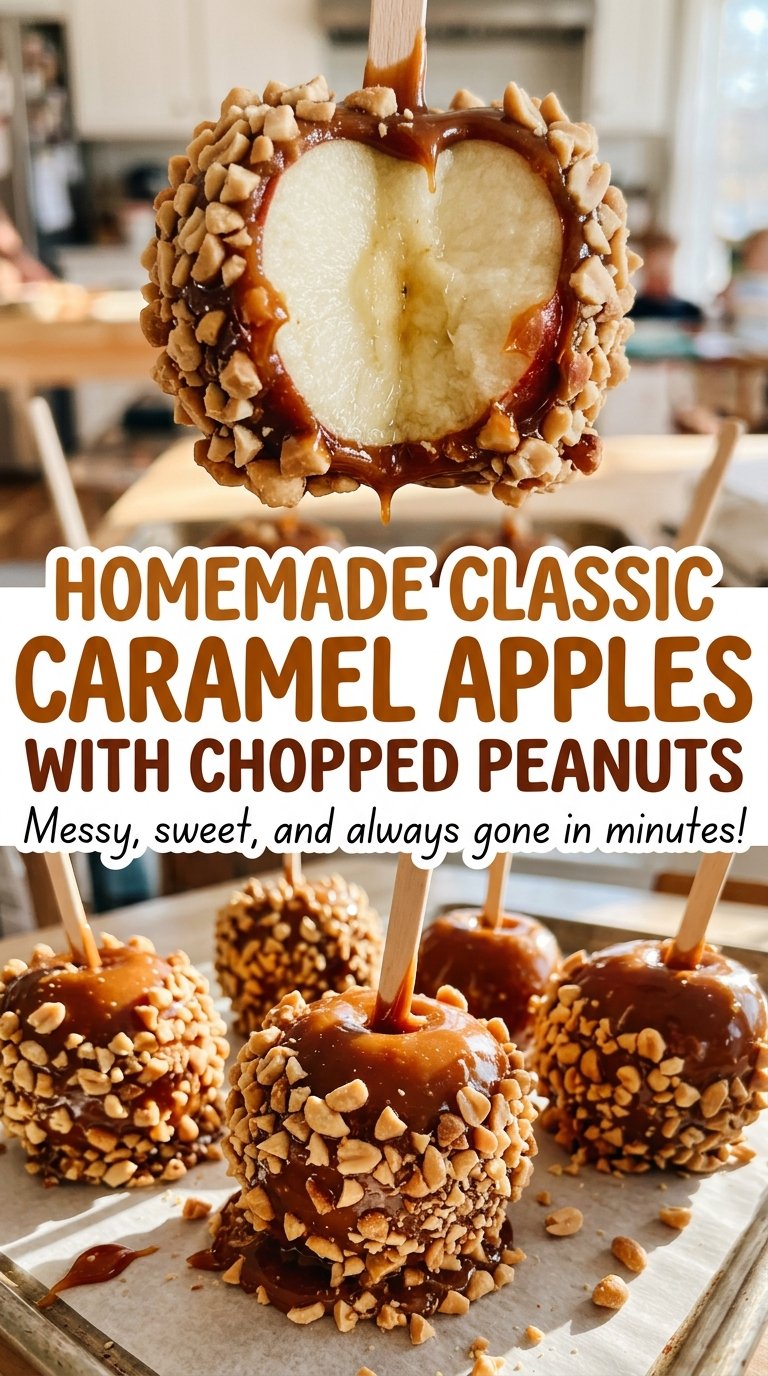
- Granny Smith apples — Their firm flesh holds up under a thick coating, and their tartness cuts through the sweetness. Choose unbruised fruit with a shape that sits steadily once dipped; a different apple will work, but a sweeter, softer variety makes a less crisp contrast.
- Brown sugar and light corn syrup — The brown sugar brings a mellow molasses note, while corn syrup helps the cooked sugar stay smooth instead of crystallizing. Light brown sugar gives the caramel a gentler flavor than dark brown sugar; golden syrup can stand in for corn syrup, though it adds its own buttery, toasty note.
- Sweetened condensed milk and unsalted butter — These give the caramel its creamy body and rich, chewy finish. Sweetened condensed milk isn’t interchangeable with evaporated milk; evaporated milk lacks the sugar and thickness this caramel depends on. Unsalted butter lets the small amount of kosher salt stay in balance.
- Vanilla extract — Stir it in after the pan comes off the heat so its aroma stays clear in the finished caramel. A good-quality extract is noticeable here, but any pure vanilla extract you enjoy will work.
- Roasted peanuts — Finely chopped pieces give more even coverage than large chunks, and roasted peanuts add a savory crunch against the soft caramel. Chop them finely enough to cling when you roll each apple; pre-chopped roasted peanuts are convenient, while freshly chopped ones tend to have a more pronounced nutty aroma.
Cook the Caramel to 245°F, Then Work While It’s Dippable
Set up the apples and peanut coating
Line a rimmed baking sheet with parchment paper and insert a wooden craft stick into the stem end of each washed, dried apple. The stick should feel secure enough to turn the apple without wobbling. Spread the chopped roasted peanuts in a shallow bowl so there’s room to roll each apple. Have the sheet and coating ready before the caramel cooks; hot caramel waits for no one.
Stir the caramel to its target temperature
Combine the brown sugar, light corn syrup, sweetened condensed milk, butter, and kosher salt in a 3-quart heavy-bottomed saucepan. Clip a candy thermometer to the side, checking that its tip doesn’t touch the bottom of the pan. Cook over medium heat, stirring constantly, until it registers 245°F; this takes about 15–20 minutes. Keep the spoon moving across the bottom so the mixture heats evenly rather than catching in one spot.
Finish the caramel off the heat
As soon as the thermometer reaches 245°F, remove the pan from the heat. Carefully stir in the vanilla extract; the caramel is hot, thick, and can bubble as you mix. Let it stand for 2 minutes before dipping. That short pause lets the mixture settle while it remains fluid enough to coat the apples.
Dip, coat, and let the shells firm
Dip an apple and turn it until the caramel covers the surface. Lift it above the pan and let excess caramel drip back for about 10 seconds, then roll it immediately in the chopped peanuts. Set it on the lined baking sheet and repeat with the remaining apples. Leave them at room temperature for 30–45 minutes, until the caramel coating feels firm.
Three Coatings That Change the Crunch
A peanut-free sunflower crunch
Replace the chopped roasted peanuts with finely chopped roasted sunflower kernels. They give the coating a similar crisp bite with a milder, seed-forward flavor; use kernels prepared without peanut cross-contact if you’re avoiding peanuts for an allergy.
Pecans for a softer, buttery crunch
Use finely chopped roasted pecans in place of the peanuts. The pieces coat the caramel the same way, but the finish tastes more mellow and buttery, with less of the salty-roasted contrast peanuts bring.
Coconut for a lighter coating
Swap the peanuts for finely chopped unsweetened coconut flakes. The coating will be less crunchy and more delicate, with a mild coconut aroma; chop the flakes small so they cling to the caramel rather than falling away in large pieces.
Storage and Reheating
- Refrigerator: Store the apples in a covered container in a single layer for up to 3 days. The caramel will firm up in the cold, and the apple may release a little moisture over time.
- Freezer: Freezing isn’t recommended; thawed apples turn soft and wet, and the caramel coating can become sticky.
- Reheating: Don’t microwave the whole apples, since the caramel can melt unevenly and slide. Let an apple sit out briefly to soften before eating, and keep its total time at room temperature under 2 hours.
Questions That Come Up While Dipping Caramel Apples
Homemade Classic Caramel Apples on a Stick with Chopped Peanuts
Ingredients
Equipment
Method
- Line a rimmed baking sheet with parchment paper.
- Insert a wooden stick into the stem end of each apple.
- Set the apples on the sheet.
- Spread the chopped peanuts in a shallow bowl.
- Combine the brown sugar, corn syrup, condensed milk, butter, and salt in a 3-quart heavy-bottomed saucepan.
- Clip a candy thermometer to the side without letting it touch the bottom.
- Cook over medium heat, stirring constantly, until the thermometer registers 245°F, about 15-20 minutes.
- Remove from the heat and carefully stir in the vanilla.
- Let the caramel stand for 2 minutes.
- Dip each apple and turn to coat.
- Lift each apple and let excess caramel drip back into the pan for about 10 seconds.
- Immediately roll each apple in the peanuts and return it to the lined sheet.
- Let the apples stand at room temperature for 30-45 minutes, until the caramel coating is firm.
