

Honey Garlic Salmon Rice Bowls
The honey glaze can go from glossy to dark before the center of a salmon portion is cooked through. I get a better finish by letting the salmon bake for…
Tip: save now, read later.
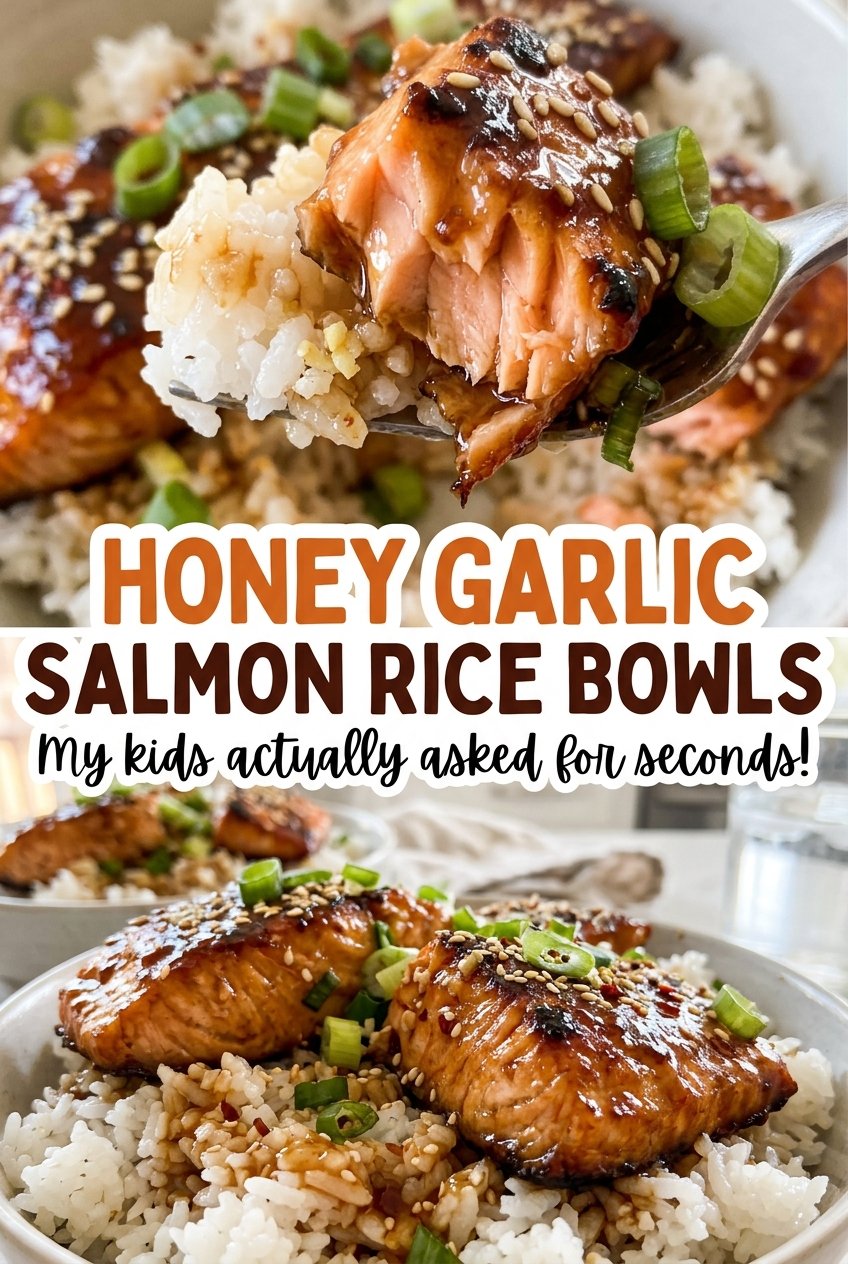
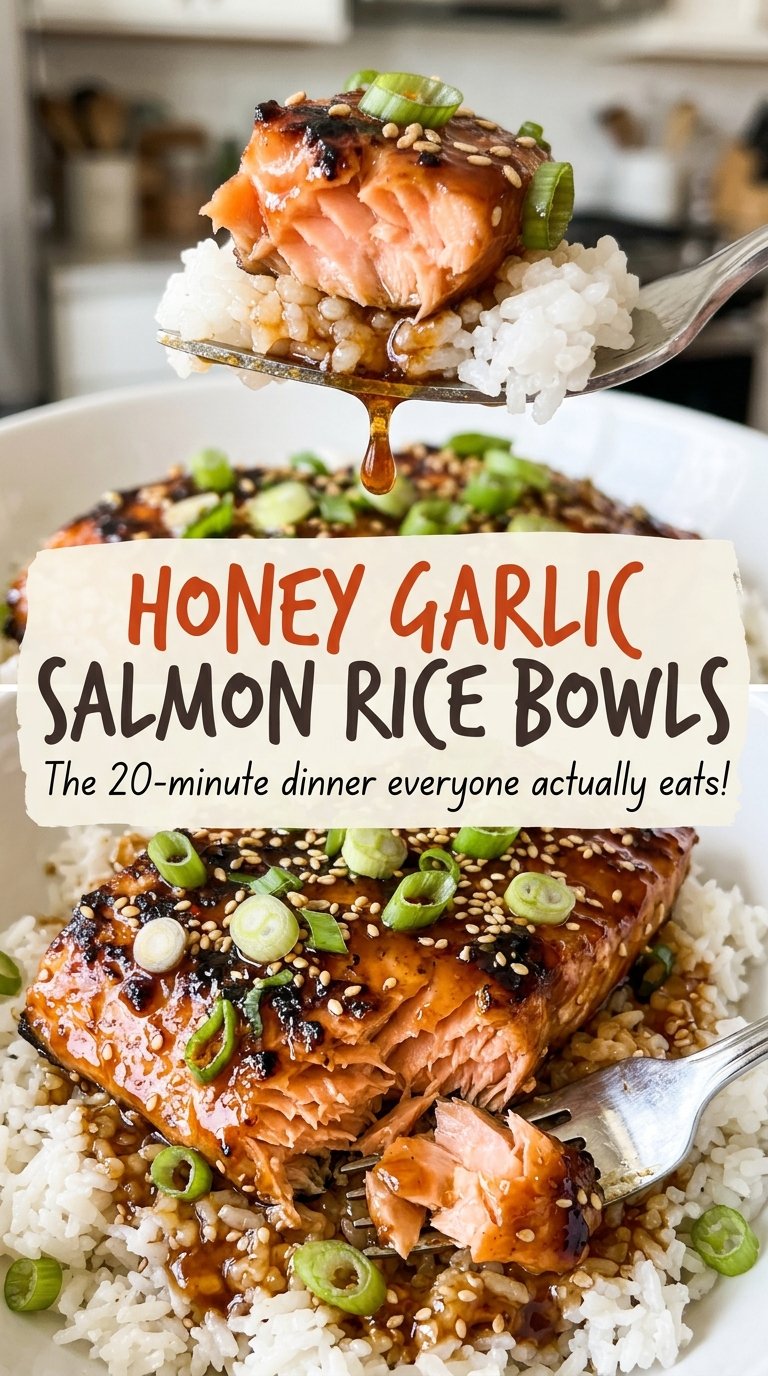
The honey glaze can go from glossy to dark before the center of a salmon portion is cooked through. I get a better finish by letting the salmon bake for 8 minutes first, then brushing on the glaze for the final stretch. That timing gives these Honey Garlic Salmon Rice Bowls tender salmon with a sticky coating, without asking the honey to sit in the oven longer than it needs to.
While the salmon bakes, the rice rests under its lid and the cucumber and carrots bring a cool, crisp contrast to the warm bowl. I like how the rice catches the extra glaze, especially when it’s spooned over the salmon right before serving. The result is a balanced bowl with savory-sweet salmon, fluffy rice, and fresh crunch in every bite.
Kitchen Note
Give the rice its full 10-minute rest off the heat, with the lid still on. That covered pause lets the grains finish steaming; lifting the lid early releases the heat they need.
Save these Honey Garlic Salmon Rice Bowls for a dinner with glossy honey-garlic salmon, fluffy rice, and crisp vegetables.
Why the Honey Glaze Goes on After the Salmon Starts Baking
Honey browns faster than the center of a thick salmon portion cooks. If you coat the fish before it goes into the oven, the sweet glaze has the full bake to darken while the middle is still catching up. Giving the salmon an 8-minute head start is a small timing choice that makes the finish easier to control.
The glaze gets its own brief simmer, too. Honey, soy sauce, rice vinegar, and garlic cook together until the sauce turns glossy and thickens slightly, so it clings when brushed over the fish. Half goes on for the last 3 to 6 minutes of baking; the rest stays back for the bowls. That final spoonful keeps the salmon shiny and gives you extra sauce without leaving the honey in the oven for the entire cook.
What Makes the Glaze, Rice, and Crunch Work Together
- Long-grain white rice — Its grains cook up separate and light beneath the salmon and glaze. Rinsing until the water runs mostly clear removes excess surface starch; this is one ingredient where the inexpensive pantry bag works just fine.
- Honey — It gives the sauce its sweetness and glossy body. The honey is part of why the glaze needs only a gentle simmer, rather than a long, hard boil that could make it too thick.
- Low-sodium soy sauce — This brings savory depth and salt without overwhelming the sweet glaze. Keeping the low-sodium version matters here because the sauce reduces as it simmers.
- Rice vinegar and garlic — The vinegar cuts through the honey’s sweetness, while minced garlic gives the glaze its unmistakable savory edge. Freshly minced garlic disperses well in the short simmer and is worth using here.
- Skinless salmon — Four skinless portions are easy to glaze and serve straight from the baking sheet. Choose evenly sized portions when you can; similar thickness helps them cook at a similar pace.
- Neutral oil — A light coating on the foil helps keep the salmon from sticking. Any neutral oil you already use for cooking is suitable; there’s no need for a specialty bottle.
- English cucumber and carrots — Thinly sliced cucumber and grated carrot add cool crunch against the warm rice and salmon. The English cucumber’s thin skin and small seed core make it convenient to slice for bowls.
- Scallions and sesame seeds — These go on at the end, so their fresh, nutty accents stay distinct instead of disappearing into the glaze.
The Order That Keeps the Rice Fluffy and the Salmon Tender
Rinse, Simmer, and Rest the Rice
Rinse the long-grain rice in a fine-mesh sieve until the water runs mostly clear, then combine it with the water and kosher salt in a 2-quart saucepan. Bring it to a boil over medium-high heat, cover, and turn the heat to low. Simmer for 15 minutes without lifting the lid. Take the pan off the heat and leave it covered for 10 minutes before serving.
Simmer the Honey-Garlic Glaze
While the rice cooks, combine the honey, low-sodium soy sauce, rice vinegar, and minced garlic in a small saucepan. Bring the mixture to a gentle simmer over medium heat, stirring occasionally. Cook for 3 to 4 minutes, until it looks glossy and has thickened slightly. A vigorous boil isn’t needed; keep the heat moderate so the honey doesn’t reduce too far.
Give the Salmon an Unglazed Head Start
Heat the oven to 400°F and line a rimmed baking sheet with foil. Lightly brush the foil with neutral oil, then arrange the four salmon portions on it. Bake for 8 minutes before brushing half the glaze over the salmon. Return the sheet to the oven for 3 to 6 minutes more, until an instant-read thermometer in the thickest portion reads 145°F.
Build the Bowls While the Glaze Is Ready
Divide the rested rice among four bowls and add the salmon, thinly sliced cucumber, and grated carrots. Spoon the remaining glaze over the salmon rather than mixing it through the rice. Finish with the sliced scallions and sesame seeds. Keeping the fresh toppings on top preserves their contrast with the warm, glazed fish.
Easy Ways to Adapt These Salmon Rice Bowls
Make the Glaze Gluten-Free
Replace the low-sodium soy sauce with the same amount of gluten-free tamari. It keeps the glaze savory, though the taste may be a little fuller; choose a low-sodium version to stay close to the balance of the original sauce.
Leave Off the Sesame Seeds
For a sesame-free finish, omit the sesame seeds and keep the scallions. The bowls lose the seeds’ nutty crunch, but the cucumber and carrots still give each serving plenty of freshness and texture.
Flake the Salmon for Smaller Bites
After baking, break each salmon portion into large flakes as you assemble the bowls. This spreads the glaze through more bites and makes the bowls easier to eat with a fork, though the salmon won’t have the same neat, whole-portion presentation.
Storage and Reheating
- Refrigerator: Refrigerate leftovers within 2 hours and use them within 3 to 4 days. Store the cucumber and carrots apart from the warm rice and salmon if you want to keep their crunch.
- Freezer: The cooked salmon and rice freeze well in separate airtight containers for up to 2 to 3 months. Cucumber and carrots lose their crisp texture after freezing, so add fresh ones when serving.
- Reheating: Reheat the rice and salmon in short microwave bursts, covered, until they reach 165°F; a little water over the rice helps keep it from drying out. Avoid heating for one long stretch, which can leave the salmon tough.
Questions That Come Up When Making These Salmon Bowls
Honey Garlic Salmon Rice Bowls
Ingredients
Equipment
Method
- Rinse the rice in a fine-mesh sieve until the water runs mostly clear.
- Combine the rice, water, and salt in a 2-quart saucepan.
- Bring to a boil over medium-high heat.
- Cover, reduce the heat to low, and simmer for 15 minutes.
- Remove from the heat and let stand, covered, for 10 minutes.
- While the rice cooks, combine the honey, soy sauce, rice vinegar, and garlic in a small saucepan.
- Bring to a gentle simmer over medium heat and cook for 3 to 4 minutes, stirring occasionally, until glossy and slightly thickened.
- Heat the oven to 400°F.
- Line a rimmed baking sheet with foil and lightly brush it with the neutral oil.
- Arrange the salmon on the baking sheet and bake for 8 minutes.
- Brush half the glaze over the salmon and bake for 3 to 6 minutes more, until the thickest portion reaches 145°F on an instant-read thermometer.
- Divide the rice among 4 bowls and top with the salmon, cucumber, and carrots.
- Spoon the remaining glaze over the salmon.
- Finish with the scallions and sesame seeds.
