
Lemon Dill Salmon Bowls
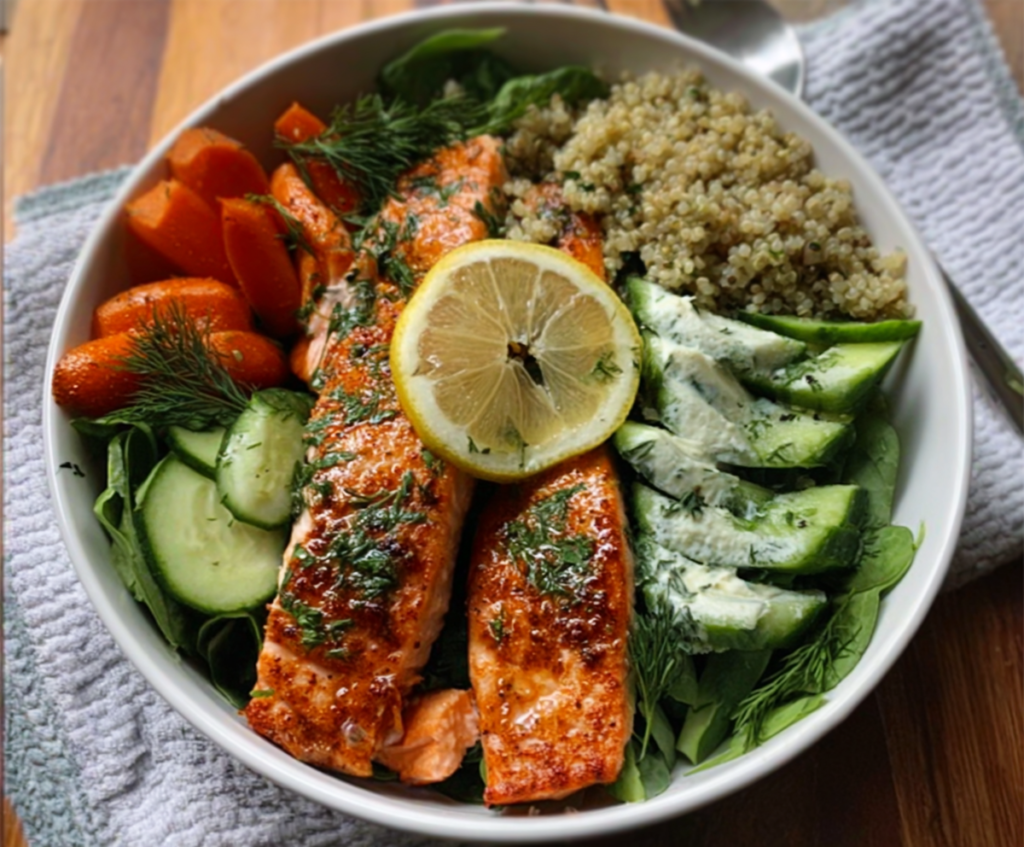
Lemon Dill Salmon Bowls are a fresh and flavorful way to enjoy a simple, healthy meal. The star of the dish is tender salmon, perfectly seasoned with bright lemon and…

By Emily
•
•
Reading time: 6 min
Tip: save now, read later.
Lemon Dill Salmon Bowls are a fresh and flavorful way to enjoy a simple, healthy meal. The star of the dish is tender salmon, perfectly seasoned with bright lemon and fragrant dill. It’s served over a bed of fluffy rice, along with crisp vegetables that add just the right crunch and color. The combination makes for a bowl that feels light but satisfying, and full of clean, bright flavors.
I love making these bowls when I want something quick but still a little special. The lemon and dill really wake up the salmon, and I find that a drizzle of a simple yogurt sauce or a squeeze more lemon over the top takes it to the next level. It’s one of those meals that feels fancy but is actually really easy to throw together, which makes it a favorite on busy nights.
One of my favorite ways to serve these bowls is with extra fresh herbs sprinkled on top and a side of roasted vegetables. It’s great for meal prep because the flavors get even better the next day. Whenever I make this dish, it feels like a little sunny escape, even if I’m just eating at home. Lemon Dill Salmon Bowls remind me that healthy food can be both tasty and comforting.
Key Ingredients & Substitutions
Salmon: Fresh salmon fillets are best here for a tender, flaky texture. If fresh isn’t available, frozen works too—just thaw completely before cooking. You can also swap salmon for trout or even chicken breasts if you prefer.
Lemon & Dill: These give the salmon a bright, fresh flavor. Use fresh dill for the best taste, but dried dill can be used in a pinch—use about one-third the amount. Lemon zest adds fragrance; if you don’t have a lemon, a splash of lemon juice can partially substitute.
Quinoa: Quinoa is a great grain base that cooks quickly and adds nuttiness. If you want a more familiar grain, try rice or couscous instead. For a lower-carb option, cauliflower rice works nicely.
Vegetables: Carrots, cucumbers, and spinach add crunch and freshness. Feel free to use other veggies you like—snap peas, cherry tomatoes, or bell peppers would all be tasty swaps.
Greek Yogurt Sauce: This sauce keeps the bowl creamy and light. You can replace Greek yogurt with sour cream or a dairy-free yogurt if needed.
How Do I Get Perfectly Cooked, Flaky Salmon Every Time?
Cooking salmon so it’s moist and flaky, not dry, can be tricky. Here’s how to nail it:
- Pat the salmon dry, then brush it with the lemon-dill olive oil mix—this helps get a nice crust and keeps the fish moist.
- Bake at 400°F for 12-15 minutes depending on thickness. Check at 12 minutes by gently pressing the fish; it should flake easily but not fall apart.
- Use a thermometer if you have one—salmon is done at 145°F internally.
- Let it rest for a couple of minutes after baking so juices redistribute and keep the fish tender.
Equipment You’ll Need
- Baking sheet – perfect for cooking salmon evenly without sticking.
- Mixing bowls – handy for seasoning salmon and mixing the yogurt sauce.
- Medium saucepan with lid – you’ll cook quinoa here; a lid keeps it fluffy.
- Steamer basket or small pot – helps cook carrots tender without losing nutrients.
- Sharp knife – makes slicing veggies and lemon easy and precise.
Flavor Variations & Add-Ins
- Swap salmon with grilled chicken or shrimp for a different protein but similar flavors.
- Use fresh parsley or tarragon instead of dill for a new herbal twist.
- Add avocado slices or olives for creaminess and a salty pop.
- Mix in roasted sweet potatoes or steamed green beans to boost veggies.
Lemon Dill Salmon Bowls
Ingredients You’ll Need:
For the Salmon:
- 2 salmon fillets (about 6 oz each)
- 2 tbsp olive oil
- 1 lemon (zested and sliced thinly)
- 2 tbsp fresh dill, chopped (plus extra for garnish)
- 1 tsp paprika
- Salt and pepper, to taste
For the Quinoa and Vegetables:
- 1 cup quinoa, rinsed
- 2 cups water or broth (for quinoa)
- 2 medium carrots, sliced
- 1 cucumber, thinly sliced
- 2 cups fresh spinach leaves
For the Yogurt Dill Sauce:
- 1/2 cup plain Greek yogurt
- 1 tbsp lemon juice
- 1 garlic clove, minced (optional)
- Salt and pepper (to taste)
How Much Time Will You Need?
This recipe takes about 35 minutes from start to finish. You’ll spend 10 minutes prepping, 15 minutes roasting the salmon, and about 15 minutes cooking quinoa and steaming carrots—all overlapping so your meal comes together quickly.
Step-by-Step Instructions:
1. Prepare the Salmon:
Preheat your oven to 400°F (200°C) and line a baking sheet with parchment paper or foil. In a small bowl, mix olive oil, lemon zest, chopped dill, paprika, salt, and pepper. Brush this mixture generously over both sides of the salmon fillets. Place the fillets on the baking sheet and bake for 12-15 minutes, until the salmon is cooked through and flakes easily with a fork.
2. Cook the Quinoa and Vegetables:
While the salmon bakes, rinse the quinoa under cold water. Combine quinoa and water or broth in a pot, bring to a boil, then reduce heat to low, cover, and simmer for about 15 minutes until all liquid is absorbed. Fluff the quinoa with a fork. Steam or boil the sliced carrots for 5-7 minutes until tender, then drain and set aside.
3. Make the Yogurt Dill Sauce and Assemble:
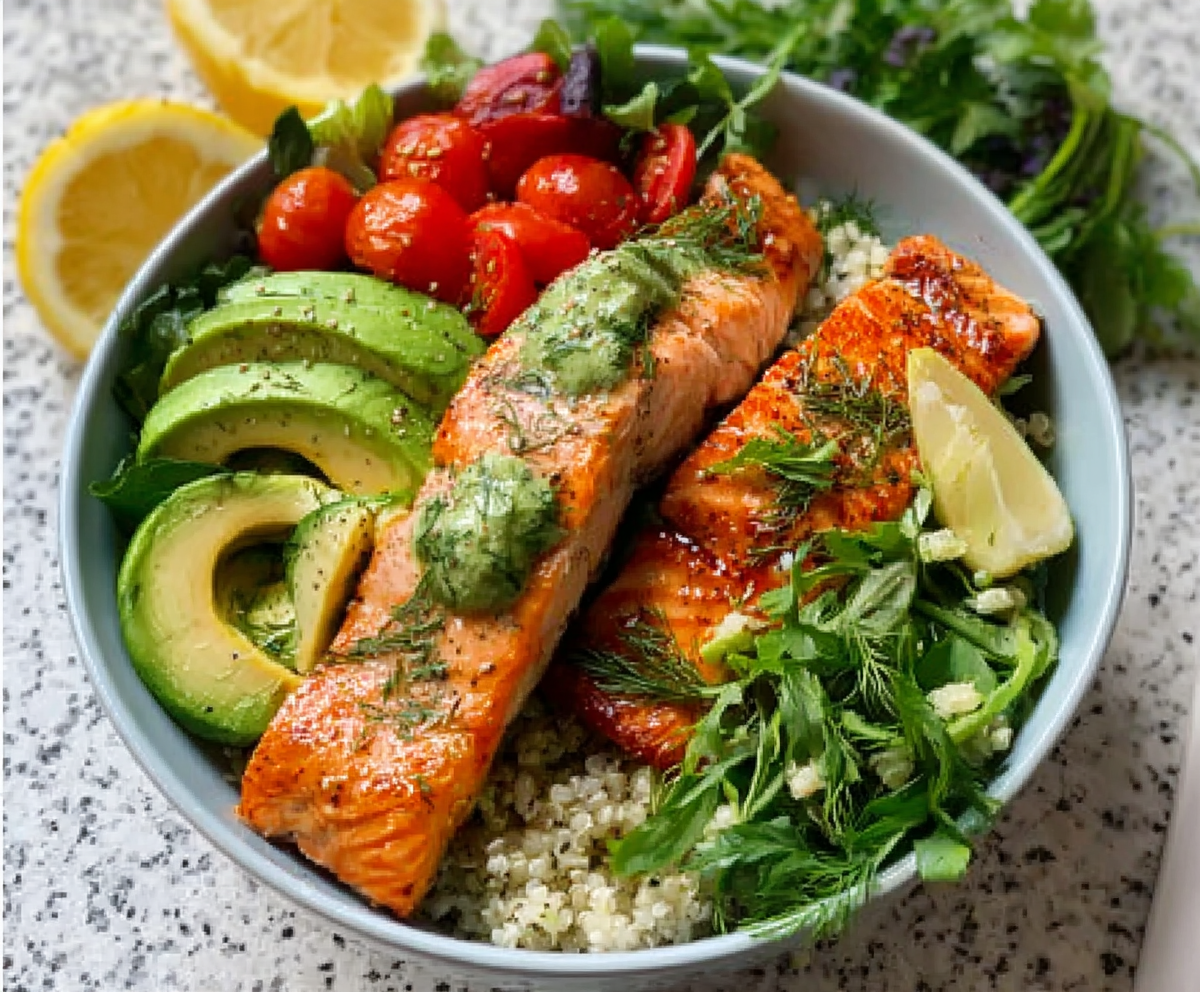
In a small bowl, mix the Greek yogurt, lemon juice, minced garlic (if using), chopped dill, salt, and pepper. Taste and adjust the seasoning as you like. Divide fresh spinach into bowls, then add quinoa, carrots, cucumber slices, and top with the baked salmon. Drizzle yogurt dill sauce over the cucumbers or salmon. Garnish each bowl with extra dill and a lemon slice. Serve immediately and enjoy your fresh, healthy Lemon Dill Salmon Bowls!
Can I Use Frozen Salmon in This Recipe?
Yes! Just make sure to thaw the salmon completely in the refrigerator overnight or under cold running water before cooking. Pat it dry to remove any excess moisture for better browning.
Can I Prepare This Meal Ahead of Time?
Absolutely! You can cook the salmon, quinoa, and steam the vegetables ahead and store them separately in airtight containers in the fridge for up to 2 days. Reheat gently before assembling the bowls and adding the yogurt sauce fresh.
What Can I Substitute for Quinoa?
If you don’t have quinoa, brown rice, couscous, or cauliflower rice are all great alternatives. Adjust cooking times accordingly based on the grain you choose.
How Should I Store Leftovers?
Store leftovers in airtight containers in the refrigerator for up to 3 days. Keep the yogurt sauce separate and add it just before serving for the freshest flavor and texture.
