
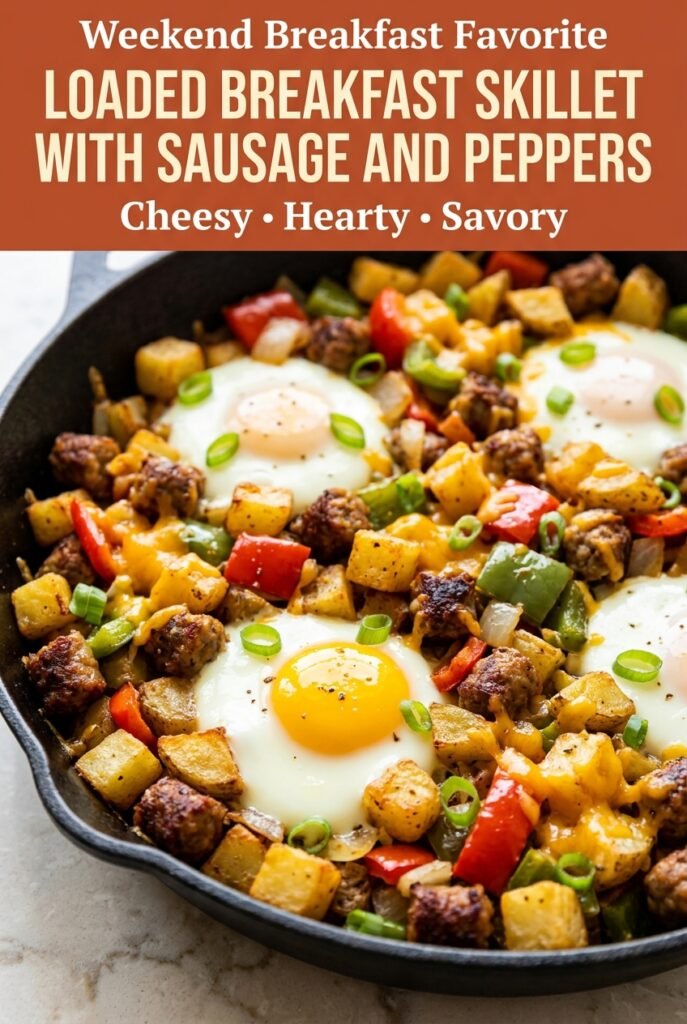
Loaded Breakfast Skillet with Sausage and Peppers
Loaded breakfast skillet with sausage and peppers earns its place in the rotation because it hits every note at once: crisp-edged potatoes, browned sausage, sweet peppers, and eggs cooked right…
Tip: save now, read later.
Loaded breakfast skillet with sausage and peppers earns its place in the rotation because it hits every note at once: crisp-edged potatoes, browned sausage, sweet peppers, and eggs cooked right in the same pan so the yolks have something rich to run into. The best part is that nothing tastes flat or one-note. The sausage seasons the potatoes as it cooks, and the vegetables pick up all that flavor from the skillet instead of just sitting on top of it.
This version works because the potatoes get their own time in the pan before the vegetables go in. That matters. If everything is piled in at once, the potatoes steam and go soft before they ever pick up color. Using Yukon Golds keeps the center creamy while the edges turn golden, and a little smoked paprika adds a deeper, breakfast-brunch kind of warmth without turning the dish into something heavy.
Below, I’ve included the small details that keep the eggs tender, the cheese melted without overcooking the skillet, and a few practical swaps if you’re working with what you already have on hand.
The potatoes got those crisp edges I was hoping for, and the eggs set up perfectly under the lid without getting rubbery. My husband kept picking at the skillet before I even put it on the table.
Save this loaded breakfast skillet with sausage and peppers for a hearty one-pan brunch with crisp potatoes, melty cheddar, and eggs cooked right in the skillet.
The reason the potatoes need a head start
Potatoes are the part that can quietly ruin a skillet like this. Add them too late and they stay pale and firm. Add them too early with too much stirring and they break down before the outside has a chance to brown. The sweet spot is enough time for the cubes to form a crust on the pan side, then just enough movement to keep them from sticking.
Yukon Golds are the right potato here because they hold their shape without tasting mealy. They stay creamy in the center even after the eggs go in. The other mistake people make is crowding the pan. If your skillet is too small, the potatoes will steam instead of sear, and you’ll lose the texture that makes the whole dish work.
- Yukon Gold potatoes — These give you a creamy interior and a sturdy enough cube to survive the skillet. Russets can work, but they break down faster and tend to dry out at the edges.
- Breakfast sausage — This is your built-in seasoning. A bulk sausage works best because it browns evenly and leaves behind flavorful drippings. If you use links, remove the casings first.
- Bell peppers and onion — They add sweetness and balance the richness. Dice them small enough to soften in the same window the potatoes need to finish cooking.
- Cheddar cheese — Sharp cheddar cuts through the sausage and potatoes better than mild cheese. Pre-shredded works, but freshly shredded melts a little cleaner if you have time.
- Smoked paprika — This gives the skillet depth without needing extra work. Regular paprika won’t give the same warm, smoky finish.
How to keep the eggs tender while the cheese melts
Brown the sausage first
Cook the sausage until it’s deeply browned, not just no longer pink. Those browned bits left in the skillet become part of the potatoes’ flavor. If there’s a lot of fat in the pan, spoon off the excess before you add the potatoes so they can sear instead of swimming.
Let the potatoes develop color
Add the potatoes to the same skillet and leave them alone long enough to pick up golden spots. Stir occasionally, not constantly. If they stick a little at first, give them another minute; once they start to release, you’ll know the crust is forming. Patience here is what keeps the final dish from tasting like boiled breakfast hash.
Cook the vegetables just until softened
The onion and peppers go in after the potatoes have started to brown so they don’t collapse into the pan. You want softened edges and a few caramelized spots, not mush. Season them at this stage so the paprika and garlic powder cling to the vegetables instead of disappearing into the sausage drippings.
Steam the eggs only until set
Make the wells deep enough that the eggs stay put, then cover the skillet over medium-low heat. The lid traps steam and cooks the tops of the whites without blasting the yolks. If the heat is too high, the bottoms set before the tops turn opaque, and the yolks go chalky instead of staying glossy.
Make it spicy
Add diced jalapeño with the bell peppers or stir in a pinch of crushed red pepper with the paprika. The heat sits nicely against the sausage and cheddar without changing the texture of the skillet.
Make it dairy-free
Skip the cheddar or use a dairy-free shred that melts well. The skillet still works because the sausage, potatoes, and peppers carry the flavor; the cheese is a finish, not the backbone.
Use bacon instead of sausage
Cook chopped bacon first, then use a little of the rendered fat to brown the potatoes. Bacon gives a saltier, smokier skillet and less bulk than sausage, so the final dish feels a little lighter.
Storage and Reheating
- Refrigerator: Store leftovers in an airtight container for up to 3 days. The potatoes soften a bit after chilling, but the flavor holds up well.
- Freezer: Freeze only the potato-sausage-pepper mixture if you can. Eggs change texture after freezing, so it’s better to cook fresh eggs when you reheat.
- Reheating: Warm the skillet mixture in a covered pan over medium-low heat or in the oven at 350°F until hot. Add a splash of water and cover if it looks dry; that keeps the potatoes from scorching while the center heats through.
Answers to the questions worth asking
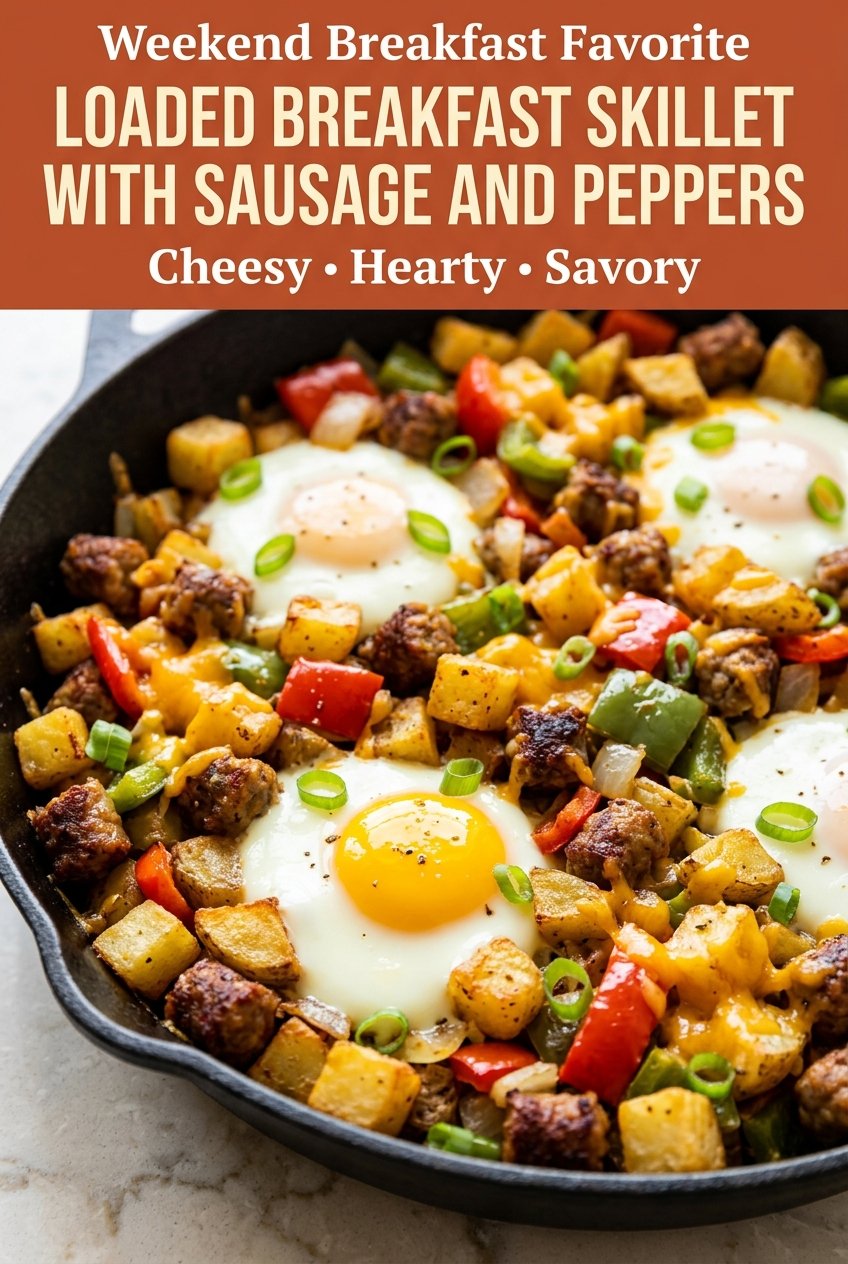
Loaded Breakfast Skillet with Sausage and Peppers
Ingredients
Equipment
Method
- Cook the breakfast sausage in a large skillet over medium-high heat for 6–8 minutes, breaking it into bite-size pieces until browned.
- Transfer the browned sausage to a plate, leaving any rendered fat in the skillet.
- Heat the olive oil in the same skillet over medium heat, then add the Yukon Gold potatoes and cook 12–15 minutes, stirring occasionally, until golden and nearly tender.
- Add the diced yellow onion, red bell pepper, and green bell pepper and cook 5–6 minutes until the vegetables soften and develop lightly browned edges.
- Season with smoked paprika, garlic powder, kosher salt, and black pepper, then stir until the potatoes and vegetables are evenly coated.
- Return the breakfast sausage to the skillet and stir 1–2 minutes until evenly distributed.
- Create four small wells in the potato mixture and crack one large egg into each well.
- Cover the skillet and cook over medium-low heat for 5–7 minutes until the egg whites are set and the yolks reach your preferred doneness.
- Sprinkle the shredded cheddar cheese around the eggs, cover the skillet, and cook 1–2 minutes until the cheese melts.
- Finish with sliced green onions and serve directly from the skillet.
