

Loaded Twice Baked Potatoes
Loaded twice baked potatoes hit that sweet spot between comfort food and crowd-pleasing side dish. The shells turn crisp in the oven, while the filling stays fluffy, buttery, and rich…
Tip: save now, read later.
Loaded twice baked potatoes hit that sweet spot between comfort food and crowd-pleasing side dish. The shells turn crisp in the oven, while the filling stays fluffy, buttery, and rich with cheddar, bacon, sour cream, and green onions. When they’re done right, you get a potato that holds its shape, tastes fully loaded in every bite, and lands on the plate looking like more effort than it actually took.
The part that makes this version work is the balance between the potato skin and the filling. Russets are the right choice because their starch gives you a light mash instead of a gummy one, and leaving a thin layer of potato inside each shell keeps everything sturdy enough to refill and bake again. The second bake isn’t just for melting cheese. It dries the edges a little, wakes up the bacon, and gives the whole thing that browned, finished look that makes people reach for a second one.
Below, I’m walking through the small details that matter most: how to scoop the potatoes without tearing the shells, how to keep the filling fluffy instead of dense, and the easiest ways to change these up when you want a different topping or need to make them ahead.
The filling stayed light and creamy, and the tops got those golden edges I always want. I made them ahead and baked them off before dinner, and they held up perfectly.
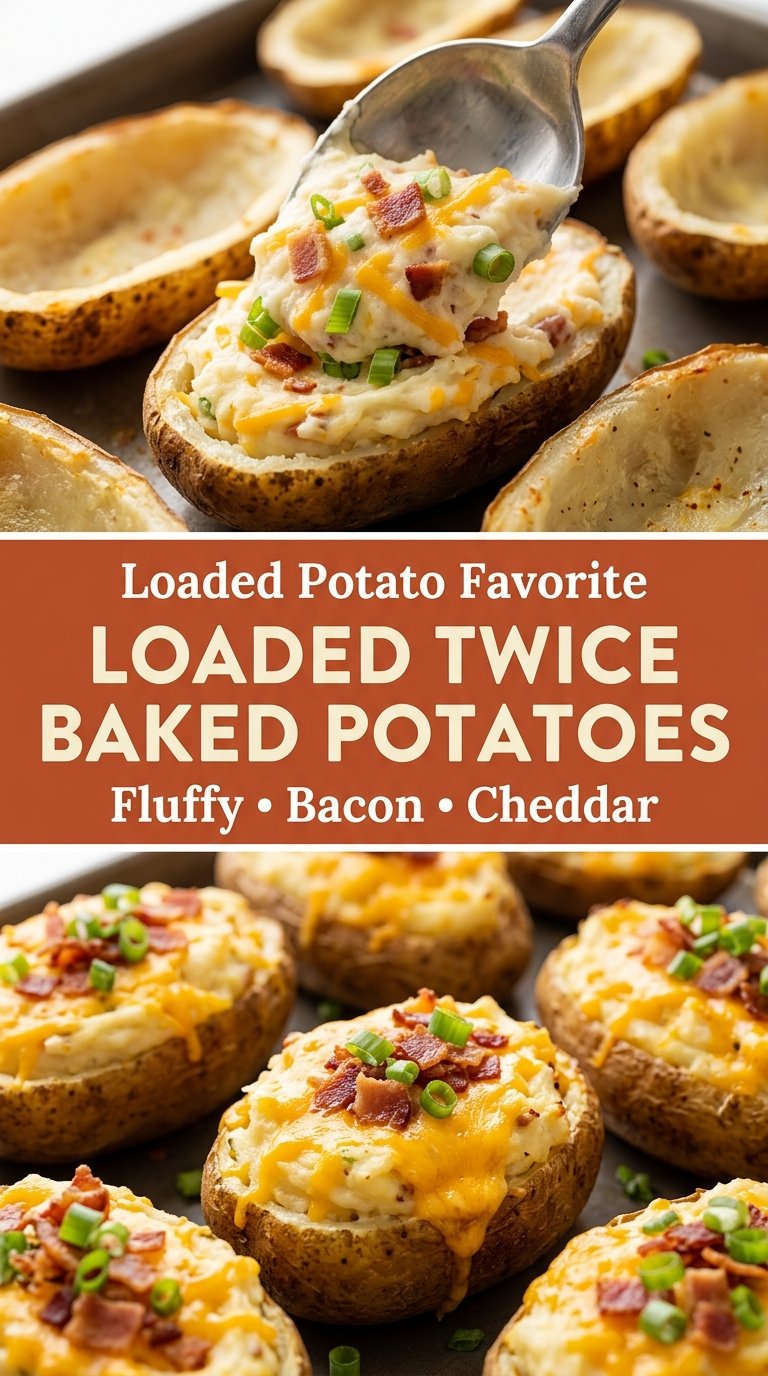
Loaded Twice Baked Potatoes with crispy shells, fluffy cheddar filling, and bacon are worth keeping close for game day or any night that needs a hearty side.
Why the Potato Shells Need a Little Insurance
The biggest mistake with twice baked potatoes is scooping too aggressively and ending up with fragile shells that collapse before the second bake. That thin border of potato left in the skin is what keeps the whole thing from turning into a mashed potato puddle on the pan. It also gives you a better contrast between the crisp outside and the creamy center.
The other place people go wrong is rushing the filling while the potatoes are still too hot or too wet. If the steam hasn’t settled, the butter and sour cream can melt into a loose, heavy mixture instead of holding a fluffy texture. Let the potatoes cool just enough to handle, then mash while the flesh is still warm so everything blends without overworking it.
- Russet potatoes — These have the dry, starchy texture that bakes up fluffy. Waxy potatoes hold their shape, but they don’t give you the same light filling.
- Sour cream — This adds tang and keeps the mash from tasting flat. Full-fat works best here because it gives the filling more body.
- Sharp cheddar — Sharp cheddar matters because it stands up to the bacon and sour cream. Mild cheddar melts fine, but the flavor gets buried.
- Bacon — Crisp bacon adds salt, smoke, and texture. If you need a shortcut, use fully cooked bacon pieces, but the flavor won’t be as deep.
- Green onions — These brighten the filling and finish. Slice them thin so they disappear into the mash instead of clumping up.
Building the Filling Without Turning It Gluey
Baking the Potatoes Until They’re Fully Tender
Start with potatoes that feel soft all the way through when pierced with a fork. If the centers are even a little firm, the filling won’t mash smoothly and the shells can tear while you scoop. The oil and salt on the outside do two jobs: they help the skins crisp and they season the shell itself, not just the filling. Don’t wrap the potatoes in foil, or you’ll trap steam and lose that baked skin texture.
Scooping for Shape, Not for Speed
Let the potatoes cool for about 10 minutes before cutting them open. That gives the steam time to settle so the filling doesn’t turn watery. Use a spoon to scoop, but leave about a quarter inch of potato attached to the skin. If a shell tears, patch it back together in the pan and keep going — a small crack won’t ruin the batch.
Mashing Until Fluffy, Then Stopping
Add the sour cream, butter, milk, salt, and pepper while the potato is still warm enough to absorb everything evenly. Mash until the mixture looks smooth and airy, but stop before it turns elastic. Overmixing releases too much starch and gives you that thick, paste-like texture nobody wants in a twice baked potato. Fold in the cheese, bacon, and green onions at the end so they stay distinct instead of disappearing into the mash.
The Second Bake That Finishes the Dish
Mound the filling slightly above each shell so the tops brown a little and hold a generous shape. Sprinkle the remaining cheese and bacon over the top, then bake just until the cheese melts and the edges start to take on color. If you leave them in too long, the filling dries out before the cheese gets a chance to turn glossy and golden. Finish with the reserved green onions after baking so they stay fresh and sharp.
How to Adapt These Potatoes for Different Tables
Make-Ahead for Easy Serving
Bake, scoop, and fill the potatoes up to a day ahead, then cover and refrigerate them before the final bake. This keeps the shells sturdy and actually helps the filling set a little, so the finished potatoes hold their shape better on the plate. Add a few extra minutes to the second bake straight from the fridge.
Dairy-Free Version
Use a good dairy-free butter, unsweetened plant milk, and a dairy-free sour cream-style alternative. The texture will still be creamy, but the flavor will be a little less rich, so salt matters more here. Use a melting-style dairy-free cheese if you want the tops to brown and soften the same way.
Vegetarian Loaded Potatoes
Skip the bacon and add chopped sautéed mushrooms, roasted broccoli, or extra green onions for more texture and savoriness. You’ll lose the smoky bite from the bacon, so a pinch of smoked paprika helps fill that gap without making the potatoes taste like a different dish. Keep the cheese generous so the filling still feels hearty.
Storage and Reheating
- Refrigerator: Store leftovers in an airtight container for up to 4 days. The skins will soften a bit, but the flavor holds up well.
- Freezer: These freeze well after the second bake. Wrap each potato tightly and freeze for up to 2 months, then thaw in the fridge before reheating for the best texture.
- Reheating: Reheat in a 350°F oven until hot in the center, about 15 to 20 minutes for leftovers. The microwave works in a pinch, but it softens the skins and can make the filling dense instead of fluffy.
Answers to the Questions Worth Asking
Loaded Twice Baked Potatoes
Ingredients
Equipment
Method
- Preheat the oven to 400°F and line a baking sheet with parchment paper.
- Rub the russet potatoes with olive oil and 1/2 tsp kosher salt, then place them on the baking sheet.
- Bake at 400°F for 50–60 minutes until tender when pierced with a fork.
- Cook the bacon in a skillet over medium heat for 8–10 minutes until crisp.
- Drain and crumble the bacon into small pieces.
- Cool the baked potatoes for about 10 minutes.
- Slice each potato lengthwise in half.
- Scoop the potato flesh into a large bowl, leaving about 1/4 inch inside each shell to help it hold its shape.
- Mash the potato flesh with sour cream, unsalted butter, whole milk, remaining 1/2 tsp kosher salt, and black pepper until fluffy.
- Fold in 1 cup shredded sharp cheddar cheese, three-quarters of the crumbled bacon, and two-thirds of the sliced green onions.
- Fill the eight potato shells generously with the mashed potato mixture and mound the filling slightly above each shell.
- Sprinkle the remaining 1/2 cup shredded sharp cheddar cheese and remaining bacon over the potatoes.
- Bake at 400°F for 15–20 minutes until heated through and the cheddar is completely melted with lightly golden edges.
- Finish with the remaining sliced green onions and serve warm.
