
Maple Balsamic Brussels Sprouts
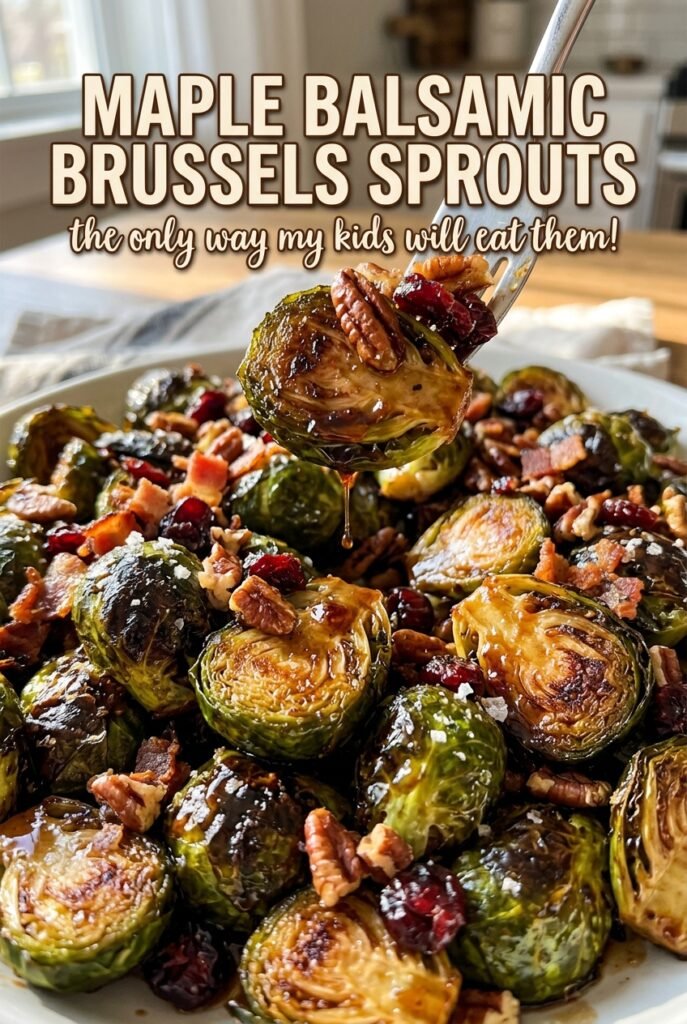
The cut sides come out of the oven with deep brown patches, while the rounded sides stay tender. That contrast is what I want from roasted Brussels sprouts, and it…
Tip: save now, read later.
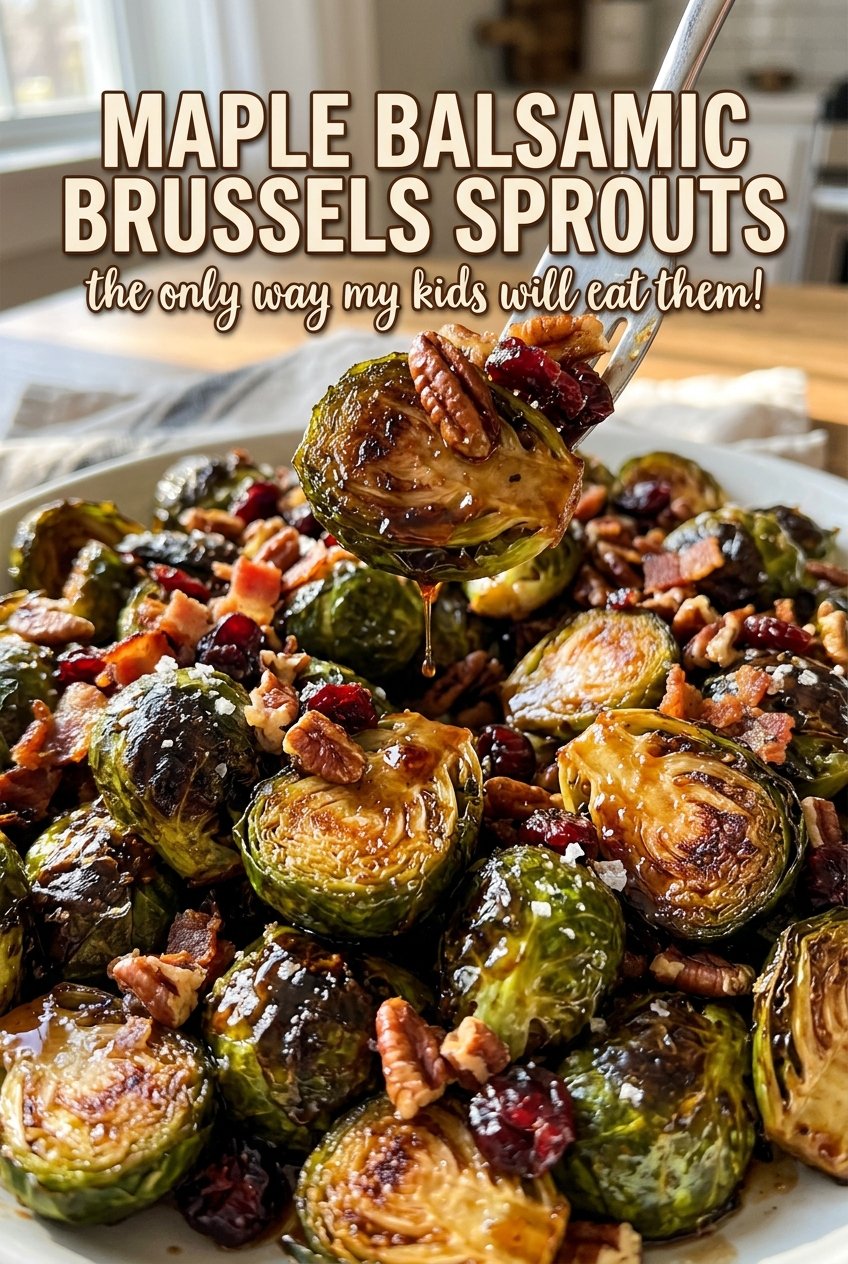
The cut sides come out of the oven with deep brown patches, while the rounded sides stay tender. That contrast is what I want from roasted Brussels sprouts, and it gives the sweet-tart glaze something to cling to. For Maple Balsamic Brussels Sprouts, I roast the vegetables first and toss them with the glaze just before serving.
The glaze tastes sharper in the bowl than it does on the hot sprouts. Balsamic vinegar brings a clean tang, maple syrup softens its edge, and Dijon mustard helps the mixture come together. I whisk those three ingredients while the sprouts roast, then add the glaze after roasting so the maple stays bright instead of baking onto the pan. The finished sprouts are tender with browned edges and a glossy, tangy-sweet coating.
Kitchen Note
Keep the glaze out of the oven and toss it with the sprouts after roasting. Maple syrup can darken quickly under high heat, while adding the glaze at the end keeps its balsamic tang clear.
Save these Maple Balsamic Brussels Sprouts for their browned edges and the tangy-sweet glaze that goes on after roasting.
Why the Cut Side Needs Direct Contact With the Pan
Brussels sprouts have a lot of little surfaces, but the broad cut face is where you get the most satisfying browning. Setting that face against the hot baking sheet gives it steady contact as the sprouts roast. If the sprouts are turned cut side up, you lose that direct contact and the finished batch won’t have the same browned underside.
Space matters, too. A single layer lets heat reach the sprouts instead of trapping them together in a crowded pile. When they’re packed tightly, moisture has less room to escape and the cut faces are more likely to soften before they brown. The rimmed 18×13-inch baking sheet gives the halved sprouts room to sit in one layer, and parchment keeps the browned bits from sticking to the pan.
Look for browned patches on the cut sides and a tender center rather than expecting every sprout to turn the same shade. Brussels sprouts vary in size, so the small ones may brown sooner than the large ones. That mix of browned edges and tender leaves is part of the appeal; the glaze rounds out the deeper roasted flavor without covering it up.
How the Sprouts, Oil, and Glaze Each Earn Their Place
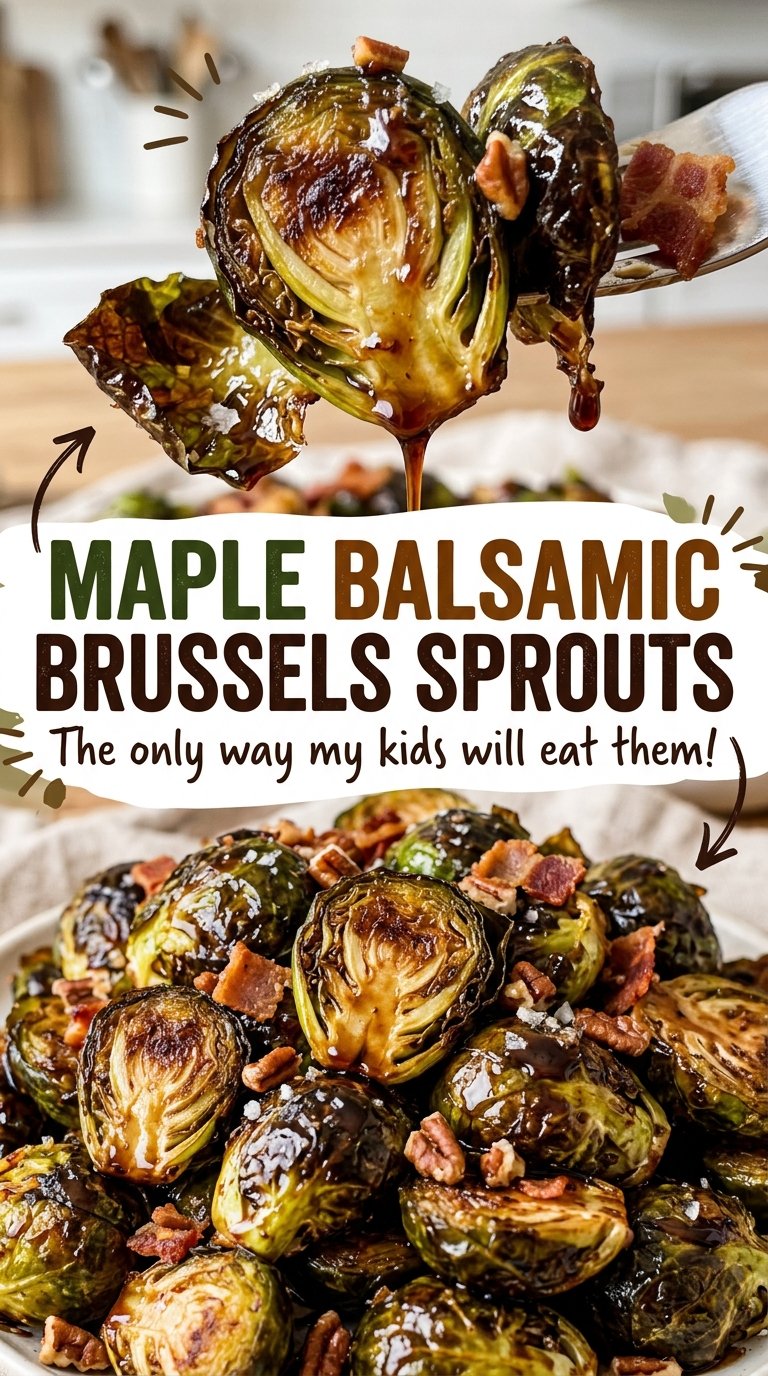
- Brussels sprouts — Fresh sprouts roast into tender centers with browned cut faces. Choose firm sprouts with compact leaves; trim the stem ends and halve them so the flat sides have room to brown. Halving also gives the glaze more cut surface to coat.
- Olive oil — The oil coats the sprouts so they roast rather than dry out, and it helps the salt and pepper cling. Use an everyday olive oil here; its subtle flavor doesn’t need to be expensive or especially delicate.
- Balsamic vinegar and pure maple syrup — Balsamic supplies the sharp, dark tang, while maple syrup brings sweetness and helps the glaze cling. Pure maple syrup has a cleaner flavor here than pancake syrup, which is a different, often thicker sweetener.
- Dijon mustard — Dijon gives the glaze a little bite and helps the vinegar and syrup combine into a more even coating. Its flavor stays in the background rather than making the sprouts taste strongly of mustard, so I wouldn’t leave it out unless you want a sharper, less rounded finish.
The Roasting Cues That Make This Batch Work
Coat and Arrange the Halved Sprouts
Heat the oven to 425°F and line a rimmed 18×13-inch baking sheet with parchment paper. Toss the trimmed, halved sprouts with the olive oil, kosher salt, and black pepper until the cut surfaces look lightly coated. Arrange them in a single layer with the cut sides down. If they overlap, spread them out so the hot pan can brown those flat faces.
Roast Until Tender and Browned
Roast for 20 to 25 minutes, until the sprouts are tender and browned on the cut sides. The visual cue matters more than having every piece look identical: check for real golden-brown patches underneath and a tender center. Smaller sprouts may finish before larger ones, so pay attention as the end of the roasting window approaches. If the centers are still firm, give them the remaining roasting time.
Whisk and Toss While Everything Is Hot
While the sprouts roast, whisk the balsamic vinegar, maple syrup, and Dijon mustard in a small bowl until the mixture looks combined. Transfer the hot sprouts to a serving bowl and toss with the glaze so it coats their warm surfaces. A spoon or spatula helps lift the sprouts from the bottom of the bowl without crushing the tender leaves. Serve them once they’re glazed.
Simple Ways to Change the Maple-Balsamic Balance
A Sharper, Less-Sweet Glaze
For a lower-sugar version, replace the maple syrup with an equal amount of balsamic vinegar. The glaze will be noticeably more tart and less rounded, but it still gives the roasted sprouts a glossy, tangy finish.
A Cleaner Balsamic-and-Maple Taste
Leave out the Dijon if you want the glaze to taste more directly of balsamic and maple. It will lose the mustard’s mild bite and won’t feel quite as rounded, but the vinegar and syrup still coat the sprouts when tossed together.
Storage and Reheating
- Refrigerator: Store leftovers in a covered container and use within 3 to 4 days. The sprouts will soften in storage, and the browned edges won’t stay crisp.
- Freezer: Freezing isn’t the best choice for this dish. Thawed Brussels sprouts tend to turn softer, and the roasted texture is one of the best parts.
- Reheating: Warm leftovers in the oven until heated through, or use a skillet for a small portion. Avoid prolonged microwave reheating if you want to preserve some texture; it softens the sprouts further.
Questions That Come Up When Roasting Brussels Sprouts
Maple Balsamic Brussels Sprouts
Ingredients
Equipment
Method
- Heat the oven to 425°F.
- Line a rimmed 18x13-inch baking sheet with parchment paper.
- Toss the Brussels sprouts with the olive oil, kosher salt, and black pepper.
- Arrange the sprouts cut side down in a single layer on the baking sheet.
- Roast for 20 to 25 minutes, until tender and browned on the cut sides.
- While the sprouts roast, whisk the balsamic vinegar, maple syrup, and Dijon mustard in a small bowl.
- Transfer the hot Brussels sprouts to a serving bowl.
- Toss the sprouts with the glaze.
- Serve.
