
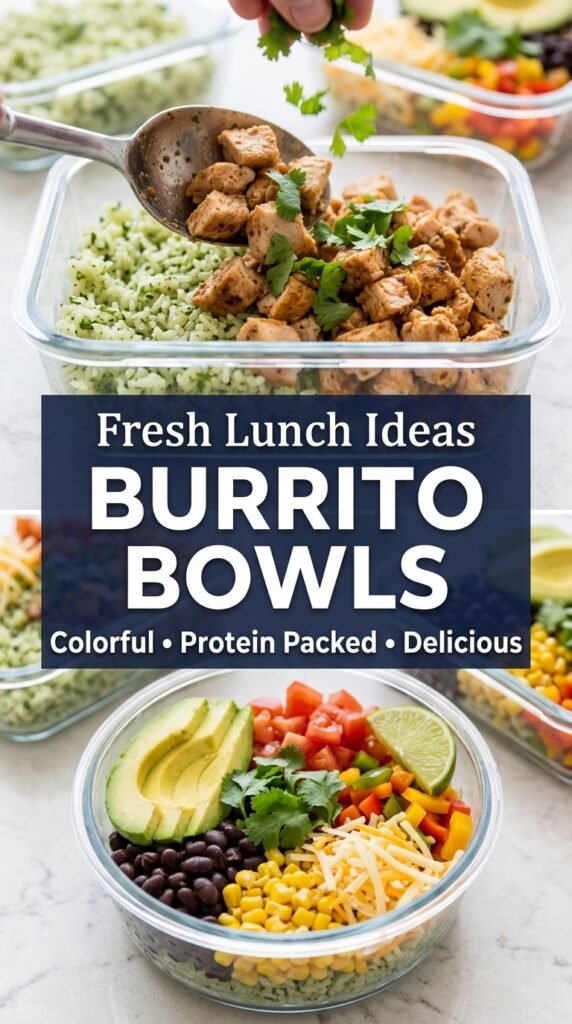
Meal Prep Burrito Bowls with Cilantro Lime Rice
Meal Prep Burrito Bowls with Cilantro Lime Rice hold up better than most lunch-prep recipes because every part has a job. The rice stays fluffy instead of soggy, the chicken…
Tip: save now, read later.
Meal Prep Burrito Bowls with Cilantro Lime Rice hold up better than most lunch-prep recipes because every part has a job. The rice stays fluffy instead of soggy, the chicken brings enough spice to carry the bowl, and the beans, corn, and vegetables keep each bite from tasting flat by day three. It’s the kind of prep that makes weekday lunch feel planned without tasting like you settled.
The trick is cooking the rice with broth first, then finishing it with lime and cilantro after it rests. That keeps the grains separate and gives the rice a brighter flavor than stirring everything in at the beginning. The chicken also gets a dry seasoning mix before it hits the skillet, which helps it brown instead of steaming in its own moisture.
Below, I’m walking through the small details that matter most: how to keep the rice from turning gummy, how to season the chicken so it tastes like more than just “meal prep,” and which toppings should wait until the last minute. Those little choices are what make these bowls taste fresh all week.
The rice stayed fluffy even after three days in the fridge, and the lime at the end made the whole bowl taste fresh instead of reheated. I added extra avocado on top and my husband took the last container for lunch before I could claim it.
Meal Prep Burrito Bowls with Cilantro Lime Rice that stay fluffy, bright, and build-your-own delicious all week.
The Rice Goes Wrong When You Treat It Like a Side Dish
Meal prep bowls live or die on the rice. If it turns sticky, everything underneath gets heavy and wet, and the whole bowl starts tasting like leftovers instead of lunch. The fix is simple: rinse the rice first, cook it covered without lifting the lid, then let it rest before fluffing. That rest time matters because the steam finishes the grains gently and keeps the texture separate.
The second mistake is adding lime juice and cilantro too early. Lime is acidic, and if you cook it with the rice, the flavor fades and the herbs lose their freshness. Stir them in after the rice has rested and fluffed, when the grains are still warm enough to absorb the aroma without breaking down.
- Long-grain white rice — This gives you the best chance at fluffy, separate grains. Short-grain rice gets softer and stickier, which works for sushi but not for meal prep bowls.
- Chicken broth — Broth gives the rice more depth than water. Use a carton or homemade stock here; the flavor difference shows up in every bite.
- Lime juice and cilantro — Add both at the end so they stay bright. If you want a stronger lime hit, use a little zest too.
- Boneless chicken breasts — Diced chicken cooks quickly and evenly, which is what you want for lunch prep. Thighs work too, but they’ll bring a richer, slightly juicier result.
What Each Ingredient Is Actually Doing in These Bowls
The seasoning blend on the chicken does more than add heat. Chili powder, paprika, cumin, garlic powder, and onion powder create a dry coating that helps the meat brown in the pan. If the chicken looks pale and soft, it’s usually because the pan was overcrowded or the heat was too low, so the pieces steamed instead of searing.
The beans and corn bring softness and sweetness, which balance the spice in the chicken. The tomatoes and bell peppers add crunch and moisture, but they’re not there to be cooked down. Leave them fresh so the bowl still tastes crisp after chilling in the fridge. Avocado belongs at serving time only; it turns dull and soft fast once it’s cut.
Monterey Jack melts into the warm rice and chicken just enough to tie the bowl together without making it heavy. If you want a sharper bite, pepper Jack works. If you’re keeping these dairy-free, skip the cheese entirely and add extra avocado or a spoonful of salsa when serving.
Building the Bowls Without Losing Texture
Cooking the Rice Until It’s Fluffy, Not Wet
Bring the rice and broth to a boil, then drop the heat to low and cover it tightly. Resist the urge to peek. Every time you lift the lid, you lose steam, and steam is what cooks the grains evenly. When the timer goes off, pull the pan off the heat and let it rest before you fluff it with a fork. If the rice seems wet at first, give it the full rest time; it usually settles into the right texture as it stands.
Seasoning and Browning the Chicken
Toss the diced chicken with the oil and spices until every piece is coated. The oil helps the seasoning cling, but it also keeps the chicken from drying out in the skillet. Cook in a hot pan and leave the pieces alone long enough to develop color before stirring. If the pan is crowded, the chicken will release liquid and turn gray instead of browned, so cook it in batches if needed.
Assembling for the Week
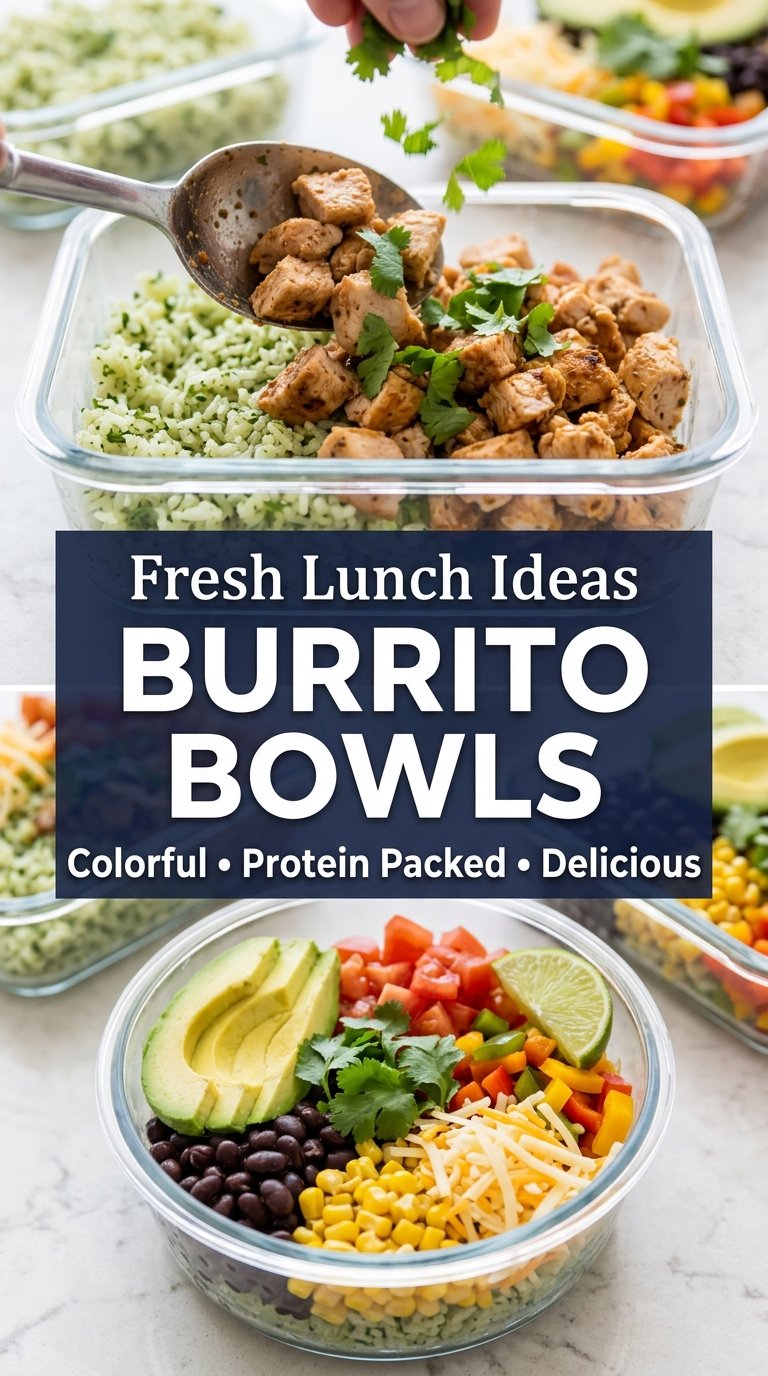
Start with the rice in the bottom of each container, then layer on the chicken, beans, corn, and vegetables. Putting the rice first keeps the heavier ingredients from smashing the fresh toppings. Let everything cool completely before sealing the lids or you’ll trap steam, which is the fastest way to ruin the texture. Add avocado, cilantro, and lime only when you’re ready to eat.
Three Ways to Make These Burrito Bowls Fit Your Week
Dairy-Free Without Losing the Finish
Leave out the Monterey Jack and add extra avocado or a spoonful of salsa at serving time. You’ll lose the creamy melt, but the bowls stay bright and balanced, and the toppings taste even fresher.
Turn It Into a Vegetarian Bowl
Swap the chicken for roasted cauliflower, extra black beans, or seasoned tofu. Cauliflower gives you a lighter bowl with plenty of texture, while tofu brings more protein and picks up the spice blend nicely if you brown it well first.
Make It Lower-Carb
Replace half or all of the rice with cauliflower rice. The bowl will be lighter and less starchy, but it won’t hold moisture the same way, so cook the cauliflower just until tender and keep it separate from the juicy toppings.
Use Thighs Instead of Breasts
Chicken thighs bring a juicier, richer result and stay tender even if they sit in the fridge a day or two longer. They do release a little more fat, so wipe out excess grease if the pan looks slick after cooking.
Storage and Reheating
- Refrigerator: Store for up to 4 days. The rice stays best when it cools completely before sealing, and the fresh toppings should be added later.
- Freezer: The chicken, rice, beans, and corn freeze well for up to 2 months. Leave out the fresh tomatoes, avocado, and bell peppers if you plan to freeze portions, then add those after reheating.
- Reheating: Reheat covered in the microwave with a small splash of water or broth so the rice loosens again. The common mistake is blasting it uncovered, which dries out the chicken and turns the rice tough.
Answers to the Questions Worth Asking
Meal Prep Burrito Bowls with Cilantro Lime Rice
Ingredients
Equipment
Method
- Rinse the long-grain white rice under cold water, swirling until the water runs clearer. This helps the rice cook up fluffy.
- Add the rinsed rice, chicken broth, olive oil, and salt to a saucepan and bring to a boil over high heat. Once boiling, reduce to low.
- Cover and cook on low for 18 minutes until the rice is tender and the liquid is absorbed. Keep the lid on so steam stays trapped.
- Turn off the heat and rest the rice for 5 minutes off the burner, covered. You should see gentle steam and a set texture.
- Fluff the rice with a fork, breaking up any clumps. Then stir in the lime juice and chopped fresh cilantro.
- In a bowl, combine chili powder, smoked paprika, ground cumin, garlic powder, onion powder, kosher salt, and black pepper. Stir until the spices look evenly mixed.
- Toss the diced chicken with the olive oil and the seasoning mixture until coated. The chicken should look speckled with spices.
- Heat a large skillet over medium-high heat, then add the chicken in an even layer. Cook for 7–9 minutes, stirring occasionally, until browned and the internal temperature reaches 165°F.
- Warm the black beans and corn in a small saucepan or microwave until heated through. They should be hot all the way to the center.
- Divide the cilantro lime rice evenly among four meal prep containers. Press lightly so the layer is level.
- Top each container with cooked chicken, black beans, corn, cherry tomatoes, diced bell peppers, and shredded Monterey Jack cheese. Distribute toppings so each bowl has a similar mix.
- Cool the containers completely before sealing them. This prevents condensation that can make rice and toppings soggy.
- Refrigerate the sealed containers for up to 4 days. Keep avocado, extra cilantro, and lime for serving to maintain freshness.
- Just before serving, add sliced avocado to each bowl and sprinkle with fresh chopped cilantro. Finish with a squeeze of lime for brightness.
- Serve with lime wedges on the side, if desired. The citrus should look fresh and vibrant.
