
Mediterranean Buddha Bowl
The chickpeas are the first thing I notice when these bowls come out of the oven: golden at the edges, with cumin clinging to their crinkled surfaces. Meanwhile, the zucchini…
Tip: save now, read later.
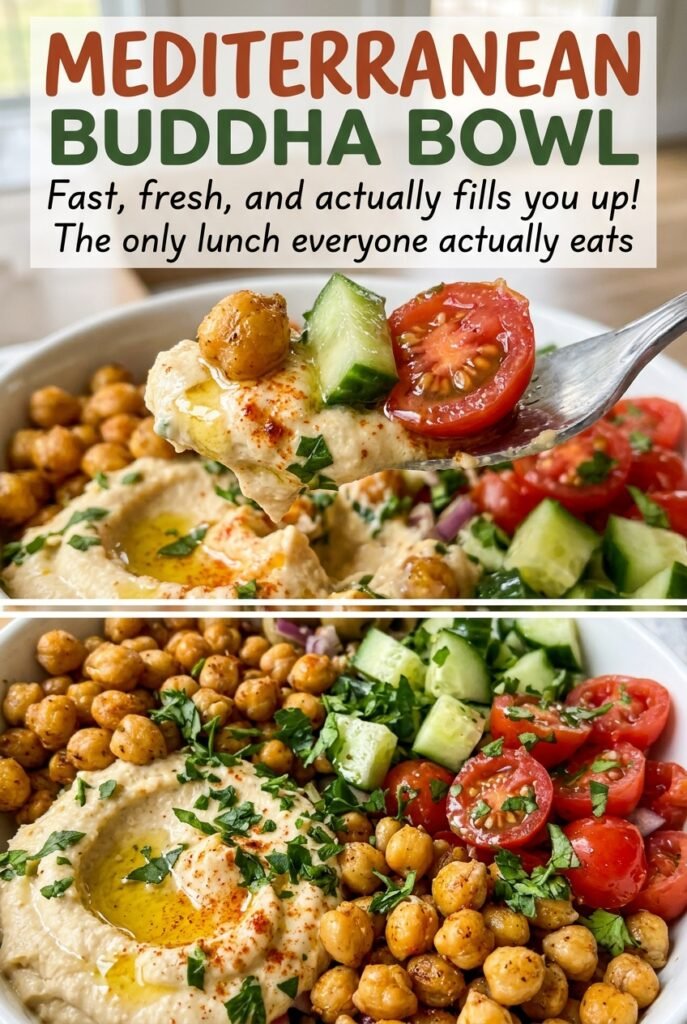
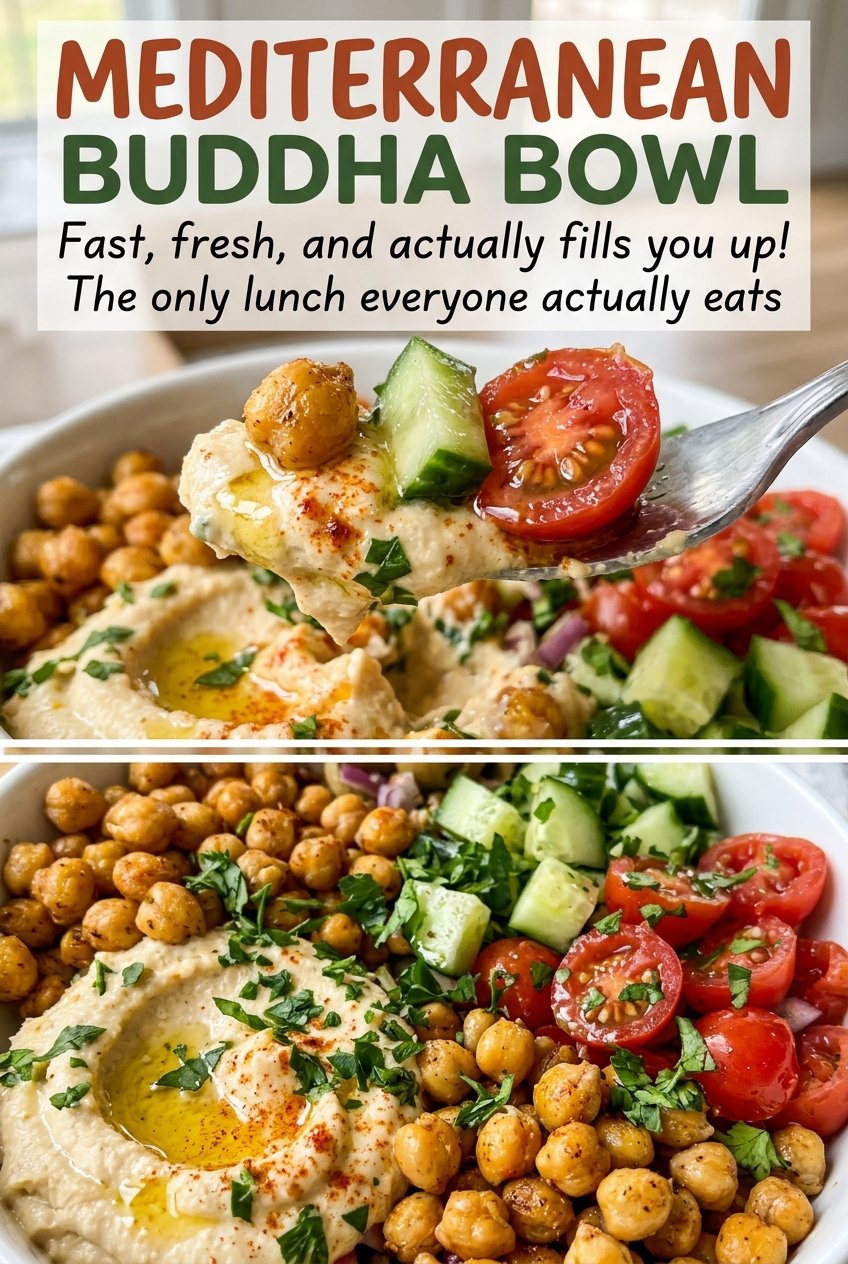
The chickpeas are the first thing I notice when these bowls come out of the oven: golden at the edges, with cumin clinging to their crinkled surfaces. Meanwhile, the zucchini and pepper have softened and picked up browned spots, so every bite has a different texture. That contrast is what makes this Mediterranean Buddha Bowl satisfying without turning it into a fussy project.
I build the bowls around quinoa, then add the roasted vegetables and chickpeas alongside cool cucumber, juicy tomatoes, olives, and feta. A quick tahini dressing brings the pieces together without hiding their individual flavors. The components are straightforward, but keeping the hot ingredients separate from the fresh ones gives the finished bowl its best mix of warm, crisp, tender, and creamy.
Kitchen Note
Pat the rinsed chickpeas thoroughly dry before tossing them with oil and cumin. Water left on their surfaces makes them steam instead of roast, and dry chickpeas brown more evenly on the pan.
Save this Mediterranean Buddha Bowl for a meal with golden cumin chickpeas, tender roasted vegetables, and a lemony tahini drizzle.
Why the Chickpeas and Vegetables Roast on Separate Pans
The vegetables and chickpeas share the oven, but they don’t need to share a baking sheet. Zucchini, pepper, and onion soften as they roast and release moisture; chickpeas need room around them so their surfaces can turn golden rather than sit in the steam from crowded vegetables. Giving each group its own pan makes it easier to get both results at once.
The two-pan setup also lets you spread the ingredients out instead of piling them into the center. Use the full surface of each rimmed sheet, keeping the pieces in a single layer. Both pans go into the 425°F oven, and swapping their positions halfway through helps them roast evenly. You’re looking for tender vegetables with browned edges and chickpeas that are golden, not dried into hard little pellets.
What Gives This Bowl Its Mediterranean Balance
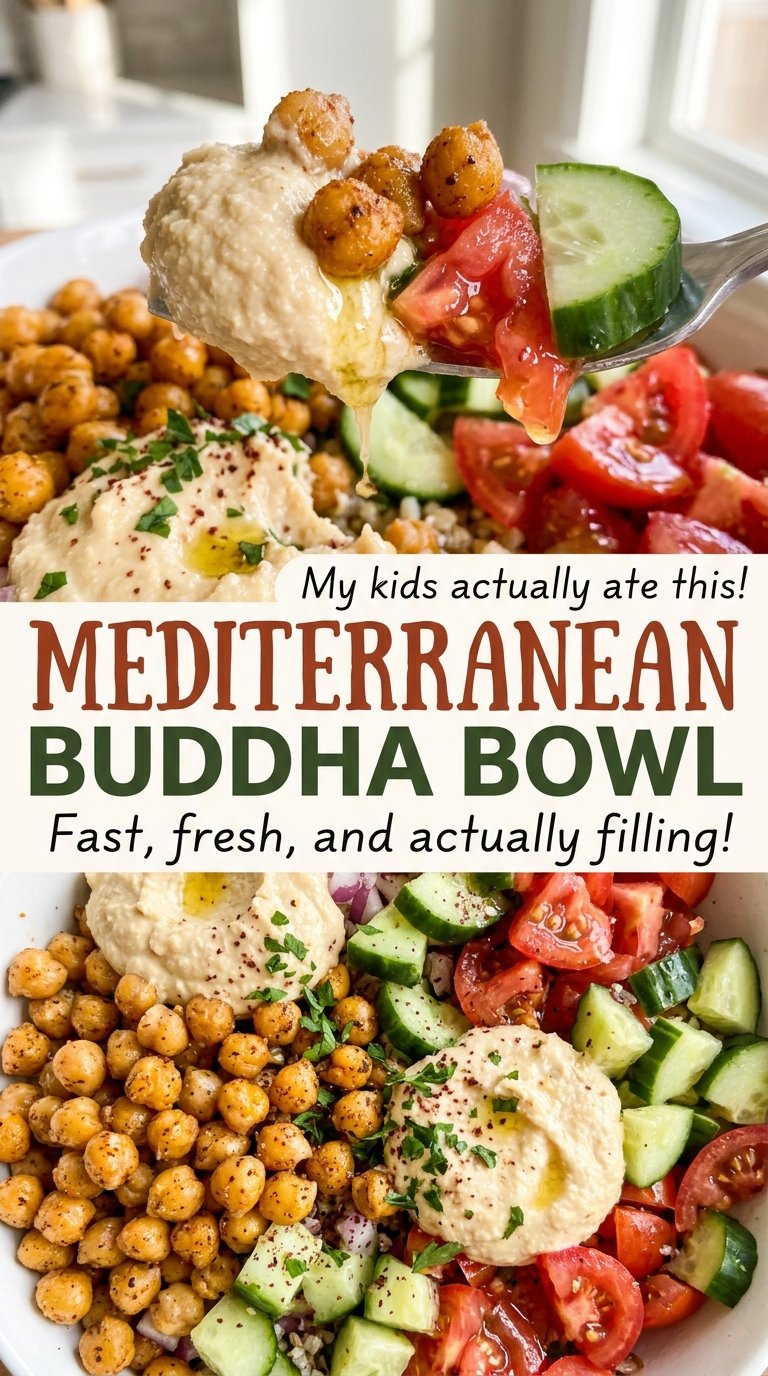
- Quinoa — Rinsing it before cooking is worth the extra minute; it removes the natural coating that can make cooked quinoa taste bitter. The grains make a light, nutty base that doesn’t compete with the briny toppings.
- Tahini — This sesame paste gives the dressing its body and distinctive nutty taste. A fresh-tasting tahini matters here because it’s the main ingredient, while the lemon and garlic sharpen it. Whisk it with the water until the dressing is smooth and pourable.
- Canned chickpeas — They’re convenient and roast well once drained, rinsed, and dried. The cumin gives them a warm, earthy note that stands up to the cool vegetables and lemon dressing.
- Kalamata olives and feta — Their salty, briny bite balances the mild quinoa and vegetables. Use pitted olives so they’re easy to eat in a bowl; crumbled feta distributes its creamy tang through the toppings.
- Fresh vegetables — The cucumber and cherry tomatoes bring cool crunch and juiciness beside the roasted zucchini, pepper, and onion. Halving the tomatoes exposes their juicy centers, while cutting the roasting vegetables into similar-sized pieces helps them cook at the same pace.
The Timing That Keeps Every Bowl’s Textures Distinct
Let the Quinoa Steam After Cooking
Combine the rinsed quinoa, water, and kosher salt in a 2-quart saucepan, then bring it to a boil over medium-high heat. Cover the pan, turn the heat to low, and simmer for 15 minutes. Take it off the heat and let it stand covered for 5 minutes, then fluff the grains with a fork. If you lift the lid early, you let out the steam the quinoa needs to finish cooking.
Give the Vegetables Their Own Room
Heat the oven to 425°F and line two 18×13-inch rimmed baking sheets with parchment. Toss the zucchini, bell pepper, and red onion with olive oil, oregano, kosher salt, and black pepper, then spread them across one sheet. Keep the pieces spread out so they roast rather than steam against one another. The vegetables are ready when they’re tender and have browned spots.
Roast the Cumin Chickpeas Beside Them
Toss the drained, rinsed, and dried chickpeas with olive oil, ground cumin, and kosher salt, then spread them on the second lined sheet. Roast both pans for 20 to 25 minutes, swapping their oven positions halfway through. The chickpeas should look golden, while the vegetables should be tender and browned. If one pan colors faster, use the visual cues rather than waiting for every piece to look identical.
Whisk, Then Build the Bowls
Whisk the tahini, lemon juice, finely grated garlic, kosher salt, and water in a small bowl until smooth and pourable. Divide the baby spinach among four bowls, then add the quinoa, roasted vegetables, chickpeas, diced cucumber, halved cherry tomatoes, Kalamata olives, and crumbled feta. Drizzle the dressing over the bowls just before serving. That last-minute finish keeps the fresh toppings distinct from the warm roasted ingredients.
Two Simple Ways to Adapt the Bowl
Make It Dairy-Free Without Changing the Dressing
Leave off the feta. The tahini dressing and the rest of the listed ingredients are dairy-free, so the bowl still has a creamy, nutty element from the dressing, though you’ll lose feta’s salty tang and crumbly texture.
Make a Less Salty, Less Briny Bowl
Omit the olives and feta, and leave the added kosher salt out of the chickpeas and dressing. The bowl will lose some of its salty, briny contrast, but cumin, lemon, garlic, and oregano still give the ingredients plenty of character.
Storage and Reheating
- Refrigerator: Store the cooked quinoa, roasted vegetables, and chickpeas in airtight containers for up to 4 days. Keep the spinach, cucumber, tomatoes, olives, feta, and dressing separate; assembled bowls soften as they sit.
- Freezer: Quinoa and roasted vegetables freeze well in airtight containers for up to 2 months. Thaw them in the refrigerator; the chickpeas lose their roasted texture in the freezer, so keep those refrigerated instead.
- Reheating: Warm the quinoa and roasted vegetables in the microwave in short bursts, stirring between bursts. Keep the spinach and fresh toppings cold, and add them after reheating so they don’t wilt or turn soft.
Questions I Get Asked About This Mediterranean Buddha Bowl
Mediterranean Buddha Bowl
Ingredients
Equipment
Method
- Combine the rinsed quinoa, water, and salt in a 2-quart saucepan and bring to a boil over medium-high heat.
- Cover, reduce the heat to low, and simmer for 15 minutes.
- Remove from the heat and let stand, covered, for 5 minutes, then fluff with a fork.
- Heat the oven to 425°F and line two 18x13-inch rimmed baking sheets with parchment.
- Toss the zucchini, bell pepper, and red onion with the olive oil, oregano, salt, and pepper, then spread them on one baking sheet.
- Toss the chickpeas with the olive oil, cumin, and salt, then spread them on the second baking sheet.
- Roast both sheets for 20 to 25 minutes, swapping their oven positions halfway through, until the vegetables are tender and browned and the chickpeas are golden.
- Whisk the tahini, lemon juice, garlic, salt, and water in a small bowl until smooth and pourable.
- Divide the spinach among four bowls and top with the quinoa, roasted vegetables, chickpeas, cucumber, tomatoes, olives, and feta.
- Drizzle the bowls with the tahini dressing and serve.
