Old-Fashioned Southern Candied Yams with Buttery Brown Sugar Syrup
When I lift the foil, the sweet potatoes should be nearly tender, but the syrup still looks loose. That’s exactly when I want to uncover the dish. The last stretch…
Tip: save now, read later.
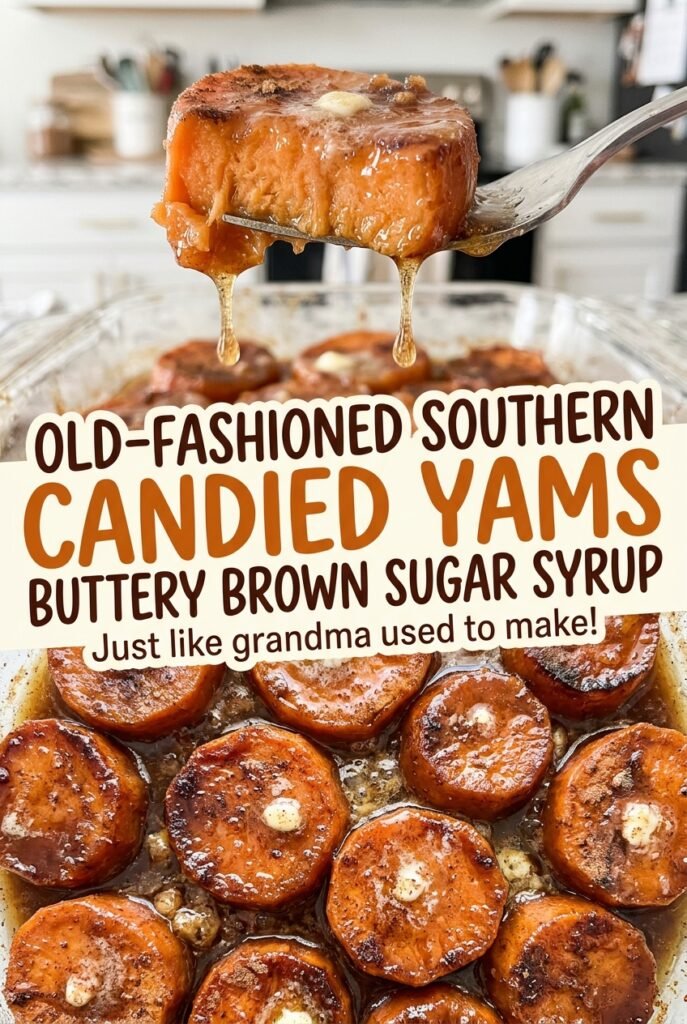
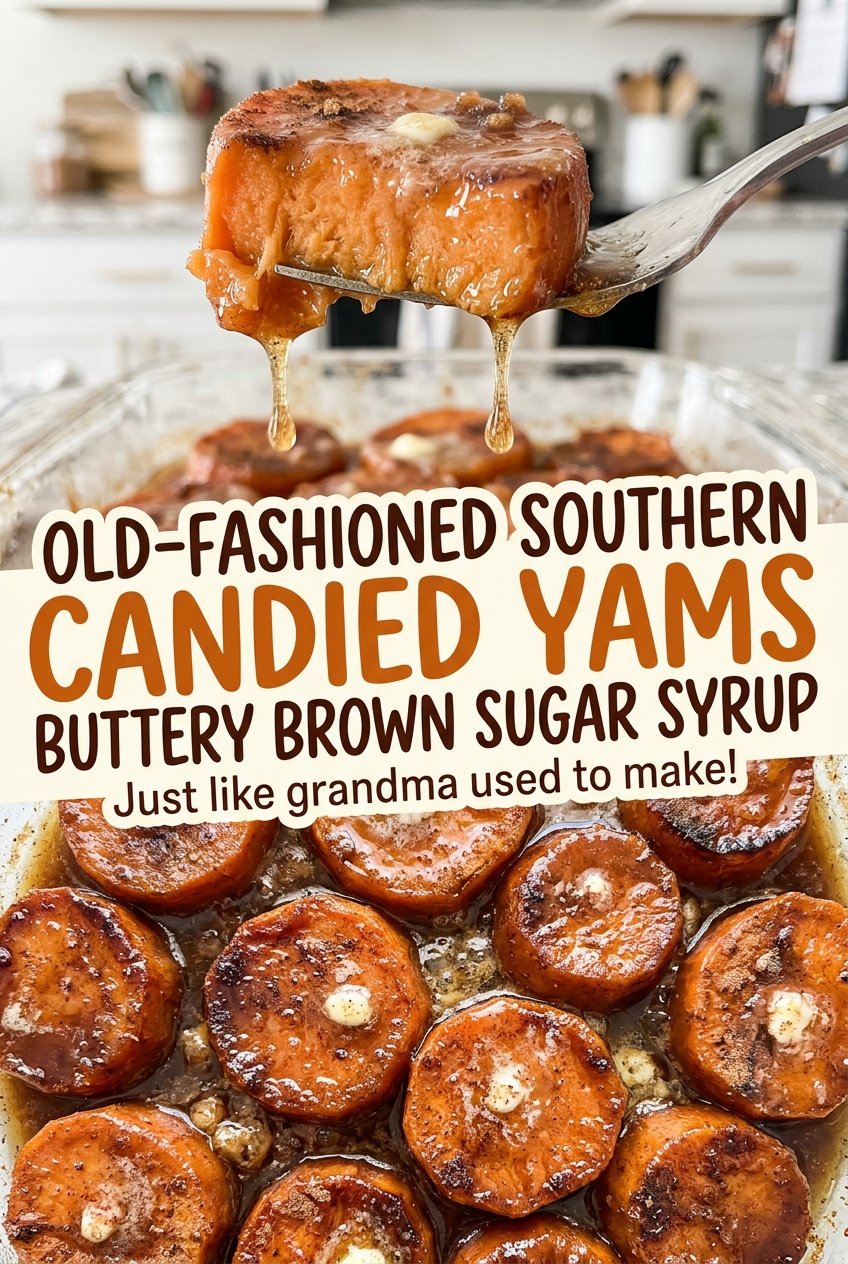
When I lift the foil, the sweet potatoes should be nearly tender, but the syrup still looks loose. That’s exactly when I want to uncover the dish. The last stretch in the oven lets the syrup bubble around the rounds and thicken without leaving the centers undercooked. These old-fashioned Southern candied yams come out tender, with a buttery brown sugar syrup that clings to each slice.
I cut the sweet potatoes into even rounds and overlap them in the baking dish so the syrup can reach the layers as they soften. The covered bake gives the potatoes time to cook gently; uncovering them for the finish concentrates the syrup. A short rest after baking lets the bubbling settle before you spoon the glossy sauce over the top.
Kitchen Note
The syrup can look thinner straight from the oven than it will on the plate. Give the yams their full 10-minute rest; the bubbling calms down, and the syrup settles around the slices instead of running across the serving dish.
Save these old-fashioned Southern candied yams for a holiday table or Sunday supper—the tender sweet potato rounds and buttery brown sugar syrup are worth keeping close.
Why the Foil Comes Off Before the Syrup Looks Finished
The covered part of the bake is doing a different job from the uncovered part. Under foil, the sweet potato rounds soften in the trapped heat while the syrup stays relatively loose. If you wait for a thick syrup before uncovering the dish, you’ll be waiting for a texture that develops during the final bake, not the first one.
Take the foil off when a fork meets only a little resistance in the thickest rounds. Then baste so the exposed tops get coated, and return the dish to the oven uncovered. The syrup can now bubble and reduce around the potatoes while the slices finish becoming fork-tender. Keep an eye on the surface near the end: you’re looking for bubbling syrup and tender rounds, not dry edges or a hard, sticky layer. That two-part bake gives you soft centers and a sauce you can spoon over every serving.
What Gives the Brown Sugar Syrup Its Buttery, Warm Flavor
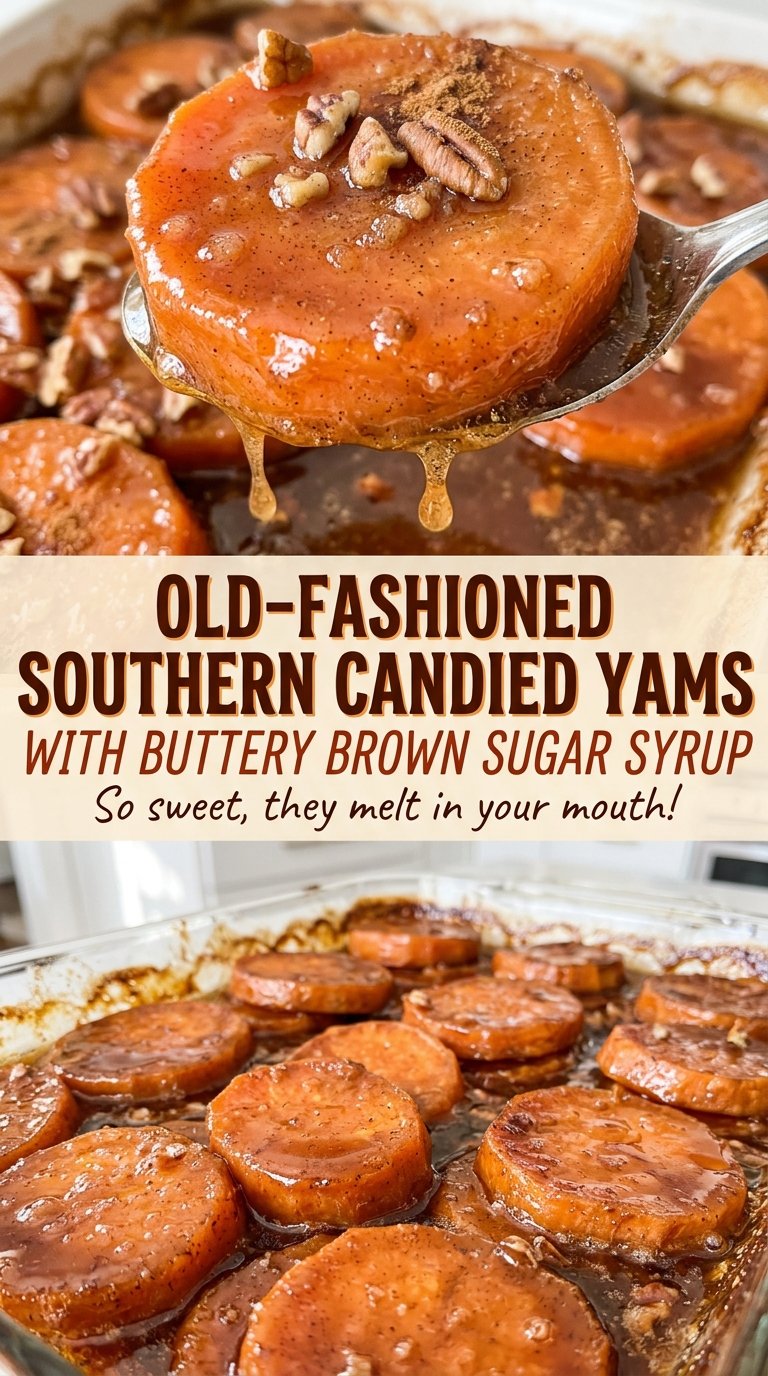
- Orange-fleshed sweet potatoes — Their moist flesh turns tender while holding its shape in rounds. Choose firm potatoes without soft spots, and cut the slices evenly so they finish cooking together. The vegetable sold as a “yam” in many U.S. grocery stores is often an orange-fleshed sweet potato; that’s the type used here.
- Unsalted butter — Butter gives the syrup its rounded, rich taste, while unsalted butter lets you control the seasoning. A good everyday butter works well; save specialty butter for another dish. For a dairy-free option, use a plant-based butter stick in its place.
- Light brown sugar — Its molasses notes complement the sweet potatoes and dissolve into the butter and water. Dark brown sugar works as a one-for-one swap if you want a deeper, more molasses-forward syrup.
- Water — It helps the sugar and butter combine into a pourable syrup before baking. Don’t replace it with extra butter; that changes the balance and can leave the sauce greasy.
- Cinnamon and nutmeg — Ground spices bring the familiar warm aroma. Use spices that smell fragrant when you open the jar; old, faded spices make a noticeably quieter syrup. For a cinnamon-only version, leave out the nutmeg.
- Vanilla extract — Stirring it in after the pan comes off the heat keeps its aroma noticeable in the finished syrup. Pure vanilla is lovely, but standard vanilla extract is fine here.
How to Bake the Rounds Until Tender Without Losing the Syrup
Layer the Sweet Potatoes Evenly
Heat the oven to 350°F and lightly coat a 9×13-inch baking dish with cooking spray. Peel the sweet potatoes and cut them into 1/2-inch-thick rounds. Arrange the slices in overlapping layers so they fit snugly without being packed into a solid mass. Even slices matter more than perfect circles; thick and thin pieces in the same dish won’t soften at the same pace.
Simmer the Butter and Brown Sugar Together
Melt the butter in a small saucepan over medium heat, then stir in the brown sugar, water, cinnamon, nutmeg, and kosher salt until combined. Bring the mixture to a gentle simmer and cook it for 1 minute, stirring as it heats. A gentle simmer is enough; a hard boil can make the syrup sputter without improving it. Take the pan off the heat before stirring in the vanilla.
Cover the Dish Until the Rounds Are Nearly Tender
Pour the syrup evenly over the layered sweet potatoes, then cover the baking dish tightly with foil. Bake for 45 to 55 minutes, checking the thickest rounds with a fork toward the end of that range. They should be nearly tender, with just a little resistance at the center. If the fork still meets a firm, raw-feeling center, keep the dish covered until the slices are closer to that cue.
Uncover, Baste, and Finish the Bake
Remove the foil and baste the sweet potatoes with the syrup in the dish. Bake uncovered for 20 to 25 minutes more, basting once halfway through. The rounds are ready when a fork slides through easily and the syrup around them is thick and bubbling. Let the dish rest for 10 minutes before serving.
Simple Swaps for a Different Syrup or a Dairy-Free Dish
Make the syrup dairy-free
Replace the unsalted butter with the same amount of dairy-free butter sticks. Choose a firm stick-style product rather than a soft tub spread, which can contain more water and make the syrup looser. The result keeps the buttery character, though the exact richness depends on the brand.
Use dark brown sugar for a deeper finish
Swap dark brown sugar for light brown sugar in the same amount. Its stronger molasses flavor makes the syrup taste darker and more caramel-like, while the method stays the same.
Skip the nutmeg for a cinnamon-led version
Leave out the nutmeg and keep the cinnamon as written. The syrup will still taste warmly spiced, with a cleaner cinnamon note and less of nutmeg’s earthy aroma.
Storage and Reheating
- Refrigerator: Refrigerate leftovers within 2 hours and keep them covered for 3 to 4 days. The syrup firms up when cold and loosens again as it warms.
- Freezer: Freeze cooled yams with their syrup in an airtight freezer-safe container for up to 2 months. Thaw them in the refrigerator before reheating; the sweet potatoes may be a little softer after thawing.
- Reheating: Warm a covered baking dish at 325°F until the center reaches 165°F, or heat individual portions in the microwave. Avoid reheating uncovered for a long stretch, which can dry the edges before the middle is hot.
Questions That Come Up When Making Candied Yams
Old-Fashioned Southern Candied Yams with Buttery Brown Sugar Syrup
Ingredients
Equipment
Method
- Heat the oven to 350°F.
- Lightly coat a 9x13-inch baking dish with cooking spray.
- Arrange the sweet potato rounds in the baking dish in overlapping layers.
- Melt the butter in a small saucepan over medium heat.
- Stir in the brown sugar, water, cinnamon, nutmeg, and salt until combined.
- Bring the mixture to a gentle simmer and cook for 1 minute, stirring.
- Remove the syrup from the heat and stir in the vanilla.
- Pour the syrup evenly over the sweet potatoes and cover the dish tightly with foil.
- Bake for 45 to 55 minutes, until the rounds are nearly tender when pierced with a fork.
- Remove the foil and baste the sweet potatoes with the syrup.
- Bake for 20 to 25 minutes more, basting once halfway through, until fork-tender and surrounded by a thick, bubbling syrup.
- Let the yams rest for 10 minutes before serving.
