

Parmesan Garlic Creamed Spinach Side Dish
As the spinach warms in the saucepan, the cream sauce settles around the chopped leaves instead of running to the bottom of the bowl. That’s the texture I want from…
Tip: save now, read later.
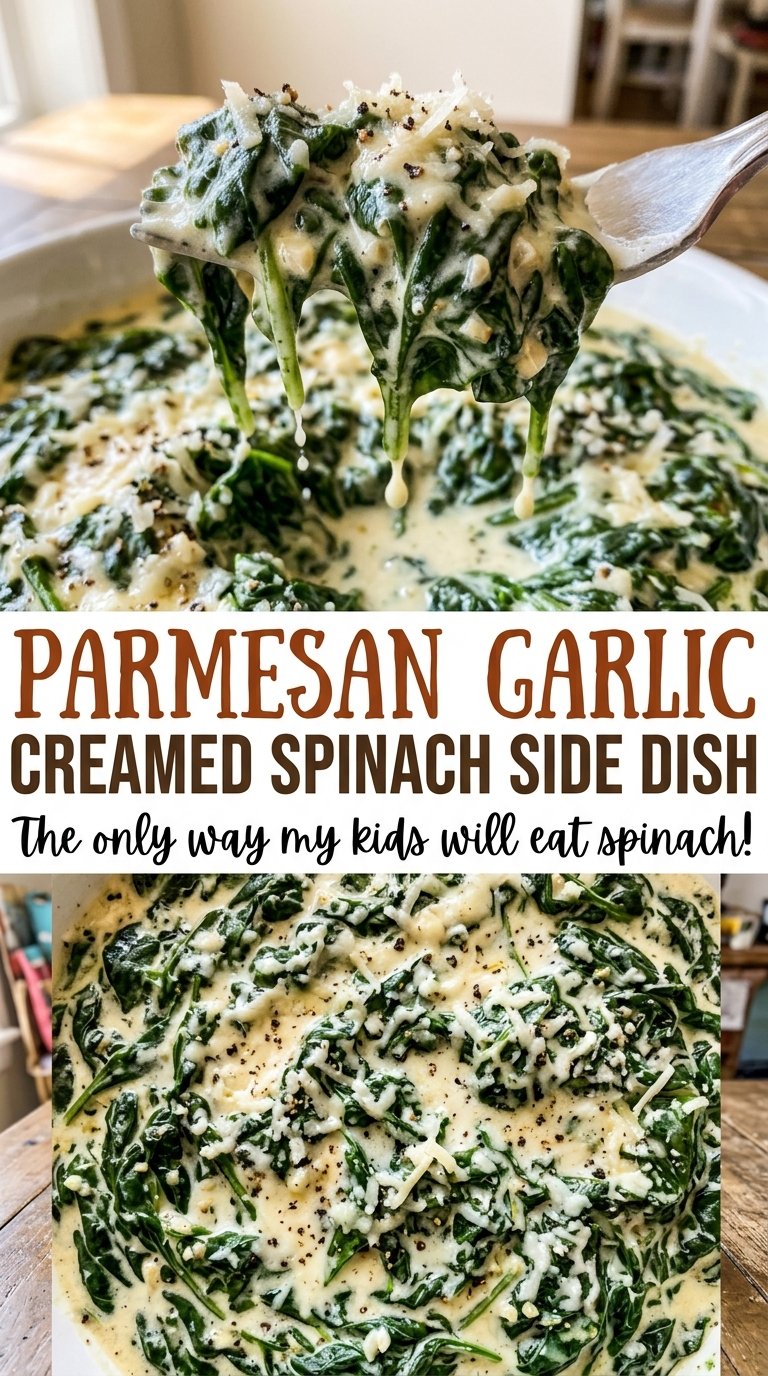
As the spinach warms in the saucepan, the cream sauce settles around the chopped leaves instead of running to the bottom of the bowl. That’s the texture I want from a side dish: soft and rich, but still clearly spinach, with a little Parmesan in every bite. This Parmesan garlic creamed spinach comes together on the stovetop, so it’s a practical way to put a warm vegetable side on the table without turning on the oven.
I keep the seasoning simple and let the garlic and Parmesan do most of the talking. A small pinch of nutmeg gives the cream a gentle warmth without making the dish taste sweet or spiced. It’s a cozy, savory side with a smooth sauce and enough character to stand beside a hearty main.

Kitchen Note
Squeeze the thawed spinach until it stops dripping before it goes into the pan. Any extra water has nowhere to go in this small batch, and it can loosen the cream sauce just when you want it to cling.
Save this Parmesan garlic creamed spinach for a creamy, garlicky side with a Parmesan finish.
Why the Cream Sauce Needs to Thicken Before the Spinach Goes In
Creamed spinach can end up thin for two different reasons: excess water from the greens, or a sauce that never had time to thicken. This version gives the flour a minute in the butter before any dairy goes in, then lets the smooth sauce simmer before the spinach is stirred through. That order gives the flour time to do its job and keeps the finished dish from tasting like raw flour.
Whisk the milk and cream in gradually rather than pouring them in all at once. It’s easier to work out small lumps while the sauce is still loose, and a gentle simmer gives it time to turn silky without scorching. Once it’s thickened, the spinach and Parmesan go in together for the short final cook. Adding the cheese at that point keeps it from spending too long over the heat.
Look for a sauce that has some body before adding the greens, not a stiff paste. The spinach and cheese will make the finished mixture denser, and you want enough sauce to coat the leaves evenly. If you rush the simmer, the dish can be looser than you intended; if the pan is bubbling hard, lower the heat so the dairy stays calm.
What the Spinach, Dairy, and Parmesan Each Bring to the Pan
- Frozen chopped spinach — Plain frozen spinach is convenient and gives the dish a consistent, fine texture. Choose chopped rather than whole-leaf spinach for the most even spoonfuls; seasoned spinach can bring extra salt and other flavors you didn’t plan for.
- Unsalted butter — Butter gives the sauce its rounded, savory base, while unsalted butter leaves the salt level in your control. If you only have salted butter, season cautiously at the end instead of assuming the listed salt amount will taste the same.
- Garlic — Fresh minced cloves make the sauce smell fragrant and savory without needing a bottled seasoning blend. Fresh garlic is worth using here; jarred garlic tends to taste less bright in a quick stovetop sauce.
- All-purpose flour — Flour thickens the dairy into a coating sauce. It’s doing more than adding body, so swapping in a different flour changes the thickening method; the gluten-free card below gives a workable alternative.
- Whole milk and heavy cream — Together they make a sauce that’s creamy without relying on cream alone. Whole milk keeps it pourable while heavy cream adds richness; using only a thinner milk will leave you with a less full-bodied result.
- Parmesan — Finely grated Parmesan melts into the sauce and brings a salty, nutty note. A wedge grated at home tends to blend in more smoothly than coarse shreds, though a finely grated packaged version works when convenience matters.
- Nutmeg — Just a little gives the dairy a warm background note that suits spinach. Ground nutmeg is fine for this small amount; there’s no need to buy a whole nutmeg unless you already enjoy grating it fresh.
Build the Sauce Smoothly, Then Finish the Spinach
Soften the Garlic Without Browning It
Melt the butter in a medium saucepan over medium heat. Add the minced garlic and stir for 30 seconds, just until it smells fragrant. Keep it moving; garlic can turn brown quickly, and browned garlic will taste sharper and more bitter than the mellow base this sauce needs. The butter should be melted and gently active, not smoking.
Whisk the Flour Into the Dairy
Whisk the flour into the butter and cook it for 1 minute, stirring so it forms a smooth paste rather than sticking in a dry patch. Gradually whisk in the milk and heavy cream. Pouring in stages and whisking as you go helps the mixture stay smooth; if you spot a lump, keep whisking before moving on. The sauce should look even and fluid before it simmers.
Let the Sauce Gain Body
Bring the sauce to a gentle simmer, then cook it for 2 to 3 minutes, whisking. A gentle simmer means small bubbles around the pan, not a rolling boil. You’ll see the sauce thicken and begin to cling to the whisk; if it’s still watery, give it the full simmering time while continuing to whisk. Keep the heat controlled so the dairy doesn’t scorch on the bottom.
Warm the Spinach and Melt the Cheese
Stir in the spinach, Parmesan, salt, pepper, and nutmeg. Cook for 3 to 4 minutes, stirring often, until the spinach is hot and the cheese has melted into the sauce. Scrape around the bottom and sides as you stir so nothing catches. The finished spinach should look creamy throughout, with no unmelted clumps of cheese.
Three Useful Ways to Change This Creamed Spinach
Make It Gluten-Free With a Cornstarch Slurry
Replace the flour with 2 teaspoons cornstarch. Before cooking, reserve 1 tablespoon of the measured milk and whisk it with the cornstarch until smooth; melt the butter and cook the garlic, then whisk in the remaining milk and cream. Bring the sauce to a gentle simmer and whisk in the slurry, cooking until thickened. The sauce stays creamy, though it won’t have quite the same buttery roux flavor.
Use Pecorino Romano for a Sharper Finish
Swap finely grated Pecorino Romano for the Parmesan. It melts into the cream sauce and gives the spinach a sharper, saltier edge. Since Pecorino is naturally saltier, taste the finished dish before adding all the kosher salt.
Give It a Little Heat
Stir a pinch of red pepper flakes into the butter with the garlic. The flakes bloom in the warm butter and add a gentle warmth that cuts through the cream, without changing the sauce’s texture. Start with a small pinch; it’s easy to add heat, but there’s no taking it back out.
Storage and Reheating
- Refrigerator: Store covered for 3 to 4 days. The sauce will firm up as it chills, and the spinach may release a little moisture.
- Freezer: Freezing isn’t recommended for the best texture. The dairy sauce can separate and turn watery when thawed.
- Reheating: Warm it gently in a saucepan over low heat, stirring often. If the chilled sauce is too thick, stir in a small splash of milk; high heat can make the sauce separate.
Questions That Come Up When Making Creamed Spinach
Parmesan Garlic Creamed Spinach Side Dish
Ingredients
Method
- Melt the butter in a medium saucepan over medium heat.
- Add the garlic and cook for 30 seconds, stirring until fragrant.
- Whisk in the flour and cook for 1 minute.
- Gradually whisk in the milk and heavy cream until smooth.
- Bring the sauce to a gentle simmer and cook for 2 to 3 minutes, whisking, until thickened.
- Stir in the spinach, Parmesan, salt, pepper, and nutmeg.
- Cook for 3 to 4 minutes, stirring often, until the spinach is hot and the cheese has melted.
