
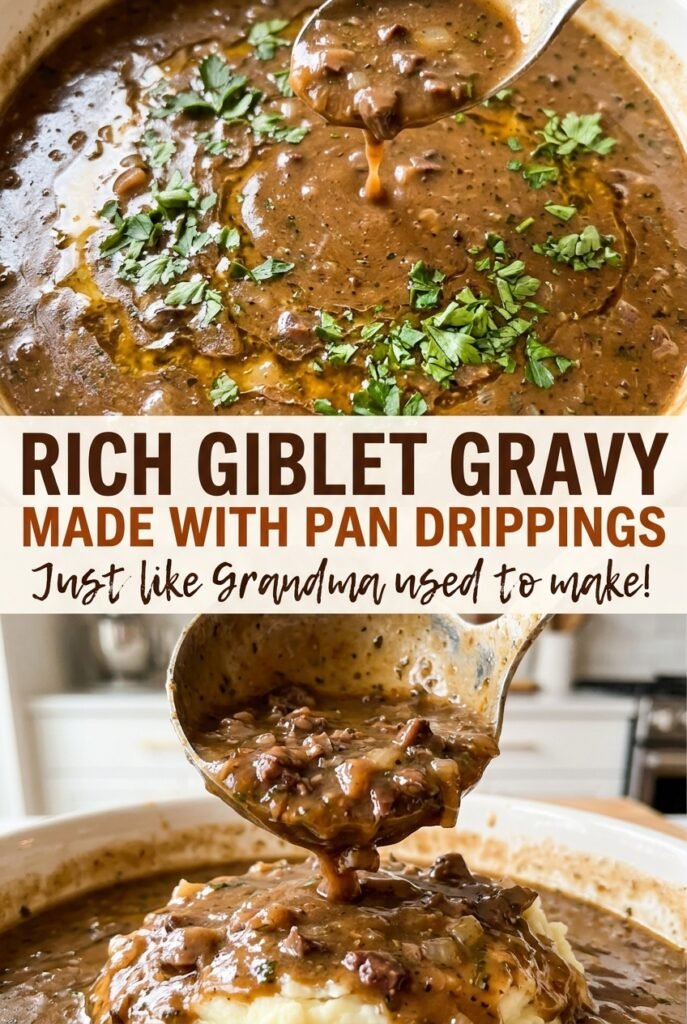
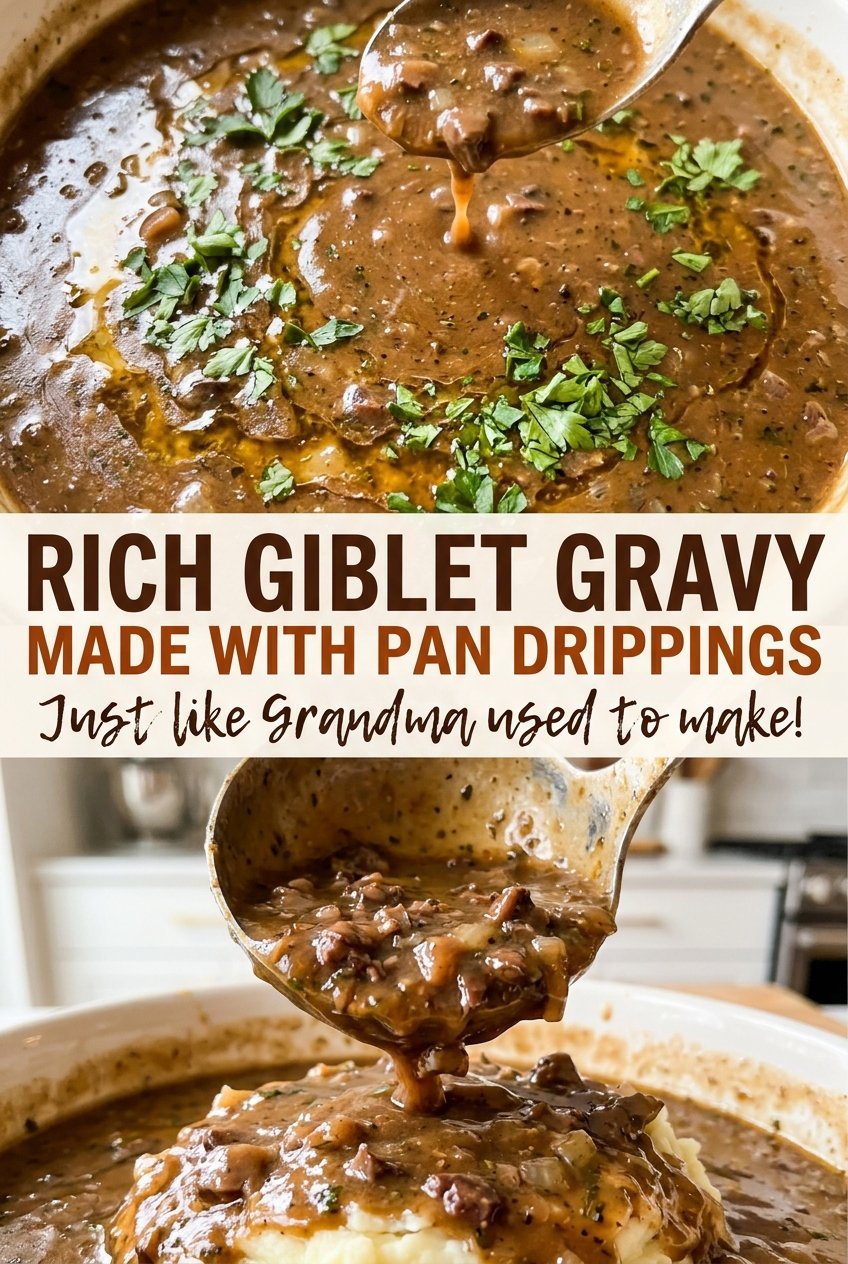
Rich Giblet Gravy Made with Pan Drippings
The stockpot barely bubbles while the neck, heart, and gizzard soften, and the kitchen starts to smell like the first real step toward gravy. I let that slow simmer do…
Tip: save now, read later.
The stockpot barely bubbles while the neck, heart, and gizzard soften, and the kitchen starts to smell like the first real step toward gravy. I let that slow simmer do its work before worrying about the pan drippings. It gives Rich Giblet Gravy Made with Pan Drippings a savory base with more depth than drippings alone, and the chopped giblets make every spoonful feel like proper holiday gravy.
I build the gravy with a pale roux, then whisk in the measured stock and defatted drippings gradually. That order matters: the flour gets coated in fat first, so it thickens the liquid smoothly instead of clumping. The giblet stock also gives me room to balance the stronger roasted-turkey juices while keeping the finished gravy rich rather than greasy. Once the gravy coats a spoon and the chopped meat is warmed through, it’s ready for the table.
Kitchen Note
Don’t let the roux get dark. After 2 minutes of whisking, it should look smooth and pale golden; a darker roux can give this gravy a toasted taste that competes with the turkey drippings.
Save Rich Giblet Gravy Made with Pan Drippings for a deeply savory gravy with tender chopped giblets and a smooth, spoon-coating finish.
Why Measuring the Gravy Liquid Matters More Than Guessing
A roux can only thicken the amount of liquid it’s paired with. Pour in more stock or drippings than the flour-and-fat base can handle, and you’ll get a thinner gravy; use less, and the result can turn pasty. The fixed total here keeps the balance predictable, even though the proportions of stock and turkey juices may shift depending on how much drippings your bird gives you.
That’s also why I measure the strained stock and the defatted pan juices together instead of judging the pot by eye. The stock brings a steady, savory backbone, while the pan juices carry the roasted turkey flavor. If the stock comes up short after straining, hot water brings it to the needed volume without changing the amount of liquid going into the roux. You still get to taste and adjust the salt at the end, when the drippings and giblets are already in the pan.
What the Giblets, Drippings, and Roux Each Bring

- Turkey giblets and neck — The neck, heart, and gizzard simmer into the stock, then the picked neck meat and finely chopped giblets give the gravy its hearty texture. Use the whole set, including the liver, for the intended savory character. The neck meat is easy to overlook after straining, so pick it from the bone before discarding anything.
- Turkey fat from the drippings — This is the roux’s main fat and carries roasted-turkey flavor. If the drippings don’t yield enough, unsalted butter fills the gap to reach the recipe’s total fat amount. Unsalted butter is useful here because the pan juices may already bring plenty of salt.
- All-purpose flour — Flour thickens the gravy when it’s cooked with the fat before the liquid goes in. It’s worth measuring accurately; a different thickener won’t behave like this roux, and a direct swap can change the texture.
- Giblet stock and defatted pan juices — The stock provides the volume and a rounded, simmered flavor; the pan juices add the roasted bird’s concentrated taste. Strain the drippings before separating fat from juices so bits from the roasting pan don’t end up in the gravy.
- Onion, celery, and bay leaf — These season the stock as the giblets simmer. A small onion and a celery rib are enough to support the turkey flavor without making the stock taste like vegetable soup; the bay leaf adds a quiet herbal note.
Building the Stock and Roux in the Right Order
Simmer the Giblets Until the Neck Gives Easily
Separate the liver from the giblet set and place the neck, heart, and gizzard in a 3-quart saucepan. Add the quartered onion, celery pieces, bay leaf, and water, then bring the pot to a boil over medium-high heat. Lower the heat, partially cover, and simmer for 1 1/2 to 2 hours; the neck meat should pull easily from the bone and the gizzard should be tender. Add the liver for the final 10 minutes so it cooks through without spending the full simmer in the pot.
Strain the Stock and Chop the Meat
Set a heatproof bowl under a strainer and pour in the stock. Measure the strained liquid, adding hot water if needed to reach the amount for the gravy. Pick the meat from the turkey neck and finely chop it with the heart, gizzard, and liver. Keep the pieces small enough to distribute through the gravy rather than clumping on the spoon.
Separate the Pan Drippings and Measure the Base
Strain the turkey pan drippings into a measuring cup, then separate the fat from the juices. Measure the turkey fat and top it up with unsalted butter if needed to make the required total. Combine the defatted juices with the giblet stock, measuring the mixture carefully so the roux receives the right amount of liquid. If the two components are still warm, whisking them in gradually is easier.
Whisk the Roux Smooth, Then Finish the Gravy
Heat the measured fat in the saucepan over medium heat, whisk in the flour, and cook for 2 minutes until the roux is smooth and pale golden. Gradually whisk in the stock-and-drippings mixture, then bring it to a simmer. Cook for 5 to 8 minutes, whisking often, until the gravy thickens enough to coat the back of a spoon; if it looks thin, give it time to reach that cue instead of adding extra flour. Stir in the chopped giblets and neck meat, salt, and pepper, simmer for 2 minutes until hot, then taste and add more salt only if it needs it.
Small Changes That Keep This Gravy True to the Turkey
Make It Dairy-Free When You Have Enough Turkey Fat
If the strained drippings provide the full measured amount of turkey fat, skip the butter. The gravy will stay dairy-free while keeping the roasted-turkey flavor; if the fat comes up short, this adaptation doesn’t apply because the specified top-up is unsalted butter.
Lean Into the Roasted-Turkey Flavor
When your turkey gives plenty of pan juices, use a larger share of those defatted juices and a smaller share of giblet stock, while keeping the combined liquid at the same total volume. The gravy will taste more distinctly of the roast and a little less like the simmered giblet stock.
Storage and Reheating
- Refrigerator: Cool and refrigerate within 2 hours, then use within 3 to 4 days. The gravy will thicken as it chills.
- Freezer: Freeze in an airtight container for up to 2 to 3 months. Thaw it in the refrigerator; the texture may look slightly separated until stirred.
- Reheating: Warm it gently in a saucepan, whisking often, and add a little water or giblet stock if it’s too thick. Reheat to 165°F; high heat or leaving it unstirred can scorch the roux at the bottom.
Questions That Come Up When Making Giblet Gravy
Rich Giblet Gravy Made with Pan Drippings
Ingredients
Equipment
Method
- Separate the liver from the giblet set and set it aside.
- Place the neck, heart, and gizzard in a 3-quart saucepan.
- Add the onion, celery, bay leaf, and water.
- Bring to a boil over medium-high heat.
- Reduce the heat to low and partially cover.
- Simmer for 1 1/2 to 2 hours, until the neck meat pulls easily from the bone and the gizzard is tender; add the liver for the final 10 minutes.
- Strain the stock into a heatproof bowl and measure 3 1/2 cups, adding hot water if needed.
- Pick the meat from the neck and finely chop it with the heart, gizzard, and liver.
- Strain the turkey pan drippings into a measuring cup and separate the fat from the juices.
- Measure 1/4 cup fat, topping it up with butter if needed.
- Combine the defatted juices with giblet stock to make 3 1/2 cups total liquid.
- Heat the measured fat in the saucepan over medium heat.
- Whisk in the flour and cook for 2 minutes, whisking, until the roux is smooth and pale golden.
- Gradually whisk in the stock-and-drippings mixture and bring to a simmer.
- Cook for 5 to 8 minutes, whisking often, until the gravy thickens enough to coat the back of a spoon.
- Stir in the chopped giblets and neck meat, salt, and pepper.
- Simmer for 2 minutes, until hot.
- Taste and add more salt if needed.
