
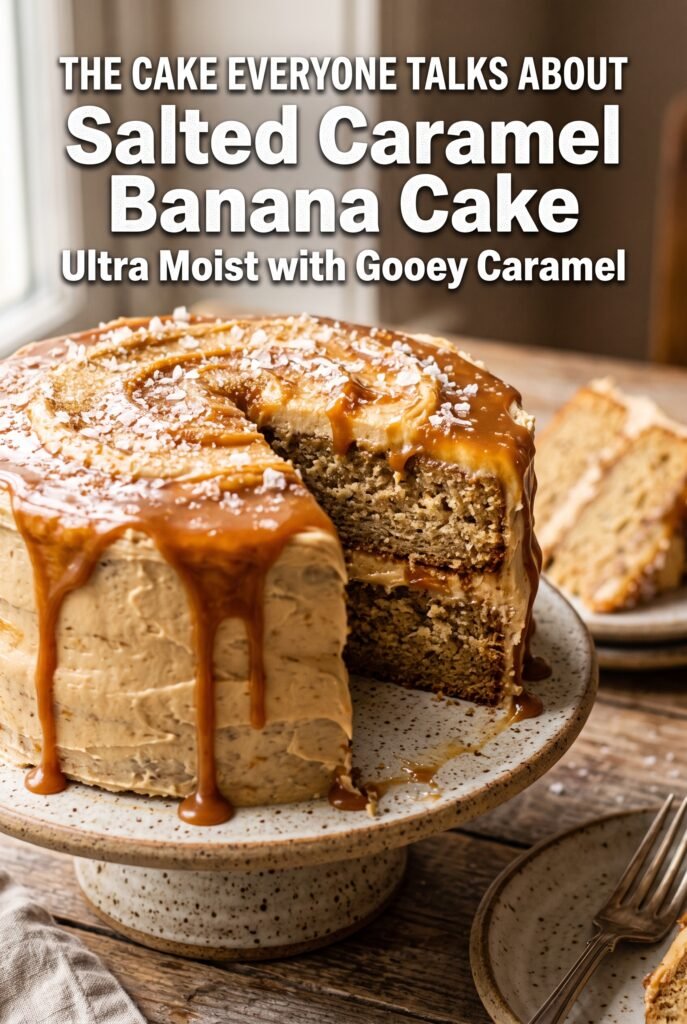
Salted Caramel Banana Cake
Moist banana cake and salted caramel belong together in the same way brown butter and toast do: the banana brings depth and softness, and the caramel turns every bite into…
Tip: save now, read later.
Moist banana cake and salted caramel belong together in the same way brown butter and toast do: the banana brings depth and softness, and the caramel turns every bite into something richer than plain layer cake ever could be. This version stays tender for days because the batter uses both butter and oil, which gives you flavor plus a crumb that doesn’t dry out after chilling. The salted caramel buttercream finishes the whole cake with enough contrast to keep the sweetness in check.
The key here is using bananas that are deeply spotted and fragrant, not just yellow with a few freckles. They mash smoothly into the batter and carry more flavor, which matters because banana cake can taste flat fast if the fruit isn’t ripe enough. Sour cream also does more than add moisture; it gives the crumb a little tang and keeps the texture plush instead of dense. The caramel doesn’t just sit on top either — it gets folded into the frosting, so the flavor runs through every layer instead of reading like a garnish.
Below you’ll find the one timing detail that keeps the cake from turning gummy, plus the best way to get a clean, glossy caramel drizzle without sliding it right off the frosting.
The frosting was silky and the caramel stayed put instead of running everywhere. I also loved that the banana flavor came through clearly without the cake tasting heavy.
Save this Salted Caramel Banana Cake for the days when you want a bakery-style layer cake with soft banana crumb and caramel in every bite.
The Mistake That Makes Banana Cake Dense Instead of Tender
Banana cake turns heavy when the batter gets overworked after the flour goes in. Once the dry ingredients hit the bowl, the gluten starts developing fast, and too much mixing gives you a tight crumb instead of a soft, plush slice. Stir until the flour disappears and stop there, even if the batter still looks a little rough.
The other common problem is using bananas that aren’t ripe enough. Pale bananas bring moisture, but not enough flavor, and the cake ends up tasting like sweet vanilla with a hint of banana instead of a real banana layer cake. The ripest fruit you have does the best job here because it dissolves into the batter and seasons the crumb from the inside out.
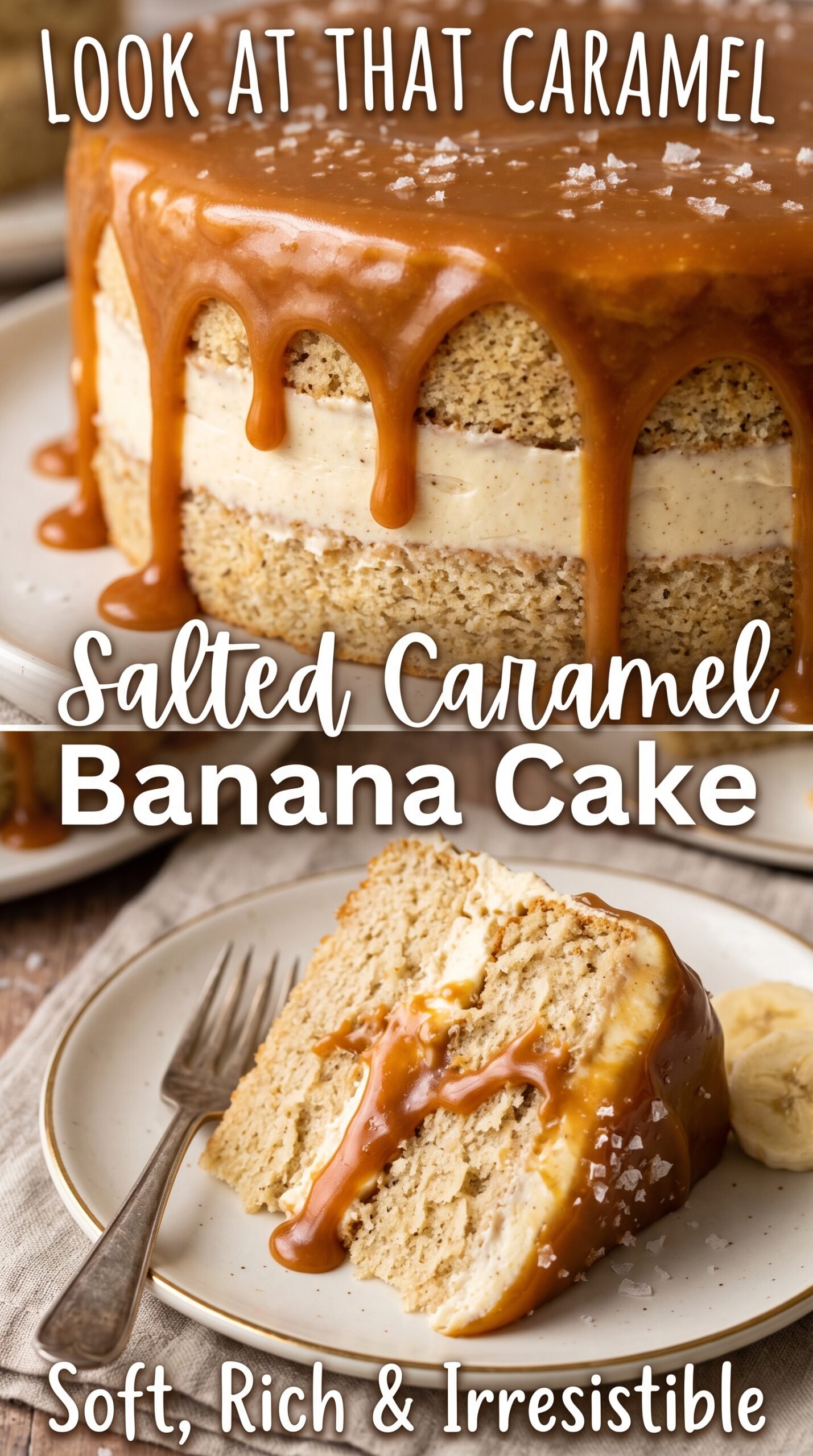
What Each Ingredient Is Actually Doing in This Cake
- All-purpose flour — This gives the cake enough structure to hold two layers and a thick buttercream without turning fragile. Cake flour will make it softer, but also a little more delicate; if you use it, keep the mixing gentle and don’t overbake.
- Brown sugar and granulated sugar — The brown sugar adds molasses depth that works with banana, while the white sugar keeps the crumb from becoming too sticky. Using all brown sugar would make the cake heavier and sweeter.
- Butter and vegetable oil — Butter brings flavor, oil keeps the crumb soft even after refrigeration. That combination matters in layer cakes because butter alone can firm up too much once chilled.
- Mashed ripe bananas — This is the main flavor source, so the ripeness matters more than the exact number on paper. Aim for bananas with dark speckles and soft spots; if yours are only partly ripe, roast them until the skins blacken and the fruit softens.
- Sour cream — Sour cream adds tang and moisture, and it helps the cake stay tender without turning wet. Full-fat plain Greek yogurt works in the same amount if that’s what you have.
- Salted caramel sauce — Use a thick sauce, not a thin drizzle, or the frosting will loosen too much. If your caramel is homemade and a little stiff, warm it just enough to stir smoothly before folding it in.
Building the Batter and Frosting Without Losing Texture
Mix the dry ingredients first
Whisk the flour, baking powder, baking soda, salt, and cinnamon together before they ever meet the wet ingredients. That keeps the leavening even, which matters in a cake this soft because one pocket of baking soda can leave a bitter bite or a lopsided rise. Cinnamon should disappear into the flour mixture rather than streak through the batter.
Cream the fats and sugars until they lighten
Beat the butter, oil, brown sugar, and granulated sugar until the mixture looks fluffy and a little paler. You’re not trying to whip it like meringue; you’re dissolving sugar into fat so the cake bakes up with a finer crumb. If the mixture still looks grainy after a minute or two, keep going until it loosens.
Fold in the bananas and sour cream gently
Add the mashed bananas and sour cream after the eggs and vanilla, then mix just until the batter looks cohesive. The batter may look slightly curdled at this point, and that’s normal — the flour will bring it back together. Once the dry ingredients go in, switch to the lowest speed or a spatula and stop as soon as there are no dry streaks.
Cool completely before frosting
Let the layers cool all the way to room temperature before you start the buttercream. Even a little warmth will melt the frosting and make the caramel slide, especially if your kitchen runs warm. The cake should feel fully set in the center and no longer give off any heat when you hover your hand over it.
Three Ways to Adapt This Cake Without Losing What Makes It Good
Make it dairy-free
Use a plant-based butter in both the cake and frosting, and swap the sour cream for unsweetened dairy-free yogurt. The texture stays close, but the frosting may be a touch softer, so chill it for 10 to 15 minutes before spreading if it feels loose.
Turn it into a one-layer sheet cake
Bake the batter in a greased 9×13-inch pan and start checking a few minutes early, since the thicker layers won’t need quite as long in the oven. This version is easier to serve for a crowd and still gives you the same banana-caramel balance, just with less fuss.
Skip the banana chips and add texture another way
If you don’t want banana chips, finish the cake with a few chopped toasted pecans or walnuts. They add crunch without pulling focus from the banana, and the nutty edge works well against the sweet caramel.
Make it ahead
Bake the layers a day ahead, wrap them well once cool, and frost the next day. The banana flavor deepens overnight, and the crumb slices more cleanly after it has had time to rest.
Storage and Reheating
- Refrigerator: Store covered for up to 4 days. The frosting firms up a bit in the fridge, but the cake stays moist.
- Freezer: Freeze unfrosted layers tightly wrapped for up to 2 months, or freeze slices individually after chilling them first. The frosted cake can freeze, but the caramel garnish is best added after thawing.
- Reheating: Let slices come to room temperature, or warm them for 10 to 15 seconds in the microwave. Don’t heat long enough to melt the buttercream, or the caramel will run and the texture will go greasy.
Questions I Get Asked About This Recipe
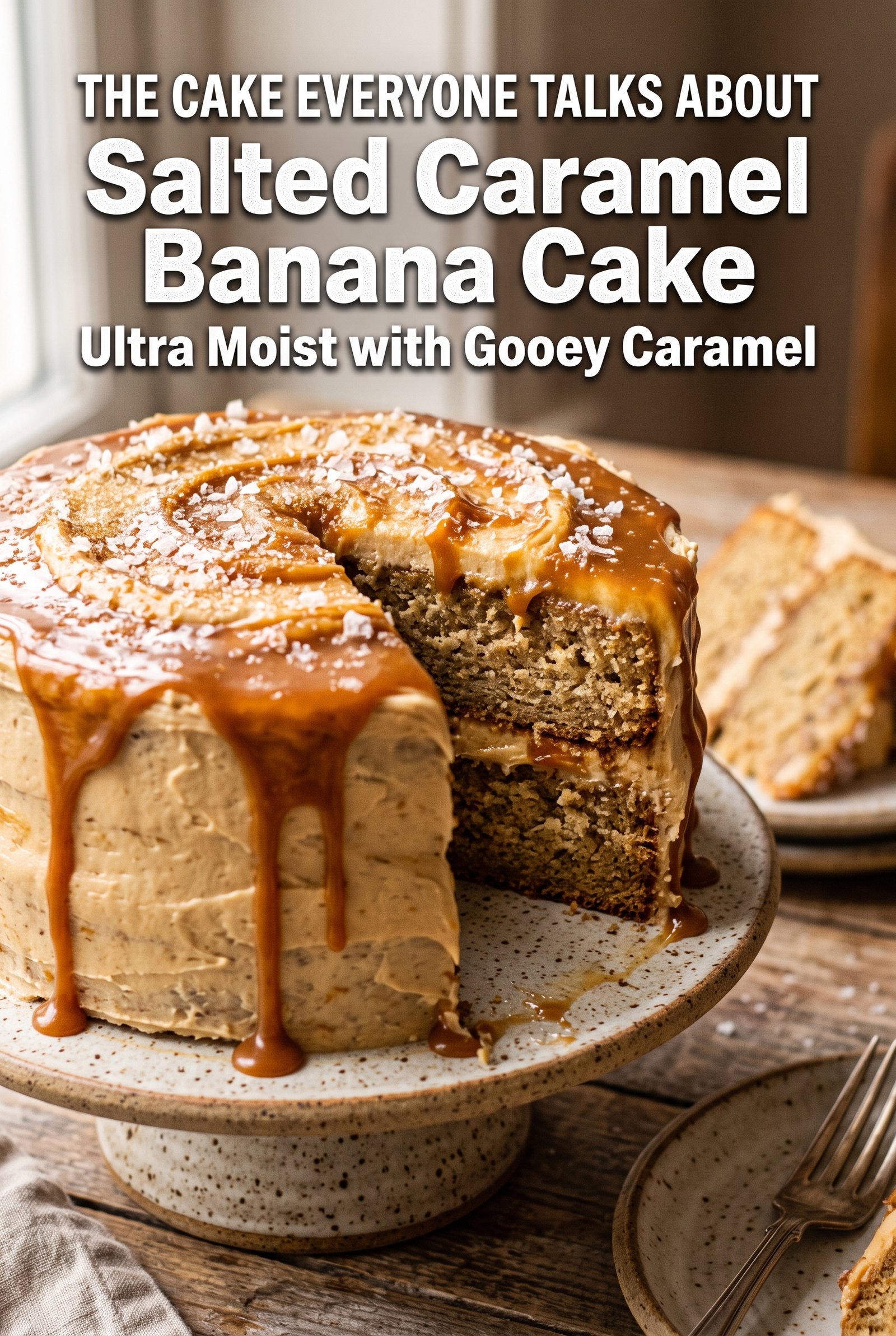
Salted Caramel Banana Cake
Ingredients
Equipment
Method
- Preheat oven to 350°F (175°C).
- Grease and line two 8-inch round cake pans.
- Whisk together all-purpose flour, baking powder, baking soda, salt, and ground cinnamon.
- Beat unsalted butter, vegetable oil, light brown sugar, and granulated sugar until light and fluffy.
- Add eggs one at a time, then mix in vanilla extract.
- Blend in mashed ripe bananas and sour cream.
- Fold in the dry ingredients until just combined.
- Divide the batter evenly between the prepared pans.
- Bake for 28–32 minutes, or until a toothpick inserted into the center comes out clean, and the tops look lightly golden.
- Cool completely.
- Beat unsalted butter, powdered sugar, salted caramel sauce, heavy cream, vanilla extract, and sea salt until smooth and fluffy.
- Frost the cake with the buttercream and spread it to the edges with a clean, even layer.
- Drizzle generously with salted caramel sauce, letting it drip slightly down the sides.
- Sprinkle flaky sea salt over the top right before serving, and add banana chips if using.
