
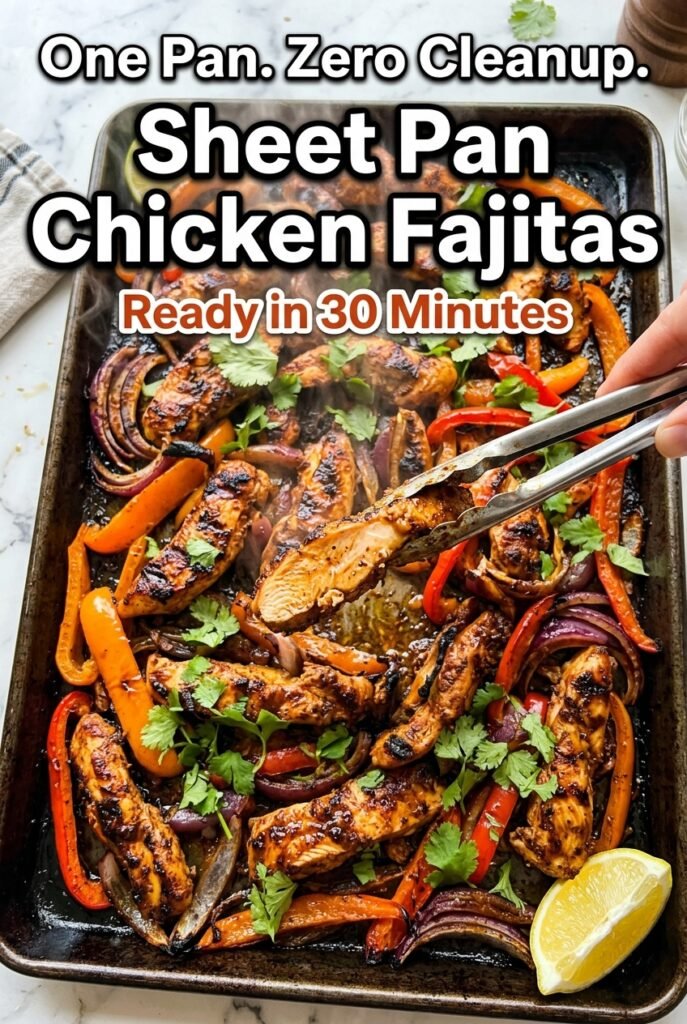
Sheet Pan Chicken Fajitas
Juicy chicken, tender peppers, and onions with those little charred edges that taste like they came off a hot grill — that’s what makes sheet pan chicken fajitas worth keeping…
Tip: save now, read later.
Juicy chicken, tender peppers, and onions with those little charred edges that taste like they came off a hot grill — that’s what makes sheet pan chicken fajitas worth keeping in the weeknight rotation. Everything roasts together on one pan, so the vegetables pick up the spiced chicken juices while the chicken stays flavorful instead of drying out. The result is a pile of fajitas that tastes bright, smoky, and fresh without turning dinner into a project.
The trick is in the spacing and the heat. A crowded pan steams the vegetables and leaves the chicken pale, but a hot oven and a single layer give you those browned bits that make fajitas taste like fajitas. Lime juice goes into the marinade for brightness, and the smoked paprika does a lot of heavy lifting here — it gives the chicken that fire-kissed flavor even though everything is coming from the oven.
Below, I’ll walk through the part that matters most: how to keep the chicken from going dry, how to get the vegetables tender with a little char, and the small changes that make this recipe work with what you’ve got in the kitchen.
The chicken stayed juicy and the peppers got those browned edges without turning mushy. I loved that the lime and smoky spices held up even after I piled everything into tortillas.
Sheet Pan Chicken Fajitas bring smoky chicken, sweet peppers, and easy cleanup to the table in one pan.
The Pan Has to Stay Wide Open or the Fajitas Steam Instead of Roast
Sheet pan fajitas go wrong when the chicken and vegetables are piled too close together. Once that happens, the moisture they release has nowhere to go, so you end up with soft peppers, pale chicken, and no real char. A hot oven helps, but space on the pan matters just as much. You want the vegetables in a loose layer and the chicken pieces tucked in without overlapping. That’s how the edges brown before the vegetables turn limp.
The other mistake is underseasoning the pan. Fajitas need enough salt and spice to carry through the tortillas, toppings, and sour cream. The marinade here does that job, and the lime juice keeps the seasoning from tasting flat. If your chicken ends up bland, it usually means the pieces were too large or the spices never got a chance to cling in an even layer.
What Each Ingredient Is Actually Doing in This Dish
- Chicken breasts — Slicing the chicken into strips helps it cook quickly at the same pace as the vegetables. If the pieces are cut too thick, the outside can dry out before the middle is done. Chicken thighs work too if you want a little more richness and don’t mind a slightly longer roast.
- Olive oil — This coats the spices so they stick to the chicken and helps the vegetables roast instead of dry out. You don’t need fancy oil here, just one with a clean flavor.
- Chili powder, cumin, smoked paprika, oregano — This is the backbone of the fajita flavor. Smoked paprika gives the roast a grilled edge, cumin brings warmth, and oregano keeps the seasoning from tasting one-note. If you only have regular paprika, the fajitas will still work, but they’ll taste a little less smoky.
- Lime juice — The acid wakes up the spices and keeps the chicken tasting fresh after roasting. Fresh lime is worth using here because bottled juice can taste dull and slightly bitter.
- Bell peppers and red onion — These are the vegetables that hold up to high heat and still taste sweet after roasting. Slice them evenly so they soften at the same rate. If the strips are too thin, they collapse before the chicken finishes.
The 20 Minutes That Actually Matter
Marinate Fast, Then Move On
Toss the chicken with the spices, oil, and lime juice until every strip looks coated, then let it sit while you prep the vegetables. Ten minutes is enough here. Longer won’t hurt, but this is not the kind of marinade that needs hours. If you leave the chicken in the lime for too long, the texture starts to get a little tight around the edges.
Spread Everything in a Single Layer
Get the peppers and onions onto the sheet pan first, then nestle the chicken around and over them without stacking the pieces. The vegetables should look loose, not packed in like a casserole. If your pan is small, use two pans. A crowded pan traps steam, and that’s the main reason sheet pan fajitas lose their char.
Roast Until the Edges Brown
At 425°F, the chicken usually takes 20 to 25 minutes, depending on thickness. You’re looking for cooked-through chicken that still looks juicy in the center and peppers with browned, slightly blistered edges. If you want more color, broil for the last 2 to 3 minutes, but keep an eye on it. Broilers can go from charred to burnt in a blink, especially on the onions.
Warm the Tortillas at the End
Warm the tortillas while the pan finishes roasting or right after it comes out. A warm tortilla bends instead of cracking, which matters when you’re stuffing it with chicken and vegetables. A dry skillet or a quick pass over a gas flame works best. Stack them in a clean towel so they stay soft until serving.
How to Adapt These Fajitas for Different Nights
Swap in chicken thighs for a richer finish
Boneless, skinless thighs bring a little more fat and stay very forgiving in the oven. They roast up juicy even if you leave them in a few minutes longer, and the flavor reads a touch deeper. Use the same seasoning and pan setup.
Make it dairy-free without changing the fajita flavor
The base recipe is already dairy-free if you skip the sour cream and use avocado, salsa, and extra lime instead. You still get plenty of richness from the olive oil and chicken juices. If you want a creamy topping, use a dairy-free cashew or coconut-based crema.
Turn them into low-carb fajita bowls
Serve the chicken and vegetables over cauliflower rice, shredded lettuce, or a mix of greens instead of tortillas. The roasting method still works exactly the same, and the smoky seasoning carries over well. Add avocado and salsa for the same layered feel without the flour tortillas.
Storage and Reheating
- Refrigerator: Store the chicken and vegetables in an airtight container for up to 4 days. The peppers soften a bit more after chilling, but the flavor stays strong.
- Freezer: The cooked fajita filling freezes well for up to 2 months. Freeze it without the tortillas and toppings, then thaw in the refrigerator before reheating.
- Reheating: Reheat in a skillet over medium heat with a small splash of water or oil until hot. The skillet brings back a little browning, while the microwave tends to make the vegetables soft and the chicken rubbery.
Answers to the Questions Worth Asking
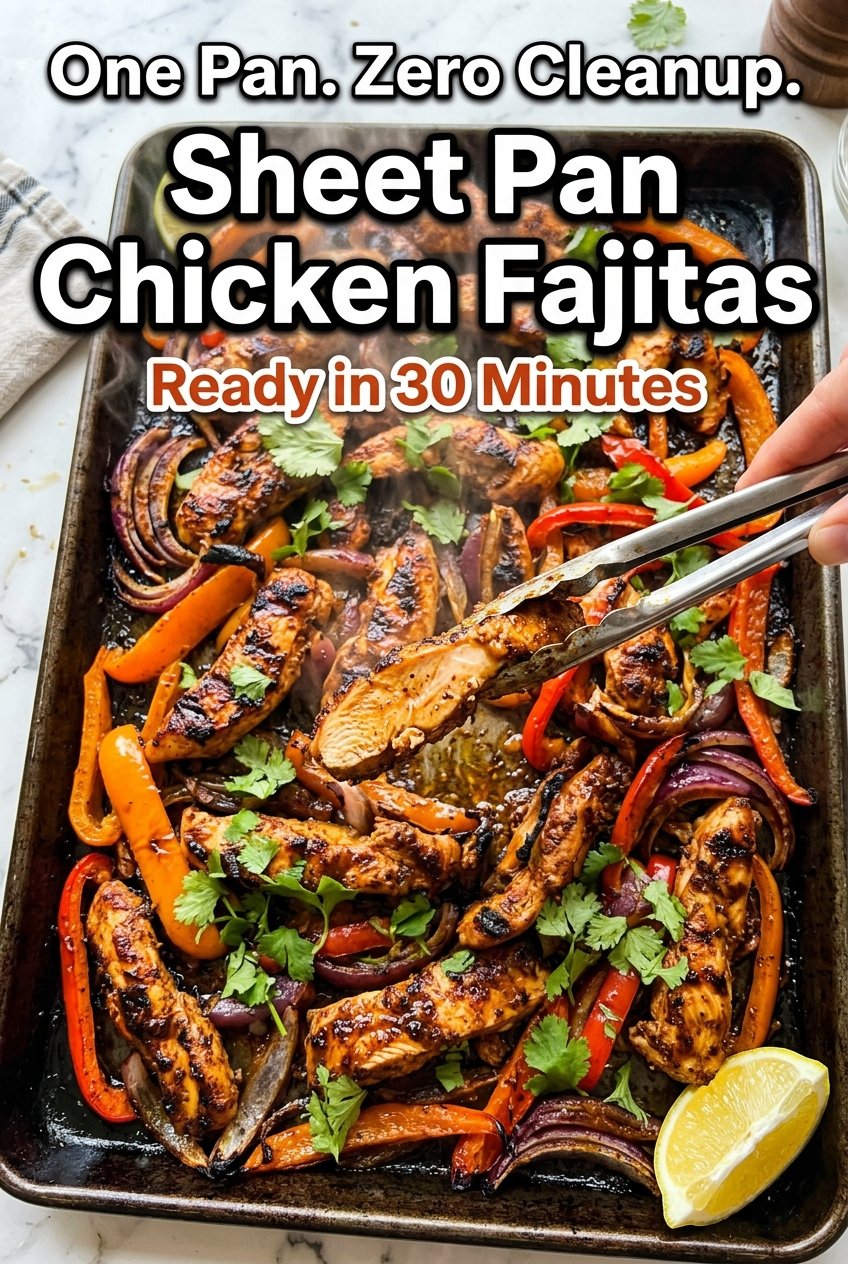
Sheet Pan Chicken Fajitas
Ingredients
Equipment
Method
- Preheat the oven to 425°F (220°C) and line a large sheet pan with foil or parchment.
- Whisk together olive oil, chili powder, cumin, smoked paprika, garlic powder, onion powder, oregano, salt, black pepper, and lime juice in a large bowl until combined.
- Add chicken strips to the marinade and toss well to coat.
- Let the chicken sit for 10 minutes while you prep the vegetables.
- Spread sliced red bell pepper, yellow bell pepper, green bell pepper, and red onion across the sheet pan in an even layer.
- Drizzle the vegetables with 1 tbsp olive oil and toss lightly to coat.
- Nestle the marinated chicken strips over and around the vegetables in a single layer, avoiding crowding.
- Roast at 425°F (220°C) for 20–25 minutes, until chicken is cooked through and the peppers and onions are soft with slightly charred edges.
- Broil for 2–3 minutes at the end for extra char on the chicken and veggies if desired.
- Warm the small flour tortillas over a gas flame or in a dry skillet for about 30 seconds per side until pliable.
- Pile chicken and vegetables into tortillas and serve immediately with sour cream, sliced avocado or guacamole, fresh cilantro, salsa, and lime wedges.
