
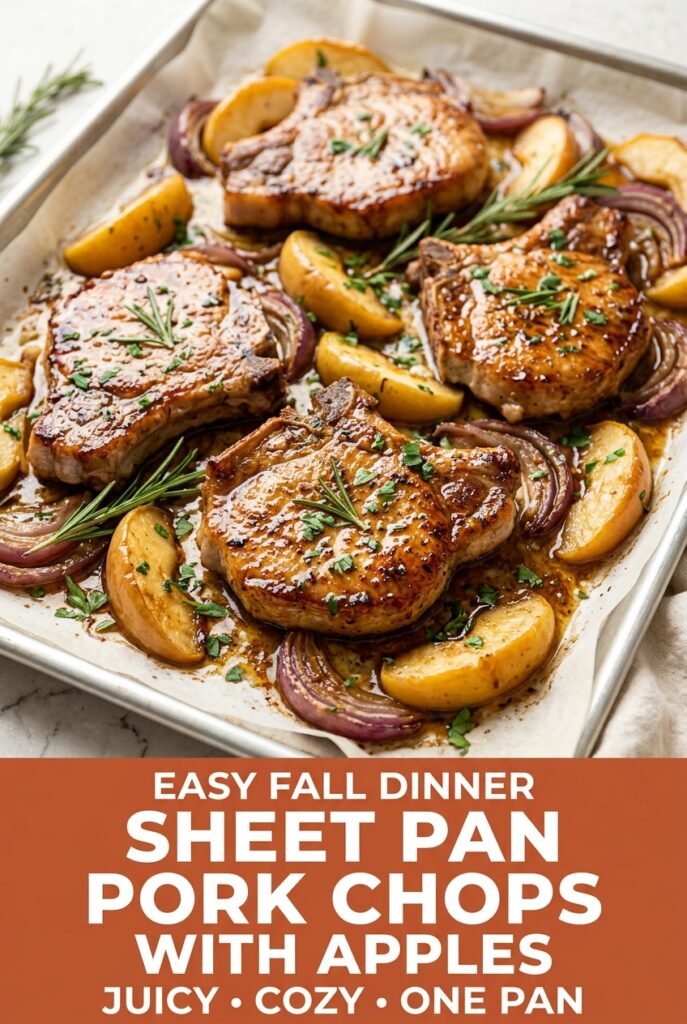
Sheet Pan Pork Chops with Apples and Onions
Juicy pork chops, soft sweet apples, and onions that go fully golden at the edges make this sheet pan dinner feel a lot more special than the effort it takes.…
Tip: save now, read later.
Juicy pork chops, soft sweet apples, and onions that go fully golden at the edges make this sheet pan dinner feel a lot more special than the effort it takes. The pork stays savory and well-seasoned, the apples turn tender without collapsing, and the onions pick up just enough caramelization to tie everything together. It’s the kind of dinner that lands on the table with a full, cozy flavor and barely any cleanup.
What makes this version work is the balance in the seasoning mix. Dijon gives the pork a sharp backbone, maple syrup helps the apples and onions roast into a glossy finish, and apple cider vinegar keeps the whole pan from tasting flat or overly sweet. Bone-in chops also give you more forgiveness in the oven, which matters when you’re roasting fruit and onions in the same pan.
Below, I’m walking through the small details that keep the pork juicy and the apples intact, plus a few smart swaps if you need to work with what’s already in your kitchen.
The pork came out juicy and the apples held their shape instead of turning to mush. I loved that the onions got sweet and browned right on the same pan, and the glaze had just enough tang to keep it from being too heavy.
Sheet Pan Pork Chops with Apples and Onions earns its spot on the weeknight list with juicy pork, caramelized onions, and tender apples in one pan.

The Trick to Keeping Pork Chops Juicy While the Apples Roast
Sheet pan pork chops go dry when they spend too long chasing caramelization. Apples and onions need time to soften and brown, but pork chops only need to reach 145°F and then rest. The fix is to roast everything together until the pork is nearly there, then use the final few minutes to finish the fruit and onions without pushing the meat past the line.
Bone-in chops help here because the bone slows down the cooking just enough to buy you a little forgiveness. The other thing that matters is thickness. Thin chops cook too fast and dry out before the apples have any color. A full 1-inch chop gives you a better window, and that’s what keeps this dinner from turning into roast pork with sad, pale fruit on the side.
- Bone-in pork chops — These stay juicier than boneless chops and handle the oven heat better. If you only have boneless, keep an eye on the temp and start checking early, since they can overcook fast.
- Honeycrisp apples — They hold their shape and stay pleasantly sweet after roasting. Use another firm apple like Fuji or Pink Lady if needed, but avoid soft apples that collapse into applesauce.
- Dijon mustard — This sharpens the glaze and helps the seasoning cling to the meat. It doesn’t make the dish taste mustardy; it just keeps the pan sauce from tasting one-note.
- Apple cider vinegar — A small amount keeps the maple and apples from becoming cloying. Lemon juice can stand in, but vinegar gives a rounder, more fitting bite.
How to Roast Everything So the Pork Finishes With the Fruit
Building the Glaze
Whisk the olive oil, Dijon, maple syrup, vinegar, and spices until the mixture looks smooth and a little loose. That texture matters because a thick paste won’t brush evenly over the pork or coat the apples well. If the mustard looks separated at first, keep whisking for a few seconds longer until it comes together.
Coating the Pan
Lay the pork chops, apples, and onions in a single layer so the heat can move around them instead of trapping steam. Brush the pork with half the glaze and toss the apples and onions with the rest. Crowding the pan is the fastest way to lose browning, so if everything looks piled up, split it across two pans.
The First Roast
Roast at 425°F for about 20 minutes, then flip the pork and stir the apples and onions. You’re looking for the edges of the apples to soften and the onions to start turning translucent with a little color. If the pan looks dry around the 15-minute mark, don’t add water; the fruit will release juice as it heats.
Finishing to Temperature
Continue roasting until the pork hits 145°F in the thickest part and the apples are tender with browned edges. Pull the pan as soon as the chops reach temp, because carryover heat will finish the job while they rest. Let the pork sit for 5 minutes before serving so the juices stay in the meat instead of running onto the cutting board.
Make It With Boneless Pork Chops
Boneless chops work, but they cook faster and dry out sooner than bone-in chops. Start checking the temperature a few minutes early and pull them the moment they hit 145°F. You’ll lose a little forgiveness, but the flavor and glaze still work the same way.
Dairy-Free and Naturally Gluten-Free
This recipe already fits both of those needs as written. Just check your Dijon mustard label if you’re cooking for someone who needs strict gluten-free ingredients, since brands can vary. The roasting method doesn’t need any changes.
Swap the Apples for Pears
Firm pears can stand in for apples if that’s what you have, but they soften a little faster and taste more delicate. Use them only if they’re still fairly firm, and expect a gentler sweetness in the finished pan. The vinegar in the glaze helps keep the dish from turning too soft or sugary.
Storage and Reheating
- Refrigerator: Store leftovers in an airtight container for up to 3 days. The apples will soften a bit more, but the flavor holds up well.
- Freezer: The pork freezes reasonably well, but the apples and onions lose texture after thawing. Freeze only if you’re okay with a softer result, and pack everything tightly to limit freezer burn.
- Reheating: Warm leftovers in a 300°F oven, covered loosely with foil, until the pork is just heated through. High heat dries out the chops fast, and the microwave tends to push the apples into mush.
Questions I Get Asked About This Recipe
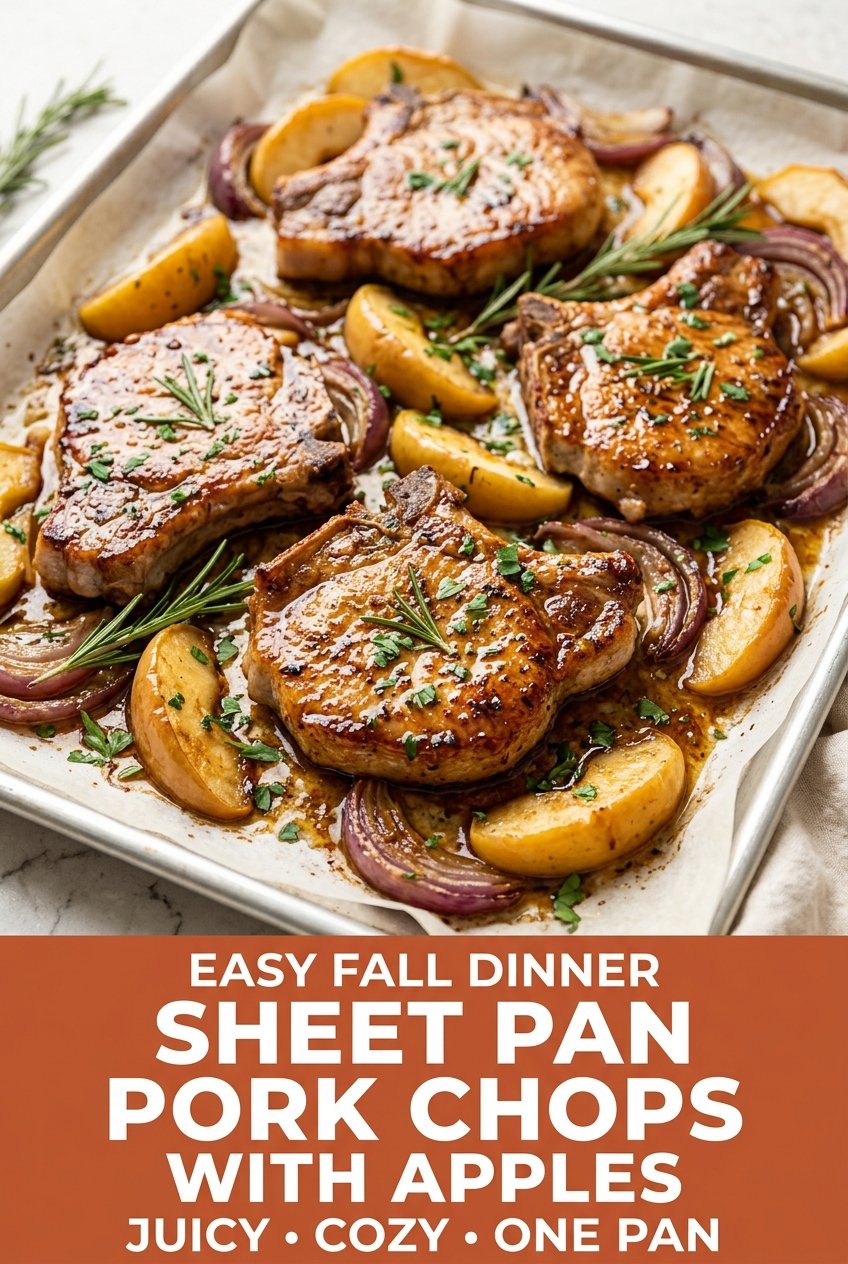
Sheet Pan Pork Chops with Apples and Onions
Ingredients
Equipment
Method
- Preheat the oven to 425°F and line a large sheet pan with parchment paper or lightly grease it (visual cue: oven fully preheated before baking).
- In a small bowl, whisk together olive oil, Dijon mustard, maple syrup, apple cider vinegar, garlic powder, smoked paprika, salt, black pepper, rosemary, and thyme until smooth (visual cue: seasoning mixture looks evenly colored).
- Arrange the pork chops, apple wedges, and sliced onion on the prepared sheet pan in an even layer (visual cue: apples and onions have space around them).
- Brush the pork chops with half of the seasoning mixture and drizzle the remaining mixture over the apples and onions.
- Toss the apples and onions gently to coat them evenly (visual cue: apples and onions look glossy with seasoning).
- Roast at 425°F for 20 minutes (visual cue: pork is starting to brown and apples soften at the edges).
- Flip the pork chops and stir the apples and onions (visual cue: onions look more translucent and caramelizing).
- Continue roasting at 425°F for 8–12 minutes, until the pork reaches an internal temperature of 145°F and the apples are tender with lightly caramelized edges (visual cue: juices run slightly clear and apples show golden-brown edges).
- Remove from the oven and let the pork chops rest for 5 minutes before serving (visual cue: meat relaxes and juices settle).
- Sprinkle with fresh parsley and serve the pork chops alongside the roasted apples and onions (visual cue: parsley adds a bright green finish).
