

Soft Caramel Apple Cookies with Chewy Caramel Bits
When diced apple softens in the skillet, the butter picks up a warm cinnamon-apple smell before there’s even any dough to bake. The first time I made these, I was…
Tip: save now, read later.
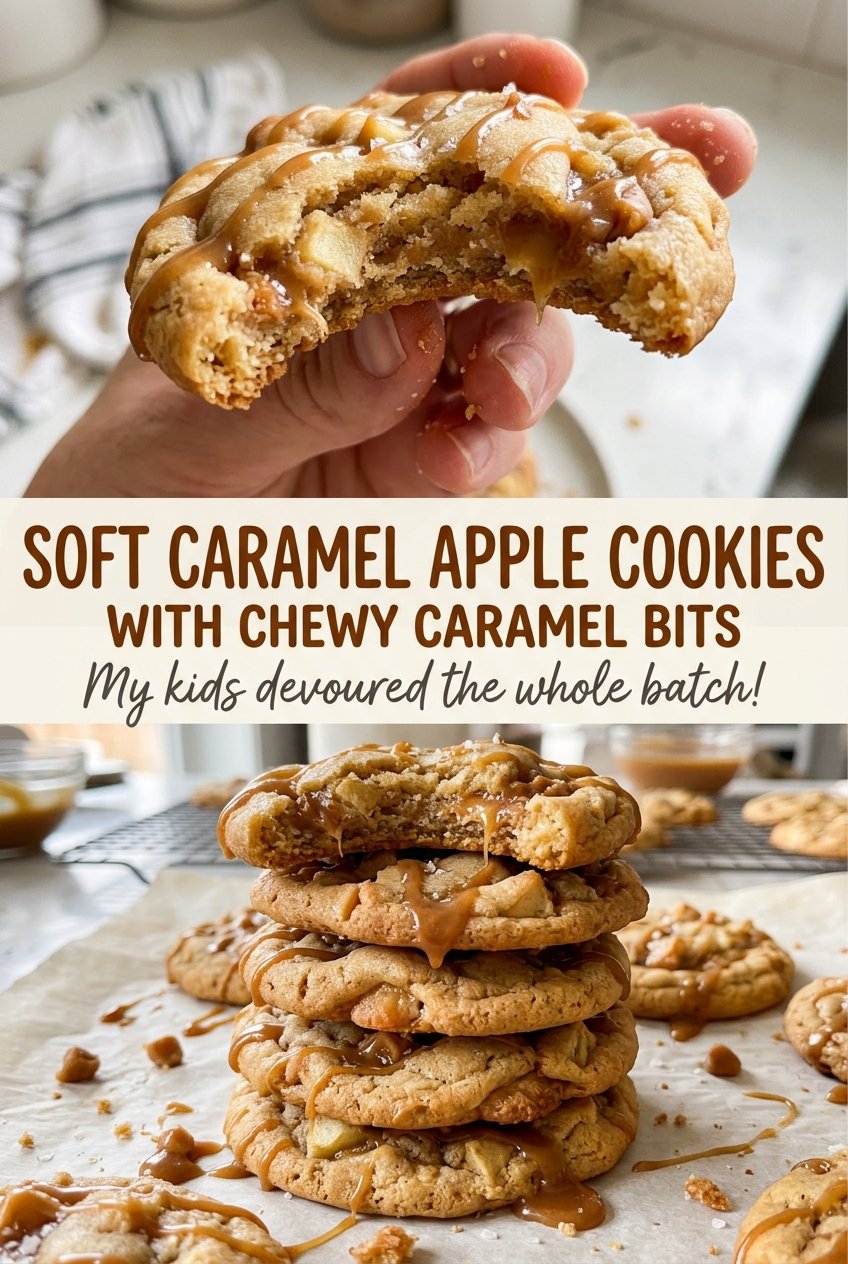
When diced apple softens in the skillet, the butter picks up a warm cinnamon-apple smell before there’s even any dough to bake. The first time I made these, I was most surprised by how much the chewy caramel bits change each bite: you get a soft cookie, a tender piece of apple, then a little caramel chew. These soft caramel apple cookies with chewy caramel bits make 24 cookies, and they’re a lovely way to use one Granny Smith without turning the whole batch into an apple cake.
The apples are cooked in butter first, then cooled before they go into the dough. That gives you tender little pieces instead of raw, crisp chunks, and the brown sugar keeps the cookie centers soft while the edges turn lightly golden. I like the mix of tart apple and sweet caramel best while the cookies are just cool enough to pick up, with the centers still tender.
Kitchen Note
Let the cooked apple cool completely before folding it into the dough. Warm apple softens the butter, and the dough gets harder to handle before it has a chance to chill.
Save these soft caramel apple cookies for a cozy baking day: tender cinnamon dough, little apple pieces, and chewy caramel bits in every batch.
Why the Skillet Apples Need to Leave the Pan Nearly Dry
Apple pieces release moisture as they cook, and that extra liquid is the difference between a dough with distinct tender bits and one that feels damp and loose. I cook the diced Granny Smith in a little butter until it’s tender and the skillet is nearly dry. The apples don’t need to brown; the goal is to soften them and cook off the liquid they’ve given up.
That brief skillet step also concentrates the apple flavor. Raw apple pieces release moisture into the dough as the cookies bake, which can make the texture less predictable. Once the cooked apple is cool, it folds into the dough without warming the softened butter. Then the 30-minute chill firms the dough, making the rounded portions easier to scoop and helping the cookies bake with defined edges.
What the Granny Smith and Chewy Caramel Bits Bring to the Dough

- Granny Smith apple — Its tartness keeps the caramel and brown sugar from making the cookies taste one-note sweet. Choose a firm apple that holds its shape when diced; a softer, overripe apple is more likely to break down while cooking. Peel and cut it into small, even pieces so each cookie gets tender apple throughout.
- Chewy caramel bits — These are made to stay as little chewy pockets in the cookie instead of turning into a thin sauce. Use the chewy kind rather than caramel sauce, which would add liquid to the dough. The bits don’t need any prep before folding in.
- Unsalted butter — The tablespoon melted in the skillet carries the apple flavor, while the softened butter creams with the sugars to build the dough. Softened means pliable but not melted; overly warm butter won’t cream the same way and can leave the dough slack.
- Brown sugar and granulated sugar — Packed light brown sugar gives the cookies their soft, chewy texture and a gentle molasses note. Granulated sugar balances it and helps the edges bake up lightly golden. Keep the brown sugar packed when measuring.
- All-purpose flour — It gives the cookies enough structure to hold the apple and caramel bits. Stir the flour mixture in only until the dry streaks disappear; working it longer can make the cookies tougher.
- Cinnamon and vanilla — Cinnamon gives the apple a familiar warm-spice note, while vanilla rounds out the brown sugar and caramel. Fresh, fragrant cinnamon makes a noticeable difference here; the vanilla extract doesn’t need to be a specialty brand.
From Skillet Apples to Soft, Set Edges
Cook the Apple Until the Skillet Is Nearly Dry
Melt the tablespoon of butter in a 10-inch skillet over medium heat, then add the peeled, cored apple cut into 1/4-inch dice. Stir often as it cooks for 5–7 minutes, until the pieces are tender and the pan is nearly dry. If liquid is still pooling, give the apple a little more time rather than adding it wet to the dough. Transfer it to a plate and let it cool completely, about 20 minutes.
Whisk the Dry Ingredients and Cream the Sugars
Whisk the flour, baking soda, cinnamon, and kosher salt together in a medium bowl so the leavening and spice are evenly distributed. In a large bowl, beat the softened butter with both sugars until creamy, about 2 minutes. The mixture should look smooth and cohesive, not like separate butter chunks and sugar. Beat in the room-temperature egg and vanilla until combined.
Fold, Chill, and Portion
Mix the flour mixture into the butter mixture just until no dry streaks remain. Fold in the completely cooled apple and chewy caramel bits, taking care not to mash the apple pieces. Cover the dough and chill it for 30 minutes; this firms it enough to scoop without the portions slumping as you work. Heat the oven to 350°F and line a large baking sheet with parchment paper.
Bake Until the Centers Still Look Soft
Scoop rounded 2-tablespoon portions onto the prepared sheet, leaving about 2 inches between them, and bake in batches for 11–13 minutes. Look for edges that are set and lightly golden while the centers still look soft; waiting for the centers to look completely firm can take the cookies past their tender stage. Let them cool on the baking sheet for 5 minutes, then move them to a wire rack to cool.
Easy Changes for These Apple-Caramel Cookies
Use a Firm, Tart Baking Apple
If you don’t have a Granny Smith, another firm tart baking apple works in the same way. A sweeter apple will make the finished cookies less tangy, and a soft apple can lose its shape more readily in the skillet.
Make a Gluten-Free Batch
Replace the all-purpose flour with a cup-for-cup gluten-free baking flour blend that contains xanthan gum, and use gluten-free chewy caramel bits. The cookies may be a little more delicate, so let them complete their 5-minute rest on the baking sheet before moving them.
Storage and Reheating
- Refrigerator: Keep cooled cookies in an airtight container for up to 4 days. They’ll feel firmer when cold; let one sit briefly at room temperature for a softer bite.
- Freezer: Freeze fully cooled cookies in an airtight container for up to 2 months, separating layers with parchment so they don’t stick together.
- Reheating: Microwave a cookie for about 8–10 seconds to soften it. Avoid heating it too long, since the caramel can get very hot.
Questions That Come Up When Baking These Cookies
Soft Caramel Apple Cookies with Chewy Caramel Bits
Ingredients
Equipment
Method
- Melt 1 tablespoon of the butter in a 10-inch skillet over medium heat.
- Add the diced apple and cook for 5–7 minutes, stirring often, until tender and the pan is nearly dry.
- Transfer the apple to a plate and let it cool completely, about 20 minutes.
- Whisk the flour, baking soda, cinnamon, and salt together in a medium bowl.
- Beat the remaining 1/2 cup softened butter with the brown sugar and granulated sugar in a large bowl until creamy, about 2 minutes.
- Beat in the egg and vanilla until combined.
- Mix in the flour mixture just until no dry streaks remain.
- Fold in the cooled apple and caramel bits.
- Cover and chill the dough for 30 minutes.
- Heat the oven to 350°F.
- Line a large baking sheet with parchment paper.
- Scoop rounded 2-tablespoon portions of dough onto the baking sheet, spacing them about 2 inches apart.
- Bake in batches for 11–13 minutes, until the edges are set and lightly golden while the centers still look soft.
- Let the cookies cool on the baking sheet for 5 minutes.
- Transfer the cookies to a wire rack to cool.
