

Sourdough Zucchini Bread
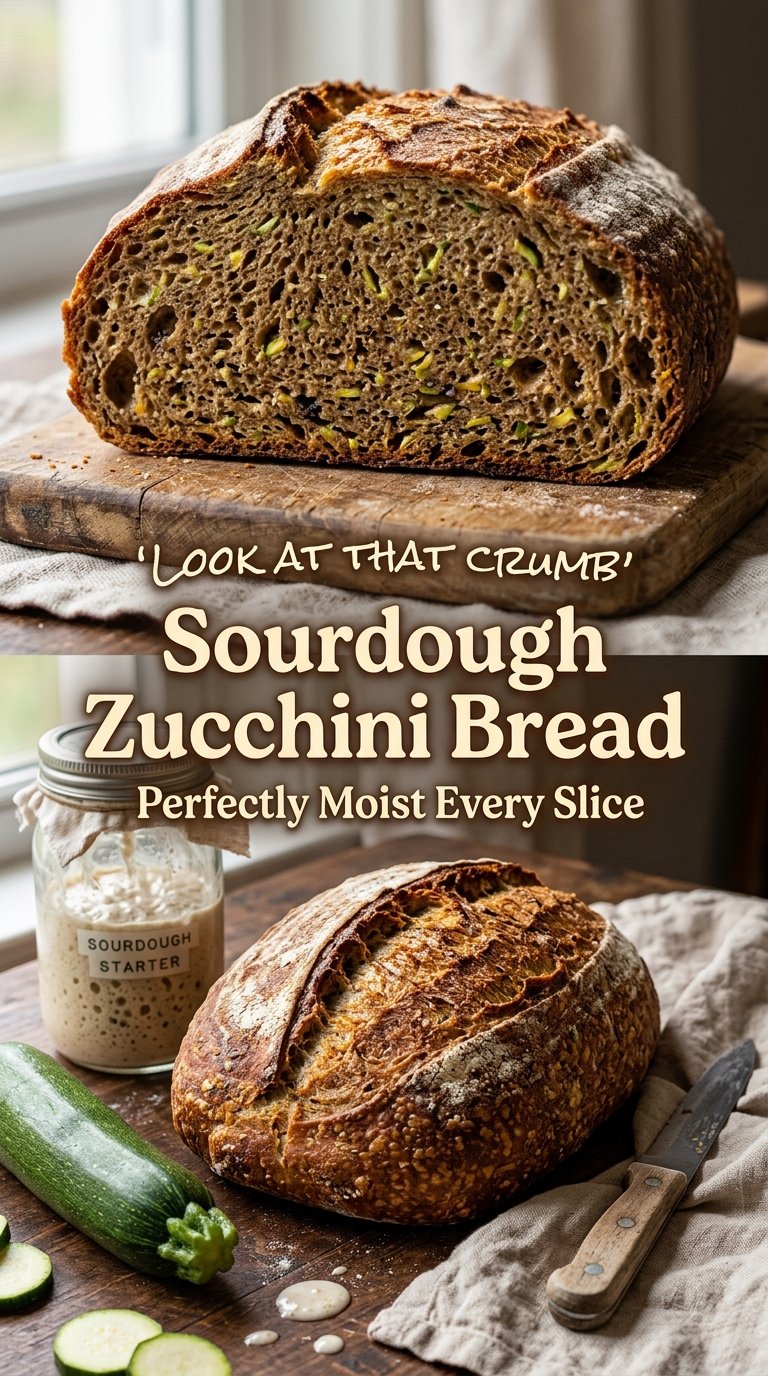
Sourdough zucchini bread bakes up with a soft, tender crumb, a lightly tangy backbone, and just enough cinnamon warmth to keep every slice interesting. The zucchini disappears into the loaf…
Tip: save now, read later.
Sourdough zucchini bread bakes up with a soft, tender crumb, a lightly tangy backbone, and just enough cinnamon warmth to keep every slice interesting. The zucchini disappears into the loaf in the best way, leaving behind moisture without turning the bread heavy or wet. It’s the kind of bake that feels practical and a little bit special at the same time, especially when you’ve got a bowl of discard waiting to be used.
What makes this version work is the balance. The sour cream, butter, and zucchini keep the crumb rich and plush, while the baking soda and baking powder lift everything so the loaf doesn’t sink under all that moisture. The discard adds flavor more than strength, so you still get a quick-bread texture instead of a dense sourdough-style loaf. Squeezing the zucchini first matters here; skip that step and the center can turn gummy before the top finishes browning.
Below, you’ll find the one prep detail that saves this loaf, the ingredient swaps that hold up, and the storage notes that keep each slice tasting fresh for days.
The loaf was moist without being soggy, and the cinnamon-vanilla flavor got even better the next day. I squeezed the zucchini well like you said, and the center baked up perfectly instead of sinking.
Save this sourdough zucchini bread for a soft, tangy loaf with a perfect crumb and no wasted discard.
The Zucchini Needs to Be Dry Before It Ever Hits the Bowl
The biggest mistake with zucchini bread is treating the vegetable like it’s just there for bulk. Zucchini holds a lot of water, and if you grate it straight into the batter without squeezing it, the loaf can bake up wet in the middle and collapse after cooling. You want shreds that still look fresh and green, but don’t drip when you press them in a towel.
The other thing worth paying attention to is how the batter looks when it comes together. This is a quick bread, not a mixer project. Stir until the flour disappears, then stop. Overmixing turns the crumb tight and chewy, and with discard in the batter, that stiffness shows up fast.
What Each Ingredient Is Actually Doing in This Loaf
- Sourdough discard — This adds the subtle tang that keeps the loaf from tasting flat. It won’t replace the leavening power in the recipe, so use discard that’s unfed and room temperature if possible.
- Shredded zucchini — This is the moisture source that gives the bread its soft crumb. Squeeze it well after grating; that step matters more than the exact size of the shreds.
- Sour cream — This deepens the texture and adds richness without making the loaf greasy. Plain Greek yogurt works in a pinch, but the bread will be a little less tender and a touch less rich.
- Melted butter — Butter gives the loaf its flavor and helps it stay soft after baking. Let it cool before mixing so it doesn’t scramble the eggs.
- Brown sugar and granulated sugar — Brown sugar brings moisture and a light caramel note, while granulated sugar helps the top bake with a delicate crust. Using both gives the loaf better balance than one sugar alone.
- Cinnamon and nutmeg — These spices don’t make the bread taste like dessert; they round out the tang from the discard and the earthiness of the zucchini. Freshly opened cinnamon makes a noticeable difference here.
- Pecans or walnuts — Optional, but they add a good contrast against the soft crumb. If you leave them out, the loaf is still complete; if you use them, toast them first for better flavor.
Building the Batter Without Crushing the Crumb
Mix the dry ingredients first
Whisk the flour, baking soda, baking powder, salt, cinnamon, and nutmeg together before anything else goes in. That keeps the leaveners and spices evenly distributed, which matters in a batter that gets mixed only briefly. If the soda lands in one spot, you’ll taste it in the finished loaf.
Bring the wet ingredients together gently
Whisk the melted butter, sugars, eggs, vanilla, sour cream, and discard until the mixture looks smooth and glossy. The batter should look cohesive, not fluffy. Once the zucchini goes in, it will loosen slightly, which is exactly what you want.
Stop as soon as the flour disappears
Fold the dry ingredients into the wet mixture just until no streaks of flour remain, then add the nuts if you’re using them. A few small lumps are fine. If you keep stirring to chase absolute smoothness, the loaf bakes up tougher and drier than it should.
Bake until the center is set, not just the top
Pour the batter into the pan, add coarse sugar if you like a crackly top, and bake until a toothpick comes out clean from the center. The top should be deep golden and spring back lightly when touched. If the center still looks glossy when the edges are already browned, give it more time under foil so the middle can catch up without overbaking the crust.
Three Good Ways to Adapt This Loaf
Make it dairy-free without losing the tender crumb
Swap the butter for melted coconut oil or a neutral dairy-free butter and use a thick dairy-free yogurt in place of sour cream. The loaf will still stay moist, though the flavor shifts a little less rich and a little more clean.
Use whole wheat flour for a heartier slice
Replace up to half the all-purpose flour with white whole wheat flour. More than that starts to dry the loaf out and makes the crumb heavier, but a partial swap gives you a nuttier flavor that works well with the cinnamon and zucchini.
Skip the nuts, or swap in chocolate chips
The nuts are there for texture, not structure, so the loaf bakes fine without them. Chocolate chips make it sweeter and more dessert-like, but they also add pockets of melted richness that soften the cinnamon profile.
Storage and Reheating
- Refrigerator: Store wrapped or in an airtight container for up to 5 days. The crumb firms up a little in the fridge, but the flavor stays good.
- Freezer: This loaf freezes well. Wrap slices individually, then place them in a freezer bag for up to 3 months so you can pull out only what you need.
- Reheating: Warm slices in the toaster oven or a low oven until just heated through. Microwaving works in a pinch, but too much time makes the texture rubbery instead of soft.
Questions I Get Asked About This Recipe
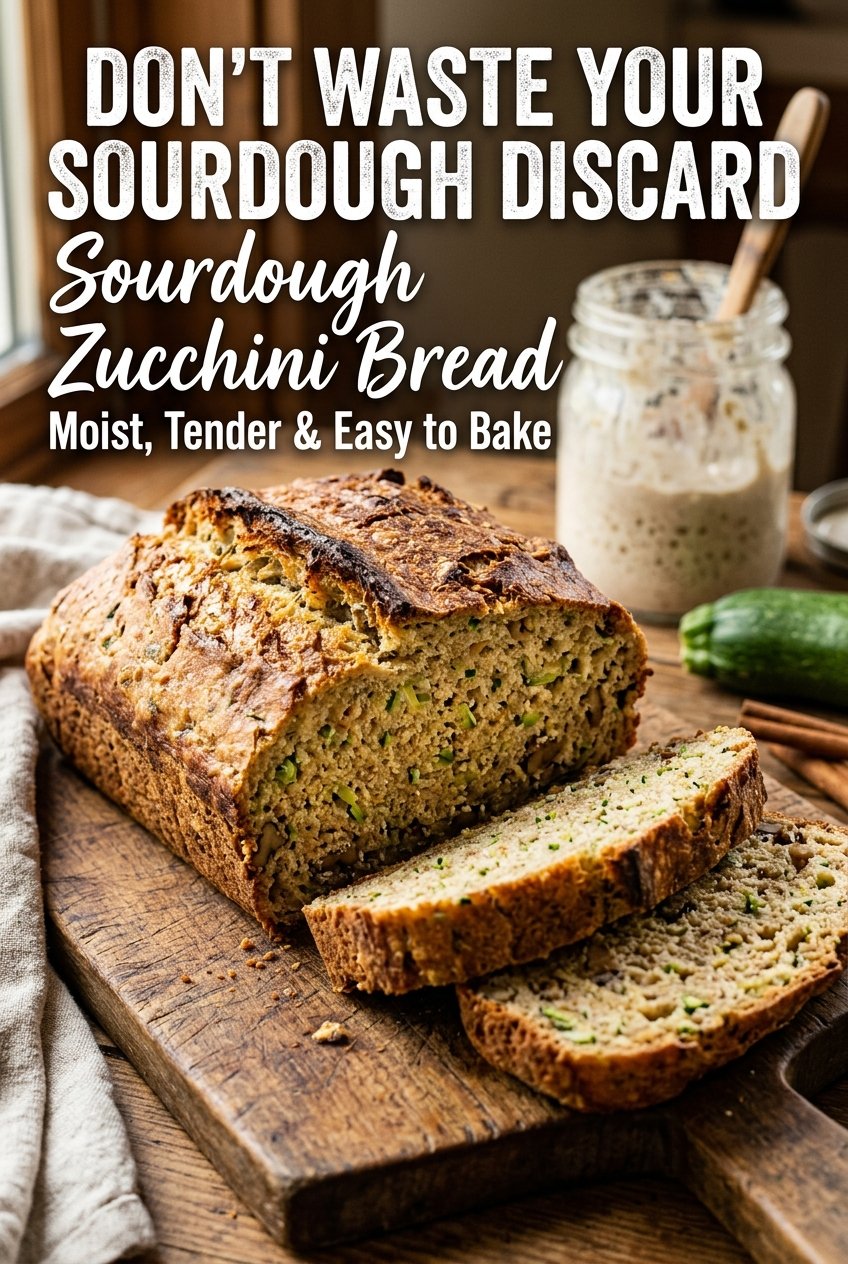
Sourdough Zucchini Bread
Ingredients
Equipment
Method
- Preheat the oven to 350°F (175°C). Look for the preheat indicator to confirm the oven is fully warmed.
- Grease and line a 9×5-inch loaf pan with parchment paper. Ensure the parchment covers the bottom and up the sides so the loaf lifts out cleanly.
- In a large bowl, whisk together all-purpose flour, baking soda, baking powder, salt, cinnamon, and nutmeg. Whisk until the spices and leaveners are evenly distributed with no visible clumps.
- In another bowl, whisk melted and cooled unsalted butter, light brown sugar, granulated sugar, eggs, vanilla extract, sour cream, and sourdough discard until smooth. Stop when the mixture looks glossy and cohesive.
- Fold in the shredded zucchini until evenly distributed. You should see green zucchini shreds throughout the batter.
- Gradually stir the dry ingredients into the wet ingredients until just combined. Stop as soon as no dry flour pockets remain to keep the loaf tender.
- Fold in chopped pecans or walnuts if using. Mix just enough so the nuts are scattered, not overworked.
- Pour the batter into the prepared loaf pan and sprinkle with coarse sugar if desired. Spread into an even layer so the loaf bakes uniformly.
- Bake for 55–65 minutes at 350°F (175°C), until a toothpick inserted into the center comes out clean. The top should look set and lightly browned, with a springy feel in the middle.
- Cool the loaf for 15 minutes before removing from the pan. Let it firm up so slices hold together when cut.
- Slice and serve warm or at room temperature. Use a gentle sawing motion for clean, moist slices.
