
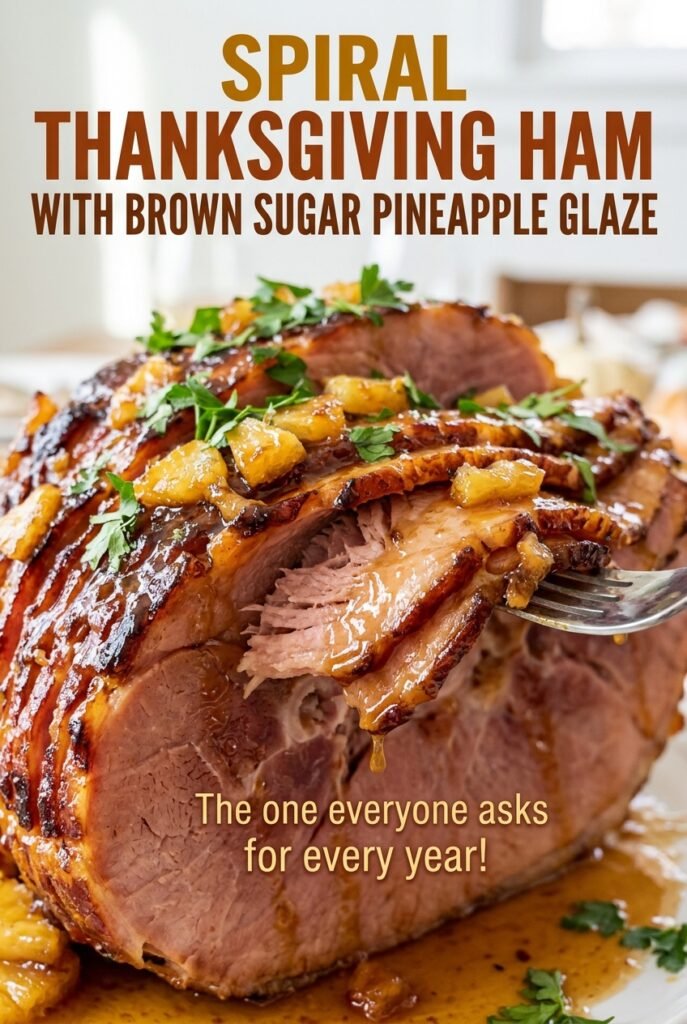
Spiral Thanksgiving Ham with Brown Sugar Pineapple Glaze
The best moment comes when the foil lifts and the pineapple glaze hits the warm ham: it settles into the spiral cuts instead of sliding straight off. I keep the…
Tip: save now, read later.
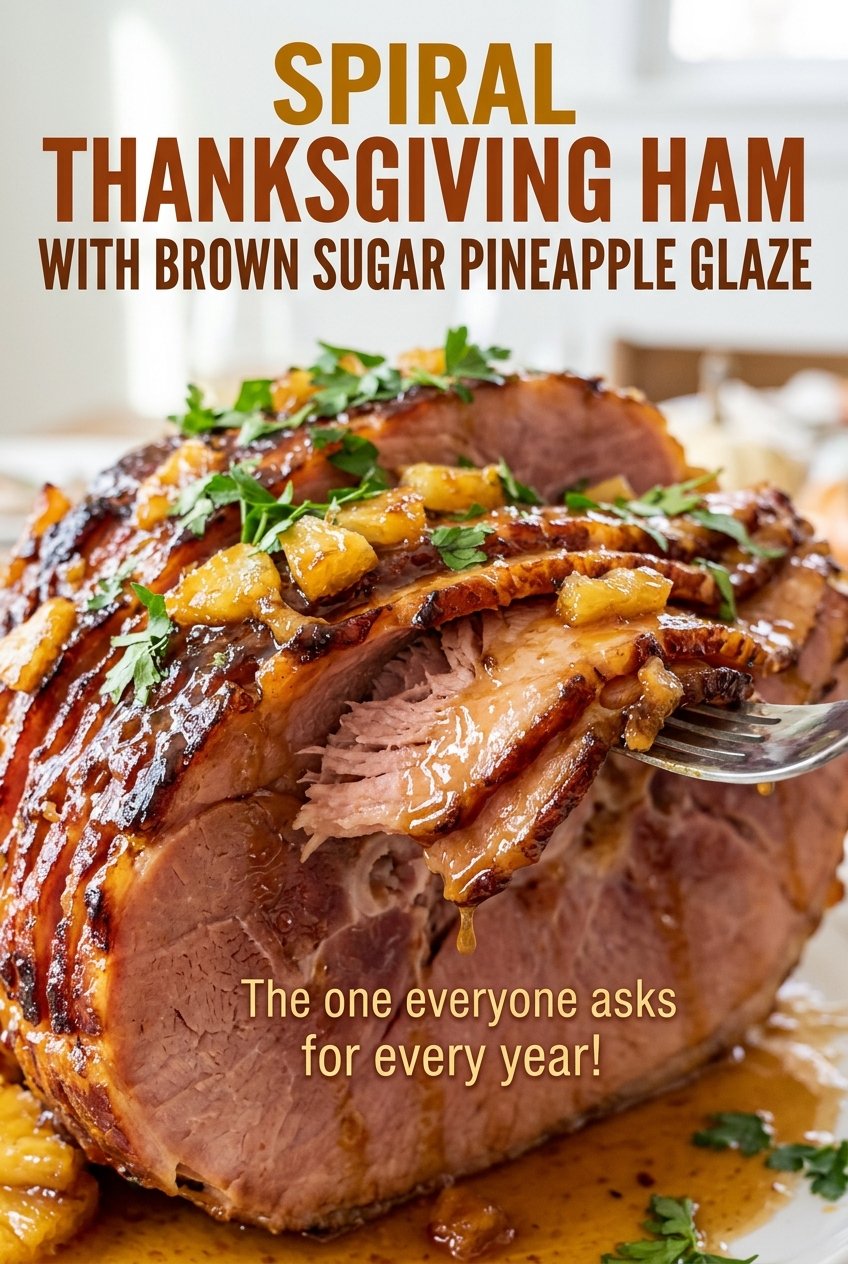
The best moment comes when the foil lifts and the pineapple glaze hits the warm ham: it settles into the spiral cuts instead of sliding straight off. I keep the oven low while the ham warms, then brush on the glaze near the end. That timing gives this Spiral Thanksgiving Ham with Brown Sugar Pineapple Glaze a glossy finish without leaving the sugary coating in the oven for the entire cook.
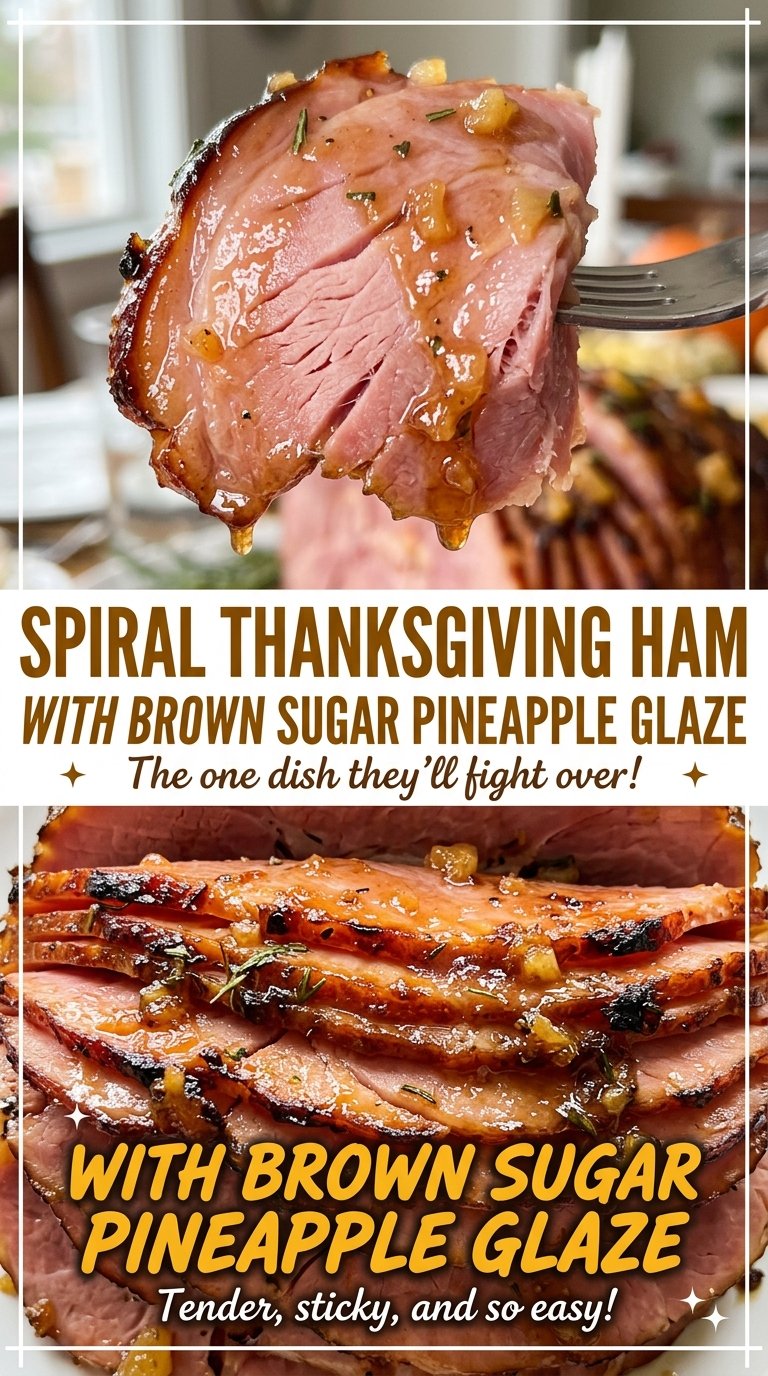
Spiral-cut ham is convenient, but those thin slices can dry out if they’re heated too aggressively. Baking it cut side down under a tight foil cover helps protect the exposed edges. The pineapple juice, brown sugar, Dijon, cider vinegar, and cloves simmer into a sweet-tart glaze, while a little cornstarch gives it enough body to cling to the meat. Each slice comes out tender, with a shiny coat of glaze tucked between the layers.
Kitchen Note
When you check the ham, keep the thermometer in the thickest part of the meat and clear of the bone. A bone can give you a misleading reading, so shift the probe slightly if you’re unsure what it’s touching.
Save this brown sugar pineapple-glazed spiral ham for a centerpiece with tender slices and a glossy, sweet-tart finish.
Why This Ham Gets Glazed Near the End, Not at the Start
A spiral ham has plenty of cut edges, and those edges are the first places to lose moisture. That’s why I warm the ham covered before the glaze goes on. The foil holds in moisture while the center heats gently, and the cut side-down position shields some of the exposed surface from the oven’s dry heat.
The glaze also behaves better when it’s added late. Brown sugar can darken and turn sticky during a long bake, while the pineapple and vinegar bring enough sweetness and acidity that the coating doesn’t need hours on the ham to taste present. Brushing in two rounds gives it time to settle between the slices, then builds a glossy finish on the outside. Keep the ham covered until it reaches about 120°F, then uncover it for the glazed finish; the center reaches 140°F as the coating turns shiny.
That sequence matters more than trying to make the glaze extra thick. If it goes on too early, the sugar has a longer stretch in the oven to darken while the ham continues warming. A short, uncovered finish keeps the glaze visible and lets you judge its color as it cooks.
What Pineapple Juice and Cornstarch Each Bring to This Ham
- Fully cooked, bone-in spiral-cut ham — Choose one labeled fully cooked, not cook-before-eating. The spiral cut makes serving easy, but it also exposes the slices, which is why the covered, gentle warm-up matters.
- Pineapple juice and light brown sugar — Pineapple juice supplies the glaze’s fruity tang, while packed light brown sugar gives it sweetness and a soft caramel note. Keep the juice rather than replacing it with water; the glaze would lose its fruit character and balance.
- Dijon mustard and apple cider vinegar — Dijon adds a savory sharpness that keeps the glaze from tasting one-note sweet. The vinegar brings a clean tang. Both are worth keeping in the mix; leaving either out makes the glaze less balanced.
- Ground cloves — A small amount gives the glaze its warm, gently spiced edge. Measure carefully, since cloves can take over quickly; there isn’t a direct substitute in this ingredient list.
- Cornstarch and cold water — Stirring these together first makes a smooth slurry that thickens the simmering glaze evenly. Don’t sprinkle dry cornstarch directly into the saucepan, where it can form stubborn lumps.
- Unsalted butter — Stir it in after taking the saucepan off the heat. It rounds out the sharp edges of the glaze and gives the finished coating a smooth sheen.
Warming the Ham and Building a Glossy Pineapple Glaze
Warm the ham gently under foil
Heat the oven to 275°F. Set the ham cut side down in a roasting pan and cover it tightly with foil so the exposed slices don’t dry as the center warms. Bake for 1 to 1 1/2 hours, checking the thickest part until it reaches about 120°F. If the temperature is still below that point, keep heating and check again rather than moving on to the glaze.
Simmer the sweet-tart base
While the ham bakes, combine the pineapple juice, packed light brown sugar, Dijon mustard, apple cider vinegar, and ground cloves in a 2-quart saucepan. Bring the mixture to a simmer and cook for 5 minutes, stirring until the sugar dissolves. It should look uniform, with no visible grains of sugar at the bottom. Keep it at a simmer rather than a hard boil.
Thicken the glaze without lumps
In a small bowl, stir the cornstarch and cold water together until the mixture is smooth. Whisk that slurry into the saucepan and simmer for 1 to 2 minutes, until the glaze thickens. If you see little white flecks or clumps, keep whisking as it simmers; adding the cornstarch dry is what makes lumps likely. Take the pan off the heat and stir in the butter until it melts.
Brush in two layers and let the ham rest
Remove the foil and brush half the glaze over the ham, working some into the spiral cuts. Return it to the oven uncovered for 10 minutes, then brush on the remaining glaze. Bake for another 10 to 20 minutes, until the thickest part reaches 140°F and the surface looks glossy. Rest the ham for 10 minutes before serving so the slices settle and are easier to lift apart.
Small Glaze Changes That Shift the Sweetness and Spice
A gentler clove note
For a milder spice finish, leave out the ground cloves and keep the other glaze ingredients. The pineapple, brown sugar, mustard, and vinegar still make a balanced glaze, just without the warm clove note.
A sharper, less-sweet glaze
To make the glaze taste more tart, shift the balance toward the apple cider vinegar and away from the brown sugar. The result is brighter and less sweet, though it won’t have quite the same caramel-like finish as the balanced version.
Storage and Reheating
- Refrigerator: Refrigerate leftover ham within 2 hours and keep it for 3 to 4 days. The cut edges may firm up as the slices chill.
- Freezer: Freeze leftovers tightly wrapped in portions for up to 1 to 2 months for best quality. Thaw them in the refrigerator before reheating.
- Reheating: Cover the slices and warm them in a 325°F oven until they reach 165°F. Reheating uncovered can dry the thin spiral slices before they’re hot through.
Questions That Come Up When Heating a Spiral Ham
Spiral Thanksgiving Ham with Brown Sugar Pineapple Glaze
Ingredients
Equipment
Method
- Heat the oven to 275°F.
- Place the ham cut side down in a roasting pan and cover tightly with foil.
- Bake until the thickest part reaches about 120°F, 1 to 1 1/2 hours, checking with a thermometer without touching the bone.
- While the ham bakes, combine the pineapple juice, brown sugar, Dijon mustard, apple cider vinegar, and ground cloves in a 2-quart saucepan.
- Bring to a simmer and cook for 5 minutes, stirring until the sugar dissolves.
- Stir the cornstarch and cold water together in a small bowl until smooth.
- Whisk the cornstarch mixture into the saucepan and simmer for 1 to 2 minutes, until thickened.
- Remove the saucepan from the heat and stir in the butter until melted.
- Remove the foil and brush half the glaze over the ham and into the spiral cuts.
- Return the ham to the oven uncovered and bake for 10 minutes.
- Brush the remaining glaze over the ham and bake for 10 to 20 minutes more, until the thickest part reaches 140°F and the glaze is glossy; keep the thermometer clear of the bone.
- Rest the ham for 10 minutes before serving.
