
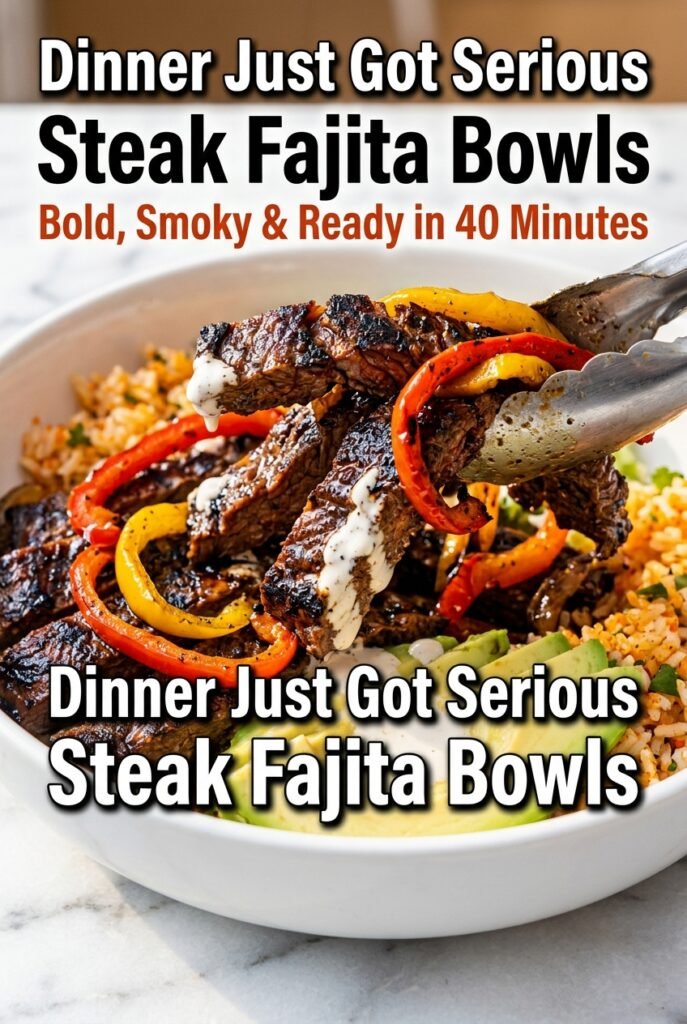
Steak Fajita Bowls
Smoky skirt steak, charred peppers, and onions piled over cilantro-lime rice make these steak fajita bowls the kind of dinner that disappears fast. The steak stays juicy because it gets…
Tip: save now, read later.
Smoky skirt steak, charred peppers, and onions piled over cilantro-lime rice make these steak fajita bowls the kind of dinner that disappears fast. The steak stays juicy because it gets a short, punchy marinade and a hard sear, then it rests before slicing so the juices stay where they belong. The rice brings a bright, fresh base that keeps the bowl from feeling heavy, and the chipotle crema ties everything together with just enough heat to keep each bite interesting.
What makes this version work is balance. Skirt steak loves high heat and quick cooking, so it gets the dark edges you want without turning tough. The vegetables are cooked in the same hot pan, which picks up all the savory bits left behind by the steak. That’s where a lot of the flavor lives, and it’s the reason this bowl tastes like more than the sum of its parts.
Below, I’ve included the small details that matter most: how to keep the steak tender, how to get the peppers properly charred instead of limp, and what to change if you need to make these bowls dairy-free or work with a different cut of beef.
The steak got that perfect char on the outside and stayed pink inside, and the chipotle crema pulled everything together without drowning the rice. My husband said the peppers tasted just like the fajita skillet at our favorite restaurant.
Save these steak fajita bowls for the night you want smoky seared steak, charred peppers, and chipotle crema in one satisfying bowl.
The Seared Steak Problem: Why Fajita Bowls Turn Tough
Skirt steak is built for high heat, not long cooking. The common mistake is treating it like a slow braise cut and leaving it on the heat until the center is fully cooked all the way through. By then, the outer edges have already gone chewy. What you want is a deep crust, a medium-rare center, and a short rest before slicing so the meat stays tender and juicy.
The other failure point is slicing with the grain. Skirt steak has long muscle fibers, and if you cut along them, every bite feels stringy no matter how well you cooked it. Turn the steak and slice it thin across those lines. That one move changes the texture more than almost anything else in the recipe.
- Skirt steak — This cut gives you the right beefy flavor and stays tender when cooked hot and fast. Flank steak works too, but it’s a little leaner, so don’t leave it on the heat as long.
- Lime juice — The acid brightens the marinade and helps season the meat all the way through. It won’t tenderize it deeply in 30 minutes, but it does wake up the beef and the vegetables.
- Smoked paprika and cumin — These do the heavy lifting for that fajita-style warmth. If you only have regular paprika, the bowl will still work, but you’ll lose some of the smoky edge that makes the steak taste charred even before the sear.
- Chipotle sauce in sour cream — This is the finishing move. Sour cream alone is flat here; the chipotle adds smoke and heat, and the cool dairy softens the spice instead of fighting it.
The 20 Minutes That Matter Most in These Steak Fajita Bowls
Marinating Without Overdoing It
Combine the marinade ingredients first, then coat the steak evenly and let it sit for at least 30 minutes. That short soak is enough for the lime, garlic, and spices to season the surface without making the texture mushy. If you go much longer than 4 hours, the acid starts working against you and the steak can lose its clean bite.
Getting a Real Sear on the Steak
Heat the skillet until it’s smoking before the steak goes in. A lukewarm pan steams the meat and leaves you with gray edges instead of a dark crust. Pat the steak lightly before it hits the pan so excess marinade doesn’t sputter and cool the surface down. Two to four minutes per side is the window here, depending on thickness; pull it when it still feels springy and let it rest for 5 minutes before slicing.
Charred Vegetables, Not Soft Ones
Use the same pan after the steak. The brown bits left behind are part of the flavor, and the peppers and onions pick them up as they cook. Keep the heat at medium-high and stir only occasionally so the vegetables can get those dark edges instead of collapsing into a soft pile. The onions should turn glossy and sweet, and the peppers should still have a little bite.
Building the Bowl in the Right Order
Start with rice so it catches the juices from the steak and crema. Add the steak and vegetables while they’re still warm, then finish with avocado, pico de gallo, cheese, and lime. If everything goes in cold, the bowl tastes flat. Warm components on the bottom and cool toppings on top give you the contrast that makes each forkful feel complete.
How to Adapt These Steak Fajita Bowls Without Losing the Point
Make it dairy-free
Skip the sour cream and cheese, then finish with extra avocado and pico de gallo. The bowls still taste rich because the steak, rice, and chipotle seasoning carry plenty of weight on their own. If you want that creamy element back, a dairy-free yogurt with a little lime juice works better than plain plant milk.
Swap in flank steak or sirloin
Flank steak gives you a similar bite, while sirloin is a little milder and more forgiving. Both should still be sliced thin against the grain, and both benefit from a hard sear rather than a longer cook. Sirloin won’t taste quite as deeply beefy as skirt steak, but it’s a good move when that’s what you have.
Make it lower-carb
Replace the rice with cauliflower rice or shredded lettuce, depending on whether you want something warm or crisp. Cauliflower rice soaks up the steak juices better, while lettuce keeps the bowl light and fresh. The rest of the components stay the same, so you don’t lose the fajita character of the dish.
Storage and Reheating
- Refrigerator: Store the steak, vegetables, and rice separately for up to 4 days. The avocado is best sliced fresh, and the rice may firm up a bit in the fridge.
- Freezer: The cooked steak, veggies, and rice all freeze well for up to 2 months if packed airtight. Freeze the crema, avocado, and pico separately or skip them until serving.
- Reheating: Reheat the steak and vegetables gently in a skillet over medium heat or in the microwave at short intervals. Don’t blast the steak on high heat or it’ll turn dry and tough before the center warms through.
Questions I Get Asked About This Recipe
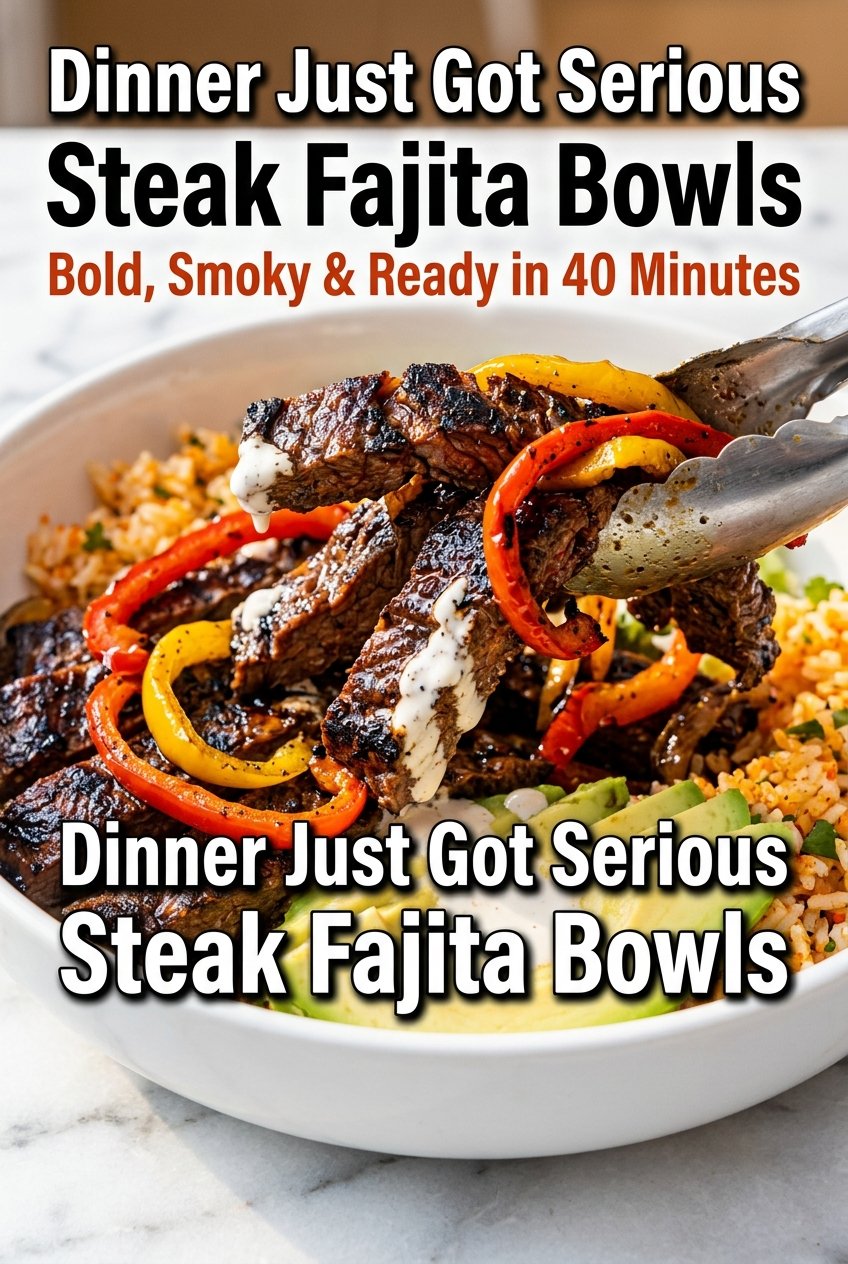
Steak Fajita Bowls
Ingredients
Equipment
Method
- In a zip-lock bag or bowl, combine olive oil, fresh lime juice, garlic cloves, cumin, smoked paprika, chili powder, oregano, salt, and black pepper, then add skirt steak and coat well.
- Marinate at least 30 minutes (up to 4 hours in the fridge) so the flavors soak in.
- Rinse long-grain white rice and cook it in chicken broth according to package directions.
- When the rice is done, fluff with a fork and stir in fresh cilantro, lime juice, and salt, then keep warm.
- Heat a large cast iron skillet over high heat until smoking.
- Remove skirt steak from the marinade, pat lightly, and sear for 3–4 minutes per side until deeply charred and medium-rare inside.
- Let the steak rest for 5 minutes, then slice thin against the grain.
- In the same cast iron skillet over medium-high heat, add olive oil.
- Toss in red bell pepper, yellow bell pepper, green bell pepper, and white onion with cumin and salt, then cook for 6–8 minutes, stirring occasionally, until edges are charred and onions are soft.
- Mix sour cream with chipotle sauce until smooth to make chipotle crema.
- Start bowls with a generous scoop of cilantro-lime rice.
- Layer in sliced skirt steak, charred fajita veggies, avocado slices, pico de gallo, and shredded Monterey Jack cheese.
- Drizzle chipotle crema over the top, squeeze fresh lime wedges, and finish with extra cilantro before serving immediately.
