

Stuffing Balls
When the onion and celery soften in butter, the kitchen starts smelling like stuffing before the bread even reaches the bowl. I like turning the mixture into individual balls because…
Tip: save now, read later.
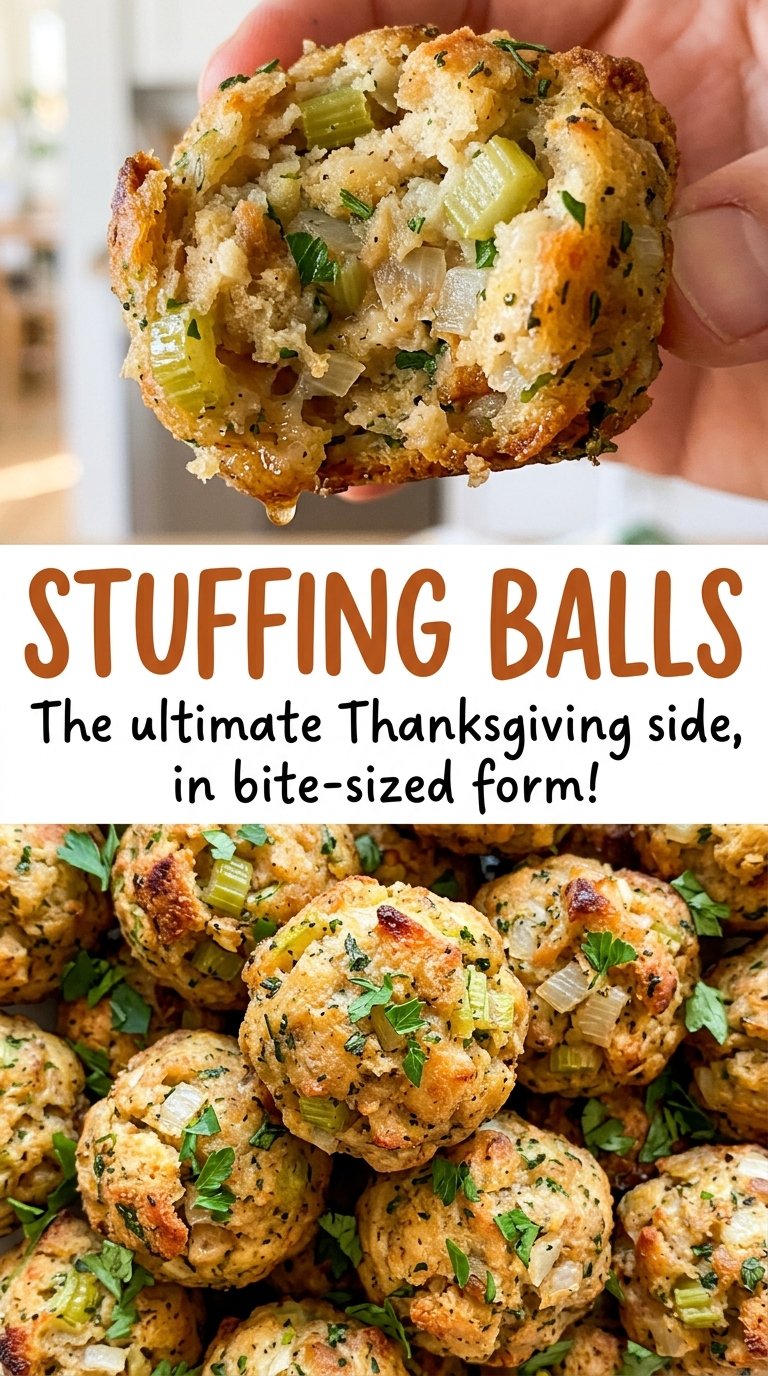
When the onion and celery soften in butter, the kitchen starts smelling like stuffing before the bread even reaches the bowl. I like turning the mixture into individual balls because each portion gets its own golden outside, with a softer, savory center underneath. These stuffing balls bring the familiar herby flavor of stuffing to the table without scooping it out of a casserole dish.
The texture depends on giving the dried bread cubes time to take in the warm broth before you add the eggs. I fold the mixture until the cubes are evenly moistened, let it stand, and then wait until it’s just warm to mix in the beaten eggs. That pause helps the balls hold together as they bake, while the sage and thyme stay present without overpowering the onion and celery.

Kitchen Note
Let the bread mixture cool until it’s just warm before folding in the beaten eggs. If the mixture is still hot, the eggs can start setting before they’re evenly distributed.
Save these stuffing balls for a cozy side dish with golden edges, tender centers, and a classic sage-and-thyme flavor.
Why the 20-ball shape gives stuffing more golden edges
A pan of stuffing bakes as one large mass, so most of its surface stays soft while the top browns. Shaping this mixture into 20 equal balls gives each portion more exposed surface in the oven. That’s where the golden exterior comes from, while the center stays moist from the broth-soaked bread. You get a different balance of crust and tender middle in every serving.
Keeping the balls equal in size matters more than making them perfectly round. If some are much larger than others, the smaller ones will brown and cook through sooner. The same-size portions also make it easier to arrange them in the 9×13-inch baking dish without crowding a few into one corner. I shape them gently so the mixture holds together, rather than packing it down hard; a compact ball can turn dense instead of tender. Once they’re in the dish, let the oven do the work and look for golden surfaces before checking the centers.
Why unseasoned bread cubes and low-sodium broth matter
- Unseasoned dried bread cubes — These are the structure of the dish, and their dryness lets them absorb the broth without starting out soggy. Unseasoned cubes also let the sage, thyme, salt, and pepper stay balanced. Fresh bread isn’t a direct swap because it brings more moisture.
- Low-sodium chicken broth — The broth moistens the bread and carries the flavor of the softened vegetables through the mixture. Choosing low-sodium broth leaves room for the measured salt without making the finished stuffing taste too salty.
- Yellow onion and celery — Finely chopping both helps them distribute through the bread instead of leaving large, crunchy pieces in individual bites. Cook them until softened; they’ll continue to lend flavor as the balls bake.
- Rubbed sage and dried thyme — These dried herbs bring the familiar savory stuffing aroma. Rubbed sage has a soft, leafy texture that blends readily into the bread, while thyme adds a quieter herbal note.
- Unsalted butter and eggs — Butter carries the flavor of the onion and celery as they cook. The beaten eggs go in after the bread mixture has cooled to just warm and help bind the portions so they keep their shape in the oven.
From softened vegetables to crisp-edged stuffing balls
Soften the onion and celery in butter
Heat the oven to 350°F and grease a 9×13-inch baking dish. Melt the butter in a large skillet over medium heat, then add the finely chopped onion and celery. Cook for 6–8 minutes, stirring occasionally, until the vegetables are softened; they should smell sweet and savory, not browned at the edges. If they still feel firm, give them the full cooking time before moving on.
Warm the broth and season the bread
Pour the chicken broth into the skillet and heat it until steaming, then take the skillet off the heat. In a large bowl, toss the dried bread cubes with the sage, thyme, salt, and black pepper so the herbs are spread through the cubes. Pour the warm broth mixture over the bread and fold until the cubes are evenly moistened. Let the mixture stand for 10 minutes so the dried bread has time to absorb the liquid.
Fold in the eggs once the mixture cools
Give the bread mixture about 10 minutes to cool until it’s just warm, then fold in the beaten eggs. Use a gentle folding motion to work the eggs through the mixture without crushing the bread cubes. Check a few spots as you mix; you want the egg distributed throughout, not pooled at the bottom of the bowl. The mixture should hold together when you gather it for shaping.
Shape, bake, and rest
Shape the mixture into 20 equal balls and arrange them in the greased dish. Bake for 30–35 minutes, until the outside is golden brown and the centers reach 160°F on an instant-read thermometer. The tops should look toasted, while the center remains tender rather than dry. Rest the balls for 5 minutes before serving so they settle and are easier to lift from the dish.
Two thoughtful ways to adapt the ingredients
Make the stuffing vegetarian
Replace the chicken broth with vegetable broth, keeping the same amount. The balls will lose the savory poultry note but keep the herby bread-and-vegetable character. Choose a low-sodium vegetable broth so the seasoning remains balanced.
Make the batch dairy-free
Use an equal amount of a firm dairy-free butter alternative in place of the unsalted butter. It will still help the onion and celery soften, though the finished stuffing may have a slightly different buttery flavor depending on the product. Keep the broth and remaining ingredients unchanged.
Storage and Reheating
- Refrigerator: Store cooled leftovers in an airtight container for 3–4 days. The edges will soften as the balls chill.
- Freezer: Freeze cooled, baked stuffing balls in an airtight freezer-safe container for up to 2 months for the best texture. Thaw them in the refrigerator before reheating.
- Reheating: Warm them in a 350°F oven until heated through, checking that the centers reach 165°F. Avoid leaving them in the oven longer than needed, or the bread can dry out.
Questions that come up when making stuffing balls
Stuffing Balls
Ingredients
Equipment
Method
- Heat the oven to 350°F.
- Grease a 9x13-inch baking dish.
- Melt the butter in a large skillet over medium heat.
- Add the onion and celery, and cook for 6–8 minutes, stirring occasionally, until softened.
- Add the chicken broth and heat until steaming.
- Remove the skillet from the heat.
- Toss the bread cubes with the sage, thyme, salt, and pepper in a large bowl.
- Pour the broth mixture over the bread cubes and fold until evenly moistened.
- Let the mixture stand for 10 minutes.
- Let the mixture cool until just warm, about 10 minutes.
- Fold in the beaten eggs.
- Shape the mixture into 20 equal balls.
- Arrange the balls in the prepared dish.
- Bake for 30–35 minutes, until the balls are golden brown and the centers reach 160°F on an instant-read thermometer.
- Rest for 5 minutes before serving.
