
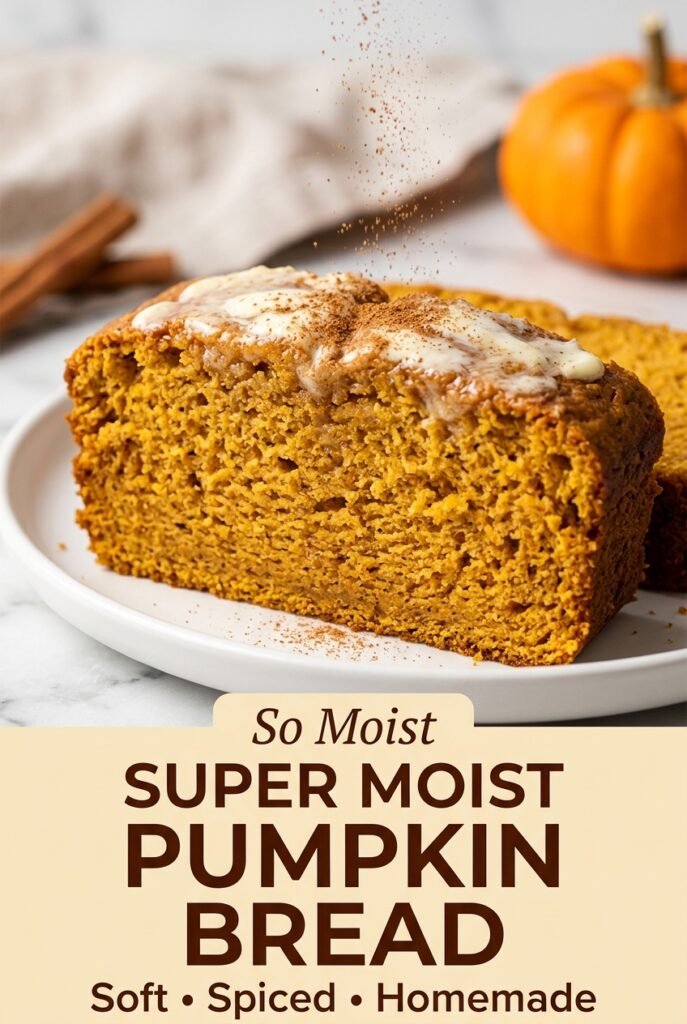
Super Moist Pumpkin Bread Recipe
Super moist pumpkin bread should give you a soft, plush slice that stays tender for days, not a dry loaf that crumbles the second you cut it. The best version…
Tip: save now, read later.
Super moist pumpkin bread should give you a soft, plush slice that stays tender for days, not a dry loaf that crumbles the second you cut it. The best version has a deep pumpkin color, warm spice in every bite, and that slightly dense, cake-like crumb that feels rich without being heavy. This loaf does exactly that.
The texture comes from using both oil and melted butter, plus sour cream for extra moisture and a little tang. Brown sugar helps hold onto softness better than white sugar alone, and pumpkin purée brings more than flavor — it adds body and keeps the loaf from baking up lean or dry. The spices are measured to taste like pumpkin bread, not just cinnamon cake with pumpkin in it.
Below, I’ll walk through the one mixing rule that matters most, what each ingredient is doing, and how to adjust the loaf if you want nuts, chocolate, or a dairy-free version.
The loaf came out incredibly soft and stayed moist for four days. I also loved that the spices were balanced — strong enough to taste like pumpkin bread, but not overpowering.
Save this pumpkin bread for the days when you want a soft, spice-forward loaf that stays moist through the whole week.
The Mixing Rule That Keeps Pumpkin Bread Tender Instead of Tough
Pumpkin bread gets dry for two reasons: too much flour and too much stirring. The batter should look thick, but once the dry ingredients are added, stop as soon as you no longer see streaks of flour. If you keep mixing to chase a perfectly smooth batter, the loaf will bake up tighter and more bready than it should.
The other thing that matters is moisture balance. Pumpkin purée brings a lot of liquid, but it also adds density, so this recipe uses both sour cream and a mix of brown sugar and granulated sugar to keep the crumb soft without turning the center gummy. That combination gives you a loaf that slices cleanly after cooling and still tastes tender the next day.
- Pumpkin purée — Use plain canned pumpkin, not pumpkin pie filling. Pie filling already has sugar and spices mixed in, which throws off both the flavor and the texture.
- Brown sugar — This is doing more than sweetening. It helps the loaf stay moist longer and gives the bread that deeper, almost caramel-like note.
- Sour cream — This is the ingredient that keeps the crumb soft and rich. Plain full-fat Greek yogurt works in a pinch, but the loaf will taste a little less plush.
- Oil plus melted butter — Oil keeps the bread moist for days, while butter adds flavor. Using both gives you the best of each without making the loaf greasy.
- Spices — Cinnamon, pumpkin pie spice, nutmeg, and cloves give the bread warmth and depth. If your pumpkin pie spice is old and faded, the loaf will taste flat, so replace it if it no longer smells fragrant.
Building the Batter Without Overworking It
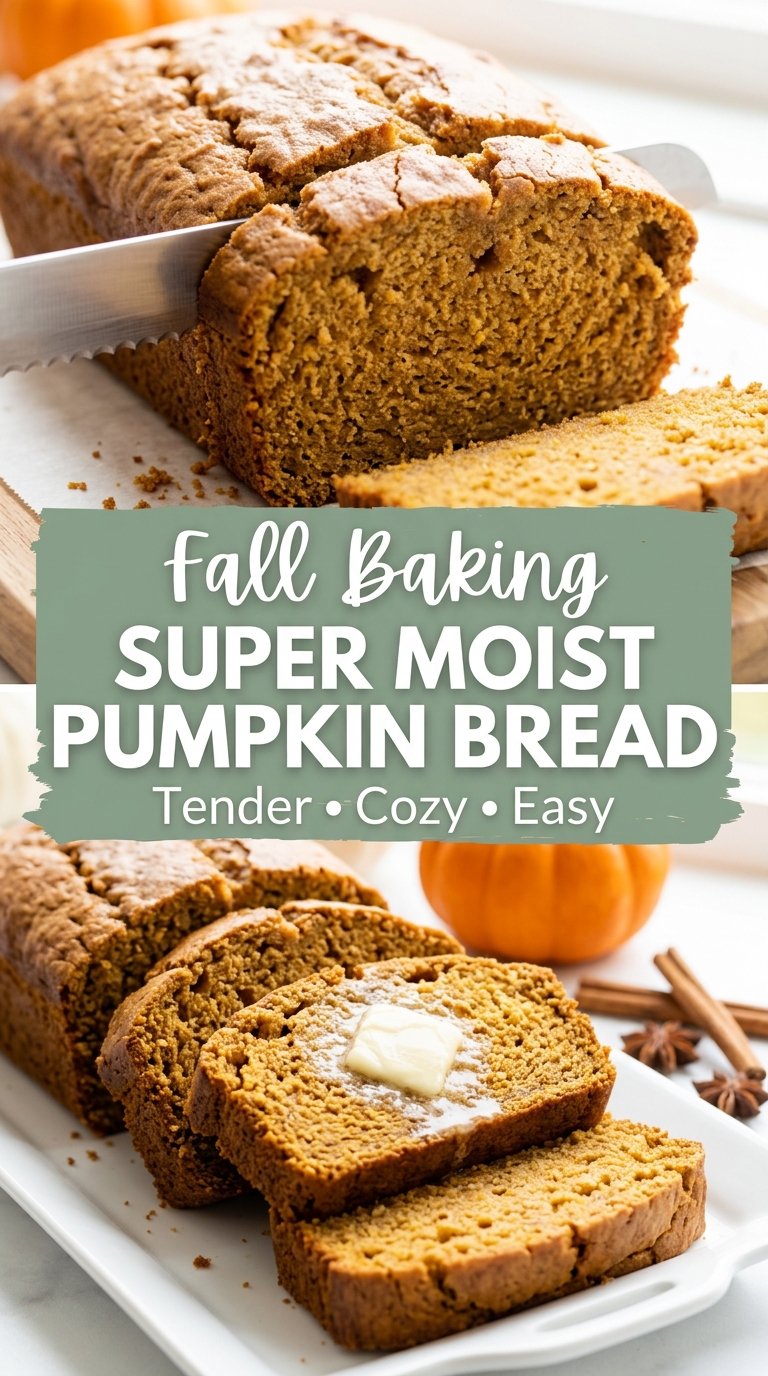
Whisk the dry ingredients together first so the baking soda, baking powder, and spices are evenly distributed. That matters because pumpkin bread has a thick batter, and uneven mixing can leave one bite pale and another one bitter with clove.
Whisk the sugars until they loosen up
Beat the eggs with both sugars until the mixture looks smooth and slightly lighter in color. You are not trying to whip in a lot of air here. You just want the sugar to start dissolving so the loaf bakes evenly instead of feeling grainy.
Add the wet ingredients in the right order
Stir in the oil, melted butter, pumpkin purée, sour cream, and vanilla until the mixture looks fully combined and glossy. If the batter seems unusually stiff, add the milk one tablespoon at a time. A thick batter is normal, but it should still drop from the spoon without needing to be pushed into the pan.
Fold, don’t beat
Add the dry ingredients and fold only until the flour disappears. This is the point where many loaves turn tough, because the batter looks unfinished before it is actually under control. A few small streaks are better than an overmixed batter, since the loaf will finish blending in the oven.
Bake until the center is set
Pour the batter into a parchment-lined 9×5-inch loaf pan and smooth the top. Bake until the loaf is deeply golden and a toothpick inserted in the center comes out clean or with a few moist crumbs. If the top browns too quickly before the middle is done, tent it loosely with foil for the last 15 to 20 minutes.
What to Change When You Want Nuts, Chocolate, or a Lighter Loaf
Add pecans for a deeper, toastier loaf
Fold in chopped pecans or walnuts at the very end so they stay suspended in the batter instead of sinking. Toasting them first gives the bread a nuttier, more defined flavor and keeps the texture from feeling soft all the way through.
Use chocolate chips for a sweeter breakfast loaf
Semi-sweet chocolate chips turn this into something closer to a snack cake, and they work best when folded in with the flour-coated batter just before baking. The bread will taste sweeter and a little richer, so it pairs nicely with coffee or a smear of cream cheese.
Make it dairy-free without losing the moist crumb
Swap the sour cream for an unsweetened dairy-free yogurt and use all oil instead of the butter. The loaf still bakes up tender, though it loses a little of the buttery flavor that gives the original version its richness.
How to keep the loaf from overbrowning
If your oven runs hot, bake the loaf on the center rack and check it early. A loose sheet of foil over the top during the last part of baking protects the crust while the middle finishes, which helps keep the crumb soft instead of dry around the edges.
Storage and Reheating
- Refrigerator: Keep it covered for up to 5 days. The crumb stays moist, though the spices taste a little stronger after a day.
- Freezer: This loaf freezes well. Wrap individual slices or the whole cooled loaf tightly in plastic wrap, then freeze for up to 3 months.
- Reheating: Warm slices in the microwave for 10 to 15 seconds or toast them lightly from frozen. Don’t overheat it, or the bread will lose the soft texture that makes it good in the first place.
Answers to the Questions Worth Asking
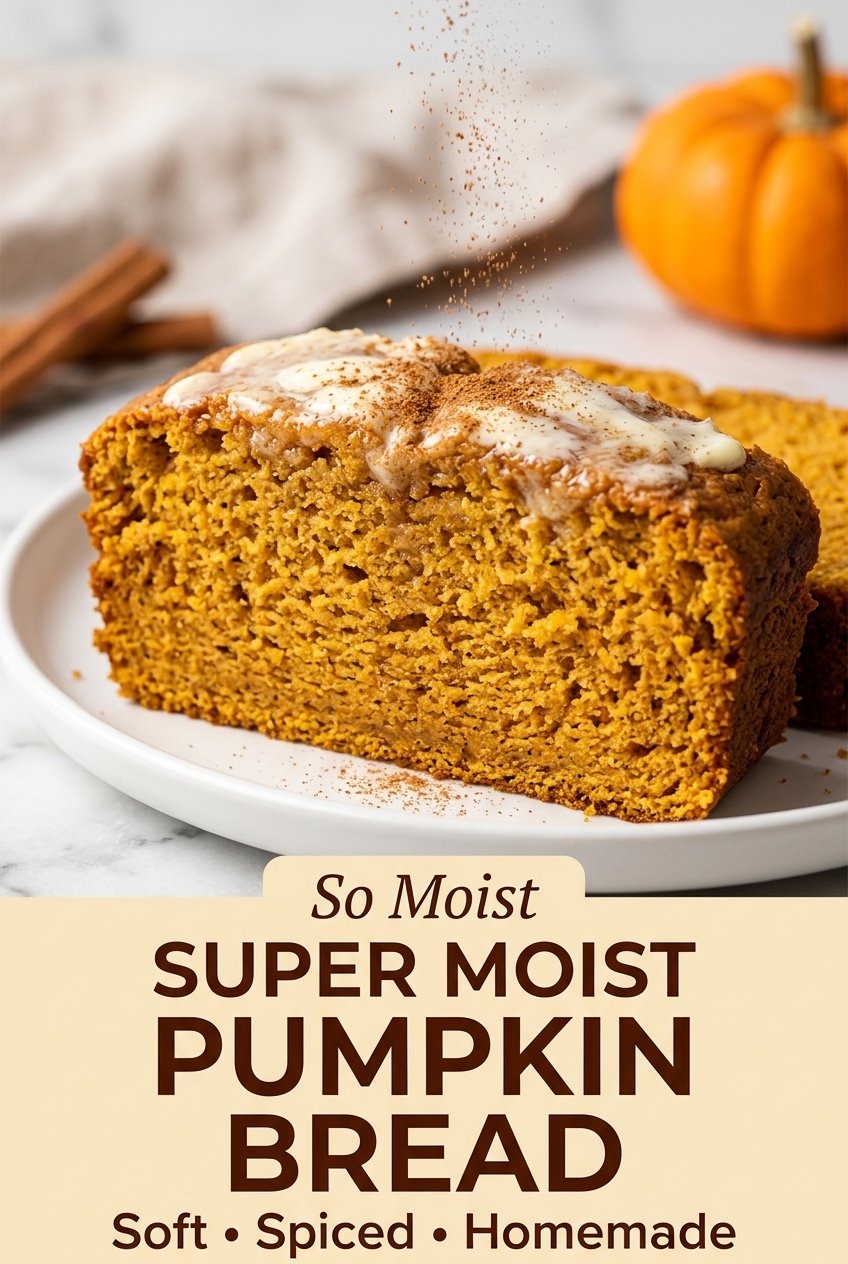
Super Moist Pumpkin Bread
Ingredients
Equipment
Method
- Preheat the oven to 350°F. Grease and line a 9×5-inch loaf pan with parchment paper.
- Whisk together the all-purpose flour, baking soda, baking powder, salt, ground cinnamon, pumpkin pie spice, ground nutmeg, and ground cloves in a large bowl until evenly combined. Stop when you no longer see streaks of spice.
- Beat the eggs with the granulated sugar and light brown sugar, packed until smooth and slightly lighter in color. The mixture should look glossy and cohesive.
- Mix in the vegetable oil, melted unsalted butter, pumpkin purée, sour cream, and vanilla extract until fully combined. Scrape the sides to ensure no streaks remain.
- Stir in the milk only if the batter seems very thick, adding it gradually. Stop once the batter flows easily from the spoon with a thick ribbon.
- Fold the dry ingredients into the wet ingredients just until incorporated. Mix only until no dry flour pockets are visible.
- Fold in the chopped pecans or walnuts and/or the semi-sweet chocolate chips if using. Stop as soon as they are evenly distributed.
- Pour the batter into the prepared loaf pan and smooth the top with a spatula. Bake at 350°F for 60–70 minutes, until deeply golden and a toothpick inserted into the center comes out clean.
- Cool in the pan for 15 minutes, then transfer the loaf to a wire rack to cool completely. This prevents steam from making the crumb gummy.
- Slice and serve as is or with softened butter or cream cheese. Cut only once the loaf is fully cooled for clean slices.
