
Watermelon Beet Salad
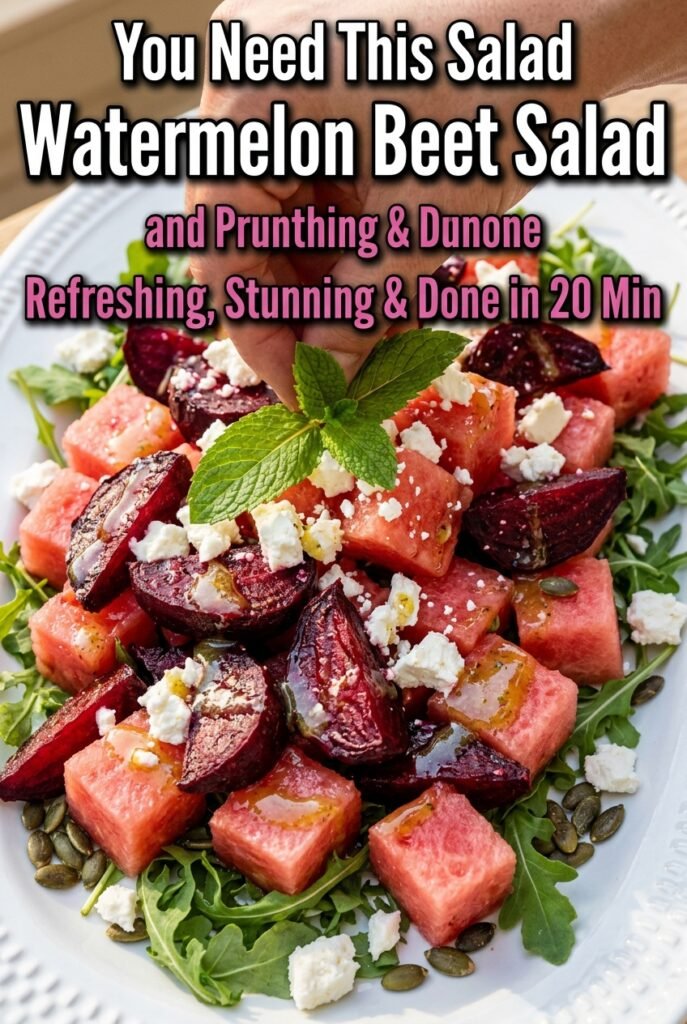
Watermelon beet salad lands with that rare combination of crisp, juicy, earthy, and creamy that makes people pause after the first bite. The watermelon stays cool and refreshing, the roasted…
Tip: save now, read later.
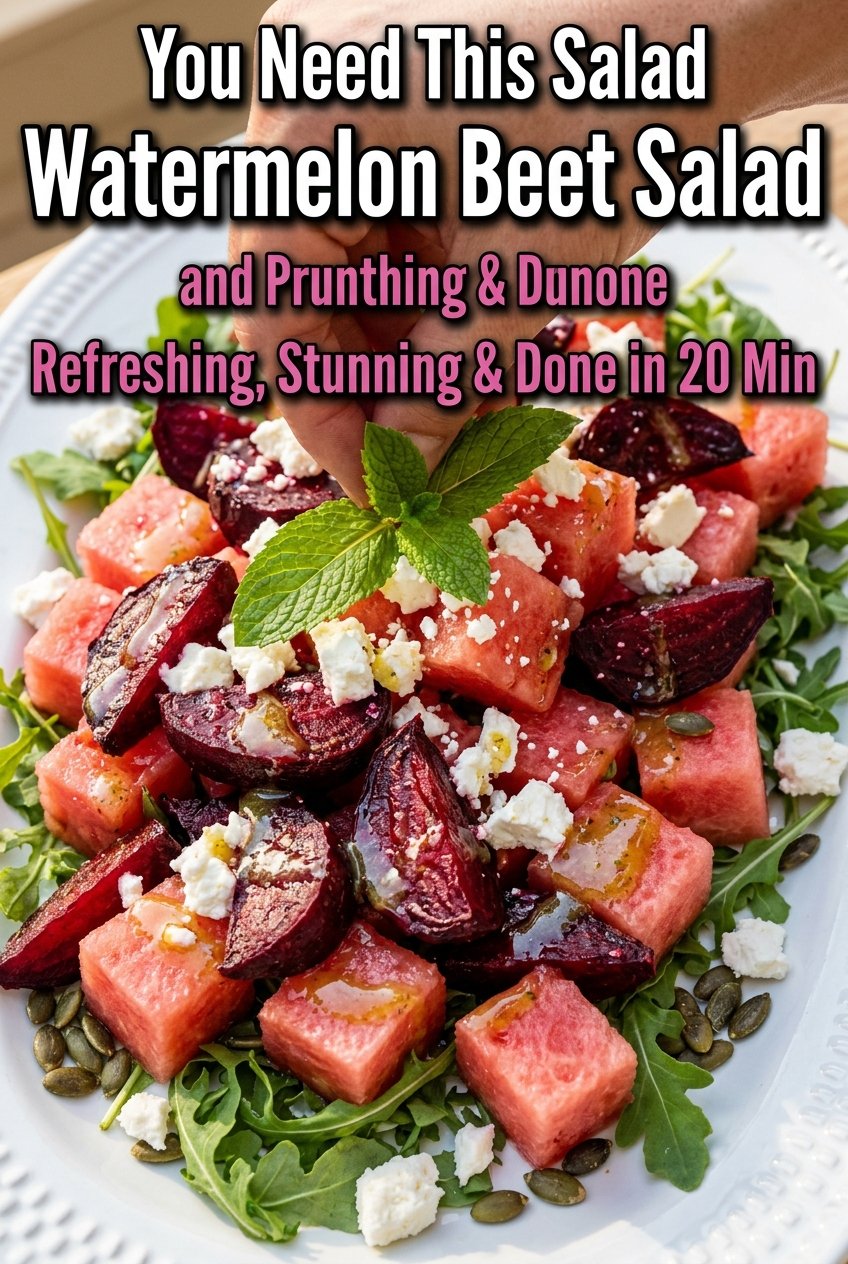
Watermelon beet salad lands with that rare combination of crisp, juicy, earthy, and creamy that makes people pause after the first bite. The watermelon stays cool and refreshing, the roasted beets bring depth, and the feta gives each forkful a salty edge that keeps the sweetness in check. It looks bright and dressed up on the platter, but the ingredients do the real work.
Roasting the beets first is what gives this salad its backbone. Raw beets would fight the watermelon; roasted beets soften into something sweeter and rounder, with just enough earthiness to make the contrast interesting. Patting the watermelon dry matters more than it sounds like it should. Extra surface moisture waters down the dressing and turns the salad murky instead of clean and crisp.
The mint, lime, and red onion keep the whole thing sharp and lively. Below, I’ve included the little details that keep the dressing balanced, the onion from overpowering the bowl, and the salad from collapsing into a puddle before it reaches the table.
The dressing coated everything without making the watermelon soggy, and the roasted beets gave it a deeper flavor than I expected. I served it right away and the mint stayed bright instead of wilting.
Save this watermelon beet salad for the days when you want a chilled, colorful platter with sweet watermelon, roasted beets, and a tangy honey-lime finish.
Why the Beets Need to Be Roasted, Not Raw
Raw beets can taste aggressive next to watermelon. They’re crunchy, yes, but they also carry a sharper earthy note that can push the salad out of balance. Roasting changes that. The beets turn sweeter, softer, and more rounded, which lets them sit beside the watermelon instead of competing with it.
The other common mistake is treating this like a tossed salad. It does better layered and finished at the end. Once the dressing hits the fruit, the clock starts ticking. That’s not a problem if you serve it right away, but it is a problem if you mix everything early and let it sit while you hunt for serving spoons.
- Roasted beets — They bring sweetness and depth that raw beets can’t match. Roast them until a knife slides through with no resistance, then cool them completely before slicing so they don’t bleed into everything else.
- Seedless watermelon — Use fruit that’s cold and firm, not mushy or overripe. If the pieces look wet after cubing, blot them with paper towels so the dressing clings instead of sliding off.
- Feta — Buy a block and crumble it yourself if you can. Pre-crumbled feta is drier and less creamy, which matters here because the salad depends on little salty pockets that soften the sweetness.
- Mint and arugula — Mint adds the fresh top note, while arugula gives the salad a peppery base. If you skip the arugula, the salad turns sweeter and a little flatter.
Building the Salad So It Stays Crisp
Roasting the beets until they’re sweet, not dry
Wrap each beet separately in foil and roast until a fork goes through without any tugging. That usually takes about 50 to 60 minutes, depending on size. If the beets are still firm in the center, the slices will taste chalky and the salad loses that soft contrast against the watermelon. Let them cool fully before peeling; hot beets shed skin messily and stain more than they need to.
Whisking the dressing until it turns glossy
The dressing is just lime juice, honey, olive oil, zest, salt, and pepper, but it needs a proper whisk so the honey disappears into the acid and oil. If it separates after sitting, whisk again right before you drizzle it. Taste it before using; the lime should be bright, not harsh, and the honey should soften the edge without making it syrupy.
Assembling without crushing the fruit
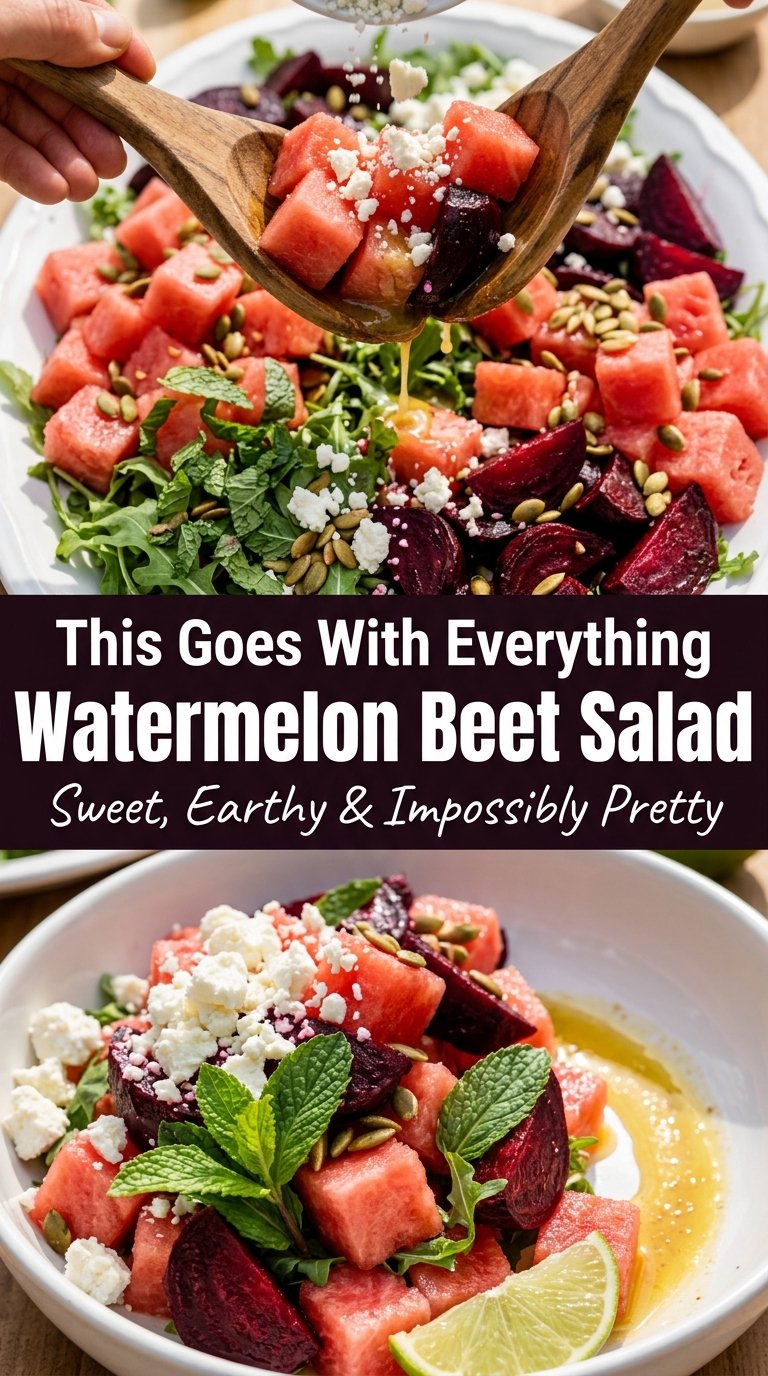
Use a wide platter or shallow bowl and build the salad in layers. Arugula goes down first, then watermelon and beets, then onion, mint, feta, and pepitas. Drizzle the dressing over the top just before serving and leave it alone. If you toss it, the watermelon breaks down, the feta smears, and the whole salad loses the clean look that makes it special.
Three Ways to Adjust This Watermelon Beet Salad
Make it dairy-free
Skip the feta and add a little extra mint plus a few more pumpkin seeds for contrast. You’ll lose the creamy salty bite, so the salad reads a little brighter and more fruit-forward, but it still works because the lime dressing and roasted beets carry enough structure.
Swap the pepitas for something crunchier
Toasted pistachios or sliced almonds bring a more noticeable crunch than pepitas and lean nicely into the sweet-salty contrast. If you use nuts, chop them lightly so you get little crisp pieces instead of big hard shards that fight the soft watermelon.
Turn it into a more substantial side
Add sliced avocado or a handful of cooked farro if you want the salad to eat more like a light lunch. Avocado adds creaminess and farro adds chew, but both soften the sharp sweet-salty contrast, so keep the dressing lively and finish with extra mint.
Use golden beets for a milder finish
Golden beets are a little sweeter and less earthy than red beets, which makes the salad taste lighter and keeps the color from bleeding as much. They’re a good choice when you want a cleaner look on the platter and a gentler beet flavor.
Storage and Reheating
- Refrigerator: Store the components separately for up to 2 days. Once dressed, the watermelon starts to soften and release juice.
- Freezer: Don’t freeze this salad. Watermelon and feta both turn unpleasant after thawing, and the texture falls apart.
- Reheating: No reheating needed. If you’re prepping ahead, chill the beets, mix the dressing, and assemble just before serving so the fruit stays crisp and the herbs stay bright.
Answers to the Questions Worth Asking
Watermelon Beet Salad
Ingredients
Equipment
Method
- Preheat the oven to 400°F (200°C). Wrap each beet individually in foil, place on a sheet pan, and roast for 50–60 minutes until fork-tender, using the foil to keep them from drying out.
- Remove the sheet pan from the oven and let the beets cool completely. Peel and slice into thin wedges once fully cooled for cleaner cuts.
- In a small bowl, whisk together the fresh lime juice, honey, olive oil, lime zest, flaky sea salt, and freshly cracked black pepper until emulsified. Taste and adjust seasoning so the dressing is balanced before assembly.
- Cut the seedless watermelon into 1-inch cubes. Pat them gently with paper towels to remove excess moisture so the salad stays crisp.
- Slice the thinly sliced red onion into very thin half-moons. If you want a milder flavor, soak the slices in cold water for 10 minutes, then drain and pat dry.
- Spread the fresh arugula on a wide serving platter as the base. Arrange the watermelon cubes and roasted beet wedges over the greens, alternating colors for contrast.
- Scatter the red onion, fresh mint leaves, and crumbled feta across the top. Sprinkle the roasted pumpkin seeds (pepitas) over everything for crunch.
- Drizzle the honey-lime dressing evenly over the salad just before serving. Do not toss—serve immediately so the layers stay visible.
