
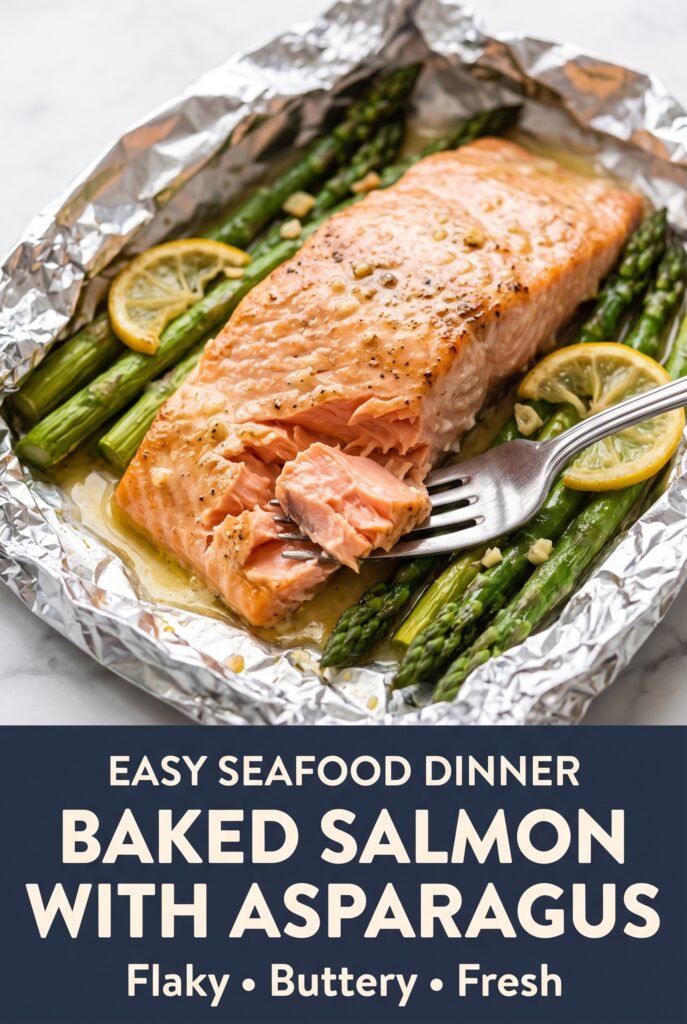
Baked Salmon in Foil with Asparagus
Tender salmon, crisp-tender asparagus, and a garlicky lemon butter sauce make these foil packets one of the easiest dinners to get right on the first try. The salmon stays juicy…
Tip: save now, read later.
Tender salmon, crisp-tender asparagus, and a garlicky lemon butter sauce make these foil packets one of the easiest dinners to get right on the first try. The salmon stays juicy because it cooks in its own little steam chamber, and the asparagus picks up just enough of the butter and lemon to taste bright without going soft. The best part is that everything finishes at the same time, which is what makes this one a keeper on busy nights.
The key is using heavy-duty foil and sealing the packets well, but not so tightly that the steam has nowhere to move. A little space inside each packet helps the salmon cook evenly instead of drying out at the edges. The butter and olive oil do two different jobs here: the butter brings richness and the oil helps the garlic and spices spread evenly over the fish and vegetables.
Below, I’ll show you how to keep the salmon from overcooking, which asparagus spears hold up best, and the one detail that keeps the lemon from turning the whole packet bitter.
The salmon came out so juicy, and the asparagus was perfectly crisp-tender. I loved that the lemon stayed bright and the foil packets kept cleanup down to almost nothing.
Save this baked salmon in foil with asparagus for a no-fuss dinner with juicy fish, bright lemon, and almost no cleanup.
The Foil Packet Trick That Keeps Salmon Juicy Instead of Dry
Salmon overcooks fast, and foil packets can either protect it or trap you into a mushy, watery dinner if the packet is sealed too loosely or baked too long. The goal is gentle, even heat with enough steam to keep the fish tender, not so much steam that the asparagus collapses and the garlic-butter turns thin and bland. That balance is why this method works better than blasting everything on a sheet pan.
The biggest mistake is treating the fish and asparagus like they need the same amount of attention from the start. Asparagus spears that are thick at the bottom need trimming, and very thick salmon fillets may need the full 18 minutes, while thinner ones are done sooner. If the top of the salmon looks opaque and the center flakes with light pressure, pull the packets out. Waiting for a deep golden color is how people end up with dry fish.
- Heavy-duty aluminum foil — This matters more than people think. Thin foil tears when you fold and seal the packets, and once steam escapes, the salmon can dry out before the asparagus is tender.
- Salmon fillets — Look for fillets that are similar in thickness so they finish together. Skin-on or skinless both work, but skin-on gives you a little extra protection on the bottom.
- Asparagus — Medium spears hold up best here. Very thin asparagus can turn limp before the salmon is done, while very thick spears may need an extra minute or two in the oven.
- Lemon — Use half for slices and half for finishing juice. The slices perfume the packets as they bake, while the fresh squeeze at the end keeps the flavor bright instead of cooked-down.
Building the Garlic-Lemon Butter So It Clings to the Fish
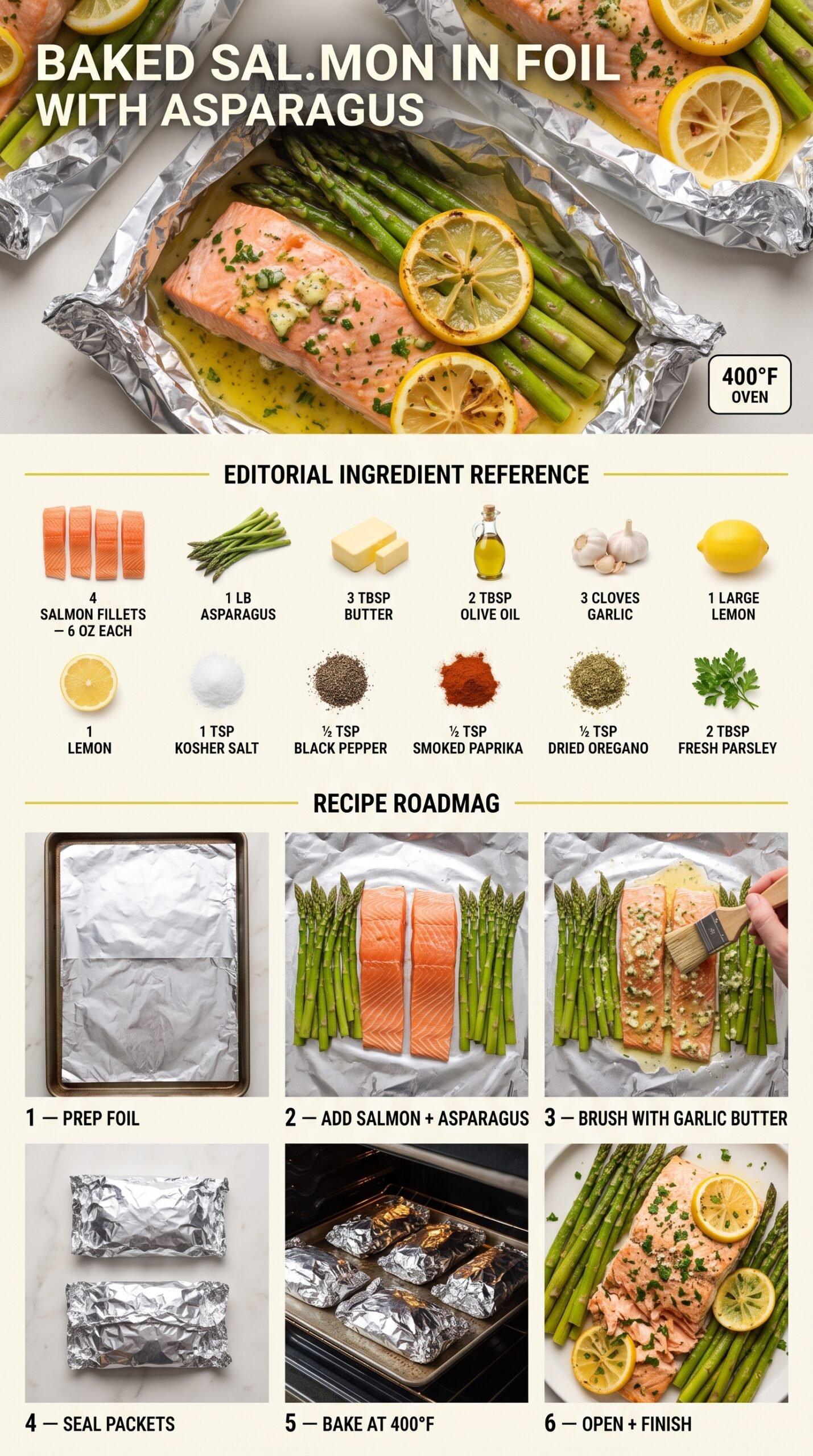
The butter does the heavy lifting for flavor, but the olive oil helps the mixture brush on evenly and keeps the garlic from scorching in the hot oven. If you skip the oil, the butter can pool in the foil and leave the top of the salmon underseasoned. Mixing the seasoning into the fat before it goes on the fish matters because dry spices spread far better that way than if you sprinkle them on at the end.
- Unsalted butter — Use melted butter so it blends smoothly with the oil and garlic. Unsalted is the right choice here because the salmon and asparagus can take the seasoning without tipping into salty.
- Olive oil — This softens the butter and helps the mixture coat every surface. If you need to substitute, another neutral oil works, but you’ll lose a little of the richness that olive oil brings.
- Garlic — Fresh minced garlic gives the sauce its backbone. Garlic powder works in a pinch, but it won’t give you the same fresh bite or aroma.
- Smoked paprika and dried oregano — These add a warm, savory layer without crowding out the lemon. Don’t overdo either one; the salmon should still taste clean and bright, not heavily spiced.
How to Layer the Packets So Everything Finishes at the Same Time
Prepping the Pan Size in Your Head
Cut four large sheets of foil and give each one enough room to fold into a loose packet without squeezing the fish. The salmon needs a little air space around it so steam can move, and the asparagus needs to sit in a single layer instead of stacking up. If the packets are cramped, the vegetables go soft before the salmon is done.
Seasoning the Fish and Vegetables
Place one fillet in the center of each sheet, then divide the asparagus around it. Brush the garlic-butter mixture over both the fish and the spears so the seasoning lands evenly. The fish should look glossy, not flooded. If the butter pools in one corner, the flavor won’t spread evenly and the bottom will taste richer than the top.
Sealing and Baking
Fold the foil over the salmon and crimp the edges to seal, leaving a little room above the fish for heat to circulate. Bake at 400°F for 15 to 18 minutes, depending on thickness. The salmon is done when it flakes easily and turns opaque in the center; if you wait until it feels firm all the way through, it has already gone past juicy.
Finishing With Fresh Lemon
Open the packets carefully because the steam is hot and strong. Squeeze the remaining lemon over the salmon and asparagus, then scatter on parsley right before serving. That last hit of acid wakes everything up. Without it, the butter can taste a little flat after baking.
How to Adapt This for Different Nights and Different Eaters
Make it dairy-free
Replace the butter with more olive oil or a plant-based butter that melts cleanly. You’ll lose a little of the round, rich finish, but the lemon, garlic, and salmon still carry the dish well.
Swap the asparagus for another vegetable
Green beans, thin zucchini spears, or broccoli florets can step in here, but each one changes the timing a bit. Broccoli needs a little more time, while zucchini softens fast and should be cut thick so it doesn’t collapse.
Use frozen salmon
Thaw it completely first and pat it dry before seasoning. If you bake it from frozen, the asparagus will overcook before the center of the fish catches up, and the packet will hold too much water.
Make it gluten-free and low-carb
This recipe already fits both without any changes. Serve it as written, or pair it with rice if you want something extra under the buttery juices.
Storage and Reheating
- Refrigerator: Store leftovers in an airtight container for up to 2 days. The salmon will stay moist, but the asparagus softens a bit as it sits.
- Freezer: It freezes, but the asparagus turns limp after thawing, so I don’t recommend freezing the finished dish.
- Reheating: Reheat gently in a 300°F oven, covered, just until warmed through. High heat dries the salmon fast and makes the asparagus stringy.
Answers to the Questions Worth Asking
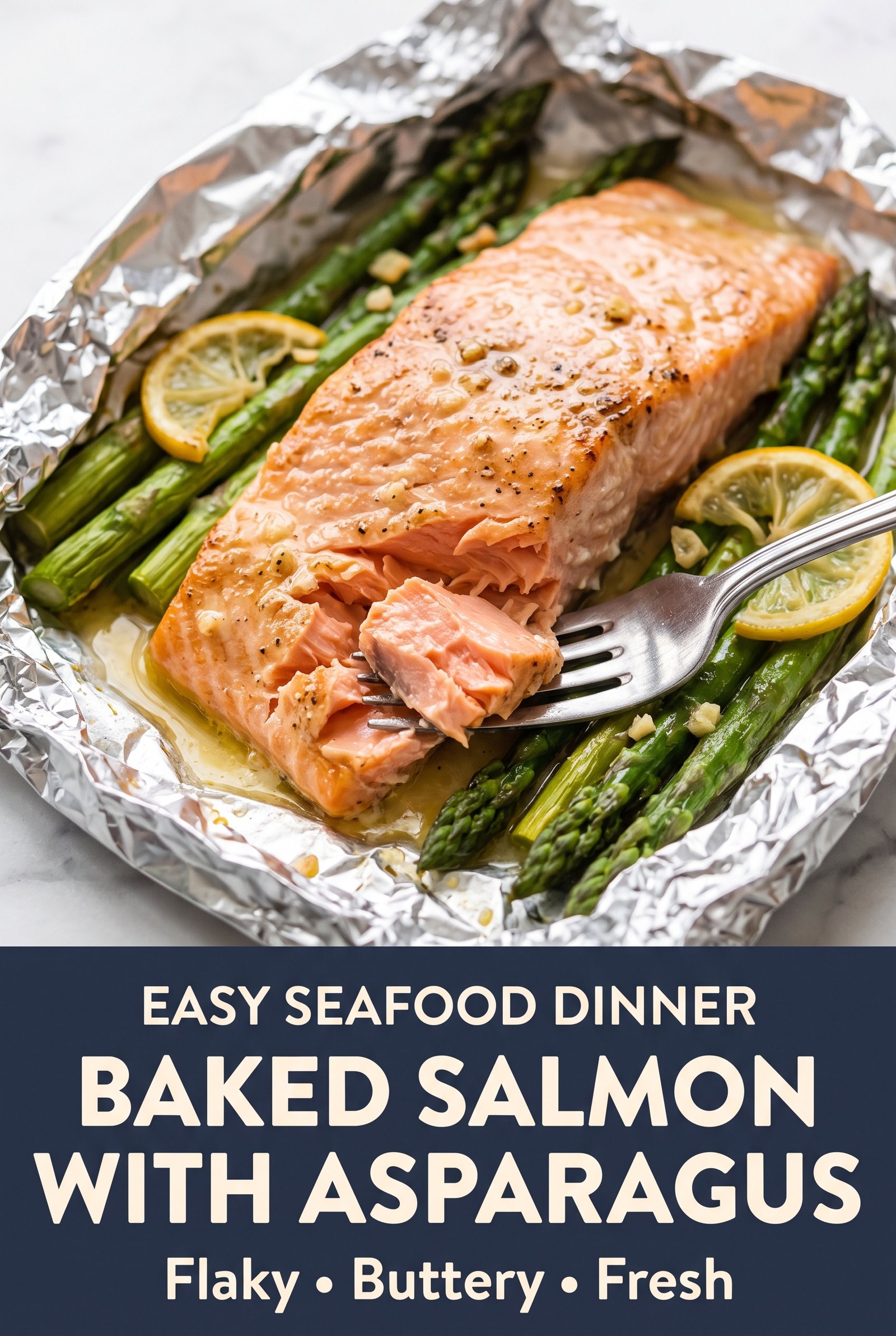
Baked Salmon in Foil with Asparagus
Ingredients
Equipment
Method
- Preheat the oven to 400°F.
- Cut four large sheets of heavy-duty aluminum foil and place one salmon fillet in the center of each sheet.
- Divide the trimmed asparagus evenly around the salmon fillets.
- In a small bowl, combine melted unsalted butter, olive oil, minced garlic, kosher salt, black pepper, smoked paprika, and dried oregano.
- Brush the garlic-butter mixture generously over the salmon and asparagus.
- Slice half of the lemon into thin rounds and place one or two lemon slices over each salmon fillet.
- Fold the foil over the salmon and asparagus and seal the edges securely while leaving a little room inside each packet for heat circulation.
- Bake the foil packets at 400°F for 15–18 minutes, until the salmon flake tests easily with a fork and looks opaque through the center.
- Check the thickest part of the salmon and cook until it reaches 145°F.
- Open the foil packets carefully.
- Squeeze the remaining lemon over the salmon and asparagus.
- Sprinkle with chopped fresh parsley and serve immediately.
