
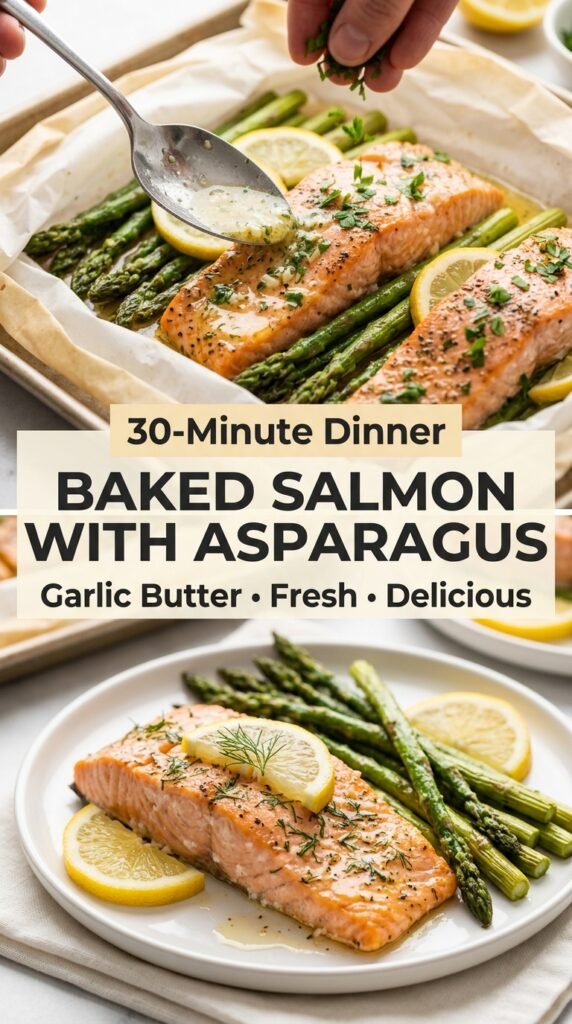
Baked Salmon in Foil with Asparagus
Flaky salmon, crisp-tender asparagus, and garlicky lemon butter all finish in the same packet, which is exactly why this dinner earns a permanent spot in the rotation. The fish stays…
Tip: save now, read later.
Flaky salmon, crisp-tender asparagus, and garlicky lemon butter all finish in the same packet, which is exactly why this dinner earns a permanent spot in the rotation. The fish stays moist, the asparagus cooks under the salmon without turning limp, and cleanup is as simple as lifting away the foil when dinner’s done.
The trick is giving the asparagus a head start with a light coating of oil so it softens without steaming into mush, then sealing the packet just tightly enough to trap moisture without crowding the fillets. The butter mixture carries the seasoning across the salmon, while the lemon slices perfume everything as it bakes. That little bit of smoke from the paprika keeps the dish from tasting flat.
Below, you’ll find the timing that keeps both the fish and the asparagus on target, plus a few swaps if you want to adjust the seasoning or use a different vegetable.
The salmon came out perfectly flaky and the asparagus stayed crisp-tender instead of soggy. I loved that the garlic butter soaked into everything, and the packets made cleanup effortless.
Baked salmon in foil with asparagus makes a fast, low-mess dinner with tender fish, bright lemon, and garlicky butter in every bite.
The Reason the Asparagus Stays Crisp Instead of Going Soft
Foil packets can be a trap when the vegetables underneath the fish turn watery before the salmon is done. Asparagus is thin enough to cook quickly, but it still needs room to steam and a little oil to help it soften without collapsing. If the spears are piled too tightly, they’ll turn slick and dull instead of staying bright and snappy.
The other mistake is overcooking the fish just to finish the vegetables. Salmon only needs a short bake at 400°F, and that temperature gives you enough heat to cook the asparagus through without drying out the fillets. Thin salmon fillets finish faster, so if yours are on the small side, start checking early. You want the flesh to flake at the thickest part while the asparagus still has a little bite.
What Each Ingredient Is Actually Doing in This Dish
- Salmon fillets — Choose fillets of similar thickness so they finish at the same time. Wild salmon tends to be leaner and cooks a touch faster, while farmed salmon is richer and more forgiving if you go a minute long.
- Asparagus — Medium spears work best here. Very thin asparagus can overcook before the salmon is done, and very thick spears may need a minute or two more in the oven.
- Butter and olive oil — Butter brings the rich, savory finish, while olive oil helps the seasoning spread and keeps the salmon from tasting heavy. If you need a dairy-free version, use all olive oil and add a little extra lemon at the end for brightness.
- Garlic, Italian seasoning, and smoked paprika — This is the seasoning backbone. Fresh garlic gives the best flavor, and the paprika adds color plus a gentle smoky note that keeps the foil packet from tasting one-note.
- Lemon slices and lemon juice — The slices perfume the salmon as it bakes, and the juice at the end wakes up the butter. If you skip the fresh finish, the dish tastes flatter than it should.
- Parsley — This is more than garnish. It adds a clean, fresh edge that balances the butter and keeps the whole pan from feeling heavy.
How to Seal the Packet So the Salmon Stays Moist
Build the asparagus bed first
Lay the asparagus in a single layer on each sheet of foil and drizzle it lightly with oil before adding the fish. That thin coating helps the spears roast instead of steaming in their own moisture. If the asparagus is tangled in a thick pile, some pieces will turn limp while others stay undercooked.
Brush the salmon, don’t drown it
Spoon or brush the garlic butter over the top of each fillet so the seasoning stays where you want it. The goal is a glossy coating, not a pool of butter collecting at the bottom of the packet. A little excess is fine, but if the fish is sitting in liquid from the start, the surface won’t develop that clean, tender finish.
Seal the foil just tight enough
Bring the long sides of the foil together and fold them down, then crimp the ends so the packet is closed but not smashed flat. You want the steam trapped inside, but the top of the packet should still have some space above the salmon. If you wrap it too tightly, the fish can cook unevenly and the asparagus loses all texture.
Check the fish before you open everything
At 15 minutes, peek at the thickest fillet through the foil. The salmon should flake easily and look opaque at the edges with a slightly translucent center that finishes as it rests. If the asparagus is done but the fish needs another minute, reseal and keep baking briefly; opening the packet too early lets out the steam that finishes the vegetables.
How to Adapt This for Different Dinners and Diets
Dairy-Free Garlic Lemon Salmon
Swap the butter for an equal amount of olive oil. You’ll lose a little of that rich, rounded finish, but the lemon and garlic stay bright and the texture remains clean. A tiny extra drizzle of oil after baking helps replace the gloss butter would have given.
Low-Carb and Naturally Gluten-Free
As written, this dish already fits both styles. The only thing to watch is any seasoning blend you substitute for the Italian seasoning; some store blends add sugar or anti-caking fillers. Stick with a simple herb blend if you want the cleanest result.
Swap the Vegetable Without Changing the Method
Broccolini, green beans, or thin zucchini ribbons all work if you adjust the timing. Broccolini needs about the same bake time as asparagus, green beans need a minute or two more, and zucchini softens fast enough that it should go under the salmon only in the last 8 to 10 minutes. The key is choosing a vegetable that won’t release so much water that the foil packet turns soggy.
Storage and Reheating
- Refrigerator: Store leftovers in an airtight container for up to 2 days. The salmon stays good, but the asparagus softens a little after chilling.
- Freezer: I don’t recommend freezing the finished dish. The salmon texture holds up better than the asparagus, but the vegetables turn watery and dull after thawing.
- Reheating: Rewarm gently in a 300°F oven, loosely covered with foil, just until the salmon is heated through. High heat dries the fish out fast, and microwaving tends to overcook the edges before the center warms.
Questions I Get Asked About This Recipe
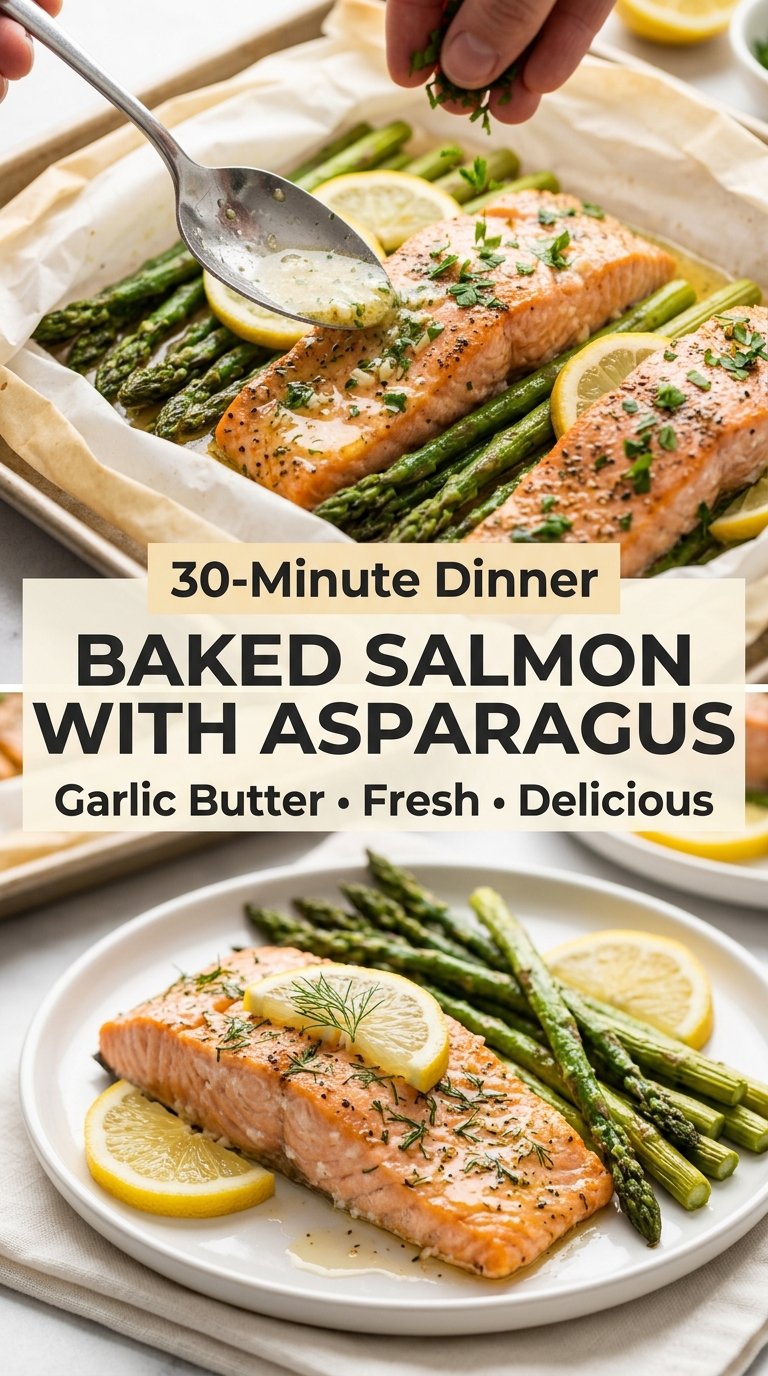
Baked Salmon in Foil with Asparagus
Ingredients
Equipment
Method
- Preheat the oven to 400°F and set out a sheet pan for the foil packets. Cut four large sheets of heavy-duty aluminum foil.
- Divide the asparagus evenly among the foil sheets. Drizzle with half the olive oil and season lightly with kosher salt and black pepper.
- Place one salmon fillet on top of each bed of asparagus. Keep the foil portions centered so they fold up tightly later.
- In a small bowl, combine melted unsalted butter, remaining olive oil, minced garlic, Italian seasoning, smoked paprika, kosher salt, and black pepper. Stir until the mixture looks evenly combined.
- Brush the garlic butter mixture generously over each salmon fillet. Top each fillet with lemon slices.
- Fold the foil tightly around each portion to create sealed packets. Press the seams firmly to help trap steam while baking.
- Bake the foil packets at 400°F for 15–18 minutes. The salmon should flake easily with a fork and reach an internal temperature of 145°F.
- Carefully open the foil packets and avoid direct steam exposure. Drizzle with fresh lemon juice.
- Sprinkle chopped fresh parsley over the salmon and asparagus. Serve immediately while the asparagus is crisp-tender.
